Published: 06 October 2026. The English Chronicle Desk. The English Chronicle Online
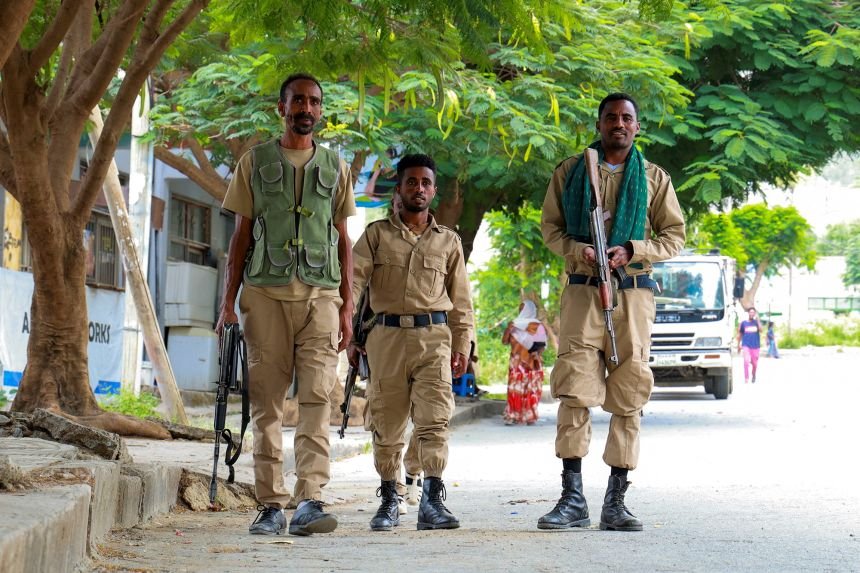
Renewed fighting in Ethiopia’s northern Tigray region is raising fears of another humanitarian catastrophe, with witnesses alleging that armed groups linked to the Tigray People’s Liberation Front (TPLF) are forcibly recruiting men and boys, including teenagers as young as 15, as the conflict once again pushes civilians into danger.
The latest violence erupted on 23 September after months of rising tensions between Ethiopia’s federal government and the TPLF, which remains the dominant political and military force in Tigray. The renewed conflict has effectively shattered the fragile peace established by the Pretoria agreement in November 2022, which had brought an end to the previous devastating war.
According to accounts from residents and people who have fled the region, the latest mobilisation has involved widespread efforts to recruit men and boys into the fighting. Witnesses described armed personnel stopping people in streets and public transport areas, with some allegedly being taken at gunpoint.

The reported recruitment campaign is said to be particularly focused on males between 15 and 40, although some accounts indicate that people up to the age of 65 have also been targeted. The allegations have created renewed anxiety among families who had hoped that the end of the earlier conflict would allow them to rebuild their lives without the threat of forced mobilisation.
For people who already experienced the horrors of the 2020-22 war, the return of armed recruitment has brought back painful memories. Gezu, whose name has been changed for his protection, is a 34-year-old former Tigrayan fighter who survived the previous conflict but lost many friends during the fighting.
After the latest violence began, he said he was contacted by TPLF authorities and asked to return to the armed struggle. Having already experienced the battlefield, he refused.
“I refused to join the war,” he said, explaining that he would rather face death than be forced back into the conflict.
According to Gezu, the authorities initially attempted to persuade people to join voluntarily. But as civilians began trying to leave their towns for safer areas, he said armed personnel started rounding people up from public places.
His account reflects the growing fear among civilians who are caught between the need to remain in their homes and the danger of being drawn into a conflict they do not want to fight.
Solomon, a 52-year-old man who managed to reach Addis Ababa, said younger men and teenage boys were among those most vulnerable. He alleged that armed TPLF personnel had detained people as young as 15 and 16 in streets and around public transportation points.
He said some parents had attempted to protect their children by producing medical documents showing that they were unfit for military service. According to his account, those efforts were often unsuccessful.
The allegations are particularly disturbing because the recruitment of children into armed conflict carries severe humanitarian and legal implications. Teenagers who should be attending school and living with their families can instead find themselves exposed to combat, injury, psychological trauma and death.
For parents in Tigray, the possibility of forced recruitment has become another reason to consider fleeing their communities. Ephrem, a 40-year-old father of three, said his family had been preparing for the possibility of leaving the region even before the newest fighting began.
He described the atmosphere inside his home as one of constant anxiety. Whenever he leaves the house, his wife and children reportedly fear that he may not return.
The accounts also point to a widening gap between those who can afford to protect themselves and those who cannot. Ephrem alleged that people with sufficient money have sometimes attempted to avoid forced recruitment through payments to officials or armed personnel.
Such allegations, if substantiated, would add another layer of inequality to a crisis already affecting communities that have endured years of displacement, poverty and disrupted services.
The ability of civilians to escape has also been severely restricted. Ethiopian Airlines suspended flights to and from Tigray after Tigrayan forces seized Mekelle airport on 23 September. The airport was subsequently retaken by Ethiopian forces, but the disruption left many civilians unable to use air travel to reach safer areas.
For months, some Tigrayans with the financial means to leave had been travelling towards Addis Ababa because of growing fears that renewed fighting was approaching. The outbreak of violence has now made movement considerably more difficult for those still trapped inside the region.
The humanitarian pressure has been compounded by restrictions on banking services. Residents reported that bank accounts were abruptly frozen during the siege, leaving people unable to access money needed for food, medicine and other necessities.
Although banking services have since resumed, a daily withdrawal limit of 2,000 birr has reportedly been imposed. With food prices rising sharply, residents say the amount is insufficient to cover basic household needs.
Negus, an elderly resident of Mekelle, described the uncertainty facing people inside the region. He said residents did not know how long the siege and fighting would continue and feared that families outside Tigray would be unable to send money or medicines to relatives.
The communication blackout has intensified that isolation. Internet and telephone services were reportedly cut on the orders of the TPLF before being restored this week. For families separated by the fighting, the interruption made it difficult to establish whether relatives were safe.
At the same time, the federal government has faced accusations over its military operations. Ethiopian authorities have been accused of conducting indiscriminate drone strikes, while opposition forces have reportedly advanced close enough to Addis Ababa to raise concerns about a wider escalation.
The return to war is especially alarming because of the enormous human cost of the previous Tigray conflict. British government estimates have put the number of civilians who died during the 2020-22 conflict at between 300,000 and 800,000, making it one of the most devastating conflicts in recent Ethiopian history.
The previous war was also marked by allegations of serious abuses by multiple parties. Ethiopian government forces, Eritrean troops and Amhara nationalist Fano militias were accused of grave violations against Tigrayan civilians, including acts described by international investigators as war crimes and crimes against humanity.
Tigrayan forces themselves were also accused of abuses against civilians during the conflict, including killings and sexual violence. Those allegations demonstrate the complex nature of the renewed crisis, in which civilians face threats from several armed actors rather than from a single side.
The emergence of reports involving the recruitment of teenagers therefore carries particular significance. For a region that has only recently begun recovering from mass violence, displacement and economic devastation, another generation could now be placed at risk of becoming directly involved in fighting.

Families are once again being forced to make decisions that should never have become part of ordinary life: whether to remain at home, attempt to escape, hide family members or risk confrontation with armed groups.
The immediate priority for civilians is the restoration of safety and humanitarian access. The longer the fighting continues, the greater the likelihood that food shortages, financial restrictions, disrupted healthcare and displacement will deepen.
For survivors of the previous war, the renewed violence is more than a political crisis. It represents the return of memories many had hoped were finally behind them. For parents watching their children grow up amid another mobilisation campaign, the fear is that the fragile peace of recent years may disappear before a new generation has had the chance to experience a normal life.
Related News:
 Ebola outbreak in DRC overwhelms health system as cases surge
 Family of British man found dead in Grenada urges UK-Grenada police cooperation
 South Africa’s Femicide Crisis Deepens
 Paris child pickpocketing gang leader jailed for eight years
 Files Link Andrew to Epstein Dinner After Prison Release
 Explosion Damages Jewish School in Amsterdam
 Police Suspect Help in Missing Alice Springs Girl Case
 US judge dismisses Kilmar Abrego Garcia indictment
 China mine blast death toll rises to 90
 Victim says non-custodial rape sentence ‘rock in my face’
 Teenage Victim Identified as Community Mourns Stabbing Death
 New Footage Revives Peter Falconio Mystery
 Ukraine Creates Long-Range Strike Command
 Dreyfus Statue Finally Gets Permanent Paris Home
 Israeli Strike in Southern Lebanon Kills Seven
 Ukraine Villagers Demand Answers After Deadly Arms Depot Strike
 Survivor Sues Musk’s xAI Over AI Abuse Images
 Daughter Finds Bones in Parents’ Burned-Out Car
 Argentina Orders Return of Nazi-Looted Painting
 UN expert urges UK to rethink Israel policy
 Abusive ex used Tesla to control and harass former partner
 Turning Point USA Faces Crisis After Kirk Killing
 Miliband Rejects Chief Rabbi’s West Bank Warning
 Royal Crown Branded Enslaved Africans in Britain’s Slave Trade
 Israel Accused of Undermining Palestinian Life

 Gaza Strike Kills Child and Paramedic
 Texas Transfers Raise Fears for Migrant Children
 Harrods Faces Dispute Over Fayed Abuse Compensation
 Clancy Defense Seeks Inquiry Into Lone Juror
 Japan PM Backs International Criminal Court
 King Refers Jamaica Slavery Petition to Privy Council
 Sri Lanka Easter Bombings: 15 Get Long Prison Terms
 Ukraine and Russia Escalate Long-Range Drone War
 Yemen fighting forces children out of school and into work
 Tennessee Set to Execute Woman After Clemency Denied
 Fayed Survivors Demand Inquiry Into Medical Regulator
 Pelicot Trial Play Comes to London for One Night
 Tennessee Execution Fails After Two Lethal Doses
 Almost Half of Fayed Accusers May Be Trafficking Victims
 Questions Grow Over Tennessee Execution Failures
 Former Bachelor star Sam Wood charged in Australia
 AI Child Abuse Images Surge in New Warning
 Latin America women fear rollback of rights
 Peterborough Mosques Tighten Security After Attack
 French Taxi Driver Cleared in David Lammy Theft Case After Fare Dispute
 UK Bans Fake Numbers: Scammers Lose Their Trick
 Greene Pushes Epstein Files Amid Trump Fallout
 Criminal Gangs Pose as Truckers to Hijack UK Supply Chains
 Deadly Russian Strikes Hit Western Ukraine, 20 Killed in Ternopil
 Man Denies Stealing Bronze Age Gold from Museum
 Inside the Helpline Protecting Missing Children in the UK
 Runaway Driver Caught by DNA Evidence
 American Mother Extradited From UK to U.S. on Murder Charges
 Met Police Vetting Failures Let Serial Rapists Remain
 School vetting failure exposed by London abuse case
 Concerns rise for Canberra boy amid Iran detention fears
 SA Police Intensify Search in Gus Lamont Case
 El Mencho Killed as Mexico Faces Violence
 Kelly Wilkinson Inquest Reveals Bail Failure
 Family of Alleged Bondi Gunman Seeks Name Suppression
 Fugitive Dezi Freeman Killed in Rural Victoria Shootout
 Canadian Mother and Daughter Released From ICE Detention
 M&S Demands Urgent Action on Rising Violent Retail Crime
 Ben Roberts-Smith Denies War Crime Allegations in First Statement
 Louisiana Tragedy: Eight Children Die in Mass Shooting
 UK Watchdogs Warn Over AI Facial Recognition Oversight
 High-Profile Murder Trial Begins for Ian Watkins Death
 Trump Announces 3-Day Russia–Ukraine Ceasefire Deal
 Barrister Criticises Trial After Suicide Case Verdict
 Guarding Justice: The Henry Nowak Case and Police Accountability
 Gaza Doctor Unrecognisable After Brutal Israeli Detention
 Kylian Mbappé Slams Paraguayan Senator Over Racist Attack
 Man Arrested in Mississippi Woman’s Death
 Mahmood Warns Far Right Over Asylum Protests
 British Columbia Sues OpenAI Over School Shooting
 Democrat Says ICE Restricted Detention Camp Oversight
 London Facial Recognition Trial Ends With False Alert
 Yemen government launches offensive against Houthis
 Gosport Protesters Clash With Police Over Migrant Rescue