Published: 06 October 2026. The English Chronicle Desk. The English Chronicle Online
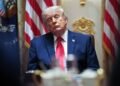
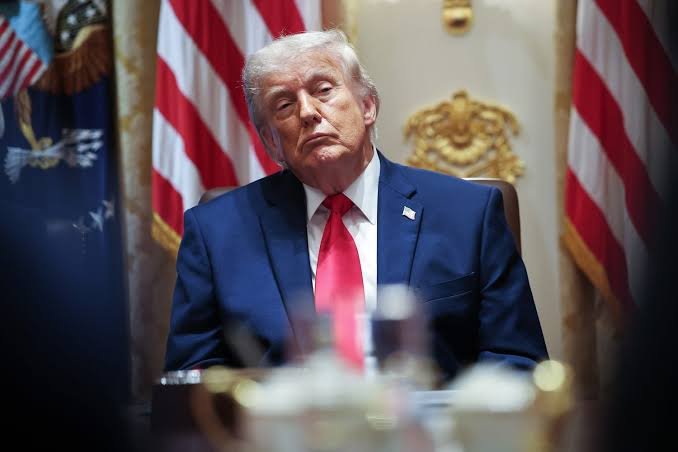
Donald Trump has said his political fundraising organisation will cover the cost of future government advertisements promoting his administration, following a growing political and legal backlash over the use of taxpayer money to broadcast the messages.
Trump announced the change after Democrats and Republicans criticised the advertisements, which had been paid for with federal funds and featured highly favourable portrayals of the president and his policies. The controversy has raised questions about the boundary between government communications and partisan political promotion, particularly with the US midterm elections approaching.
In a social media statement, Trump said the advertisements would instead be paid for using money raised by MAGA Inc, the political action committee that serves as a major fundraising vehicle for his political movement.
He described the disputed advertisements as positive promotion for the United States and suggested that the practice was relatively ordinary. However, the announcement marked a significant shift from the White House’s earlier defence of the use of public money for the broadcasts.

The advertisements had already generated substantial expenditure. Estimates indicated that at least $1.4m to $1.5m in federal money had been spent on the television campaign by the end of September, although the eventual total could be higher depending on how broadcasters classified the spots.
Trump did not explain how the government would deal with money that had already been spent. It also remained unclear whether his political organisation would reimburse taxpayers for advertisements that had already aired or whether the new arrangement would apply only to future campaigns.
The White House said that MAGA Inc would pay for similar advertisements going forward but did not provide details about how the administration would demonstrate that political funds, rather than taxpayer money, were being used.
The issue has become particularly contentious because the advertisements were not presented as conventional campaign commercials. They carried a message stating that they had been paid for by the US government, even though their content prominently highlighted Trump’s achievements and political themes.
The first advertisement included footage of Trump discussing the fight against communism, alongside text celebrating what it described as the largest tax cuts in American history, a revival of US manufacturing and efforts to defend law enforcement.
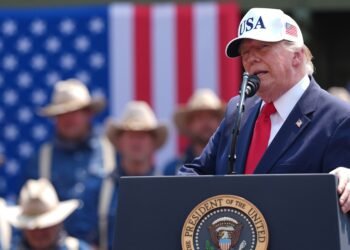
A second advertisement aired soon afterwards and featured images of Mount Rushmore combined with excerpts from Trump’s speech during the Fourth of July weekend, when he marked the 250th anniversary of the United States.
A third commercial drew even greater attention because of its similarity to an advertisement used by Trump’s 2024 Republican re-election campaign. It showed Trump walking through a hallway while his voice warned of a final struggle against what he described as globalists and warmongers.
Each advertisement ended with the statement that it had been paid for by the US government.
The similarity between government-funded messaging and campaign material has intensified criticism from lawmakers who argue that federal resources should not be used to advance a president’s political interests.
The controversy also comes at a politically sensitive moment. Republicans are preparing for the 2026 midterm elections, while Trump and his allies have increasingly used MAGA Inc to support Republican candidates around the country.
The organisation had accumulated more than $400m by the end of July, giving Trump and his political allies a substantial financial resource for election-related activities. The president has already begun using that political network to assist Republican candidates ahead of the midterms.
The distinction between government communications and political campaigning is therefore particularly important. Government agencies regularly spend public money on advertising to explain policies, inform citizens about programmes or communicate during emergencies. Such spending can become controversial when advertisements appear to promote an individual politician or political party.
Two Democratic members of Congress had already asked federal oversight bodies to examine whether the Trump administration broke the law by using taxpayer money to broadcast the advertisements.
Jamie Raskin, the senior Democrat on the House Judiciary Committee, and California Congressman George Whitesides referred the matter to the Government Accountability Office and the Office of Special Counsel. They characterised the advertisements as pre-election propaganda and questioned whether the administration had exceeded the legal limits governing government-funded communications.
Legal experts have also raised concerns about possible violations of federal restrictions on publicity and propaganda. Other rules restrict partisan political activity by government employees, creating another potential area of scrutiny.
The legal questions are complicated by the nature of the advertisements themselves. Government communications can legitimately explain a president’s policies or promote public programmes, but the use of taxpayer money to create material that resembles election advertising could cross a line established by federal law.
The Trump administration has strongly defended the advertisements, arguing that they promote government policies and communicate positive information about the country. Trump’s latest announcement, however, suggests that the administration recognises the political sensitivity of using public money for such material.
California Senator Adam Schiff has demanded evidence that taxpayer funding for the advertisements has ended and that the money already spent will be returned.
Schiff argued that taxpayers should not be left to absorb the cost of what critics regard as political promotion. He called on the White House to provide proof that the new arrangement was genuine rather than simply a change in how future advertisements were described.
The question of reimbursement may prove particularly difficult. Trump has said MAGA Inc will pay for the advertisements in the future, but he has not publicly explained whether the political organisation will repay federal agencies for the earlier broadcasts.
That distinction matters because changing the funding arrangement going forward would not necessarily resolve questions about money already spent.
The controversy also highlights the growing overlap between Trump’s presidency and his political operation. MAGA Inc has become a major source of financial support for Republican candidates, while Trump remains deeply involved in electoral politics despite occupying the White House.
His political fundraising network provides substantial resources that could potentially finance communications promoting his agenda, but using those resources for material connected to official government activities raises its own set of questions about transparency and accountability.
The advertisements are therefore becoming a test of how the administration manages the boundary between governing and campaigning.
For supporters of Trump, the commercials may simply represent an effort to communicate the administration’s achievements to the public. For critics, however, the use of taxpayer money and campaign-style imagery creates the appearance that government resources are being used to benefit the president politically.
The timing has made the issue even more sensitive. With the midterms approaching, every government-funded communication that features Trump’s policies or image is likely to face heightened scrutiny.
The decision to shift future costs to MAGA Inc may reduce some of the immediate criticism, but it does not automatically settle the broader dispute. Questions remain over the legality of the original spending, the amount already paid by taxpayers and whether any reimbursement will occur.

The episode also demonstrates how quickly political pressure can force changes in the administration’s approach. What began as a government-funded advertising campaign has evolved into a wider debate about public money, presidential power, campaign politics and the safeguards designed to prevent federal resources from being used for partisan purposes.
As oversight bodies consider the complaints and lawmakers demand greater transparency, the Trump administration may face continued scrutiny over how it communicates its achievements to the American public.
For now, Trump’s decision to turn to MAGA Inc represents a clear attempt to separate future promotional spending from taxpayer funding. Whether that move will satisfy critics, resolve the legal questions or prevent similar controversies in the future remains uncertain.
Related News:
 US National Guard Member Killed in DC Shooting
 Trump Escalates Minnesota Immigration Surge Amid Rising Tensions
 Democrats Push Affordability to Challenge Trump Ahead of Votes
 Greenland Faces Pivotal Summit Over Arctic Power Struggle
 Government Unveils Northern Powerhouse Rail Plans
 Trump press secretary attacks reporter over ICE question
 Kyrsten Sinema Faces High-Profile Lawsuit Over Marriage Interference
 ‘He Believed Help Was Coming’: Why Iran’s Protesters Feel Betrayed
 Trump Fed bid heads to Supreme Court
 Trump officials continue false claims after Alex Pretti shooting
 Fulton election raid hits Georgia election office
 Partial US Government Shutdown Hits Homeland Security Funding
 Thousands Protest ICE Operations in Nationwide US Day of Action
 Epstein Files Reveal Trump Officials’ Emails with Financier
 Thousands Protest ICE in New York Against Trump Deportation Campaign
 Sinema payment row deepens after $9,000 transfer claim
 Nurses’ families fear breakup under UK immigration crackdown
 California Democrats Vow Trump Reckoning
 Trump’s Surgeon General Pick Evades Vaccine Questions
 Clinton Testimony Erupts in Fiery Exchange
 Adelaide University Faces Backlash Over Event Cancellation
 Can King Charles Calm Trump on Key US Visit?
 Melania Trump Epstein remarks spark survivor backlash
 Trump Signals Hope for New Iran Talks as Ceasefire Fades
 US Catholics Caught Between President and the Pope
 Iron Worker Challenges Trump Loyalist in Ohio
 Trump Faces Crisis as Iran Reopens Hormuz Tensions
 GOP Senator Criticizes Trump’s Feud With Pope Leo XIV
 UK Stands Firm on Falklands Amid US Rift
 Trump at Press Dinner Sparks Tension
 Investigation Into Anti-Trump Motives After Gala Shooting
 Trump Defiant After Washington Hotel Shooting
 Identity Revealed: Suspected Washington Gunman Named
 US Court Weighs Fate of TPS for Migrants
 Trump orders US troop pullout from Germany
 Judge halts deportation of Yemeni refugees in US
 White House Security Case Sparks Political Firestorm
 Trump approval plunges amid Iran war fears
 Ohio’s Battle for Trust: Democrats Vying to Flip the Buckeye State
 Trump warns Iran as Middle East tensions surge again
 US ‘Narco Boat’ Strikes Draw Global Outcry
 Ohio Primaries Set Stage for Crucial Midterms
 Afghan Families Left in Limbo Face Risk of Deportation
 Tensions Emerge in Netanyahu-Trump Alliance
 US Awaits Iran Reply on New Ceasefire Proposal
 Immigration Judges Fear Pressure in Trump Era
 Kevin Warsh sworn in as Fed chair amid economic backlash
 US green card applicants must apply from abroad, DHS says
 Tulsi Gabbard exits after turbulent intelligence tenure
 Hormuz Talks Near Critical Stage
 Former ICC prosecutor condemns US sanctions
 DeSantis’s ‘Alligator Alcatraz’ Faces Final Shutdown
 Prosecutor Proposes Law to Combat Election Deceit
 House Curbs Trump’s War Powers in Rare Rebellion
 AOC Backs El-Sayed in Tight Michigan Senate Primary
 US Courts Back Trump on Park Signage Removals
 Trump’s Mount Rushmore Speech: A Divisive Anniversary
 Trump Refuses to Sign Housing Bill, But Law Takes Effect
 Houthis Strike Saudi Arabia as Middle East Tensions Rise
 Trump Hardens Canada Trade Stance as Talks Stall
 Trump Calls Iran War ‘Small Potatoes’ Despite US Deaths
 Trump gives $45,000 holiday gifts to White House aides
 New Mexico Takes Facebook to Trial Over Data Scandal
 Trump’s Washington Projects Face Architectural Criticism
 US Networks Suspend Trump White House Pool Coverage
 Trump and Mamdani Hold Cordial Gracie Mansion Meeting
 Democrat Says ICE Restricted Detention Camp Oversight
 Xi urges Trump to avoid US-China military conflict
 Lula accuses Trump of seeking control over Brazil
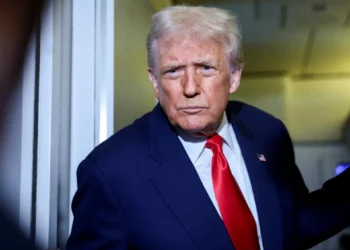 Republican Senator Questions Trump Ad Spending
 US Sends Third Carrier to Middle East
 Brazil Election Draws Religion Into Final Campaign
 Trump Immigration Policy Faces New Legal Tests
 Lula Warns of Bolsonaro Family Return as Brazil Votes
 DOJ Declines to Reopen Powell Renovation Probe
 Musk’s DOGE Sparks Turmoil Inside US Government
 Families Await USS Abraham Lincoln Homecoming
 US bombers leave RAF Fairford after terror threat
 White House defends new aide over anti-Biden photo
 Quebec separatists return to power without majority