Published: 26 September 2026. The English Chronicle Desk. The English Chronicle Online
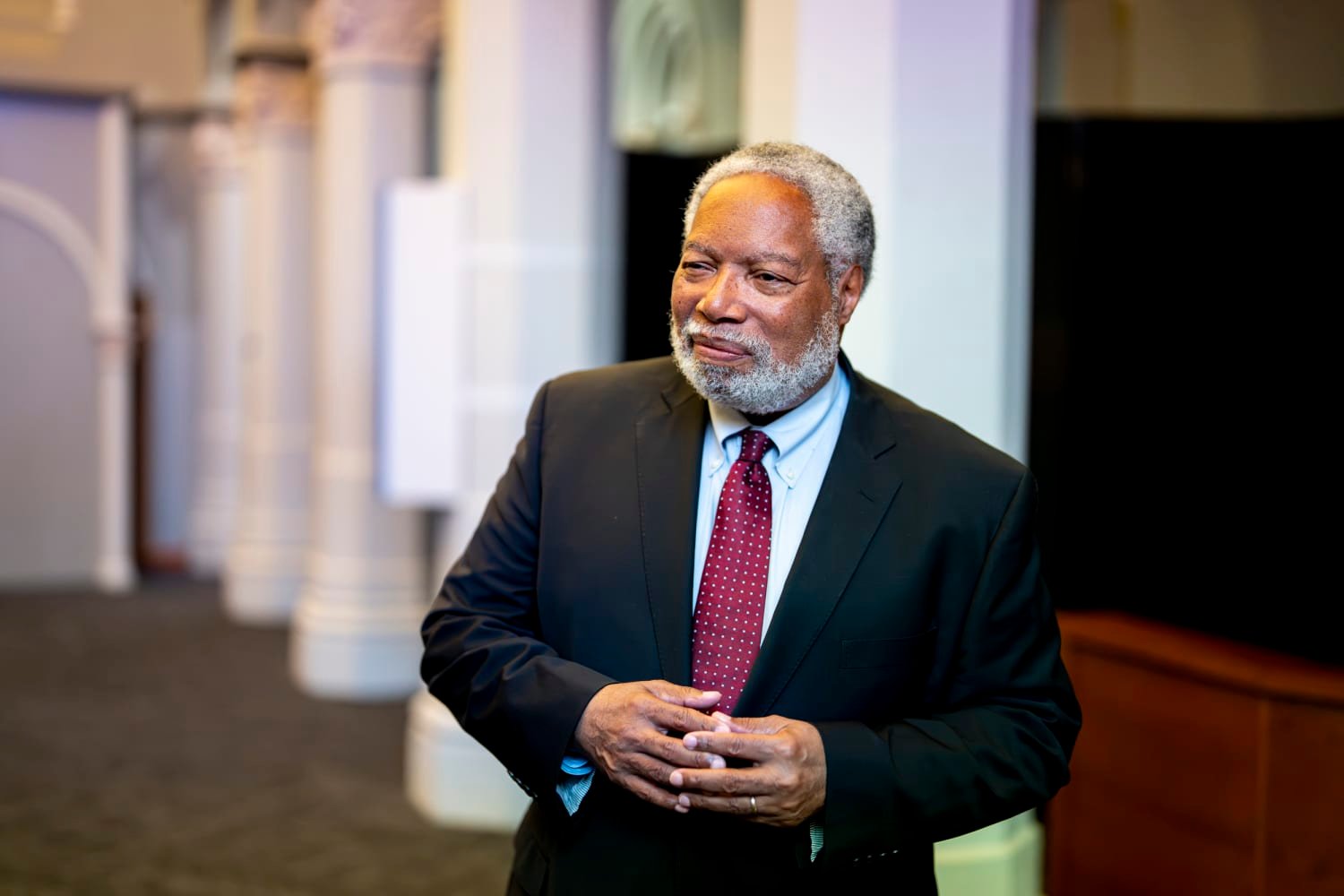
Smithsonian Secretary Lonnie G. Bunch III has delivered a forceful defence of the institution’s role in documenting American history, telling an audience in Washington that confronting difficult chapters of the past is not an act of disloyalty but an essential part of understanding the country.
Bunch, who is due to retire from the Smithsonian at the end of 2026, received a standing ovation on Friday during a special conversation at the National Museum of African American History and Culture in Washington. The event formed part of the museum’s 10th-anniversary celebrations and was moderated by journalist Laura Coates.
The discussion came at a politically sensitive moment for the Smithsonian. The institution has faced increasing scrutiny from Donald Trump’s administration, which has criticised aspects of the way American history is presented in museums and has called for greater emphasis on what it describes as the nation’s achievements and accomplishments.
Against that backdrop, Bunch defended the principle that museums must present history in its complexity, including episodes that may be uncomfortable or painful.

He rejected suggestions that Smithsonian employees or exhibitions are motivated by hostility towards the United States. Instead, he argued that examining the country’s history honestly reflects a deep attachment to the nation and a desire to understand how it developed.
The National Museum of African American History and Culture, which Bunch helped establish as its founding director, has become one of the most prominent institutions devoted to documenting the African American experience. The museum opened to the public in 2016 and is now marking its first decade with a series of events under the theme “Welcome Home: Our Legacy Continues.”
The Smithsonian has confirmed that Bunch’s Friday evening conversation was designed to explore the role of museums in examining the past, considering multiple perspectives and deepening public understanding of the people and events that have shaped the United States. The event also took place as America prepares to mark the 250th anniversary of the Declaration of Independence.
For Bunch, the question of how museums present slavery remains central to the wider discussion about American history. He argued that slavery cannot be separated from the story of the United States because it played a foundational role in the development of the country and its institutions.
His comments came after years of political debate over the treatment of slavery, racial inequality and other difficult subjects in American schools, museums and public institutions. Supporters of a more traditional patriotic presentation of history have argued that national institutions should place greater emphasis on American achievements and avoid presenting the country primarily through its failures.
Critics of that approach argue that removing or minimising painful historical experiences can leave the public with an incomplete understanding of how the country developed.
Bunch presented his position in terms of historical responsibility rather than political confrontation. He said that understanding the United States requires examining the whole story, including its “dark corners”. For curators, he suggested, the responsibility is to bring those parts of history into the light and allow visitors to consider them in context.
That philosophy has been closely associated with his career. Bunch began working at the Smithsonian in 1978 and eventually became the institution’s 14th secretary in 2019. He was the first African American to hold that position.
Before becoming secretary, he served as the founding director of the National Museum of African American History and Culture from 2005 until 2019. During that period, he helped guide the institution from an ambitious concept into a major museum on Washington’s National Mall.
The Smithsonian says Bunch has spent nearly four decades associated with the institution. His career has included work as a historian, curator and museum leader, with the African American museum representing the most visible achievement of his leadership.
The museum itself was the product of a lengthy effort to establish a national institution devoted specifically to African American history and culture. Its exhibitions cover subjects including slavery, emancipation, segregation, the civil rights movement, African American military service, cultural achievements and contemporary life.
Bunch’s defence of historical complexity therefore carries particular significance for the institution he helped create. He told the audience that the museum would continue to stand as a place where difficult stories could be encountered, even as political debates surrounding cultural institutions intensified.
He also spoke personally about the museum’s importance. Recalling moments when he had faced pressure and criticism, Bunch described walking through the galleries and seeing objects connected with some of the most painful episodes in African American history. Those experiences, he suggested, reinforced his belief that the museum could provide a source of perseverance and possibility.
Among the museum’s most recognised objects is the casket associated with Emmett Till, the Black teenager whose 1955 murder became an important catalyst for the modern civil rights movement. The object has become one of the museum’s most powerful reminders of the human consequences of racial violence.
Bunch said the museum could not simply be erased by changes in political leadership or public controversy. Its collections, exhibitions and educational mission have become part of a broader national conversation about American identity.
The debate has intensified as the Trump administration has sought greater influence over the presentation of history at federally supported cultural institutions. The administration has accused some institutions of presenting a distorted version of the American story, while supporters of the Smithsonian’s existing approach say historical scholarship should not be altered according to the political priorities of any particular administration.
The Smithsonian occupies a distinctive position in American public life. Established by Congress in the 19th century, it operates under the governance of a Board of Regents and a secretary. Its network includes museums, research centres, libraries and the National Zoo.
The institution has previously emphasised its nonpartisan character and the role of its governing structure in protecting its institutional independence. That question has become particularly prominent during the current dispute over museum content.
Bunch’s retirement announcement earlier this month added another dimension to the debate. The Smithsonian said he would conclude nearly 38 years of service when he steps down.
His departure comes after a period in which the institution has faced unusually intense political attention. The Smithsonian has been preparing exhibitions and programmes connected with the United States’ 250th anniversary while also responding to scrutiny over how its museums portray subjects such as slavery, race and national identity.
At Friday’s event, however, the emphasis was not simply on the political dispute. The conversation focused more broadly on what museums are supposed to do and how they can help societies understand themselves.
The museum’s acting director, Shanita Brackett, has also emphasised the importance of inclusion, public engagement and independent scholarship. A new legacy fund established in Bunch’s honour is intended to support the African American museum’s work and its future programmes.
Television producer and museum board member Shonda Rhimes pledged $1 million to the fund, which was launched with an anonymous donation of $3.5 million and has a target of at least $10 million.
The fundraising effort reflects concerns about preserving the museum’s mission while ensuring that it remains capable of expanding exhibitions, educational programmes and public engagement.
For visitors, the debate over historical interpretation can sometimes appear abstract. Inside the museum, however, the subjects being discussed are represented through photographs, documents, clothing, personal possessions and other objects connected with real people and events.
That human dimension was central to Bunch’s message. His argument was that confronting painful history does not require rejecting the country itself. Instead, understanding those experiences can help explain the struggles, achievements and continuing debates that have shaped American society.

The National Museum of African American History and Culture is currently celebrating its 10th anniversary with events running from September 24 to September 27. The programme includes discussions, community gatherings and special celebrations designed to reflect on the museum’s first decade.
As Bunch prepares to leave the Smithsonian, his remarks underline the continuing debate over who decides how national history should be told. Political leaders, historians, museum professionals and members of the public continue to hold different views about how national pride should coexist with historical honesty.
For Bunch, the answer lies in refusing to separate the two. His message to the audience was that a country cannot fully understand its achievements without also examining the circumstances, conflicts and injustices that helped shape them.
His appearance at the museum therefore became both a farewell moment and a statement about the institution he helped build. As the Smithsonian enters a new chapter and the United States prepares for its 250th anniversary, the question of how the nation remembers its past is likely to remain a major part of the public conversation.
Related News:
 Trump’s Washington Projects Face Architectural Criticism
 US National Guard Member Killed in DC Shooting
 Trump Escalates Minnesota Immigration Surge Amid Rising Tensions
 Democrats Push Affordability to Challenge Trump Ahead of Votes
 Greenland Faces Pivotal Summit Over Arctic Power Struggle
 Government Unveils Northern Powerhouse Rail Plans
 Trump press secretary attacks reporter over ICE question
 Kyrsten Sinema Faces High-Profile Lawsuit Over Marriage Interference
 ‘He Believed Help Was Coming’: Why Iran’s Protesters Feel Betrayed
 Trump Fed bid heads to Supreme Court
 Trump officials continue false claims after Alex Pretti shooting
 Fulton election raid hits Georgia election office
 Partial US Government Shutdown Hits Homeland Security Funding
 Thousands Protest ICE Operations in Nationwide US Day of Action
 Epstein Files Reveal Trump Officials’ Emails with Financier
 Thousands Protest ICE in New York Against Trump Deportation Campaign
 Sinema payment row deepens after $9,000 transfer claim
 Nurses’ families fear breakup under UK immigration crackdown
 California Democrats Vow Trump Reckoning
 Trump’s Surgeon General Pick Evades Vaccine Questions
 Clinton Testimony Erupts in Fiery Exchange
 Adelaide University Faces Backlash Over Event Cancellation
 Thousands Protest Iran Strikes Outside US Embassy London
 Can Congress Stop US Sports Teams From Moving Cities?
 Can King Charles Calm Trump on Key US Visit?
 Melania Trump Epstein remarks spark survivor backlash
 Trump Signals Hope for New Iran Talks as Ceasefire Fades
 US Catholics Caught Between President and the Pope
 Iron Worker Challenges Trump Loyalist in Ohio
 Trump Faces Crisis as Iran Reopens Hormuz Tensions
 GOP Senator Criticizes Trump’s Feud With Pope Leo XIV
 UK Stands Firm on Falklands Amid US Rift
 Trump at Press Dinner Sparks Tension
 Investigation Into Anti-Trump Motives After Gala Shooting
 Trump Defiant After Washington Hotel Shooting
 Identity Revealed: Suspected Washington Gunman Named
 US Court Weighs Fate of TPS for Migrants
 Trump orders US troop pullout from Germany
 Judge halts deportation of Yemeni refugees in US
 White House Security Case Sparks Political Firestorm
 Trump approval plunges amid Iran war fears
 Ohio’s Battle for Trust: Democrats Vying to Flip the Buckeye State
 Trump Threatens UN Budget Cuts as US Pushes ‘Trade Over Aid’ Agenda
 Trump warns Iran as Middle East tensions surge again
 US ‘Narco Boat’ Strikes Draw Global Outcry
 Ohio Primaries Set Stage for Crucial Midterms
 Afghan Families Left in Limbo Face Risk of Deportation
 Tensions Emerge in Netanyahu-Trump Alliance
 US Awaits Iran Reply on New Ceasefire Proposal
 Immigration Judges Fear Pressure in Trump Era
 Kevin Warsh sworn in as Fed chair amid economic backlash
 US green card applicants must apply from abroad, DHS says
 Tulsi Gabbard exits after turbulent intelligence tenure
 Hormuz Talks Near Critical Stage
 Former ICC prosecutor condemns US sanctions
 DeSantis’s ‘Alligator Alcatraz’ Faces Final Shutdown
 Prosecutor Proposes Law to Combat Election Deceit
 House Curbs Trump’s War Powers in Rare Rebellion
 AOC Backs El-Sayed in Tight Michigan Senate Primary
 US Courts Back Trump on Park Signage Removals
 Trump’s Mount Rushmore Speech: A Divisive Anniversary
 Court Rejects Florida Campus Speech Restrictions
 Trump Refuses to Sign Housing Bill, But Law Takes Effect
 Houthis Strike Saudi Arabia as Middle East Tensions Rise
 Trump Orders Signs Criticising Smithsonian Museum
 Is America Ready for an AOC Presidential Run?
 Trump Calls Strait of Hormuz ‘American Territory’
 Trump Hardens Canada Trade Stance as Talks Stall
 Bayeux Tapestry Revives Franco-British Ties
 Trump Calls Iran War ‘Small Potatoes’ Despite US Deaths
 Trump gives $45,000 holiday gifts to White House aides
 New Mexico Takes Facebook to Trial Over Data Scandal
 Middle powers seek new alliances amid Trump era
 US Networks Suspend Trump White House Pool Coverage
 Trump and Mamdani Hold Cordial Gracie Mansion Meeting
 Trump Eyes Major Belarus Fertiliser Deal Amid Canada Trade Dispute
 Democrat Says ICE Restricted Detention Camp Oversight
 Roman Finds Reveal Bath’s Suburban Past
 Xi urges Trump to avoid US-China military conflict
 Lula accuses Trump of seeking control over Brazil