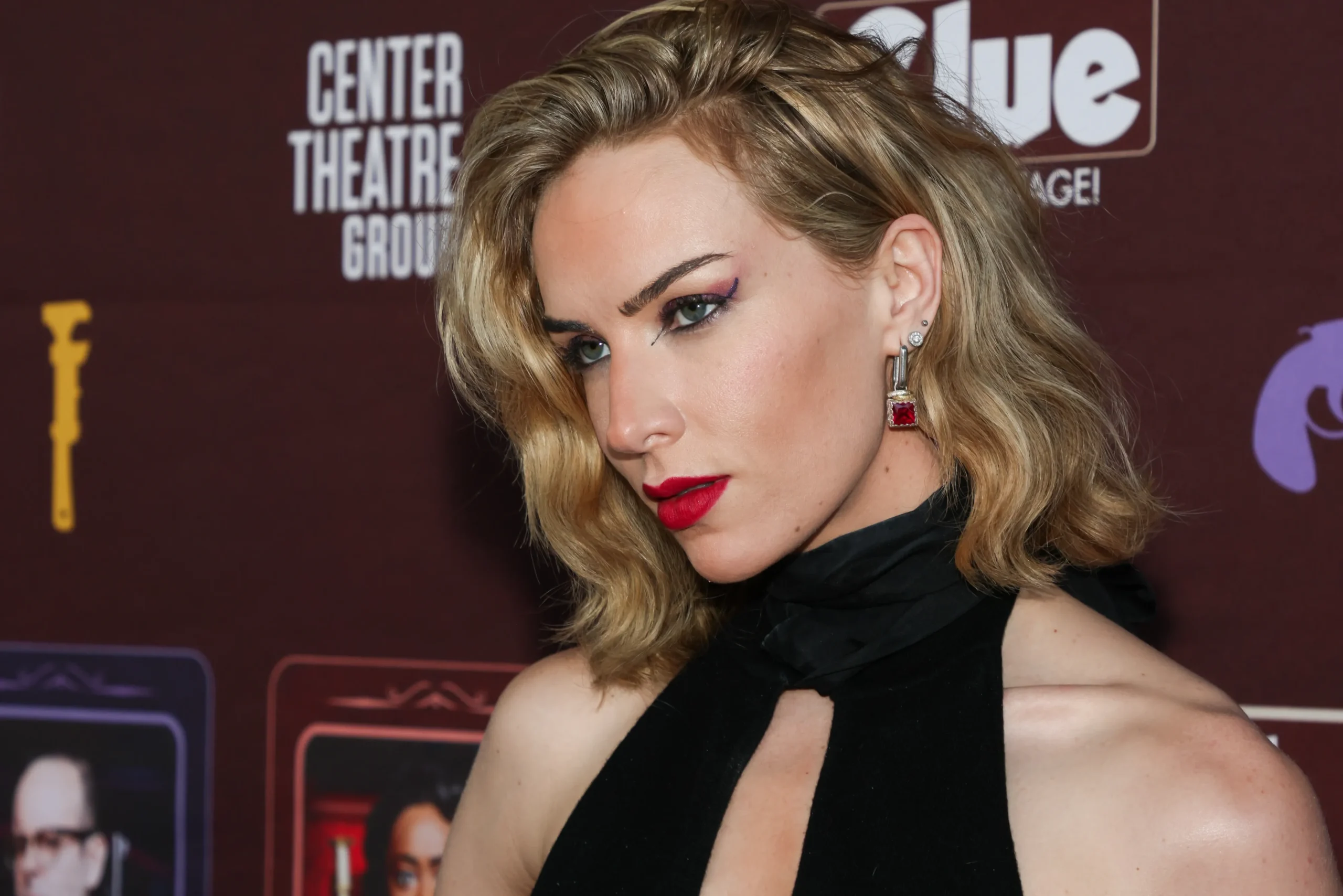
British actor and filmmaker Charlotte Kirk is building a career increasingly shaped by her own creative decisions, using writing and producing to gain greater control over the roles she plays and the stories she brings to the screen. After years of navigating the challenges of the entertainment industry, including a highly publicised scandal involving powerful figures in Hollywood, Kirk says creating her own projects has become essential to her professional independence.
Now 34, Kirk has moved between acting, screenwriting and film production, developing a body of work that frequently explores crime, horror and psychological drama. Her latest project, the Christmas romantic comedy Christmas & Chaos, represents a lighter departure from the darker characters she has played in recent years. In the film, she takes on the role of Sadie, a pop star attempting to produce three successful songs for a new musical within a demanding deadline.
The film also features Jason Isaacs as an entertainment impresario who communicates with the characters through video calls, while Ben McGregor plays a composer whose personal disappointments become part of the developing story. Kirk not only stars in the production but also serves as its producer, reflecting her growing involvement in shaping projects beyond her performance.

The film was developed through collaboration with director Jamie Adams, who is known for working with improvisation in several low-budget British productions. Rather than following a conventional screenplay, Kirk and Adams established the central premise and allowed the story to develop during filming.
The basic idea involved a Christmas setting, a pop star facing a deadline to create hit songs and the possibility of an unexpected romance. However, the absence of a fixed script gave the actors room to explore their characters and introduce developments that had not been planned in advance.
Kirk said the experience initially made her nervous because she had little previous experience with improvisational acting beyond her drama training. The first few takes were challenging as the cast worked to understand their characters and find the direction of individual scenes. Nevertheless, she found the process liberating because it allowed performances to develop without the limitations of predetermined dialogue.
Some moments in the film also carried personal echoes. Kirk acknowledged that certain conversations involving Sadie’s former partner reminded her of aspects of her own past relationship with filmmaker Neil Marshall. She said that while watching the finished production, she could recognise moments when elements of her own personality had emerged through the character.
Sadie is portrayed as a fragile but self-important performer who is anxious about losing public relevance. The character’s desperation to remain successful reflects a familiar concern within the entertainment industry, where actors and performers can find themselves judged according to the reception of their latest project.
Kirk understands the uncertainty of that environment. She said that the difficult part of a film career is not necessarily the work itself but the periods when opportunities disappear. A production that fails to reach film festivals or attract a significant audience can affect how an actor is perceived, even when the quality of their work remains strong.
That experience has encouraged her to create opportunities rather than wait for others to offer them. Through her production company, she aims to make approximately two films a year, giving herself a more consistent platform for acting and developing stories that interest her.
Her professional journey began with a decision to leave Britain for the United States at the age of 18. Kirk believed Hollywood could offer greater opportunities than the British film and television industry, particularly for someone who did not come from an established acting background.
Her father worked as an electrician and her mother as a carer. She attended drama classes at weekends, but she felt that parts of the British entertainment industry could be difficult to enter without the advantages of certain educational institutions, social backgrounds or accents.
She believed the American industry offered a greater possibility for newcomers to find opportunities, even though familiar faces continued to dominate many productions. Her decision to move abroad at such a young age was driven partly by confidence gained through acting and partly by a willingness to take risks.
Kirk has also spoken openly about being diagnosed with autism as a child. She believes it may have influenced how she approached uncertainty and fear when deciding to move to the United States. Looking back, she suggests that she might not have taken the same step if she had experienced those concerns differently.
However, she also recognises that her confidence was accompanied by naivety. Arriving in a new country and trying to establish herself in a competitive industry meant depending on people she did not necessarily know well. She now regrets placing trust in individuals who, in her view, did not deserve it.
Her reflections are particularly significant because her time in the United States became connected to a controversy involving allegations of sexual harassment and extortion. The dispute attracted attention because it involved some of the most influential men in the film business and raised wider questions about power, professional relationships and accountability in Hollywood.
Kirk declined to discuss the details of the controversy in her interview because she remains bound by at least two non-disclosure agreements. The agreements have restricted what she can publicly say about the events, leaving her unable to respond fully to some of the claims and accounts that have circulated about her.
The publicly available information surrounding the controversy includes allegations of sexual harassment on one side and accusations of extortion on the other. The men involved have denied wrongdoing and have described their relationships with Kirk as consensual. The competing claims have made the episode complicated, while the legal restrictions have limited her ability to provide her own detailed account.
Kirk signed a non-disclosure agreement in 2017 and has subsequently attempted to have it lifted. Her efforts followed changes in California law that limited the use of such agreements in certain cases involving allegations of sexual harassment. However, she remains unable to speak freely about the matter.
Without addressing the specific allegations, Kirk said that some of the things written about her were untrue. She has continued working and developing her career despite the controversy, noting that many people entering the industry today may know little about the earlier events.
She hopes that one day she will be able to tell her full story. Until then, the restrictions remain a significant part of how she can discuss her experiences publicly.
The conversation also touched on the conviction of comedian and actor Russell Brand for rape and sexual assault, announced the day before the interview. Kirk said she had become accustomed to seeing allegations and revelations involving men in the entertainment industry. She expressed concern that public attention following major scandals does not necessarily mean that abuses of power have ended.
In her view, the exposure of figures such as Harvey Weinstein and Jeffrey Epstein should not create the impression that the broader problem has been resolved. She believes there are still individuals in positions of influence who continue to engage in harmful behaviour, despite increased scrutiny of the industry.
Her comments reflect continuing debates about the structures of power within film and television, particularly the difficulties faced by younger performers trying to establish themselves in environments where access to opportunities can depend heavily on influential individuals.
For Kirk, developing her own productions has become one way to reduce that dependence. Her work with Neil Marshall has been an important part of this approach. The pair were previously engaged and have continued their professional relationship through several film projects, often collaborating on writing and production.
Their first film together, The Reckoning, was a historical horror story set in the 17th century. They later worked on The Lair, which drew on science-fiction and creature-feature traditions, and Compulsion, an erotic thriller. Kirk has also appeared in Duchess, their 2024 crime film, and hopes the project will eventually receive a sequel.
She recently completed another film connected to Marshall, titled The Spiral Down. Marshall wrote and produced the project but did not direct it. Kirk is also preparing for a role in a film scheduled for early 2027, although she has described the casting as slightly controversial and has not revealed further details.
She believes the opportunity came because the filmmakers had seen the work she had created herself. That experience reinforces her conviction that producing is not simply an additional responsibility but a necessary part of building a sustainable acting career.
Outside professional commitments, Kirk is living in London with her partner, a property developer who also assists with producing some of her films, and their baby son. Her personal life has entered a different phase, but her professional ambitions remain closely connected to creative independence.
Despite experimenting with different forms of entertainment, including earlier attempts at music, Kirk says acting has always been her main priority. Playing a pop star in Christmas & Chaos therefore presented an unusual challenge, particularly because she experiences stage fright when singing in front of an audience.
Her latest work demonstrates the range she is willing to explore, moving from violent genre productions to a Christmas romantic comedy built around improvisation and unexpected character development. More broadly, her career reflects an effort to remain active in an industry that can be unpredictable and difficult to navigate.

Kirk’s experience also highlights the complicated relationship between personal reputation, professional opportunity and the power of public narratives in Hollywood. While she remains restricted in what she can say about the controversy that affected her career, she has continued to work, produce films and pursue roles on her own terms.
For the actor, the ability to create projects has become a way to shape her future rather than allow others to determine it. Her approach suggests that, after years of uncertainty, she is increasingly focused on building a career in which she has a greater say over both the stories she tells and the people with whom she chooses to work.
Related News:
 Susan Sarandon Says Palestine Stand Costs Roles
 Sam Wood Denied Bail Over Alleged Domestic Assault
 Breaking Bad Actor RJ Mitte Dies at 34
 Joni Mitchell Becomes US Citizen After 62 Years
 Walliams’ Reputation Was ‘In Plain Sight’, Insiders Say
 Harry and Meghan’s Australia Visit Sparks Debate
 Disneyland Adds Facial Recognition at Entrances
 Whistler’s Mother and why its fame frustrated artist
 Cannes filmmakers split over AI’s role in cinema
 Can Anyone Replace Graham Norton? Chat Show Challenge
 Is This the End of Harry and Meghan’s US Dream?
 Bad Apples Review: Ronan Leads School Horror Satire
 Taylor Swift and Madonna Lead 2026 MTV VMAs
 Dale Vince Plans New London-Wide News Operation
 Pelicot Trial Play Comes to London for One Night
 Oasis Recordings Pulled From Auction After Legal Action
 BBC Three and Scotland Face Online-Only Future
 Gillian Anderson Defends Front-Row Theatre Warning
 Sydney Festival 2027 Unveils Major International Dance Line-up
 Trump Names Katie Zacharia as Next White House Spokesperson
 Trump Names Katie Zachariah as Next White House Press Secretary
 Aardman Cuts Losses but Fails to Return to Profit
 Hello Kitty Maker Ends Japanese Drama Partnership
 Met Police Chief Urges More Russell Brand Victims to Speak Out
 Russell Brand’s Barrister Reports Himself to Legal Watchdog
 Kate Winslet to Narrate Film Highlighting King’s Environmental Mission
 From Lego to Pokémon: How Adults Are Driving UK Toy Market Growth
 Director Michael Caton-Jones Reflects on Career and Beginnings
 Rusty Bond-Era Aston Martin Restored to £1m Glory
 John Lithgow criticises Rowling stance in trans debate
 Draco Malfoy Emerges as Lunar New Year Icon in China
 Rising Costs Force Families to Rethink Days Out
 Ticketmaster Fees Rise Despite Recent US Junk Fee Crackdown
 Scott Mills Sacked by BBC Over Personal Conduct Claims
 M&S Demands Urgent Action on Rising Violent Retail Crime
 Greens Face Internal Row Over Antisemitism Claims
 Barrister Criticises Trial After Suicide Case Verdict
 Pope Meets Families in Italy Toxic Waste Zone
 Farage and Reform UK Reshape British Politics
 Saving the Scalloped Hammerhead: The Pacific Battle
 Trump’s Mount Rushmore Speech: A Divisive Anniversary
 British Teens in EU Face Soaring UK University Fees
 England and Norway Fans Turn Miami Into World Cup Carnival
 UK Schools Struggle as Classrooms Top 40C
 Olympus Awaits Unesco Heritage Recognition
 Burnham unveils £65m drought aid for farmers
 Queue row erupts on Wales’ highest mountain
 British Museum Faces Questions Over Peter Thiel’s Private Bayeux Viewing
 Man Arrested in Mississippi Woman’s Death
 UK Retailers Accused of Breaking Refund Laws
 Mahmood Warns Far Right Over Asylum Protests
 UK Rent Gap Puts Low-Income Families Under Pressure
 Democrat Says ICE Restricted Detention Camp Oversight
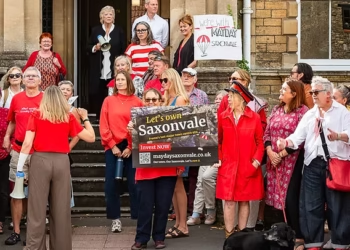 Frome Community Loses Bid for Major Regeneration Site
 Madrid Tent Camp Grows as Spain Housing Crisis Deepens
 London Facial Recognition Trial Ends With False Alert
 UK University Strikes Spread as Financial Pressure Grows
 Healey urged to act as UK energy bills rise 4%
 Badenoch Raises Prospect of 2027 UK Election
 French School Protests Escalate as 400 Schools Close
 Salinas Struggles to Keep the American Dream Alive
 Gosport Protesters Clash With Police Over Migrant Rescue
 UK Water Firms Earn Millions From Industrial Wastewater
 South Africa Withdraws Directive on Asylum Applications
 Australian Advocates Seek Subsidised Drugs for PMOS
 British Military School Abuse Victims Denied Justice
 Elizabeth Struhs Inquest Examines Child Safety Failures
 UK Shoppers Urged to Avoid Hake and Coley
 Senegal LGBTQ+ Crackdown Drives People Into Hiding
 UK Bill Faces Warning Over Fayed Trafficking Victims
 UK Visa Refusal Threatens Baby’s Family Christmas
 Up to 20 English Maternity Units Face Possible Closure
 Greens Face Leadership Test as Jordon Steele-John Misconduct Claims Leave Party in Limbo
 Lula Supporters Make Final Push Ahead of Brazil Runoff
 Fire Engulfs Hitler’s Eagle’s Nest Retreat
 UK Land Registry Plan Faces Opposition From Landowners
 UK Chancellor Moves to Scrap Gas Standing Charges
 Alan Jones Trial Paused for Melbourne Cup Viewing
 Early-Release Prisoners Face Rising Risk of Homelessness
 Australian Mortgage Confidence Hits 32-Year Low