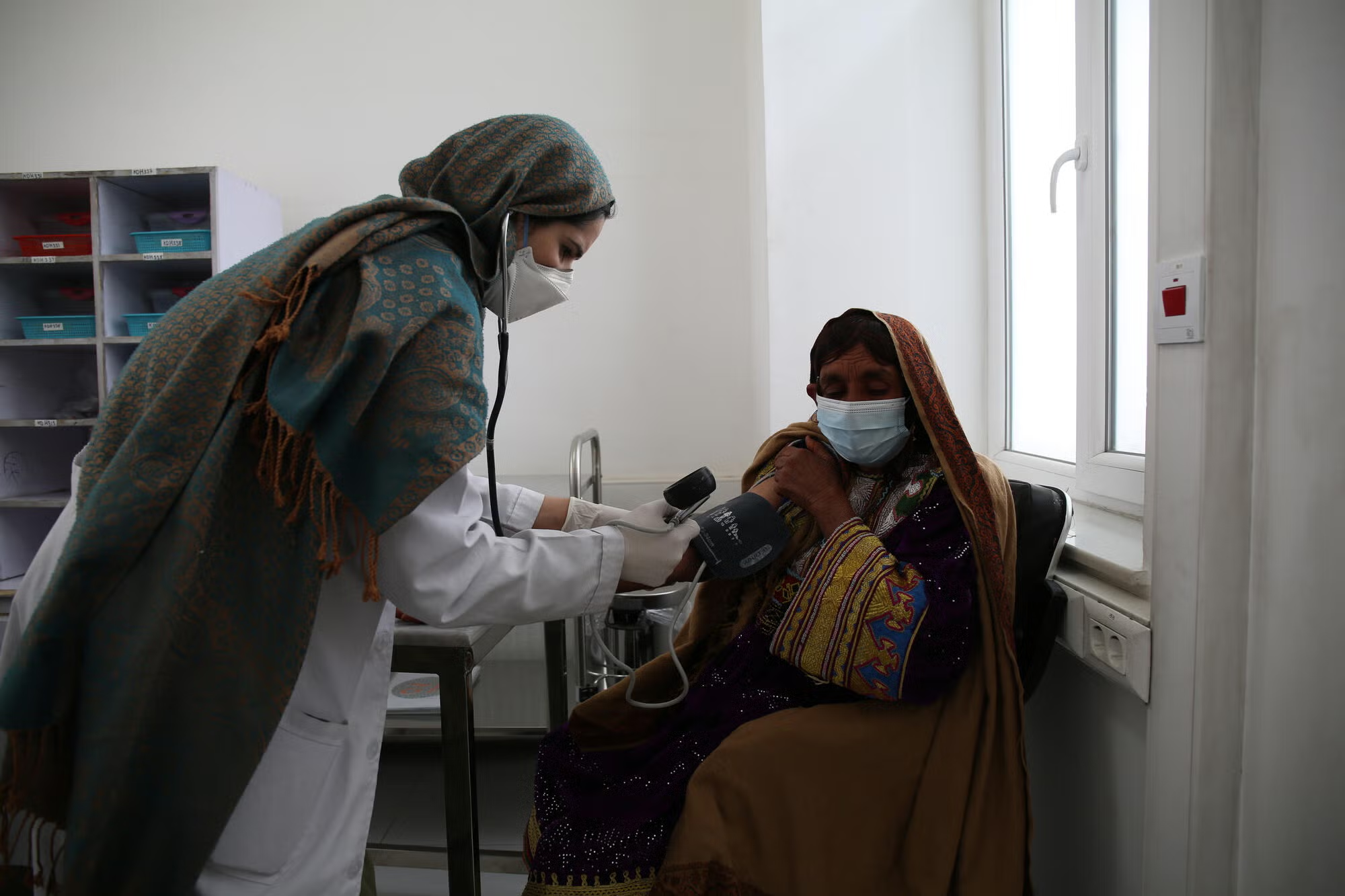
Women across Afghanistan are facing increasingly severe barriers to medical treatment amid an unofficial Taliban restriction preventing male doctors from examining or treating female patients. The reported enforcement of the measure has left many women struggling to access essential healthcare, with some forced to endure serious pain, travel long distances or seek assistance from providers who may not have the necessary qualifications.
Interviews conducted by journalists with Afghan women and medical professionals reveal how the restriction is affecting everyday healthcare, from dental treatment to emergency hospital services. Although the Taliban have not publicly announced a nationwide ban on male doctors treating women, accounts from patients and healthcare workers suggest that the restriction is being enforced in several provinces through warnings, inspections and threats of punishment.
One woman’s experience in the western city of Herat illustrates the consequences. Farida, 37, had been suffering from severe dental problems for years. After returning from Iran with her family earlier in 2026, she struggled with financial difficulties and limited access to healthcare. Eventually, worsening pain made it impossible for her to sleep or eat normally, prompting her to visit a dental clinic in the Bakrabad area in early July.

The dentist who examined her found that several teeth were badly damaged and required extraction and replacement with implants or dentures. The clinic prepared a treatment plan involving multiple appointments and required her to pay the full cost in advance. Farida agreed, hoping the treatment would finally relieve her long-standing pain.
However, during her third appointment, when the dental implants were due to be fitted, clinic staff unexpectedly stopped the procedure. She was told that a problem had emerged and that she should return home until the clinic contacted her.
When Farida called two days later to ask when treatment could resume, she received a devastating explanation. The clinic said an instruction had come from the Taliban-run Ministry for the Propagation of Virtue and the Prevention of Vice prohibiting male dentists from treating female patients. She was informed that the clinic could not complete her treatment unless the situation changed.
Three months later, her dental care remained unfinished. The interruption left her dealing with continuing discomfort after having already paid for treatment that she could not complete.
The reported restrictions appear to extend beyond dental clinics. Male doctors in several provinces have reportedly received instructions not to examine female patients, even when medical attention is urgent. According to accounts from healthcare workers, exceptions are limited and subject to conditions, including the presence of a male guardian, known as a mahram, or the involvement of female medical staff in certain procedures.
Samim, a surgeon who has worked for 15 years at a public hospital in northern Afghanistan, described the uncertainty facing medical professionals. He said doctors were being prevented from directly examining female patients because they were not their male guardians. According to him, the restrictions applied regardless of whether a procedure was straightforward or a patient’s condition was critical.
Such conditions create serious practical difficulties for hospitals and clinics. Medical emergencies often require immediate examination and intervention, and delays can place patients at greater risk. Requiring a male relative to be present may also make treatment difficult for women whose families are unavailable, who live far from medical facilities or who cannot travel with a guardian at short notice.
The restrictions have also reportedly produced unusual instructions within the healthcare system. In the northern province of Balkh, officials were instructed in May to avoid using female patients’ actual names. Hospitals, private practices and clinics were reportedly told to address women as “Bibi” instead, including on medical prescriptions.
The instruction has added another layer of difficulty to an environment in which women already face restrictions on their movement, education and access to public life. Using a general term instead of a patient’s name in medical settings may also create confusion when healthcare workers need to identify individuals, maintain records or coordinate treatment. The reported directive illustrates how rules governing women’s public visibility can extend into institutions responsible for protecting their health.
For some women, finding a doctor has meant travelling extraordinary distances. Rahima, from Kunar province, said an elderly female relative had to travel hundreds of miles to Kandahar to receive dental treatment because her son operated a dental clinic there. The woman’s husband had objected to her visiting male dentists in Kunar, where he knew the local doctors and feared that her treatment would become a source of social embarrassment.
The journey demonstrates how restrictions and social pressures can combine to make even routine medical care difficult. A woman who cannot find an acceptable provider nearby may have to depend on relatives, travel to another province or postpone treatment. For older patients and those with limited financial resources, such journeys can be particularly exhausting and expensive.
The problem is made worse by the shortage of female healthcare professionals. Women in Afghanistan have increasingly limited opportunities to enter medical professions, leaving fewer qualified female doctors available to treat female patients. Since December 2024, the Taliban have barred women from studying at medical institutes, further restricting the pipeline of future female healthcare workers.
Doctors at hospitals have also reported restrictions on employing female staff. The remaining practising female doctors are reportedly required to have a mahram under Taliban rules, creating additional obstacles to their ability to work. These measures affect not only female medical professionals but also the patients who depend on them for treatment.
One patient’s account illustrates the complications even when a woman manages to reach a male doctor. She said she arrived at a medical practice accompanied by her father but was still unable to receive immediate treatment. The doctor reportedly required another female patient to arrive with her own male guardian before proceeding. The explanation given was that the additional woman could assist if a problem arose, since the doctor was not permitted to touch a female patient.
The arrangement highlights the difficulties of applying restrictions that interfere with basic medical procedures. Clinical examinations and treatment frequently require direct contact between doctors and patients. When qualified professionals are prevented from providing care because of gender-related conditions, the availability of medical facilities does not necessarily mean that patients can actually receive treatment.
For women living in areas where female doctors are scarce or unavailable, the choices can become particularly distressing. They may risk seeking care from a male professional, potentially exposing themselves and the clinic to punishment; attempt to obtain help from female providers without adequate qualifications; or remain at home and endure their illnesses.
Healthcare workers have described an atmosphere of fear surrounding the restrictions. Dentists have reportedly faced raids and warnings from Taliban security personnel, with some being threatened with imprisonment if female patients are found receiving treatment in their clinics. Such enforcement measures can discourage medical professionals from helping women even when they recognise that treatment is necessary.
A dental clinic assistant in Jalalabad, Nargis, said some male doctors had developed ways to avoid detection while treating female patients. She described how a doctor sometimes joked about keeping a chadari, the full Afghan burqa, inside the clinic so he could wear it if Taliban officials arrived and avoid being recognised as a man.
Although the comment was made jokingly, it reflects the anxiety reportedly experienced by healthcare workers who fear punishment for providing medical services. It also suggests that some practitioners may feel compelled to conceal ordinary professional activities rather than openly deliver treatment.
The reported restrictions have also raised questions about the relationship between public statements and enforcement on the ground. In February 2026, Taliban communications minister Hamdullah Nomani said male doctors would be considered mahram when treating female patients. Such a position appeared to suggest that medical professionals could provide care without violating the restrictions on contact between unrelated men and women.
However, the experiences described by patients and doctors indicate that this assurance has not consistently translated into access to treatment. Women continue to report being turned away, while medical professionals describe uncertainty over what they are permitted to do. The absence of a publicly announced nationwide ban has therefore not prevented the reported spread of restrictions through local enforcement and instructions.
The consequences extend beyond individual medical appointments. When women cannot obtain timely treatment, relatively manageable health problems can become more serious. Dental infections, untreated illnesses and delayed emergency care can affect a person’s ability to work, study and care for family members. Financially vulnerable households may face additional pressure when they must travel to distant cities or pay for repeated appointments that cannot be completed.
Afghanistan’s healthcare system already faces significant difficulties, and the reported restrictions risk deepening the gap between medical needs and available services. The shortage of female doctors, limits on women’s medical education and barriers to female employment combine to create a situation in which patients may have fewer realistic options with every new restriction.
The testimonies also raise broader concerns about women’s dignity, privacy and equal access to essential services. Medical treatment is often time-sensitive, and patients should be able to seek help based on their health needs rather than face uncertainty over whether a qualified professional is permitted to examine them.

For Farida, the consequences remain personal and immediate. Her dental treatment was interrupted after she had endured years of pain and committed scarce family resources to receiving care. For other women, the obstacles may involve more serious conditions and more urgent decisions.
The accounts gathered by journalists point to a healthcare environment in which women are increasingly forced to negotiate restrictions before they can even reach a doctor. Until the reported barriers are removed and women can access qualified medical professionals without fear, millions may continue to face difficult choices between seeking treatment and risking further hardship.
Related News:
 Five Years of Taliban Rule Leave Afghanistan in Crisis
 Delhi Freezes Promotion of Police Officer After Allegations
 India’s Youth Movement Alleges Mass Detentions Before Protest
 Pakistan Lawyers Back PTI Long March and Demands
 Delhi Braces for Youth Protests Over Voter Roll Dispute
 Delhi Detains Protest Leaders as Youth Rally Escalates
 PTI Announces Swabi Rally Ahead of Long March Plans
 Delhi Closes Metro Stations Ahead of Election Protest
 Pakistan Suspends PTI Government Amid Political Crisis
 Suu Kyi Appears in Rare Photos After Royal Gift
 Zelenskyy Says US Failed to Warn Kyiv of Russian Strikes
 Gaza Floods Leave Thousands Homeless as Tents Await Entry
 NHS Safety Fears as Nurses Cover Doctor Gaps
 UK may ban protests amid rising antisemitism fears
 Immigration Judges Fear Pressure in Trump Era
 Dreyfus Statue Finally Gets Permanent Paris Home
 Taliban global ties grow as rights fears mount
 Israeli Strike in Southern Lebanon Kills Seven
 Nepal Flood Survivors Face Unimaginable Loss
 Nepal Tunnel Rescue Offers Hope Amid Flood Devastation
 Yemen War Displaces 125,000 as Fighting Intensifies
 Texas Transfers Raise Fears for Migrant Children
 Disabled Travellers Seek Fairer UK Care Rules
 Saudi Pact Raises Risk of Pakistan Entering War
 Japan PM Backs International Criminal Court
 King Refers Jamaica Slavery Petition to Privy Council
 Nepal PM calls deadly flood a global climate warning
 Yemen fighting forces children out of school and into work
 Trump Asked Xi About Buying US Weapons
 South Korea-Ukraine Row Erupts Over North Korean POWs
 Fayed Survivors Demand Inquiry Into Medical Regulator
 New Maps Reveal Gaza’s Vast Destruction
 Pilot Recalls Fight to Save Flydubai Passengers
 Yemen government launches offensive against Houthis
 Latin America women fear rollback of rights
 Pacific Climate Summit Draws Limited Global Leaders
 Cancer rises faster among younger adults, study finds
 WHO Says Russia Plague Epidemic Risk Remains Low
 WHO Seeks Russia Answers Over Suspected Plague Death
 Indonesia Faces Lawsuit Over Escalating Wildfire Haze
 South Sudan Trauma Wards Struggle as Fighting Intensifies
 Sri Lanka Ex-First Lady Arrested Over Donation Probe
 Israel Promotes Film Challenging Controversial Gaza Documentary
 Gaza War Deepens India’s Strategic Ties With Israel
 Turkey Rules Out Troops in Saudi Arabia’s Houthi Conflict
 Delhi Tightens Security Ahead of Election Protest
 Navi Pillay Wins Nobel Peace Prize for Justice
 US Execution Livestream Plan Sparks Global Outrage
 Controversial Vaccine Trial Approved in Guinea-Bissau
 Millions Face Tougher Medicaid Rules From January
 India’s Voter Roll Crisis Sparks Nationwide Protests
 Iranian Woman Faces Death Sentence Over Social Media Post
 Greens Block Labor’s Health Rebate Cuts for Pensioners
 Indonesia Tests Dry Ice as Toxic Haze Spreads Across Asia
 Senegal LGBTQ+ Crackdown Drives People Into Hiding
 Gadi Eisenkot: Israel’s Anti-Netanyahu Challenger
 One Nation Pledges $2,000 Baby Subsidy in Victoria
 Up to 20 English Maternity Units Face Possible Closure
 Helen Haines Loses Leg in Alleged Targeted Attack
 Zelenskyy Accuses US of Delaying Ukraine Missile Supplies
 Support for NHS Founding Principles Declines Across UK
 Japan’s Takaichi Faces a Crucial Second Year in Power
 Fifth Foreign Firm Withdraws From Jerusalem Cable Car Plan
 Helen Haines Loses Both Legs After Alleged Attack
 Netanyahu Faces Defining Election Test as Israel Divides
 King Charles Faces Caribbean Slavery Apology Demands
 Yvette Cooper Reverses NHS Patient Watchdog Abolition Plan
 Amnesty Alleges Cambodian Officers Guarded Scam Compounds
 Bedouin Women Drive Historic Arab Election Gains
 Democrats Court Maha Voters as Trump Alliance Frays
 Australia Faces Growing Scrutiny Over Paraquat Risks
 Australia Reviews UK Visa Rules Amid Worker Influx
 UK Review Urges Jobs Revolution for Disabled Youth
 Reeves rejects £1bn plea for NHS redundancy payouts
 New Zealand Covid Response Praised Despite Lingering Scars
 Wes Streeting faces narrow road to Labour members’ favour
 Maldives Cave Diving Tragedy Raises Safety Alarm
 Badenoch Raises Prospect of 2027 UK Election
 South Africa Withdraws Directive on Asylum Applications
 Early-Release Prisoners Face Rising Risk of Homelessness