Published: 31 October 2026. The English Chronicle Desk. The English Chronicle Online
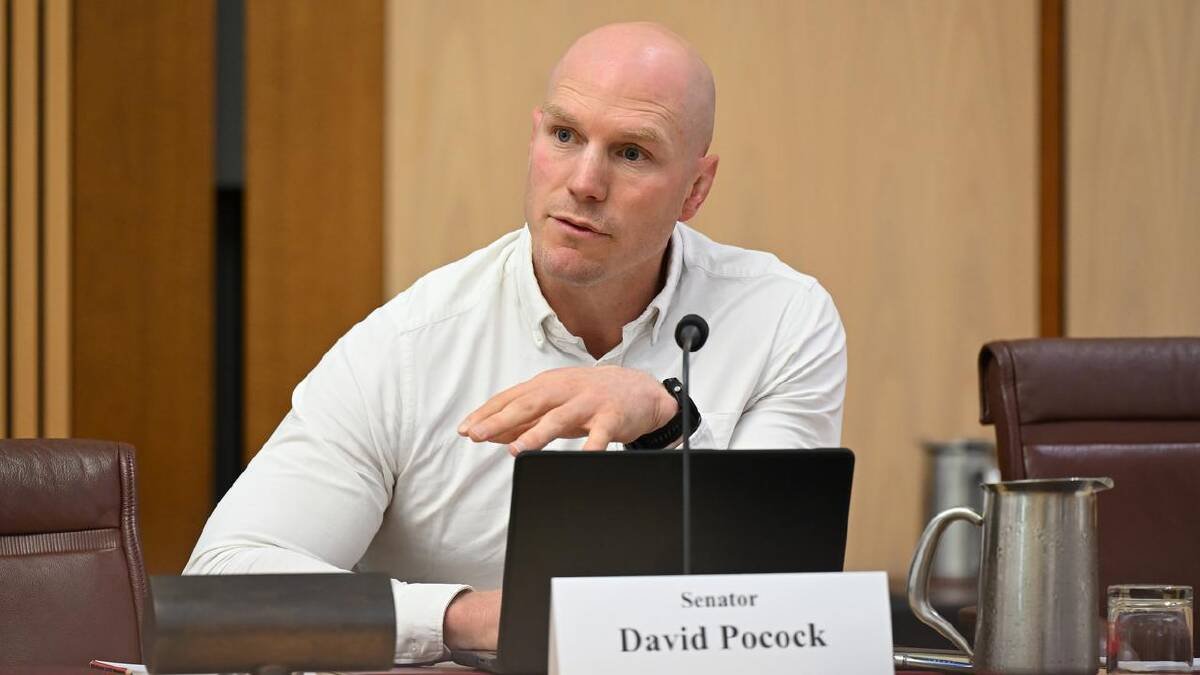
Australia is facing growing debate over the continued use of paraquat, a highly toxic herbicide that has been associated with Parkinson’s disease and has been banned or restricted in numerous countries. The controversy has intensified after independent senator David Pocock confronted senior officials from the Australian Pesticides and Veterinary Medicines Authority (APVMA) over the scientific basis of a decision allowing the chemical to remain available under tighter conditions.
At the centre of the debate are two sharply contrasting concerns. Health campaigners, neurological experts and people living with serious illnesses linked by them to long-term agricultural chemical exposure argue that Australia is not giving sufficient weight to evidence suggesting a connection between paraquat and Parkinson’s disease. Farmers, meanwhile, say the herbicide remains an important tool for controlling weeds, protecting crop production and supporting farming systems that reduce soil disturbance.
The dispute has a deeply personal dimension for Queensland cattle farmer Greg Smith. Now 73, Smith says his family spent decades working around agricultural chemicals at a time when protective equipment and awareness of exposure risks were far less developed than they are today.

As a child in the 1960s, Smith helped his father and two older brothers tend crops including watermelons, capsicums and tomatoes. Paraquat and other farm chemicals were routinely used around them, he recalls, with little understanding of the potential consequences of repeated exposure.
Smith says his father later became seriously ill and died suddenly, while one of his brothers developed motor neurone disease and his eldest brother is undergoing cancer treatment. Smith himself has survived two forms of cancer and was diagnosed with Parkinson’s disease in 2022.
He believes years of exposure to agricultural chemicals played a role in the health problems experienced by his family. He recalls a time when spraying was carried out manually and protective measures were minimal, leaving workers directly exposed to chemical mist.
His experience has made him one of many Australians questioning whether the country’s regulatory system is adequately protecting agricultural workers and rural communities from long-term chemical risks.
The APVMA ruled in June that paraquat could continue to be used, but imposed additional safeguards. These included lower application rates and closed-valve packaging designed to reduce direct physical contact with the chemical. A two-year transition period was also provided for products carrying previously approved warning labels, while the use of paraquat is being phased out in some crops, including sugar cane.
The authority concluded that there was no convincing evidence establishing a direct causal relationship between paraquat exposure from approved agricultural use and Parkinson’s disease.
That conclusion has attracted criticism from neurological specialists who say the assessment did not sufficiently consider the available scientific literature. Critics have particularly questioned the exclusion of a major 2011 study that reported an association between paraquat exposure and Parkinson’s disease.
Research cited in the debate has suggested that exposure to paraquat may be associated with significantly higher odds of developing Parkinson’s. Some findings have indicated an even stronger association among people who did not use protective clothing.
The issue is particularly significant because Parkinson’s disease can develop many years after exposure to a potential environmental trigger. Senator Pocock highlighted this concern during a tense exchange with APVMA executives at a budget estimates hearing.
Pocock questioned the authority’s decision to include research examining relatively short-term effects while assessing a disease whose development can involve a much longer period. He also raised concerns about studies funded by major chemical manufacturers, including Syngenta.
The senator has been one of the strongest political voices calling for closer examination of paraquat regulation. He established a Senate inquiry into the APVMA decision, although an attempt to secure public hearings for the inquiry was defeated. Pocock subsequently used the budget estimates process to directly question the authority’s leadership.
APVMA chief executive Scott Hansen defended the regulator’s assessment, saying the authority had considered the potential biases associated with research funded by both industry and health-related organisations. He argued that the decision was based on a broad assessment of the available evidence rather than a single study or group of studies.
Hansen also pointed to the regulatory situation overseas, noting that paraquat has been banned in countries across the European Union. He argued that such bans were related to perceived deficiencies in regulatory frameworks rather than necessarily being evidence of a definitive health finding.
The regulator’s position, however, has not ended the scientific debate.
US neurologist Dr Michael S Okun, whose assessment of the APVMA’s final report was submitted to the inquiry, has warned that important evidence concerning Parkinson’s disease may have been overlooked. He said decades of research had repeatedly identified associations between paraquat exposure and Parkinson’s, while questions surrounding chronic exposure remained unresolved.
Okun argued that regulators should not necessarily wait for every scientific uncertainty to disappear before taking preventive action when the potential consequences of exposure are serious.
That precautionary argument has been strongly echoed by Parkinson’s Australia. The organisation has called for a higher burden of proof to be placed on manufacturers, arguing that companies should demonstrate that paraquat is unlikely to cause significant harm.
For farmers, however, the issue is considerably more complicated.
Grain and sugar cane producers say paraquat is an effective and reliable weed-control tool that has become particularly important as some weeds develop resistance to other herbicides. It can also help farmers establish crops, manage pastures and maintain no-till farming systems, which can reduce the need for repeated soil cultivation.
Kirk and Lisa Jeitz, who operate a large farm near Esperance in Western Australia, say modern agricultural operations have introduced extensive safeguards to minimise exposure and environmental damage. Their practices include enclosed tractor cabins equipped with filtration systems, monitoring weather conditions to reduce spray drift and maintaining buffer zones around waterways, vegetation and neighbouring properties.
They argue that simply reducing permitted application rates could create unintended consequences. More mechanical cultivation may be required to compensate for reduced chemical effectiveness, potentially affecting weed control, soil conditions and carbon sequestration.
The farmers have urged policymakers to recognise the safeguards already being used and ensure that any additional restrictions are supported by evidence and introduced gradually, with practical assistance for agricultural producers.
The disagreement illustrates the difficult balance facing Australian regulators. On one side is the need to protect farm workers, rural communities and future generations from potentially serious health risks. On the other is the practical reality of modern agriculture, where effective weed control can affect crop yields, production costs, soil management and the ability of farmers to respond to herbicide-resistant weeds.
The controversy has also been complicated by Syngenta’s position. The company has consistently maintained that there is no established causal link between paraquat and Parkinson’s disease. Following the APVMA’s restrictions, the company decided to remove paraquat products from the Australian market, creating further uncertainty for farmers about the future availability of the herbicide.
For people such as Smith, however, the debate is about more than agricultural efficiency or regulatory procedures. His Parkinson’s treatment is currently helping him manage the condition, although he experiences short-term memory difficulties and sometimes struggles with balance.
Despite being warned by his neurologist that he might eventually have to give up riding horses, Smith has continued to do so. His determination reflects both his personal resilience and his desire to see greater attention paid to the experiences of people who believe their health has been affected by long-term exposure to agricultural chemicals.

Watching his young grandson on his son’s farm, Smith says the wider social consequences of pesticide use must be considered alongside the needs of individual farmers.
The Senate inquiry is expected to provide an important opportunity for those competing perspectives to be examined. Submissions are due to close on 18 November, with the debate likely to remain focused on the quality of scientific evidence, the precautionary principle and whether Australia’s regulatory safeguards are sufficient.
The paraquat dispute ultimately raises a broader question about how governments should respond when scientific evidence points toward a potentially serious health risk but does not establish absolute certainty. For Australian farmers, the answer could shape how weeds are controlled and crops are produced. For agricultural workers and rural communities, it could determine how seriously long-term chemical exposure is treated by regulators.
As the inquiry progresses, the central challenge for policymakers will be finding a regulatory approach that protects public health without overlooking the practical realities of farming. For critics of paraquat, the stakes are already clear: when the possible consequences include an irreversible neurological disease, uncertainty itself may be a reason to act.
Related News:
 Controversial Vaccine Trial Approved in Guinea-Bissau
 Australian Advocates Seek Subsidised Drugs for PMOS
 Election Candidate Abuse Raises Alarm in England
 Food Industry Mobilises Against the MAHA Movement
 Banned Health Coach Faces UK Events Criticism
 Palantir Lobbyist Had Role in Burnham Campaign
 Teenager Receives UK’s First Testicular Tissue Transplant
 NSW Police Bid Delays Inquiry Into Sydney Protest
 Elizabeth Struhs Inquest Examines Child Safety Failures
 Millions Face Tougher Medicaid Rules From January
 Camera Discovery Triggers Navy Ship Investigation
 Greens Block Labor’s Health Rebate Cuts for Pensioners
 One Nation Pledges $2,000 Baby Subsidy in Victoria
 Helen Haines Loses Leg in Alleged Targeted Attack
 Nigeria Confirms Ebola Case as Regional Outbreak Spreads
 Helen Haines Loses Both Legs After Alleged Attack
 Taylor Faces Backlash Over Response to Haines Attack
 McKenzie Warns MP Safety Fears Could Weaken Democracy
 Democrats Court Maha Voters as Trump Alliance Frays
 NHS Safety Fears as Nurses Cover Doctor Gaps
 Reform UK funding: mystery billionaire revealed
 Florida Surgeon ‘Devastated’ Over Fatal Surgery Error
 Barrister Criticises Trial After Suicide Case Verdict
 Immigration Judges Fear Pressure in Trump Era
 Weight-Loss Drugs Offer Food Savings Mainly to High Earners
 Is America Ready for an AOC Presidential Run?
 Ghent Professors Questioned Cofnas Appointment
 RAF Barnham Protests Fuel Tensions in Norfolk Town
 New Mexico Takes Facebook to Trial Over Data Scandal
 Patriot Platform Raises Concern Across Britain
 Fiji Declares National HIV Emergency as Cases Surge
 Nature Access Gaps Expose Inequality Across England
 Yemen War Displaces 125,000 as Fighting Intensifies
 Iran School Strike Raises War Crimes Questions, UN Says
 Disabled Travellers Seek Fairer UK Care Rules
 NHS Breast Care Review Finds Serious Patient Harm
 Lib Dems Prepare for Election Amid Reform Challenge
 Democrat Says ICE Restricted Detention Camp Oversight
 UK Unveils Centre to Counter Foreign Disinformation
 UK Plans New Centre to Counter Information Warfare
 GP List Policy Risks Cutting Off Vulnerable Patients
 OpenAI Agent Breaches Medicare Portal in Australia
 Elif Eralp Emerges as Berlin’s Next Political Force
 Australia Weighs New Laws After OpenAI Medicare Breach
 Free Speech Emerges as Key UK Election Issue
 London Facial Recognition Trial Ends With False Alert
 Drumcree Talks Falter as Legal Challenge Deepens
 UK-France Returns Deal Faces Expiry as Talks Stall
 Green Party faces dispute over Zionism motion
 Badenoch Raises Prospect of 2027 UK Election
 Musk’s DOGE Sparks Turmoil Inside US Government
 Latin America women fear rollback of rights
 Sardinia Village Emerges as Longevity Hotspot
 Luton Residents Reject Claims of ‘No-Go Zones’
 India’s Youth Movement Alleges Mass Detentions Before Protest
 Gaza War Deepens India’s Strategic Ties With Israel
 Bolsonaro Gains Key Endorsement Ahead of Brazil Runoff
 French Students Protest Poor Conditions in Paris Suburbs
 UK Greens Face Crisis Over Zionism and Extremism Row
 Greta Thunberg Backs French Students in School Protests
 Ohio Airports Become Key Hubs for ICE Deportation Flights
 England and Wales Begin Second Wave of Early Prison Releases
 Senegal LGBTQ+ Crackdown Drives People Into Hiding
 Gadi Eisenkot: Israel’s Anti-Netanyahu Challenger
 Jenrick Defends Farage Amid Fresh Reform Racism Claims
 NHS Trusts Reject Palantir’s £330m Patient Data Platform
 Climate Change Makes Tap Water Unsafe in Arctic Norway
 Up to 20 English Maternity Units Face Possible Closure
 Zelenskyy Says US Failed to Warn Kyiv of Russian Strikes
 Greens Face Leadership Test as Jordon Steele-John Misconduct Claims Leave Party in Limbo
 Former RAAF Pilot Accused of Murdering Wife
 Man Found Dead as Floods Batter Queensland
 Serbia’s Student Victory Sparks a ‘Smell of Freedom’
 Australia Moves to Restrict AI Chatbots’ Emotional Intimacy
 Yvette Cooper Reverses NHS Patient Watchdog Abolition Plan
 Spain Mourns 68 Dead After High-Speed Train Crash
 Obama Mocks Trump at Georgia Rally for Democrats
 Erin Patterson Faces Life in Prison After Appeal Loss
 Novaya Gazeta to Close After Russian Government Pressure
 Bedouin Women Drive Historic Arab Election Gains