Published: 28 July 2026 | The English Chronicle Desk | The English Chronicle Online
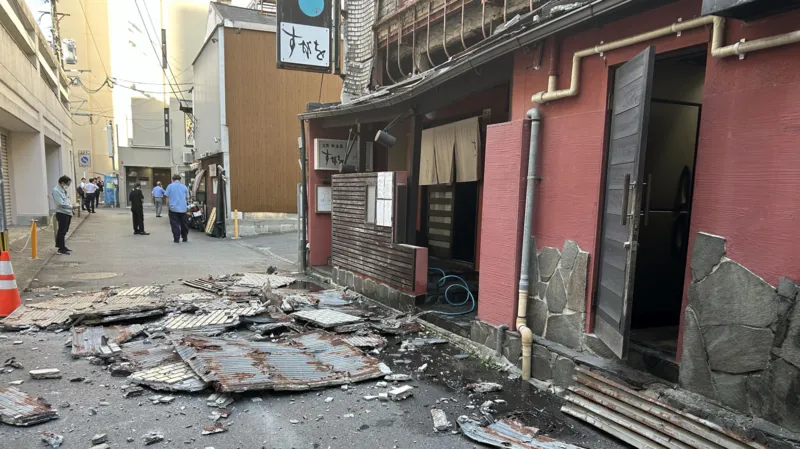
A powerful magnitude 7.1 earthquake has struck Japan, leaving several people injured and prompting emergency responses across affected areas as authorities assess damage and warn residents to remain cautious over possible aftershocks.
The earthquake shook parts of Japan with strong intensity, causing buildings to tremble, transport disruptions and widespread concern among local communities. Emergency services were deployed to check damaged structures, assist injured residents and monitor conditions following the major seismic event.
Japan, one of the world’s most earthquake-prone countries, has strict safety standards and extensive disaster preparedness systems. However, a powerful quake of this magnitude can still cause significant disruption, particularly in densely populated areas.
Officials said several people were injured as a result of the earthquake, although initial reports indicated that the number of casualties remained limited compared with the scale of the tremor. Rescue teams continued inspections in affected locations to identify any further damage or injuries.

Authorities urged residents to stay alert because strong aftershocks can follow major earthquakes. Emergency agencies advised people to avoid damaged buildings, secure loose objects and follow official guidance while assessments continued.
The earthquake triggered concern among communities familiar with Japan’s history of devastating seismic disasters. Many residents immediately moved outdoors or gathered in open areas as buildings shook and warnings were issued.
Japan experiences thousands of earthquakes every year because it sits along the Pacific Ring of Fire, a region known for intense tectonic activity. The country’s location at the meeting point of several tectonic plates makes it highly vulnerable to earthquakes and volcanic activity.
Over decades, Japan has developed some of the world’s most advanced earthquake monitoring technology and disaster response systems. Buildings are designed with strict safety requirements, while public awareness campaigns regularly prepare citizens for emergencies.
Despite these measures, earthquakes remain unpredictable and can cause serious consequences depending on their location, depth and proximity to populated areas.
The magnitude 7.1 quake was strong enough to be felt across a wide area, with residents reporting intense shaking and concerns about possible damage.
Authorities immediately activated emergency procedures, including inspections of infrastructure such as roads, bridges, rail networks and public facilities.
Japan’s railway operators often suspend services temporarily after significant earthquakes to conduct safety checks. Such measures are designed to prevent accidents and ensure that infrastructure remains safe before operations resume.
Airports and ports in affected regions may also carry out inspections following major seismic activity.
Officials said emergency teams were working to restore normal services while ensuring public safety remained the priority.
The earthquake also raised concerns about possible tsunami risks. Japan’s Meteorological Agency closely monitors coastal conditions after major offshore earthquakes because underwater seismic activity can generate dangerous waves.
In this case, authorities assessed tsunami risks and provided updates to communities as information became available.
For residents living along Japan’s coastline, earthquake alerts are taken seriously because of the country’s history with destructive tsunamis.
One of the most devastating examples was the 2011 earthquake and tsunami disaster, which caused widespread destruction and led to the Fukushima nuclear accident.
That disaster transformed Japan’s approach to emergency preparedness and reinforced the importance of rapid warnings, evacuation planning and resilient infrastructure.
Following the latest earthquake, authorities again emphasised the importance of preparedness.
Government officials encouraged residents to keep emergency supplies available, including water, food, medicines and communication equipment.
Experts say individual preparedness plays a crucial role during major disasters because emergency services may initially be overwhelmed.
The earthquake also highlighted the importance of Japan’s advanced monitoring systems.
Japan operates one of the world’s most sophisticated earthquake warning networks, capable of detecting seismic activity and sending alerts before stronger shaking reaches some locations.
These early warnings can provide valuable seconds for people to take protective action, such as moving away from dangerous objects or stopping machinery.
Although a few seconds may seem limited, experts say they can significantly reduce injuries and prevent accidents.
The latest quake comes as Japan continues investing in disaster resilience amid concerns that future major earthquakes could occur along some of the country’s most active fault lines.
Scientists have long warned about the possibility of large-scale earthquakes in areas such as the Nankai Trough, where major historical earthquakes have occurred.
Government agencies regularly conduct drills and update emergency plans to prepare for potential disasters.
The impact of earthquakes extends beyond immediate physical damage. Businesses, schools and communities can face disruption, while residents may experience stress and uncertainty after a major tremor.
Psychological support is often provided following disasters, particularly for those who experience injuries, property damage or fear of further earthquakes.
Local authorities have urged residents affected by the quake to support one another and remain informed through official sources.
Japan’s emergency response agencies continue to assess the situation, with damage reports expected to develop as inspections continue.
Engineers are checking buildings and infrastructure to determine whether repairs or restrictions are required.
In areas where damage has occurred, authorities are prioritising assistance for vulnerable residents, including elderly people and those requiring medical support.
International attention has also focused on the earthquake, with Japan receiving messages of support from governments and organisations around the world.
The country’s experience in managing natural disasters has often been studied internationally, particularly its approach to earthquake-resistant construction and emergency planning.
Experts say the response to the latest quake demonstrates the importance of preparation, but they also stress that no system can completely eliminate the risks created by powerful natural events.

As Japan continues monitoring aftershocks and evaluating damage, officials remain focused on ensuring public safety and restoring normal life.
The magnitude 7.1 earthquake serves as another reminder of the constant challenges faced by countries located in active seismic zones.
For Japan, a nation shaped by decades of experience with earthquakes, preparedness remains the strongest defence against unpredictable natural disasters.
Related News:
 Bodies of Two Chinese Backpackers Found in Floodwaters
 How and When to See April’s Full Pink Moon
 Victory or Compromise? Tehran’s Streets Erupt in Mixed Emotion Following Ceasefire
 Canadian astronaut French words ease language row
 Chornobyl Still at Risk 40 Years After Disaster
 RAF Typhoons scrambled amid Russian drone threat near Nato
 Escobar’s Hippos May Be Moved to India Zoo
 China Fireworks Factory Blast Kills 21 in Hunan
 China mine blast death toll rises to 90
 Japanese Bear That Injured Four Still Missing
 India’s Gen Z Protest Movement Enters a New Phase
 French Firefighters Battle ‘David vs Goliath’ Wildfire
 Britain deploys RAF specialists to assist Belgium with drone threats
 Hitler’s DNA Confirms He Truly Had Only One Testicle
 Poll Reveals China Leads World in Trusting AI Technology
 US Clears Nvidia AI Chip Sales to China in Policy Shift
 UK New Car Discounts Near £6,000 as Prices Are Slashed
 Storm Leonardo Triggers Election Delay Calls in Iberia
 Hindu Man’s Stand Sparks Hope in India
 Snow and Rain Warnings as Cold Snap Continues in the UK
 Break from Wintry Weather as UK Temperatures to Climb to 14 °C
 Social Media Trial: Woman Says Addiction Began at Six
 Nine Killed in Karachi Consulate Protest
 Baba Vanga’s Chilling World War 3 Prediction and Russia’s New Leader
 Tiny Possum and Glider Thought Extinct for 6,000 Years Found in Remote West Papua
 Musk’s xAI Permit Sparks Fury Over Power Plant Expansion
 The Kill Line: A Shifting Vision of the American Dream
 Spring Awakening: Temperatures to Hit 17°C as Britain Bathes in Sunshine
 “Homo Sapiens are All of Us”: Artemis II Crew Sends Emotional Message of Unity from Deep Space
 ‘The frontline is like Terminator’: Ukraine’s fighting robots
 Peretz Targets FA Cup Upset Amid War Concerns
 Apple at 50: Three Products That Changed How We Live
 Storm Dave Disrupts Travel but Conditions Set to Ease
 ‘No Gas, No Food’: LPG Shortage Triggers Reverse Migration in Indian Metros
 Moldova River Crisis Exposes War’s Hidden Cost
 Cyclone Vaianu Forces Mass Evacuations in New Zealand
 Artemis II Returns After Historic Moon Flyby
 The Sinking Heritage: The Dutch Village at Risk of Being Demolished
 Robots Outpace Humans in Beijing Half-Marathon
 Reform UK funding: mystery billionaire revealed
 Exploring Italy’s Forgotten Dolomites Beyond Crowds
 Southeast Asia Turns to Russia Amid Energy Crisis
 Disneyland Adds Facial Recognition at Entrances
 Ukraine Urges UK to Seize Russian Oil Tankers
 Older Than Dinosaurs: Secrets of Mayfly Dance Revealed
 Two Dead in Adelaide Airport Plane Crash Fire
 The $2.5 Billion “Speed Breaker”: RBI Battles Digital Fraud Surge
 Australia pushes Pacific security pact amid China tension
 Canadian Fiddler Sues Google Over AI Defamation Claim
 BJP Sweeps West Bengal in Historic Breakthrough
 “The Trial’s Strange Turn”: Musk v. Altman Case Veers into Personal Testimony and ‘Sperm Offers’
 France Faces Record Presidential Crowded Race Amid Far-Right Surge
 US Awaits Iran Reply on New Ceasefire Proposal
 One Nation Stuns Australia With Historic Farrer Win
 Musk v OpenAI Trial: The Battle for the Soul of AI
 Hormuz Talks Near Critical Stage
 Pope Meets Families in Italy Toxic Waste Zone
 Discontent grows around Putin amid war strain
 Farage and Reform UK Reshape British Politics
 Starmer Leadership Under Pressure After Setbacks
 Thailand Tightens Visa Rules to Curb Tourist Misbehavior
 UN Issues Urgent Warning: Imminent Return of El Niño
 Everest Climber Recalls Guide’s Six-Day Survival
 Bear Escapes Factory Through Open Window
 Families Grieve Beyond Air India Crash Victims
 Deadly Earthquake Hits Philippines
 Sydney Records Hottest June Since 1859 as Expert Warns New High a ‘Signature’ of Global Warming
 Millions Gather for Khamenei’s Six-Day State Funeral
 KAAN Fighter Jet Signals New Era for NATO Air Power
 Le Pen’s Popularity Holds Despite Conviction
 Bryne Backs Haaland Before England World Cup Clash
 Dreyfus Statue Finally Gets Permanent Paris Home
 Teen Charged After Layla Jeffery Found Dead
 Venezuela Quake Death Toll Surpasses 4,000
 China Detains US Scientist Linked to North Korea Nuclear Research
 Bangladesh President to Step Down After Political Shift
 India’s Gen Z Protesters Claim Victory, Demand More Change
 India’s First Woman Army Boxer Eyes Commonwealth Gold
 US and Iran Pause Strikes as Diplomatic Talks Loom
 Hong Kong Activist Allowed to Stay in UK After Threat