Published: 28 August 2026. The English Chronicle Desk. The English Chronicle Online
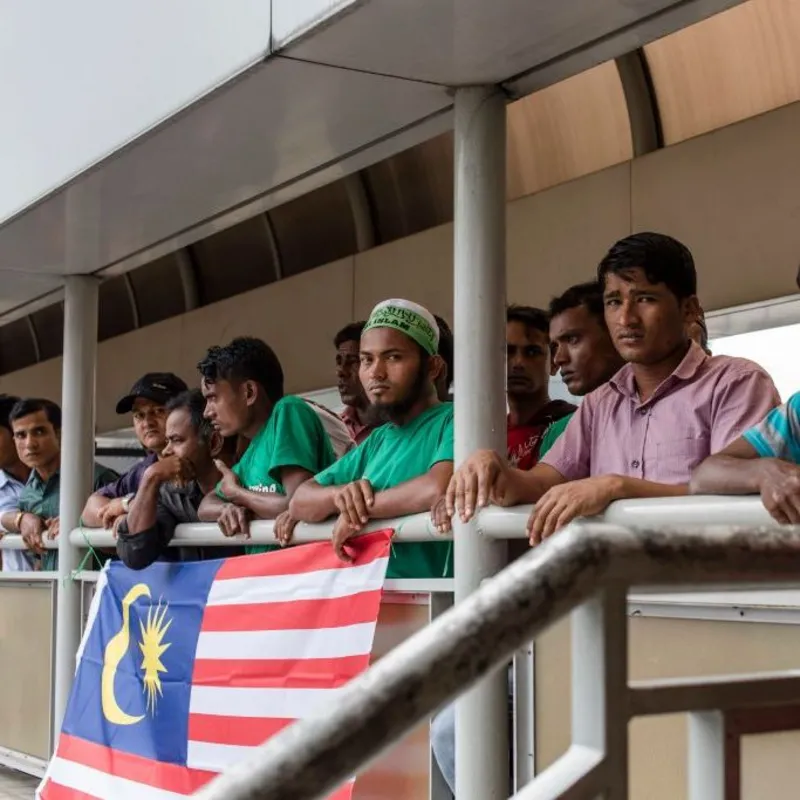
Malaysia was once seen by many Rohingya refugees as a place where they could find safety after fleeing persecution in Myanmar. Today, however, that sense of security is rapidly disappearing as hostility towards the community grows across the country.
For years, Malaysia’s political leaders have spoken publicly about the need to protect the Rohingya, particularly because both communities share a Muslim faith. In 2017, then-prime minister Najib Razak urged Malaysians to defend Rohingya people, saying their lives had value because they were human.
Nine years later, that message appears increasingly distant from the experiences of many Rohingya living in Malaysia.
Teachers, activists and refugees say they are facing greater pressure, discrimination and fear. Community schools have been raided or forced to change how they operate, while some Rohingya families have been evicted from communities where they had lived for years.
For children, the consequences are particularly serious. Rohingya children are generally barred from attending Malaysian public schools and instead depend on informal, community-run learning centres. But those schools are now becoming increasingly vulnerable to official scrutiny and public hostility.

Irhan, a Rohingya refugee who founded a school in northern Malaysia for children aged between six and 15, says his students are increasingly afraid.
His school was raided by eight uniformed police officers last month. The officers photographed students and instructed some of them to return home.
“The students are just here to learn. Now their families are afraid,” he said.
Another Rohingya school in Selangor suspended classes for a month following growing concerns about the safety of its students. When it reopened, children were told not to wear their school uniforms and to leave immediately after lessons rather than gathering in groups.
Farooq, a Rohingya teacher, said the measures were intended to keep students out of public view.
“We’re keeping a low profile to protect our students from getting attacked,” he said.
The uncertainty has led some community schools to close altogether, while refugees in some areas have faced eviction and pressure from local residents.
The situation reflects a broader shift in attitudes towards Rohingya refugees in Malaysia, where public frustration has increasingly been amplified through social media.
A community shaped by persecution
The Rohingya are a stateless Muslim minority originating largely from Myanmar’s Rakhine State.
Myanmar has historically denied citizenship to the Rohingya and has frequently portrayed them as illegal immigrants, despite Rohingya communities having lived in the region for generations.
Decades of discrimination and periodic violence have forced large numbers of Rohingya to flee their homes.
The largest modern exodus occurred in 2017, when a Myanmar military crackdown drove more than 700,000 Rohingya into neighbouring Bangladesh.
The United Nations described the military operation as having the characteristics of “textbook ethnic cleansing”. The United States has also determined that the violence amounted to genocide.
Myanmar is now facing a genocide case at the International Court of Justice, where allegations concerning the treatment of the Rohingya are being examined.
For those who escaped, Malaysia offered an alternative destination.
The UN refugee agency estimates that more than 126,000 Rohingya have resettled in Malaysia, making it one of the world’s largest host countries for the community.
The actual figure may be higher, according to rights groups.
Many Rohingya chose Malaysia because it is a Muslim-majority country with comparatively strong economic opportunities. Some had hoped to work, educate their children and eventually return home.
But Malaysia does not formally recognise refugees or asylum seekers under a comprehensive national refugee framework. As a result, Rohingya refugees have limited legal access to employment, education and other public services.
That vulnerability has left many dependent on informal employment and community networks.
From welcome to suspicion
The deterioration in public attitudes has been gradual.
During the Covid-19 pandemic, Rohingya people were accused on social media of spreading the virus and taking employment opportunities from Malaysians. Online campaigns called for refugees to be deported, while authorities turned away boats carrying Rohingya asylum seekers.
This year, activists say, the rhetoric has intensified.
In May, social media posts accused Rohingya refugees of mishandling animals sacrificed during Eid al-Adha. The allegations spread rapidly and were followed by a series of broader claims about the community.
Some online posts accused Rohingya people of demanding automatic citizenship, seeking political influence or attempting to take control of Malaysia.
Rights groups have described many of these claims as exaggerated or unfounded.
An online petition calling for Rohingya refugees to be removed from Malaysia reportedly attracted more than 420,000 signatures before being taken down following criticism.
For refugees who have lived in Malaysia for many years, the change has been painful.
Karim, a Rohingya activist who arrived in Malaysia in 2003, remembers feeling welcomed when he first settled in the country.
“Life as a refugee is tough,” he said, describing the difficulties of spending years working in construction. But he also recalled that Malaysians had generally treated him with kindness.
Now, he says, he is increasingly afraid to go outside.
He has been confronted during his daily commute by people asking why Rohingya refugees are “making a mess” of Malaysian cities and telling them to return home.
Irhan, who arrived in Malaysia as a teenager in 2001, shares the same sense of insecurity.
“In the early years, the Malaysians were our friends. They cared for our children. But it’s changed,” he said.
“I would leave if I could, but where else can I go? We are not wanted anywhere.”
Why returning to Myanmar is not an option
For many Rohingya refugees, returning home remains unrealistic.
Myanmar is still engulfed in a devastating civil war, while fighting in Rakhine State has caused extensive destruction and displacement.
The Arakan Army and Myanmar’s military regime have fought for control of territory, creating new dangers for civilians.
Rohingya people face particular risks because of their longstanding marginalisation and the hostility of armed groups operating in the region.
There are also fears that Rohingya men could be forcibly recruited into the conflict.
For refugees in Malaysia, therefore, the idea of simply “going home” ignores the circumstances that forced them to flee in the first place.
Many say they would like to return eventually, but only if Myanmar becomes safe and they can live there with basic rights and security.
The UN has warned that conditions for minorities in Myanmar have deteriorated dramatically.
UN High Commissioner for Human Rights Volker Türk recently described the situation as one of widespread misery and cruelty.
Politics and the refugee debate
Malaysia’s political climate has also contributed to concerns about the future of the Rohingya community.
Prime Minister Anwar Ibrahim recently said Myanmar had agreed to accept 5,000 Rohingya refugees from Malaysia, citing the countries’ diplomatic relationship.
He also warned Rohingya people not to disrupt the lives of Malaysians, stressing that Malaysia was the country’s home.
The comments have been interpreted by critics as evidence that tougher rhetoric towards refugees is becoming increasingly mainstream.
Other prominent figures have made even harsher statements.
Nurulhidayah Zahid, the daughter of Malaysia’s deputy prime minister, compared Rohingya refugees to “monkeys in the forest” in a social media post.
Former deputy police chief Ayob Khan Mydin Pitchay has also described the influx of Rohingya as a “cancer” requiring urgent action.
Such remarks have alarmed human rights organisations, which argue that refugees are being portrayed as a convenient source of blame for problems that are much broader.
Yap Lay Sheng, a researcher with Fortify Rights, said refugees and migrants were increasingly being used as political scapegoats for domestic challenges.
She argued that Malaysia’s international image as a compassionate Muslim-majority country was being tested by the treatment of the Rohingya.
Malaysia is due to hold its next general election before February 2028, and activists fear the issue could become even more politically charged as campaigning intensifies.
The children caught in the middle
For Rohingya families, however, the political debate is ultimately about something more immediate: whether their children can live safely and receive an education.
Community-run schools operate with limited resources and uncertain legal status. Teachers and volunteers try to provide basic education to children who otherwise have few alternatives.
The recent raids and security concerns have therefore created a difficult dilemma.
Closing schools protects children from immediate exposure to hostility, but keeping them away from education could leave another generation without the skills needed to build a more secure future.

Irhan says his primary concern is not politics.
He wants his students to have an opportunity to learn.
“I don’t know where to get help, or who can get us registered as a school,” he said.
“I hope the Malaysians can understand that the children just want an opportunity to learn.”
That appeal reflects the central tension facing Malaysia’s Rohingya population.
The country has no simple answer to the refugee crisis. Malaysia is not responsible for the persecution that drove the Rohingya from Myanmar, but the people who arrived seeking safety now live within its borders, many for years or even decades.
As hostility grows, refugees who once regarded Malaysia as a refuge increasingly fear that they are becoming unwanted outsiders.
For a community already displaced by violence, the loss of that sense of safety carries consequences far beyond politics. It affects whether children can attend school, whether adults feel safe travelling to work and whether families believe they have any place left to call home.
The Rohingya crisis therefore remains not only a question of migration policy but also one of human dignity, education and protection.
Until conditions in Myanmar allow safe and voluntary return, thousands of Rohingya in Malaysia will continue to depend on the country’s willingness to balance public concerns with its responsibilities towards vulnerable people seeking protection.
Main Category:
World
Sub Categories:
Asia | Life & Society | Politics | Human Rights | Investigative Stories | News
SEO Section
News Combination SEO Title:
Focus Key:
Meta Description:
Related News:
 British skier killed in La Plagne avalanche tragedy
 Mandelson apologises over Epstein ties after public scrutiny
 Friedman Uninvited From 2024 Adelaide Writers’ Week
 Starmer Challenges US Over Controversial Greenland Deal
 Spoof “Make America Go Away” Caps Rally Denmark Over Greenland
 Silence and Unity Mark Bondi Terror Attack Memorial
 India-EU Free Trade Deal Marks Historic Economic Shift
 Concerns rise for Canberra boy amid Iran detention fears
 New Zealand Covid Response Praised Despite Lingering Scars
 Starmer Praised for Stance on Trump and Iran Conflict
 African World Cup Fans Face $15,000 Entry Bond Fee
 Diplomacy on the Brink: Pakistan’s Risky Peace Mission
 Teenage Titan: Sooryavanshi Smashes IPL Records
 Big Tech Faces Investigation Over Australia’s Social Media Ban
 Farage Shuns Truss as US Right-Wing Roadshow Hits London
 Sam Konstas Dropped as Australia Unveils New Contract List
 Canadian Mother and Daughter Released From ICE Detention
 The Price of Hubris: Trump, Netanyahu, and the ‘Easy’ War
 Reform UK Pledges To Halt Visas Over Reparations Demands
 US and Iran Agree to Two-Week Provisional Ceasefire
 Trump and Tehran Find Common Ground in Landmark Ceasefire
 Israel Defies Ceasefire as Lebanon Operations Persist
 Own an Entire Australian Town for the Price of a UK Flat
 Pakistan Brokers Historic Peace Deal Amid Rising Tensions
 Islamabad Hosts Historic Peace Talks Between Iran and USA
 Melania Trump Denies Ties to Epstein and Ghislaine Maxwell
 Trump Signals Hope for New Iran Talks as Ceasefire Fades
 Kyiv and Odesa Mourn After Deadly Wave of Russian Strikes
 Security Alert Near Israeli Embassy as Police Investigate
 Machado Rallies in Madrid as Venezuela Stays Frozen Out
 US Forces Seize Iranian Ship Near Hormuz Blockade
 US-Iran Standoff: Will Trump Deploy Ground Troops?
 Investigation: Offshore Loans and Sanctions
 Investigation Into Anti-Trump Motives After Gala Shooting
 Cross-Border Crisis Shatters Fragile Afghan Peace
 Oil Prices Surge Above $120 Amid Iran Blockade Fears
 Trump orders US troop pullout from Germany
 Japan Protests Erupt Over Plans to Revise Constitution
 The Burning Lens: An Iranian Artist’s Visual Resistance
 One Nation Candidate’s Surprising Ties to Independents
 High Stakes in Beijing as Trump and Xi Meet Amid Global Turmoil
 Fear and Betrayal: The Chilling Case of Kouri Richins
 Australia Joins UK-Led Mission to Reopen Vital Strait
 Trump and Xi Convene in Beijing for Historic High-Stakes Summit
 Scepticism and tight security as Beijing braces for Trump
 Australia Bans Neo-Nazi Group Under Tough New Hate Laws
 Rubles and Resilience: How Russia-China Border Towns Thrive
 Trump Turns to Middle East Allies as Iran Peace Eludes
 Aussie Race Row: Coalition Accused of Scapegoating
 Trump Pledges 5,000 Troops for Poland in U-Turn
 Tony Abbott Returns as New Liberal Party President
 Cannes filmmakers split over AI’s role in cinema
 Teaching Machines Right From Wrong in the Digital Age
 Washington Brokerage Sparking Hope Amid Regional Firestorms
 US Condemns ‘Two-Tier’ UK Policing After Student Murder
 EU Leadership Gathers in Tivat to Renew Balkan Ties
 Trump Appeals for Middle East Calm but Conflict Escalates
 Millions in British Charity Funds Linked to Illegal Settlements
 Captain in the Spotlight: The Future of England Cricket
 Strike on Iranian Water Infrastructure Sparks War Crime Concerns
 US Trafficking Arrest Exposes Shocking Exploitation
 Trump Urged to Condemn UFC Fighter Over Obama Slurs
 Trump Signs Landmark Iran Accord in Versailles
 Gas Prices Fall Below $4 Following US-Iran Peace Deal
 Grief and Devotion Amidst the Rubble of Nabatieh
 US Military Pacific Boat Strike Kills Three People
 Canada Secure Historic Last 16 Spot with Late Goal
 Keiko Fujimori Claims Dramatic Victory in Peru Runoff
 EU Slashes Steel Quotas But Grants UK Favourable Rates
 Trump’s Mount Rushmore Speech: A Divisive Anniversary
 Southern Europe Reels as Wildfires Force Mass Evacuations
 Gaza Doctor Unrecognisable After Brutal Israeli Detention
 Telstra Software Fault Triggers Massive Nationwide Outage
 Colombia’s Fight Over Fossil Fuels
 Trump Swaps Planes Amid Iran Tensions
 Rubio Pushes to Dismantle Global Justice Court
 Yemen Accuses Iran of Violating National Sovereignty
 A New Era Begins: Spain and Gibraltar Border Fence Falls
 Houthis Strike Saudi Arabia as Middle East Tensions Rise
 Former Diplomats Urge UK and France to Act on Palestine