Published: 17 September 2026. The English Chronicle Desk. The English Chronicle Online
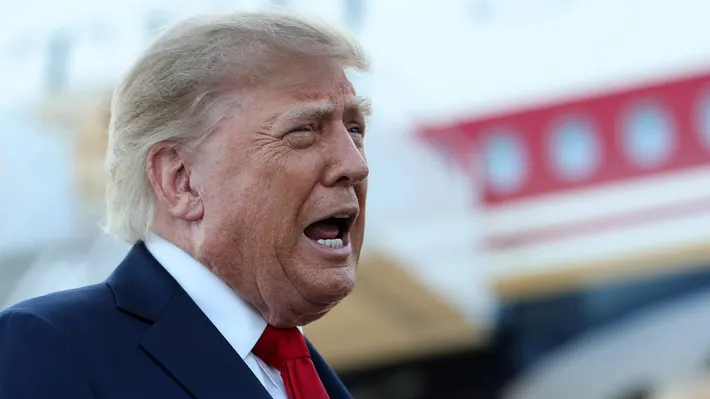
The European Union and the United States have entered a fresh diplomatic dispute after US President Donald Trump warned that Europe could face “very serious tariffs” or restrictions on trade if the bloc proceeds with a proposal to deepen its relationship with Canada.
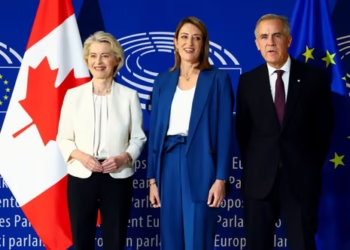
The warning came less than a day after European Commission President Ursula von der Leyen proposed opening the way for Canada to become the European Union’s first “associate member”. The idea was presented during von der Leyen’s annual State of the European Union address in Strasbourg, where Canadian Prime Minister Mark Carney was present. The European Commission says the proposed arrangement would focus on common economic interests, technology, energy, defence and wider strategic cooperation.
Trump, speaking to reporters in the United States, described the proposed relationship as “laughable” and suggested that Washington could respond if it considered the EU’s decision hostile. He warned that the United States could impose substantial new tariffs on European goods or potentially restrict trade in some areas. Reuters reported that Trump said the response would depend on what he considered the intention behind the European initiative.
The remarks add another layer to already complicated trade relations between Washington, Brussels and Ottawa. The dispute is also taking place against a wider backdrop of changing economic and security relationships, as Canada seeks to strengthen connections with European partners while the EU attempts to increase its own strategic resilience.

Von der Leyen has rejected the idea that the proposed Canadian partnership is directed against the United States. In presenting the initiative, she described the relationship as one designed to strengthen common interests rather than to target another country. European Commission officials repeated that message after Trump issued his warning.
The proposal itself is significant but remains at an early stage. Canada would not simply become a normal EU member under the plan. Instead, Brussels is proposing a new form of relationship with a non-EU country. The European Commission’s 2026 priorities describe the initiative as opening the door for Canada to become the bloc’s first associate member and creating an “Alliance for the Future” focused on economic security, technological cooperation and defence-industrial links.
That distinction is important because Canada is not being offered full EU membership or automatic participation in all EU institutions. The precise legal and institutional structure of the proposed associate status has yet to be worked out. Reuters reported that the concept has prompted questions among some EU diplomats because its practical details remain unclear.
For Canada, the proposal comes at a time when relations with its largest trading partner, the United States, have become more difficult. Ottawa has been seeking to broaden its economic and strategic relationships, including closer cooperation with European countries. Canada already has an extensive trade relationship with the EU through the Comprehensive Economic and Trade Agreement, while discussions have expanded into areas such as defence, technology and critical resources.
Carney’s visit to Strasbourg underlined the growing importance Ottawa is placing on European ties. The Canadian prime minister is scheduled to address the European Parliament on Thursday, where he is expected to discuss the future direction of Canada-EU relations. The European Parliament’s official agenda confirms that Carney is due to make a formal address followed by a press conference.
The timing of the visit has given the proposed partnership additional political significance. Canada’s government has argued for greater diversification of its international economic relationships, while European leaders have increasingly stressed the importance of strengthening cooperation with countries that share democratic institutions and strategic interests.
The EU’s proposal also fits into a broader strategy outlined by von der Leyen during her State of the Union speech. Her address included initiatives covering European defence, energy security, critical raw materials, technology and cooperation with international partners. The European Commission said the Canada initiative would help create a closer economic and security relationship between the two sides.
The United States, however, remains deeply connected to both the European and Canadian economies. Any substantial new tariffs imposed by Washington could therefore have consequences beyond the immediate diplomatic dispute. Higher tariffs can increase the cost of imported goods and create uncertainty for companies involved in cross-border trade, although the eventual economic effects would depend on the scale, scope and duration of any measures actually introduced.
For the moment, no new US tariff package specifically targeting the EU has been announced as a direct consequence of the associate-member proposal. Trump’s comments amount to a warning about possible future action if Washington determines that the European move is hostile. The European initiative itself also remains subject to further discussion among EU governments and with Canada.
The disagreement illustrates the increasingly complicated trade environment facing Western economies. European governments are seeking stronger partnerships as geopolitical tensions and supply-chain concerns reshape economic policy. Canada is attempting to widen its strategic options, while the Trump administration continues to use tariffs and the prospect of trade restrictions as instruments of US economic policy.
European officials have also pushed back against the suggestion that Washington should determine the bloc’s geopolitical choices. France’s Europe minister, Benjamin Haddad, said the United States should not decide the political and geopolitical direction of European countries, according to Reuters. His comments reflected a wider European emphasis on maintaining the EU’s ability to make independent decisions about its international partnerships.
At the same time, the proposed Canada arrangement will have to overcome questions within Europe about its practical meaning. The European Union has 27 member states, and any substantial new institutional relationship with Canada would require agreement on its terms. The proposal’s political appeal does not by itself establish a new legal status, and negotiations would be needed to determine what participation, obligations and benefits an associate member would actually receive.
For Ottawa, the initiative represents an opportunity to explore a closer relationship with Europe without pursuing full EU membership. For Brussels, it offers a potential framework for closer cooperation with a major democratic economy possessing important natural resources, technological capabilities and defence links.

For Washington, however, the proposal is being viewed through the lens of an already tense relationship with both Canada and the EU. Trump’s latest warning suggests that the question of how Canada and Europe strengthen their relationship could become another point of disagreement in transatlantic trade relations.
The immediate focus will now turn to Carney’s address to the European Parliament and the response from EU governments. His speech is expected to provide a clearer indication of how Canada views the proposed associate-member framework and what form Ottawa would like the relationship to take.
The dispute is therefore still at an early stage. The European Union has opened a political discussion about a new kind of partnership with Canada, while the United States has warned that Washington could respond with tariffs or other trade measures if it considers the initiative hostile. Whether the proposal develops into a formal arrangement will depend on negotiations between Canada and the EU, as well as agreement among EU member states.
For businesses and policymakers on both sides of the Atlantic, the episode is another sign that trade and geopolitical relationships are becoming increasingly interconnected. What began as a proposal for closer cooperation between Canada and Europe has quickly become part of a wider debate about economic security, strategic independence and the future shape of transatlantic relations.
Related News:
 Reeves Fights to Keep Treasury Role Amid Labour Turmoil
 Tories Press Healey Over Tax Rises Ahead of Budget
 UK Wage Growth Slows as Jobs Market Holds Firm
 BBC News Faces Deep Cuts in 2,000 Job Plan
 UK Pushes for New EU Goods Trade Deal
 Labour MPs Urge Burnham to Revive UK Aid Target
 Burnham Faces Mounting Budget Challenges
 UK plans tougher Israel stance with settlement trade ban
 Oil nears $100 as Saudi attacks shake markets
 Reform Faces Questions Over £72m Donations
 Farage Threatens Union Funding Ban Over Reform Donations
 North Sea Firms Urge Early End to Windfall Tax
 UK Pay Growth Slows to 3.9% as Rate Decision Nears
 Bank Urged to Slow Bond Sales as UK Costs Rise
 JLR Eyes NATO Market With New Defender Military Vehicle
 UK Inflation Hits 3.1% as Household Pressure Grows
 Slave-Trade Wealth Embedded in Britain’s Financial System
 UK Youth Jobs Gap Reveals Deep Regional Divide
 EU Opens Door to Canada as Associate Member
 Entain Plans 400 Job Cuts After Profit Update
 David Lammy Faces Possible Legal Challenge Over Foreign Office Secondment Scheme
 Ministers Accused of Defamation Over Palestine Action Ban and Mass Arrests
 Charlie Kirk Killing Used to Mobilise UK’s Largest Far-Right Rally in Decades
 Jailed Georgian Opposition Leaders Warn UK of Iranian Links to Ruling Party
 Shabana Mahmood Warns Border Failings Are Eroding Trust in States
 Lucy Powell urged ministers to reconsider costly legal case for Labour donor’s firm
 Tories Push to Dilute Labour’s Workers’ Rights Bill
 Rachel Reeves to lead UK trade push in Saudi Arabia amid rights debate
 Johnson Approved China’s London ‘Super-Embassy’ in 2018
 UK and EU Signal Fresh Push for Defence Cooperation Talks
 Emails Show Epstein Funded Mandelson’s Husband After Jail
 Wealthy Britons Flee Gulf War but Avoid UK Taxes
 UK Doubles Steel Tariffs to 50% to Protect Domestic Plants
 New UK advice scheme to boost savings and investing
 City & Guilds Faces Governance Crisis Over Sale
 UK rejects EV charging VAT cut amid Treasury clash
 Trump Refuses to Sign Housing Bill, But Law Takes Effect
 Unions Warn Labour Over Zero-Hours Contract Reforms
 Firms on both sides fear damage from US-Canada trade war
 Trump orders US to rename Lake Ontario ‘Lake America’
 Europe Faces Winter Gas Supply Anxiety
 UK Households Could Save £173 on Fixed Energy Deals
 Exeter Approves Saudi Military Training Partnership
 Dutch Bank Moves 86 Tonnes of Gold to London
 Trump Hardens Canada Trade Stance as Talks Stall
 Green Leader Targets Starmer’s Former Seat
 Reform Faces Fresh Financial Controversy
 UN expert urges UK to rethink Israel policy
 Ukraine Moves to Seize Water Company
 UK Cost Squeeze Deepens as Mortgages and Gas Rise
 Swedish Mining Push Puts Sami Land Rights Under Pressure
 Spire Healthcare Agrees £1bn Takeover by Toscafund
 UK House Prices Fall as Mortgage Rates Rise
 Argentina to file criminal charges over Falklands oil drilling
 Miliband Rejects Chief Rabbi’s West Bank Warning
 Trump Pledges $5,000 if Republicans Win Midterms
 John Lewis Losses Widen to £124m as Confidence Falls
 Reform UK Receives Record £36m Donation From Crypto Billionaire
 Oil Prices Surge as Saudi Pipeline Closure Deepens Crisis
 Thames Water Revises Oxfordshire Mega-Reservoir Plan
 UK Retailers Accused of Breaking Refund Laws
 UK State Pension Set to Rise 3.9% as Triple Lock Holds
 UK Parents Cut School Uniform Costs as Prices Rise
 Fashion Firms Urge UK-Made NHS and Army Uniforms
 Fugitive Developer Rants at NSW Corruption Inquiry
 New Evidence Deepens Church of England Slavery Reckoning
 Mayors Could Gain Greater Powers Over Water Firms
 Lords Call for Tobacco-Style Gambling Ad Ban
 Next Raises Profit Forecast After Strong Summer Sales
 UK Must Act with Courage and Clarity on Israel-Palestine Conflict, Says Foreign Affairs Committee Report
 Tanni Grey-Thompson Faces Abuse Over Opposition to Assisted Dying Bill
 Trump’s UK Ambassador Urges North Sea Drilling to Strengthen US Ties
 Millionaires group urge Reeves to introduce wealth tax to ‘lift kids out of poverty’
 Starmer Says Labour’s Economic Plan Needs Years to Deliver
 South Korea Jails Ex-President in Martial Law Ruling
 Relationship with Trump may be beyond repair, Starmer warned
 Silent Tracks: Rail Line Without Passengers
 Bayeux Tapestry Revives Franco-British Ties
 Trump gives $45,000 holiday gifts to White House aides
 JPMorgan Boss Warns Against UK Bank Tax Rise