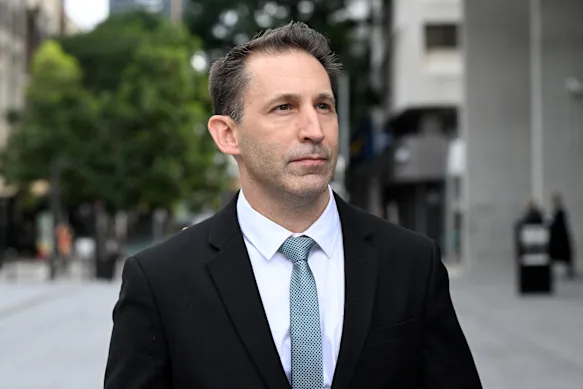
A former Royal Australian Air Force pilot accused of murdering his wife and staging her death to resemble an accident was described as a “master manipulator” who allegedly led a double life, a court in Brisbane has heard. Prosecutors allege that Robert John Crawford killed his wife, Frances Elizabeth Crawford, during a prolonged breakdown of their marriage and subsequently attempted to conceal the circumstances of her death. Crawford, 49, has pleaded not guilty to the murder charge, and the allegations against him are now being examined by a Supreme Court jury.
The trial opened on Monday, with prosecutor Chris Cook outlining the prosecution’s account of the events leading up to Frances Crawford’s death on 29 July 2024. Her body was discovered near a ride-on lawnmower at the bottom of a retaining wall on the couple’s rural property at Upper Lockyer, west of Toowoomba in Queensland. The circumstances surrounding the discovery and the condition of the scene are expected to form part of the evidence presented during the proceedings.
Cook told the jury that the prosecution believed the alleged killing occurred against the backdrop of a relationship that had deteriorated over a significant period. According to the prosecutor, the couple were approaching divorce when Frances died, and the marriage had become increasingly troubled by allegations of infidelity, broken trust and disagreements about their future together.

The prosecution alleges that Crawford subsequently embarked on a prolonged effort to make his wife’s death appear accidental. The jury will be required to consider the evidence presented by the prosecution and determine whether it establishes his guilt beyond reasonable doubt. At this stage, the claims made in court remain allegations, and Crawford retains the presumption of innocence unless and until he is convicted.
In outlining its case, Cook portrayed Crawford as a man whose public image allegedly differed sharply from his private conduct. The prosecutor told jurors that Crawford presented himself as someone with strong Christian values, but alleged that his behaviour contradicted that image. Cook used forceful language to describe the accused, characterising him as a serial unfaithful partner who allegedly maintained relationships outside his marriage.
The prosecution is expected to call four women who allegedly had affairs with Crawford. Their evidence may help the jury understand the state of the marriage, the allegations of infidelity and the relationship difficulties that prosecutors say preceded Frances’s death. The significance of each witness’s testimony will depend on the evidence they provide and how it relates to the prosecution’s broader case.
The court heard that Frances had struggled with the question of whether to end the marriage or allow her husband another opportunity to rebuild their relationship. According to the prosecution’s account, she had established a detailed set of boundaries intended to define what she would no longer accept in the relationship. These included specific conditions that, if breached, would lead to divorce.
Among the alleged deal-breakers were sexual or emotional infidelity, pornography and masturbation, the jury was told. The details offer a glimpse into the depth of the couple’s marital difficulties and the effort Frances had reportedly made to establish clear expectations for the relationship. Prosecutors intend to place these issues within the wider context of what they allege was a deteriorating marriage.
The prosecution also suggested that financial considerations may have provided a motive for the alleged killing. Cook told the jury that Crawford stood to lose financially if the marriage ended in divorce. According to the case outlined by prosecutors, the accused wanted to retain possession of the couple’s home and avoid dividing his superannuation, Australia’s retirement savings system.
Financial disputes can become significant issues in contested separations, particularly when property, retirement savings and family arrangements are involved. In this case, however, the suggestion that financial concerns motivated the alleged murder is part of the prosecution’s argument and must be assessed alongside the other evidence. The jury has not yet reached a verdict.
The court was also told that Frances had not made a straightforward decision to end the relationship. Prosecutors described her as having wavered between pursuing a divorce and giving her husband an opportunity to demonstrate that he could change. That uncertainty, according to the prosecution’s narrative, formed part of the circumstances in which the couple were living in the period before her death.
Justice Lincoln Crowley informed jurors that the prosecution would allege Crawford caused his wife’s death either through strangulation or blunt-force trauma. The precise circumstances of the alleged killing and the evidence supporting the prosecution’s account will be central to the trial. The jury must evaluate the relevant testimony and any forensic or other evidence presented before deciding whether the charge has been proved.
A visit to the property where Frances’s body was found is scheduled for Wednesday. Justice Crowley told jurors that viewing the location would help them understand the evidence and the physical surroundings described during the trial. Such a visit may provide useful context concerning the layout of the rural property, the retaining wall and the area near the ride-on lawnmower.
The location is likely to be important in helping jurors assess the circumstances in which Frances was discovered and consider the competing implications of the evidence. However, the visit itself will not determine the case. The jury will need to consider the site alongside witness testimony, expert evidence where presented and the arguments made by both the prosecution and the defence.
The trial is expected to hear from as many as 47 witnesses over approximately three weeks. That timetable suggests the proceedings will involve a substantial examination of the couple’s relationship, the events preceding Frances’s death and the prosecution’s allegations about what happened afterwards. The witnesses may provide different perspectives on the marriage and the circumstances surrounding the case, with their evidence tested through the court process.
Crawford’s defence barrister had not delivered an opening statement when the trial began. The defence will have an opportunity to respond to the prosecution’s allegations and challenge the evidence in accordance with the proceedings. Until the evidence has been heard and the jury has reached its decision, the prosecution’s account should not be treated as an established finding of fact.
The case has drawn attention to the intersection of relationship breakdown, alleged deception and the financial consequences of divorce. Yet the central question before the court is not simply whether the marriage was troubled or whether Crawford was allegedly unfaithful. The jury must determine whether the prosecution has provided sufficient reliable evidence to establish that he murdered his wife and attempted to disguise the circumstances of her death.

For Frances Crawford’s family and those close to the couple, the trial may offer an opportunity to hear evidence about the final days of her life and the circumstances in which she died. Court proceedings can be emotionally demanding for families, particularly when intimate details of a relationship become part of the public record. The evidence must nevertheless be examined carefully, with the court ensuring that the allegations are tested fairly.
As the trial continues, attention is expected to focus on witness accounts, the condition and layout of the property, the alleged motive and the prosecution’s claim that Frances’s death was deliberately made to appear accidental. The planned site visit and the expected testimony from dozens of witnesses are likely to form important parts of the coming weeks.
The outcome will ultimately depend on the evidence and the jury’s assessment of it. Crawford has denied the charge by pleading not guilty, and the prosecution must prove its case beyond reasonable doubt. Until the court reaches a conclusion, the allegations remain unproven, and the legal process must determine whether the former RAAF pilot is guilty of the crime alleged against him.
Related News:
 NSW Police Bid Delays Inquiry Into Sydney Protest
 Sam Wood Denied Bail Over Alleged Domestic Assault
 Baby Boy Found Dead at Adelaide Motel: Two Charged
 Elizabeth Struhs Inquest Examines Child Safety Failures
 Camera Discovery Triggers Navy Ship Investigation
 Undercover officer deceived women with ‘grotesque and cruel’ lies, spycops inquiry told
 Police Suspect Help in Missing Alice Springs Girl Case
 Barrister Criticises Trial After Suicide Case Verdict
 Westminster Council Threatens Charing Cross Soup Kitchen
 BBC Warned About Missing Clothes of Murder Victim
 Cambridge Professor Jason Arday Found Dead at Home
 Councils spend £125m on illegal children’s care
 Patriot Platform Raises Concern Across Britain
 Democrat Says ICE Restricted Detention Camp Oversight
 Cornell Fraternity Assault Investigation Reopened
 Fayed Survivors Demand Inquiry Into Medical Regulator
 London Facial Recognition Trial Ends With False Alert
 Hundreds of UK prisoners released early amid overcrowding
 Drumcree Talks End Without Agreement Ahead of Appeal
 Almost Half of Fayed Accusers May Be Trafficking Victims
 New Prosecutor Takes Over Cornell Assault Case
 Latin America women fear rollback of rights
 Flydubai Co-Pilot Studied in Australia Before Attack
 Detective Breaks Down Recalling Double Murder Scene
 Christa Pike Wakes After Failed Tennessee Execution
 ICE Agent Shoots Man in New York as Child Escapes Harm
 Three Convicted in Mexico Surfing Trip Murders
 UAE Says Co-Pilot Planned Suicide Attack on Israel
 British Military School Abuse Victims Denied Justice
 Former Students Raise Concerns Over School Culture
 England and Wales Begin Second Wave of Early Prison Releases
 Senegal LGBTQ+ Crackdown Drives People Into Hiding
 French Police Face Scrutiny Over Injured Teenagers
 UK Bill Faces Warning Over Fayed Trafficking Victims
 Helen Haines Loses Leg in Alleged Targeted Attack
 Helen Haines Loses Both Legs After Alleged Attack
 Ben Roberts-Smith Denies War Crime Allegations in First Statement
 Florida Surgeon ‘Devastated’ Over Fatal Surgery Error
 Immigration Judges Fear Pressure in Trump Era
 New Footage Revives Peter Falconio Mystery
 Internal Exclusions Surge in England’s Schools
 Survivor Sues Musk’s xAI Over AI Abuse Images
 Abusive ex used Tesla to control and harass former partner
 Man Arrested in Mississippi Woman’s Death
 Israel Accused of Undermining Palestinian Life
 Fugitive Developer Rants at NSW Corruption Inquiry
 Texas Charges Seven Noncitizens in Voting Crackdown
 Mahmood Warns Far Right Over Asylum Protests
 NHS Breast Care Review Finds Serious Patient Harm
 Harrods Faces Dispute Over Fayed Abuse Compensation
 Patrick Clancy speaks publicly about children’s deaths
 Clancy Defense Seeks Inquiry Into Lone Juror
 King Refers Jamaica Slavery Petition to Privy Council
 OpenAI Agent Breaches Medicare Portal in Australia
 Free Speech Emerges as Key UK Election Issue
 Tennessee Set to Execute Woman After Clemency Denied
 French Student Protests Escalate Into Violent Clashes
 UK University Strikes Spread as Financial Pressure Grows
 Drumcree Talks Falter as Legal Challenge Deepens
 UK-France Returns Deal Faces Expiry as Talks Stall
 Badenoch Raises Prospect of 2027 UK Election
 French School Protests Escalate as 400 Schools Close
 Gosport Protesters Clash With Police Over Migrant Rescue
 Andrew Mountbatten-Windsor Challenges Police Raids
 Police accused of failing abuse victims
 Botstein Quits Bard Amid Epstein Investigation Calls
 Royal Navy Sailor Charged With Alleged Spying
 Sri Lanka Ex-First Lady Arrested Over Donation Probe
 South Africa Withdraws Directive on Asylum Applications
 Delhi Tightens Security Ahead of Election Protest
 US Execution Livestream Plan Sparks Global Outrage
 Australian Advocates Seek Subsidised Drugs for PMOS
 ABC Reporter Faces Possible Disciplinary Action Over Opinion Piece
 Ohio Airports Become Key Hubs for ICE Deportation Flights
 Pakistan School Roof Collapse Kills 27 Students
 Gadi Eisenkot: Israel’s Anti-Netanyahu Challenger
 Jenrick Defends Farage Amid Fresh Reform Racism Claims
 Macron Condemns Violence as France Faces 2,400 Arrests
 US Military Failed to Notify UK Police Over Airman Crime
 Greens Face Leadership Test as Jordon Steele-John Misconduct Claims Leave Party in Limbo