The trial of former Australian radio broadcaster Alan Jones was briefly interrupted on Tuesday after his defence team requested a short court break to allow him to watch the Melbourne Cup horse race. The unusual moment came as an award-winning investigative journalist continued giving evidence about her years-long investigation into allegations of sexual misconduct against the former broadcaster.
Jones, 85, has pleaded not guilty to 21 charges of indecent assault and sexual touching involving five men. The proceedings are being heard at the Downing Centre Local Court in Sydney, where the prosecution is examining allegations that have emerged through police investigations and extensive media reporting. The charges relate to alleged incidents involving several complainants, while Jones has the right to defend himself against the accusations.
The request for the interruption was made by Jones’s defence barrister, Gabrielle Bashir SC, who asked Judge Glenn Walsh whether the court could take a break shortly before 3pm. Jones, who has a longstanding interest in horse racing, was sitting in the front row of the public gallery and was seen laughing during the exchange.

Judge Walsh appeared amused by the request and acknowledged that there was a particular race in which the defendant would be interested. He agreed to suspend proceedings from 2.50pm until 3.10pm, allowing Jones an opportunity to follow the Melbourne Cup. The court regularly takes short afternoon breaks for witnesses, although Tuesday’s request brought an unusual sporting dimension to the hearing.
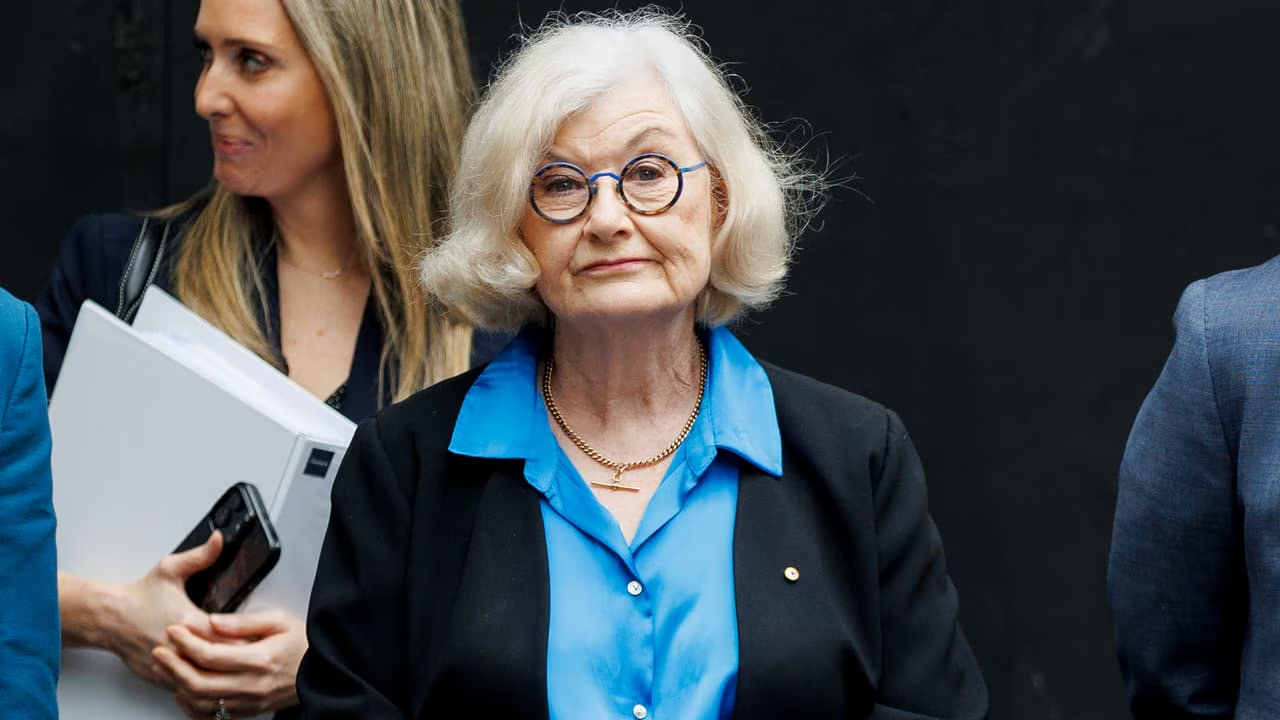
The interruption occurred during the evidence of Kate McClymont, chief investigative reporter at the Sydney Morning Herald, whose reporting played a significant role in bringing allegations against Jones into wider public attention. McClymont spent the day answering questions about her investigation, which was published in 2023 and examined claims made by several men about the former broadcaster.
Her evidence has become an important part of the proceedings because the prosecution is examining how the allegations first came to light, how potential complainants were identified and whether the reporting process was conducted responsibly. The defence, meanwhile, has questioned the journalists’ motivations, their communications with colleagues and the language used during conversations with people who made allegations.
During cross-examination, Bashir questioned McClymont about an expression she had used while interviewing one of the complainants, identified in court as complainant C. The phrase was “go the grope”, which the defence suggested was relevant to the way the journalist approached the subject. McClymont agreed that she had used the expression but explained that the complainant himself had repeated it during their conversation.
She rejected the suggestion that she was searching for provocative or attention-grabbing language to strengthen a story. McClymont told the court that interviewing someone about an allegation was a conversation, not an exercise in finding sexually suggestive phrases for publication. Her response reflected her position that the wording had emerged naturally from the interview rather than being deliberately introduced to sensationalise the account.
The defence also questioned McClymont about the commercial value of investigative journalism. Bashir asked whether special investigations published under a reporter’s name could help sell newspapers, raising questions about readership and advertising performance. McClymont said those considerations were not relevant to her work as a journalist. She maintained that her focus was on examining allegations and reporting information rather than generating commercial benefits for the newspaper.
As part of the cross-examination, Bashir took the witness through call records, emails and other communications involving McClymont and her colleagues. Among those whose communications were discussed were columnist Peter FitzSimons and reporter Jennifer Duke. The material included exchanges dating back to 2017, providing the defence with an opportunity to question how the investigation developed over several years.
One message written by McClymont after speaking to a man who made allegations against Jones, referred to in the proceedings as complainant C, included the words, “We have another one.” The defence has relied on communications of this kind to challenge the manner in which the investigation was conducted and to suggest that journalists were actively seeking additional allegations.
In her opening statement, Bashir argued that McClymont and FitzSimons were looking for a story about Jones. She also suggested that their reporting was influenced by hostility and professional jealousy associated with Jones’s former radio rival, Ray Hadley. These were arguments presented by the defence, rather than findings established by the court.
McClymont told the court that FitzSimons had been working on a story concerning allegations against Jones since October 2017. She described the matter as a long-running investigation, indicating that the reporting process had developed over an extended period rather than emerging suddenly in response to a single complaint.
Earlier in her testimony, McClymont said that the three alleged victims she interviewed had received no financial or other benefit from her or the media company in exchange for sharing their accounts. She also explained that she had spoken to the men separately and maintained confidentiality between them. According to her evidence, the individuals were not informed about one another’s accounts during the interview process.
The journalist said she had consistently sought comment from Jones and his legal representatives before publishing her reports. She used text messages and emails to approach them for responses, a process that formed part of her explanation of how the investigation was handled. The court also heard that McClymont did not initially provide police with her interview notes and recordings because the material was confidential or unavailable at the time. She later received a subpoena requiring her to provide the relevant material in 2026.
Her reporting prompted further attention to allegations against Jones, with additional individuals coming forward after the publication of the investigation. Police subsequently established Strike Force Bonnefin to examine the complaints. The investigation followed the publication of the reporting in December 2023, which brought several allegations into public view and contributed to the police inquiry.
Jones appeared in court on Tuesday with support from men’s rights activist Bettina Arndt and defamation lawyer Paul Svilans of Mark O’Brien Legal. McClymont was accompanied by senior figures from her newspaper, including editor Jordan Baker and deputy editor Nick Ralston. Her professional background also featured during the proceedings. She has received 10 Walkley Awards, one of Australia’s most recognised honours for journalism.
The case has attracted considerable attention because of Jones’s long public career and his former influence in Australian broadcasting. For decades, he was a prominent radio personality, particularly through his breakfast programme on Sydney station 2GB. His broadcasting career came to an abrupt end in 2020 after a series of on-air controversies contributed to the loss of advertisers and a significant decline in station revenue.

At the time of his arrest in late 2024, Jones had already been retired from his reported $4 million-a-year breakfast radio programme for four years. New South Wales police arrested him at his apartment in Sydney following what investigators described as a lengthy and thorough inquiry. The arrest marked a major development in a case that had attracted growing public attention following the publication of allegations.
The current proceedings are expected to continue as the court examines the evidence, including the journalist’s reporting process, communications and accounts from people who have made allegations. The prosecution must establish its case through admissible evidence, while the defence has the opportunity to challenge witnesses and question the reliability of the material presented.
Tuesday’s brief interruption for the Melbourne Cup was a light moment in an otherwise serious and closely watched legal proceeding. The central issues remain the allegations against Jones, the evidence supporting the charges and the questions raised by both sides about the circumstances in which the complaints were reported and investigated. No determination of guilt has been made, and the former broadcaster remains entitled to the presumption of innocence as the trial continues.
Related News:
 Latin America women fear rollback of rights
 NSW Police Bid Delays Inquiry Into Sydney Protest
 Sam Wood Denied Bail Over Alleged Domestic Assault
 Three Convicted in Mexico Surfing Trip Murders
 UAE Says Co-Pilot Planned Suicide Attack on Israel
 Baby Boy Found Dead at Adelaide Motel: Two Charged
 Elizabeth Struhs Inquest Examines Child Safety Failures
 Camera Discovery Triggers Navy Ship Investigation
 French Police Face Scrutiny Over Injured Teenagers
 Helen Haines Loses Both Legs After Alleged Attack
 Former RAAF Pilot Accused of Murdering Wife
 Serbia’s Student Victory Sparks a ‘Smell of Freedom’
 Trump’s Midterm Campaign Faces Racism and Political Backlash
 Erin Patterson Faces Life in Prison After Appeal Loss
 Victorian Magistrate Reprimanded Over Courtroom Remarks
 Ben Roberts-Smith Denies War Crime Allegations in First Statement
 Police Suspect Help in Missing Alice Springs Girl Case
 Cartel crackdown raises fears of fresh violence
 Search Intensifies for Missing Hiker on WA Bibbulmun Track
 Barrister Criticises Trial After Suicide Case Verdict
 New Footage Revives Peter Falconio Mystery
 Teen Charged After Layla Jeffery Found Dead
 Westminster Council Threatens Charing Cross Soup Kitchen
 BBC Warned About Missing Clothes of Murder Victim
 Cambridge Professor Jason Arday Found Dead at Home
 Argentina Orders Return of Nazi-Looted Painting
 Councils spend £125m on illegal children’s care
 Patriot Platform Raises Concern Across Britain
 Israel Accused of Undermining Palestinian Life
 Fugitive Developer Rants at NSW Corruption Inquiry
 Iran School Strike Raises War Crimes Questions, UN Says
 Gaza Strike Kills Child and Paramedic
 Briton Faces Cyprus Court Over Son’s Fatal Fall
 Democrat Says ICE Restricted Detention Camp Oversight
 King Refers Jamaica Slavery Petition to Privy Council
 OpenAI Agent Breaches Medicare Portal in Australia
 Cornell Fraternity Assault Investigation Reopened
 Fayed Survivors Demand Inquiry Into Medical Regulator
 London Facial Recognition Trial Ends With False Alert
 French Student Protests Escalate Into Violent Clashes
 Israel-bound Plane Lands in Saudi Arabia After Cockpit Fight
 Drumcree Talks Falter as Legal Challenge Deepens
 UK-France Returns Deal Faces Expiry as Talks Stall
 Hundreds of UK prisoners released early amid overcrowding
 Drumcree Talks End Without Agreement Ahead of Appeal
 Almost Half of Fayed Accusers May Be Trafficking Victims
 French School Protests Escalate as 400 Schools Close
 New Prosecutor Takes Over Cornell Assault Case
 Flydubai Co-Pilot Studied in Australia Before Attack
 Detective Breaks Down Recalling Double Murder Scene
 Christa Pike Wakes After Failed Tennessee Execution
 ICE Agent Shoots Man in New York as Child Escapes Harm
 Trader Wins Unfair Dismissal Case After Overseas Work
 Navi Pillay Wins Nobel Peace Prize for Justice
 Controversial Vaccine Trial Approved in Guinea-Bissau
 Premier League Faces a Crisis of Trust After City Verdict
 Trump Attacks Norway After Nobel Peace Prize Snub
 Australian Advocates Seek Subsidised Drugs for PMOS
 British Military School Abuse Victims Denied Justice
 Former Students Raise Concerns Over School Culture
 ABC Reporter Faces Possible Disciplinary Action Over Opinion Piece
 Ohio Airports Become Key Hubs for ICE Deportation Flights
 England and Wales Begin Second Wave of Early Prison Releases
 Farage Rejects Claims Reform Would Let Troops Shoot Migrants
 Senegal LGBTQ+ Crackdown Drives People Into Hiding
 Gadi Eisenkot: Israel’s Anti-Netanyahu Challenger
 UK Bill Faces Warning Over Fayed Trafficking Victims
 Mexican Court Sentences Three Men to 158 Years Each
 Macron Condemns Violence as France Faces 2,400 Arrests
 Four Dead in Fast-Moving Fire at Canadian Military Base
 Helen Haines Loses Leg in Alleged Targeted Attack
 Zelenskyy Accuses US of Delaying Ukraine Missile Supplies
 Greens Face Leadership Test as Jordon Steele-John Misconduct Claims Leave Party in Limbo
 Taylor Faces Backlash Over Response to Haines Attack
 McKenzie Warns MP Safety Fears Could Weaken Democracy
 Albanese Vows Swift Action on MP Safety Threats
 Brisbane Pub Shooting Claims Life of 19-Year-Old Woman
 Bedouin Women Drive Historic Arab Election Gains
 Russell Brand Trial Enters Crucial Week of Evidence
 Domestic Abuse Survivor Fears Attacker Without Tag