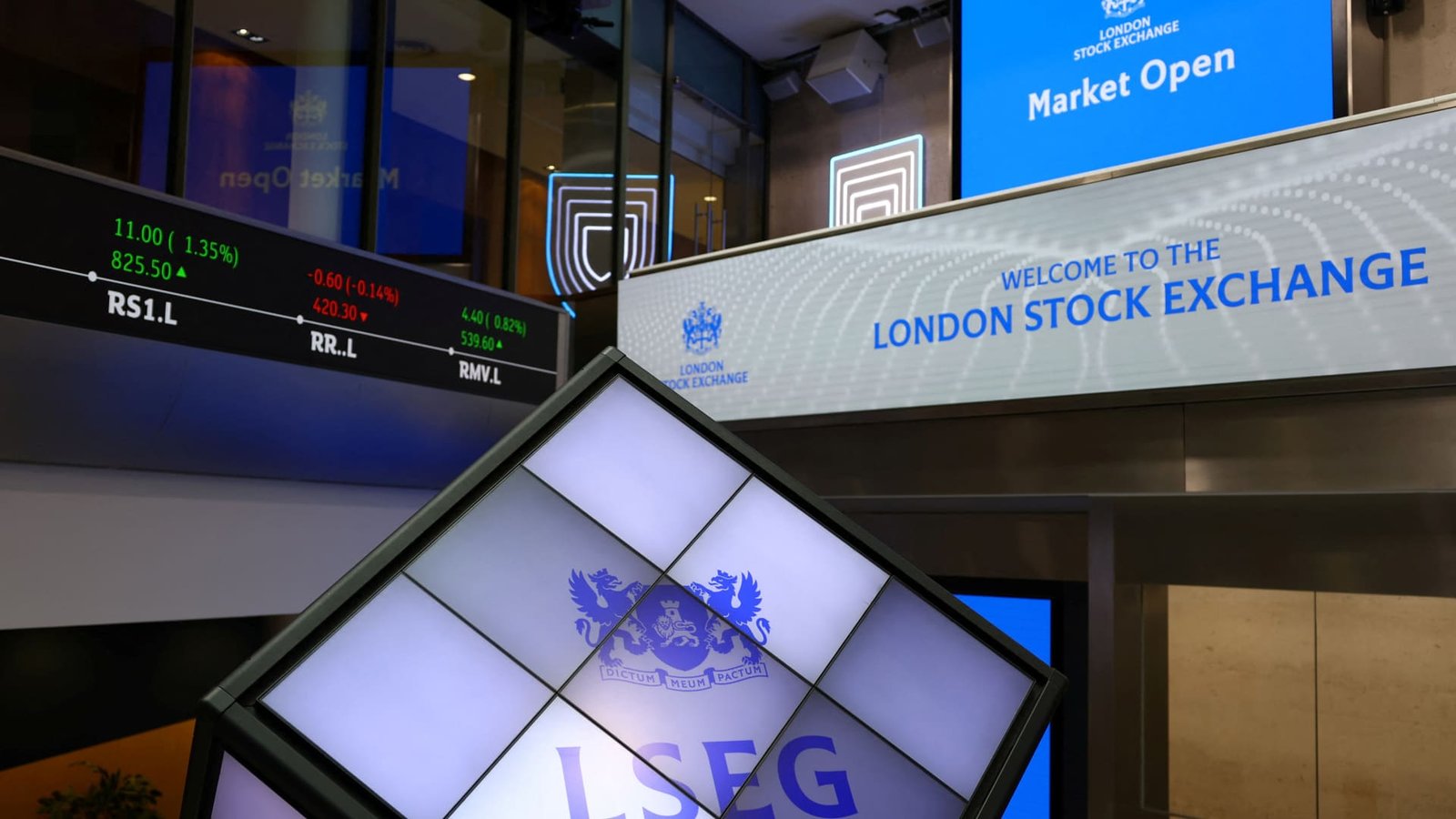
The chief executive of British investment management group M&G has urged the UK government to take decisive action to prevent more major companies from abandoning the London Stock Exchange, warning that the growing departure of prominent businesses could undermine the country’s financial markets and weaken its long-term economic prospects. The warning follows a decision by Compass Group, one of the largest companies listed on the FTSE 100, to move its primary stock market listing from London to New York, adding to mounting concerns about Britain’s ability to retain internationally competitive businesses.
Andrea Rossi, chief executive of M&G, has expressed strong opposition to Compass Group’s proposed move, confirming that the investment group’s fund managers intend to vote against the decision. In a letter published in the Financial Times, Rossi described the company’s decision as a warning about the overall health of the British stock market. He argued that the departure of such a significant FTSE 100 company should not be treated as an isolated corporate decision, but rather as an indication of deeper structural challenges facing the UK’s financial sector.

According to Rossi, the continued movement of major companies away from London should concern policymakers, investors and everyone interested in Britain’s economic future. He believes that the government needs to recognise the growing risks associated with the loss of major listed businesses and introduce targeted measures to make the London market more attractive to companies seeking investment and international growth.
Compass Group, which operates one of the world’s largest catering businesses, is valued at approximately £45.9 billion, making it the 18th-largest company in the FTSE 100 by market capitalisation. The company provides catering and related services to schools, hospitals, workplaces and other institutions across numerous countries. Its decision to transfer its primary listing to the United States has therefore attracted considerable attention from the British investment community.
The company has explained that its business has increasingly become focused on the North American market. Approximately two-thirds of its profits are generated in North America, while around 40% of its shareholders are based in the United States. According to the company, establishing its primary listing in New York would better reflect its geographical business operations and provide improved access to what it considers the world’s largest and deepest pool of capital.
The argument highlights a significant issue facing the London Stock Exchange. Many large British-listed companies generate substantial portions of their revenue outside the United Kingdom, making international investment markets increasingly important to their expansion strategies. Across the FTSE 100, only around one-third of reported revenue comes from the domestic UK market. As a result, some companies may consider New York a more suitable location for attracting international investors and securing higher market valuations.
However, the proposed departure of Compass has intensified concerns that other major companies could follow a similar path. If businesses increasingly conclude that American markets offer better access to investment, stronger valuations and greater financial opportunities, London could gradually lose some of its most valuable listed companies. Such a trend could weaken the exchange’s international standing, reduce investment activity and affect the broader financial services industry.
Rossi has suggested several possible interventions that could help reverse the trend. One of his key recommendations is to reduce or completely remove stamp duty on purchases of UK-listed shares. He believes that lowering the costs associated with investing in British companies could encourage greater participation from domestic and international investors, potentially making London a more attractive destination for businesses considering their listing options.
The financial implications of Compass Group’s departure are also becoming a concern for the government. According to analysis cited by the Financial Times, the move could result in approximately £40 million in lost stamp duty revenue. Although this amount is relatively small compared with the overall size of the British economy, it illustrates how the departure of major listed companies can affect public finances as well as the wider investment environment.
The M&G chief has also called for pension providers to increase their exposure to British equities. He argued that pension funds could allocate a greater proportion of their default investment portfolios to UK-listed companies, helping to create a stronger domestic investor base. Greater institutional investment could improve market liquidity, support company valuations and provide businesses with more opportunities to raise capital without relying excessively on overseas markets.
Pension investment has become an important part of Britain’s wider economic policy debate. Large pension funds manage substantial amounts of money on behalf of workers and retirees, giving them considerable influence over the direction of capital investment. Encouraging more of these funds to support British companies could potentially strengthen the domestic stock market and improve access to long-term financing.
Rossi has also proposed linking public financial assistance to future stock market commitments. He argued that when companies receive taxpayer support, a commitment to maintain or establish a UK stock market listing should form part of the agreement. The proposal reflects concerns that businesses benefiting from public resources should also contribute to the development of Britain’s domestic financial markets.
Compass Group’s planned move comes after several other major companies transferred their primary listings to the United States. Equipment rental company Ashtead, building materials group CRH and Flutter Entertainment, the owner of Paddy Power, have all moved their primary listings away from London in recent years. Their decisions have raised questions about whether the UK market is losing its competitive appeal compared with major international financial centres.
The pharmaceutical industry has also provided an example of the changing relationship between British businesses and American capital markets. AstraZeneca, one of the UK’s largest pharmaceutical companies, introduced a direct listing of its shares on the New York Stock Exchange in 2025, placing its American shares on an equal footing with its London-listed stock. Although this did not mean abandoning its London listing, the development demonstrated the growing importance of US investors to major British businesses.
The London market has faced additional departures through overseas acquisitions. Three FTSE 100 companies, investment manager Schroders, insurance group Beazley and product testing company Intertek, have left the public market following acquisitions by foreign groups in 2026. These transactions have further reduced the number of major businesses available to investors through London’s principal stock market.
The repeated loss of established companies has raised broader questions about the competitiveness of the UK’s financial system. Businesses considering where to list their shares often assess several factors, including investor demand, company valuations, regulatory requirements, trading costs, access to institutional capital and the overall strength of the financial market. New York benefits from a particularly large pool of institutional investors and substantial trading activity, making it an attractive destination for multinational businesses seeking greater international exposure.
For London, the challenge is not simply preventing individual companies from leaving. Policymakers must also address the underlying factors influencing corporate decisions and improve the conditions for businesses seeking to raise capital domestically. Lower investment costs, stronger pension fund participation, regulatory improvements and a more supportive environment for publicly listed companies could all play a role in restoring confidence.
The debate also carries implications for ordinary British savers. Pension funds, insurance companies and other investment institutions hold shares in major listed businesses on behalf of millions of people. Changes in the composition of the London market could therefore influence domestic investment opportunities and the long-term performance of portfolios connected to British companies.

The UK government has been approached for comment on the concerns raised by Rossi and the proposed measures to strengthen the London Stock Exchange. Its response could become an important part of the wider debate over Britain’s financial competitiveness and the future of its capital markets.
As Compass prepares to move its primary listing to New York, pressure is likely to grow on ministers to demonstrate that London remains an attractive destination for major international businesses. The central question facing policymakers is whether the UK can reverse the trend before further departures weaken its position as one of the world’s leading financial centres. Without meaningful reforms and renewed investor confidence, the continued movement of major companies overseas could become a long-term challenge for Britain’s economy, financial institutions and investment community.
Related News:
 Oil nears $100 as Saudi attacks shake markets
 Thames Water Revises Oxfordshire Mega-Reservoir Plan
 UK Trade Losses Grow Without EU Product Deal
 Poundland Rescue Bid Could Protect 11,000 Jobs
 UK Diesel Reaches £2 as Inflation Surges Across Europe
 Minister Rejects Fears of UK Diesel Shortage
 Informa Agrees £2.24bn Deal to Buy Clarion
 Healey Plans £1bn Online Marketplace Tax Crackdown
 BP Profits Surge as Middle East Conflict Lifts Margins
 UK House Prices Suffer Sharpest Fall in Three Years
 UK Retail Sales Surge as Families Stockpile Emergency Supplies
 Capita CEO Quits as Shares Plunge 67% Over Pension Crisis
 UK House Prices Fall as Mortgage Rates Rise
 Billionaire Chris Rokos poised to leave UK
 JPMorgan Boss Warns Against UK Bank Tax Rise
 John Lewis Losses Widen to £124m as Confidence Falls
 UK Productivity Improves as Bank Weighs Interest Rates
 UK Retail Sales Rebound as Consumers Spend More
 UK Borrowing Hits £18.3bn Ahead of Budget
 Thinktank Calls for Abolition of UK State Pension
 MPs Defend UK Economic Watchdog Against Critics
 Chinese Hybrid Car Surge Raises EU Auto Industry Concerns
 AO Acquires Jessops in Camera Retail Expansion
 Should Savers Lock Into 5.25% Fixed Rates?
 Beaverbrooks Boss Calls for Relief on Business Costs
 UK Diesel Prices Hit Record High Amid Iran Conflict
 UK house price growth slows as mortgage rates rise
 UK borrowing costs surge as global bond sell-off deepens
 Boots Sale Nears as Weston Family Eyes $9bn Deal
 UK Assures Public Over Diesel Supply
 UK Faces Calls to Review Bank Failure Bets
 UK Weighs Chinese Car Tariffs Amid EU Trade Push
 BT Agrees £400m TalkTalk Rescue Deal
 Asos Investigates Hack Claims After Customer Alerts
 EU-China Talks Target Surge in Hybrid Car Imports
 Google Maps Brings Live Fuel Prices to UK Drivers
 Tesco Raises Profit Forecast as Consumer Confidence Holds
 Ministers Push ATO to Reconsider Credit Card Ban
 Australia Delays Tax Credit Card Payment Ban After Backlash
 IFS Warns UK Budget Faces £35bn Spending Gap
 UK Van Drivers Face £2.5bn Diesel Cost Surge
 EU Caps Chinese Hybrid Car Imports at 350,000
 IMF Warns Global Economy Is Nearing Its Limits
IMF Raises UK Growth Forecast Ahead of Healey’s Budget
 Business Chief Urges Burnham to Fix Brexit Damage
 UK Unemployment Falls to 4.7% as Vacancies Decline
UK Borrowing Hits £24.5bn Ahead of Healey’s Budget
 Labour MPs Urge Burnham to Lead UK Reindustrialisation
 China’s AI Ambitions Hit $2.4 Trillion Market Setback
 Healey Set to Scrap Planned Cut to Cash ISA Allowance
 Lloyds Warns Against Extending Higher Bank Tax
 UK House Price Growth Slows to Two-Year Low
 London Luxury Homes Face Deeper Price Declines
 Australia Faces Deeper Economic Slowdown
 UK Mortgage Holders Face Fresh Payment Shock
 Ryanair Weighs Pay Freezes as Fuel Costs Surge
 David Jones Faces Administration After Talks Collapse
 M&S Profits Rebound to £355m After Cyber-Attack
 Poundland Remains Vulnerable as Rescue Talks Continue
 Nationwide Launches Exclusive Savings Deal Paying 5.3%
 UK Inflation Climbs to 3.6% as Fuel Prices Surge
 Bank of England Faces £160m Renovation Challenge
 EDF Expands UK Market With 1.3m Utilita Accounts
 UK Borrowing Beats Forecast in Boost for Healey
 UK Cost Squeeze Deepens as Mortgages and Gas Rise
 UK Retailers Accused of Breaking Refund Laws
 UK Pay Growth Slows to 3.9% as Rate Decision Nears
 Entain Plans 400 Job Cuts After Profit Update
 UK Rent Gap Puts Low-Income Families Under Pressure
 Calls Grow to Expand UK National Wealth Fund
 Healey urged to act as UK energy bills rise 4%
 North Sea Strike Threatens UK Fuel Supplies
 UK house prices stall as mortgage costs rise
 Japan Beer Giants Face Cartel Probe
 Hall and Woodford Win Nobel Economics Prize
 Iran War Pushes UK Corporate Profit Warnings to Two-Year High
 UK Inflation Hits 3.5% as Middle East War Drives Fuel Costs
 Sainsbury’s Warns of Tough Christmas Ahead
 UK Chancellor Moves to Scrap Gas Standing Charges
 Australian Mortgage Confidence Hits 32-Year Low