Published: 05 August 2026. The English Chronicle Desk. The English Chronicle Online
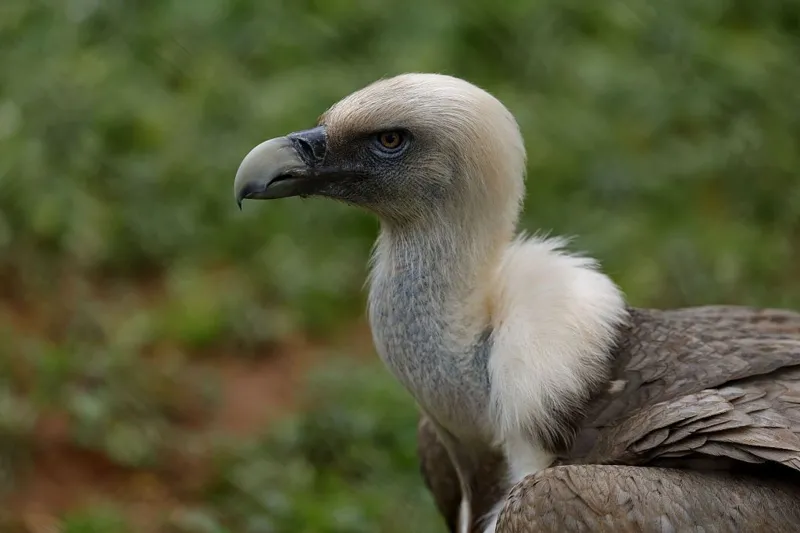
Vultures are among nature’s most misunderstood birds. Often associated with death, decay and scavenging, they rarely receive the admiration given to colourful songbirds or majestic birds of prey. Yet across Africa, conservationists warn that the disappearance of vultures is creating a serious ecological problem, with several species now facing the threat of extinction.
In Nigeria, however, one community is demonstrating that protecting the birds is possible when conservation becomes a shared responsibility.
In the south-eastern town of Awka-Etiti, Chukwuemeka Igwe has become known as the “Vulture King” because of his determined efforts to protect the birds. Working with the Nigeria Conservation Foundation, Igwe has spent years encouraging residents to defend vultures from hunters and helping establish local measures designed to keep the birds safe.
His work is centred around a sacred forest surrounding a shrine dedicated to Nguma, a traditional deity. The forest is considered a protected spiritual place, and residents say vultures have long been associated with the shrine.
“People fear the environment where the shrine is. No evil will ever happen here. So, nobody fights vultures that perch here,” Igwe explains.

The relationship between the community and the birds is rooted in traditional beliefs. Residents sometimes leave animal sacrifices at the shrine, which attract vultures. Their presence is regarded as a positive spiritual sign, suggesting that the deity has accepted the sacrifice and heard the community’s appeal.
For Igwe, however, the importance of the birds extends well beyond spirituality.
He says vultures have been part of everyday life in Awka-Etiti for as long as he can remember, walking among people and feeding on food left around the community.
That relationship stands in sharp contrast to what is happening elsewhere across West Africa, where vulture populations have fallen dramatically.
Conservationists say hunting, poisoning, habitat destruction and the illegal trade in vulture parts are driving the decline. Traditional beliefs and spiritual practices are also contributing to demand for the birds and their body parts in some parts of the region.
According to BirdLife International, poisoning is estimated to account for about 60% of vulture deaths in Africa.
The scale of the decline is alarming. BirdLife says African vulture populations have fallen by between 80% and 97% over the past 50 years. Seven African vulture species are currently classified as globally Endangered or Critically Endangered on the International Union for Conservation of Nature Red List.
The consequences extend far beyond the loss of individual bird species.
Vultures perform a vital ecological function by consuming dead animals rapidly. Their powerful digestive systems allow them to process carcasses containing dangerous pathogens that could otherwise spread through the environment.
By removing dead animals before they become breeding grounds for bacteria and other organisms, vultures effectively provide a natural sanitation service.
Nigeria Conservation Foundation conservation biologist Stella Egbe says the disappearance of vultures can therefore have consequences for human health.
“In places where the total collapse of vultures has happened, there has been impact of rising zoonotic diseases,” she says.
Vultures can help reduce the risk of diseases such as anthrax and rabies spreading through animal remains. Their absence can leave ecosystems without an important natural barrier against potentially dangerous pathogens.
But the birds themselves are becoming increasingly vulnerable.
Rapid urbanisation has destroyed trees and other habitats where vultures nest. At the same time, poisoning remains a major threat, particularly when birds feed on contaminated carcasses.
The illegal wildlife trade adds another dimension to the crisis.
Conservationists say Nigeria has become a significant hub for the illegal trade in vultures, partly because of its biodiversity and its porous borders. Demand for vulture bodies and body parts has pushed prices sharply higher.
Egbe says dead adult vultures that once sold for around 25,000 to 30,000 Nigerian naira can now fetch as much as 200,000 naira.
The increasing commercial value of the birds creates a dangerous incentive for hunters.
More worrying still, conservationists say hunters are increasingly targeting nests and eggs.
Vultures reproduce slowly compared with many other birds. Adults generally reach sexual maturity between five and seven years old and may produce only one chick every year or two. Many young birds also fail to survive their first year.
That means removing a nest or eggs can have consequences that extend for years.
“You’ve heard shocking news that people are not just going for vultures anymore, they’re going for the nests and even the eggs,” Egbe says.
The situation has made the survival of protected populations particularly important.
Awka-Etiti offers one such example.
For years, the birds remained relatively secure because of the spiritual importance attached to the shrine and its surrounding forest. But Igwe says the situation began to change when outsiders arrived to hunt the birds.
As the number of vultures declined, he became increasingly determined to act.
For the past six years, he has worked with the Nigeria Conservation Foundation to mobilise community leaders, volunteers, local groups and security teams.
Igwe visits markets, bus stations and public spaces to educate people about the importance of vultures.
“I tell them that vulture is helpful to human life,” he says.
His unusual nickname has become part of his conservation identity. Rather than trying to escape the title of Ezeudene, or “King of Vulture”, he has embraced it as a way of drawing attention to his campaign.
“I’m fighting to make nature exist the way it’s supposed to be,” he says.
The community has also introduced local bylaws to strengthen protection for the birds. Volunteers monitor the population and watch for potential threats from outside hunters.
The results are encouraging.
Local monitoring teams have recorded more than 160 vultures, compared with around 20 recorded in 2017.
For a species facing severe population declines across much of Africa, that increase provides an important example of how local conservation can work.
“The missing vultures are almost back,” Igwe says. “If you go to the marketplace now, you see vultures. At one time they disappeared, but now they are coming back.”
The experience also highlights the importance of combining conservation science with local knowledge and cultural traditions.
Rather than asking communities to abandon long-established beliefs, conservationists in Awka-Etiti have worked with residents to build on an existing relationship between people and birds.
The sacred status of the forest has helped provide protection, while modern conservation efforts have strengthened awareness and monitoring.
Nigeria’s authorities are also attempting to tackle the wider illegal wildlife trade.
Abdullahi Maiwada, a spokesman for the Nigerian Customs Service, says officials have seized protected wildlife and supported prosecutions involving illegal trafficking.
Nigeria is a member of the Convention on International Trade in Endangered Species, or CITES, under which international trade in endangered species is subject to strict controls.
But Maiwada acknowledges that enforcement cannot solve the problem by itself.
“We may not be able to do it without the cooperation or understanding of members of the community,” he says.
His point reflects one of the central lessons from Awka-Etiti. Wildlife protection becomes considerably more effective when local residents understand why an animal matters and actively participate in protecting it.
That approach may become increasingly important as conservationists prepare to review the West African Vulture Conservation Action Plan, originally drafted in 2022.
Researchers and conservation organisations are expected to examine the pressures facing vultures across the region, including poisoning, hunting, habitat loss and illegal trade.
The challenge is enormous.
Seven African vulture species are already considered Endangered or Critically Endangered, while populations have collapsed across much of the continent. The discovery of more vulnerable nests and eggs adds another threat to birds that already reproduce slowly.
Climate and environmental changes could further complicate their future by altering habitats and food availability.
Yet the story of Awka-Etiti provides a reason for cautious optimism.
The return of vultures to a community where their numbers had fallen sharply suggests that populations can recover when hunting is prevented and suitable habitats remain available.
For Igwe, the birds’ return is not simply a conservation statistic. It represents a restoration of something that has long been part of his community’s environment and cultural identity.

For scientists, it is evidence that community-led conservation can make a measurable difference.
And for the wider public, the story offers a reminder that animals often dismissed as unattractive or unpleasant can play essential roles in maintaining healthy ecosystems.
Vultures may feed on death, but their presence helps protect life.
The challenge now is to ensure that the success of Awka-Etiti does not remain an isolated example. Protecting Africa’s remaining vultures will require stronger enforcement, public education, habitat protection and cooperation between communities, conservation organisations and governments.
The Vulture King may have helped bring hundreds of birds back to one corner of Nigeria. But with populations continuing to decline across the continent, his campaign is ultimately part of a much larger fight: keeping one of nature’s most important cleaners in Africa’s skies.
Related News:
 Moldova River Crisis Exposes War’s Hidden Cost
 Chornobyl Still at Risk 40 Years After Disaster
 Europe’s Rivers Dry Up as Climate Crisis Deepens
 Congo Ebola Outbreak Risks Becoming Deadliest Ever
 DR Congo Faces Its Worst Ebola Outbreak Ever
 South Africa’s Garden Route Gem Faces Looming Water Crisis
 How Do You Modernise Mango Farming? India’s Growers Urged to Innovate as Climate Change Hits
 Study Says Only Two Nations May Survive Nuclear War
 Baba Vanga’s Chilling World War 3 Prediction and Russia’s New Leader
 Rescued Sea Turtle Shows ‘Fighting Spirit’ After Vital CT Scan
 How and When to See April’s Full Pink Moon
 “Homo Sapiens are All of Us”: Artemis II Crew Sends Emotional Message of Unity from Deep Space
 The Digital Frontline: Inside the Rise of Africa’s ‘Manosphere’
 Hot in the City: Energy Crisis Tests Singapore’s Air-Con ‘Addiction’
 The Sinking Heritage: The Dutch Village at Risk of Being Demolished
 Canadian astronaut French words ease language row
 RAF Typhoons scrambled amid Russian drone threat near Nato
 Escobar’s Hippos May Be Moved to India Zoo
 Older Than Dinosaurs: Secrets of Mayfly Dance Revealed
 The $2.5 Billion “Speed Breaker”: RBI Battles Digital Fraud Surge
 The Glass Ceiling of the Galaxy: Inside the High-Stakes Succession War at Samsung
 “The Trial’s Strange Turn”: Musk v. Altman Case Veers into Personal Testimony and ‘Sperm Offers’
 Doomsday Clock Nears Midnight Amid Global Crises
 “The Body Under Siege”: Understanding the Physiological Impact of Extreme Heat
 Ebola outbreak in DRC overwhelms health system as cases surge
 Pope Meets Families in Italy Toxic Waste Zone
 Hope for mountain bongos returns to Kenya
 UN Issues Urgent Warning: Imminent Return of El Niño
 Mangrove Forests Recover After Years of Damage
 Ancient Method Turns Food Waste Into Meals
 African Fishermen Blame Chinese Trawlers for Declining Catches
 Scientists Discover New Monkey Species With Striking Orange Lips in DR Congo Rainforest
 As Heatwaves Strike, Europeans Turn to Chinese Air Conditioners
 Olympus Awaits Unesco Heritage Recognition
 French Firefighters Battle ‘David vs Goliath’ Wildfire
 Magnitude 7.1 Earthquake Strikes Japan, Several Injured
 People Trapped in Japan Shopping Centre After Earthquake
 Many Trapped Inside Japanese Shopping Centre After Earthquake
 Japan Quake Survivors Recall Terror as Homes Crumble
 Ghana Mourns the Death of Its Tallest Man, Remembered as a Gentle Giant
 Calls Grow to Ban Toxic Pet Flea Treatments
 Brazil Orders Discord to Suspend Livestreams
 Britain deploys RAF specialists to assist Belgium with drone threats
 US Clears Nvidia AI Chip Sales to China in Policy Shift
 UK New Car Discounts Near £6,000 as Prices Are Slashed
 Snow and Rain Warnings as Cold Snap Continues in the UK
 Indian University Kicked Out of AI Summit for Claiming Chinese Robot Dog as Its Own Invention
 Epstein Eyed Record Label Investment to Access Women, Files Suggest
 Chad Shuts Border With Sudan in Bid to Stop Conflict Spreading
 ‘Every Day Feels Like a Month’: Iranians Describe Life Under ‘Constant’ US‑Israeli Strikes
 Cocoa Farmers Suffer as Chocolate Market Collapses
 Trump Considers Military Operation to Seize Iran’s Uranium
 ‘The Final Word’: Kathleen Stock’s Polemic Against Assisted Dying Reshapes the UK Debate
 ‘The Cost of Living’: Asia’s Migrant Workers Debate if Gulf Jobs are Worth the Risk of War
 Electric Shock: Australians Buy Record Number of New EVs as Fuel Crisis Bites
 The Suffocating Silhouette: Why Metal’s Mask Trend is Turning Deadly
 The Fallen Icon: Ben Roberts-Smith Charged with Five War-Crime Murders
 The Great Chokehold: Why the Strait of Hormuz is the Epicenter of the 2026 Crisis
 The Frozen Frontier: Why Frostbite is the Least of Concerns for Canada’s Arctic Forces
 Beyond the Swoosh: Anta Sports Overtakes Rivals to Become Global Top Three
 “Three-Wheeled Triumph”: Mayor of Erewash Completes 2,000-Mile European Charity Run
 Capitalism ‘Suicidal’, Warns Petro at Climate Summit
 Tragedy in the Red Centre: Outback Search Ends in Discovery of Missing Girl’s Body
 The “Dry” Life: Teens Trialing Social Media Bans Call Initial Disconnection “Boring” and “Dry”
 “The Digital Frontier”: Scotland’s Papers Grapple with AI Harassment and ‘Mortgage Bottlenecks’
 “Eyes in the Sky, Spikes on the Ground”: Advanced Satellite Imagery and AI Algorithms Deployed Across Britain to Save the Vanishing Hedgehog
 “The Critical Intervention”: Essential Steps for Identifying and Treating Heat-Related Emergencies
 “The Price Persistence”: Navigating the UK’s Evolving Cost-of-Living Landscape
 Bear Escapes Factory Through Open Window
 Fans Bring Flags and Fire to World Cup Scenes
 Fans Invited to Share Scotland World Cup Stories
 Girl Survives 32 Hours Under Rubble After Venezuela Quake
 Trump’s Major Recruitment Drive Targets Border Patrol Growth
 London Tube Heat Reaches Dangerous Levels
 Thousands Evacuated in France as Wildfires Spread Across Regions
 AI Jitters Send Chip Stocks Tumbling in US and Asia
 Wildfires Intensify in South-West France as Region Braces for 40C Heatwave
 Two Killed as Firefighting Helicopters Collide During Greece Wildfire Mission
 Avalanche Claims Nepal’s Greatest Mountain Guides
 Tennessee Town Backs Trump as War Fuels Its Economy