Published: 16 September 2026. The English Chronicle Desk. The English Chronicle Online
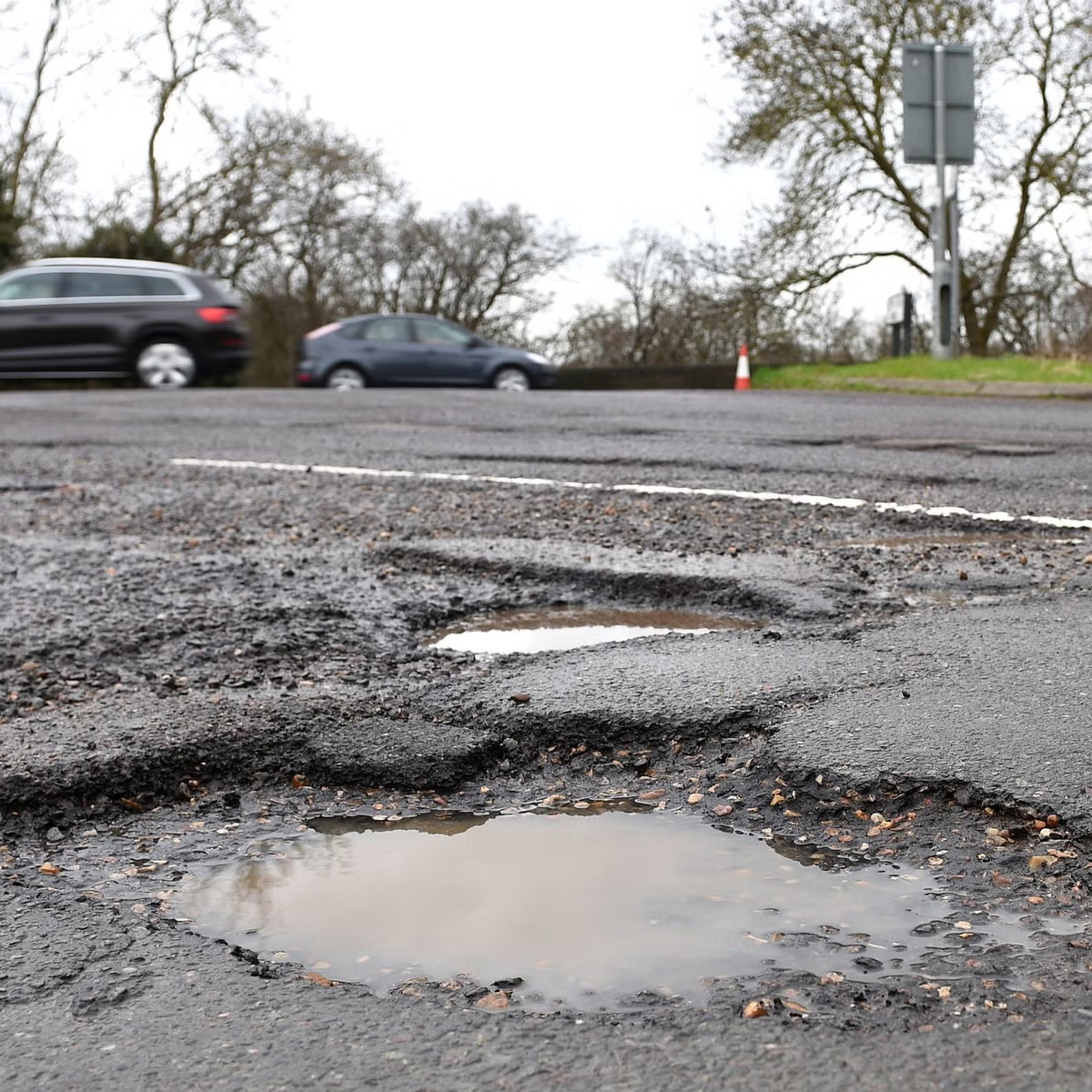
Britain’s already deteriorating road network could face further damage in the coming months as the effects of an exceptionally hot summer combine with the legacy of a wet winter, according to warnings from the RAC and road-surface specialists. The organisations say motorists should prepare for more potholes as prolonged heat and intense ultraviolet radiation weaken asphalt surfaces, leaving roads more vulnerable to cracking and deterioration.
Potholes are often associated with cold, wet and freezing conditions, when water enters cracks and repeated temperature changes contribute to the breakdown of road surfaces. However, prolonged periods of extreme heat can also accelerate deterioration. The RAC said the UK’s recent sequence of heatwaves has created conditions that could leave roads particularly susceptible to damage once autumn rainfall arrives.
Simon Williams, the RAC’s head of policy, said intense ultraviolet exposure and heat gradually oxidise the bitumen that binds asphalt together. As the binding material becomes more brittle, cracks can develop in the surface. Once those cracks are exposed to traffic and subsequent rainfall, they can develop into more serious defects.
The warning comes after a difficult period for Britain’s roads. Earlier in 2026, the Asphalt Industry Alliance reported that only about half of the road network in England and Wales was considered to be in good condition. Months of heavy rain during the preceding winter had already placed significant pressure on road surfaces and local authority maintenance budgets.

The summer then brought another form of extreme weather. Temperatures exceeded 38C in some parts of the UK during repeated heatwaves, placing additional stress on roads and other infrastructure. Road-surface experts have warned that the combination of intense summer heat and ultraviolet radiation followed by colder and wetter winter conditions can accelerate the deterioration of roads.
Mike Hansford, chief executive of the Road Surface Treatments Association, said extreme UK weather conditions could speed up the deterioration of road surfaces. He pointed to the combination of increased summer ultraviolet radiation and colder, wetter winter weather as a particular concern.
The road problems are part of a wider pattern of infrastructure pressures associated with increasingly extreme weather. Scientists have linked the UK’s exceptional temperatures to human-induced climate change, while research cited by the Guardian found that the high temperatures experienced during the summer were significantly more likely because of human-caused climate change.
Roads are not the only part of the UK’s transport infrastructure affected by extreme heat. Hot and dry conditions have caused soils beneath railway embankments to shrink, contributing to timetable changes and slower services on some routes. High temperatures can also increase the risk of railway tracks buckling, creating additional operational challenges for train companies and infrastructure managers.
The effects of prolonged heat have also extended beyond transport. UK insurers have reported increases in subsidence claims during the summer, as unusually dry conditions caused soil to lose moisture and shrink around buildings. Hastings Direct said it expected claim levels to remain above normal into October unless sustained rainfall restored soil moisture.
For motorists, potholes have become a significant source of concern. An RAC report earlier in the year found that 51% of motorists surveyed considered the condition of Britain’s roads their biggest driving-related concern. The same research found that 83% said they encountered potholes on most car journeys.
Williams attributed motorists’ concerns to both long-term pressures on road maintenance and the effects of recent extreme weather. He said the condition of road surfaces reflected a prolonged need for investment by local authorities, compounded by the particularly wet winter and exceptionally hot summer.
There are, however, signs of increased government spending on road maintenance in England. Williams pointed to council highway budgets of £1.6 billion for the 2025-26 financial year, describing the funding as a record level. He also highlighted £7.3 billion allocated in the November budget for road improvement works through the end of the decade.
The additional funding is intended to allow councils to take a longer-term approach to road maintenance rather than relying solely on short-term repairs. Road-surface organisations have increasingly argued that preventative maintenance can help preserve roads before small cracks develop into larger defects requiring more expensive intervention.
The Department for Transport has also introduced new requirements for councils in England designed to encourage longer-term approaches to road maintenance. Under the requirements announced in June, local authorities will have to provide evidence that they are pursuing more durable solutions for potholes and deteriorating roads.
The new approach links maintenance funding to councils’ performance in addressing the underlying condition of their road networks. Authorities that fail to demonstrate sufficient progress could face reductions of up to one-third of their road-maintenance funding.
The policy reflects a wider shift towards preventing road deterioration rather than repeatedly repairing individual potholes. While emergency repairs can address immediate safety problems, long-term surface treatments and planned maintenance can help reduce the rate at which roads deteriorate.
The RAC’s warning nevertheless highlights the difficulty of maintaining infrastructure during increasingly variable weather conditions. Roads that have already been weakened by heavy rainfall can be exposed to high temperatures, ultraviolet radiation and prolonged dryness, followed by renewed rainfall. Each stage can contribute to different forms of deterioration.
For councils, the challenge is therefore not simply the number of potholes already visible on roads. Maintaining the underlying road structure and preventing cracks from developing into deeper defects may become increasingly important as weather patterns become more extreme.
The issue also carries financial consequences for motorists and local authorities. Potholes can damage vehicles, while repeated repairs increase pressure on already stretched council budgets. If extreme weather continues to accelerate deterioration, authorities could face greater demand for both immediate repairs and longer-term reconstruction.

The latest warning does not mean every road will experience the same level of damage. Road condition varies considerably according to construction, traffic levels, maintenance history, drainage and local weather. Nevertheless, the RAC and road-surface specialists say the combination of existing deterioration and this summer’s extreme heat creates conditions in which additional problems could emerge.
The coming months will provide a clearer indication of the scale of the damage. Autumn rainfall could expose weaknesses created during the summer, particularly where heat and ultraviolet radiation have already caused cracking. Roads that survived the winter in poor condition could therefore require further attention as temperatures fall and wetter weather returns.
The government’s increased funding and new maintenance requirements are intended to improve the UK’s ability to respond to the problem. But the RAC’s warning underlines the growing importance of adapting infrastructure maintenance to a changing climate, where both extreme heat and heavy rainfall can contribute to damage.
For Britain’s motorists, that could mean continued encounters with potholes even after the summer heat has ended. The immediate concern is road condition, but the longer-term challenge is ensuring that the country’s infrastructure can withstand increasingly demanding weather conditions while councils move towards more preventative and durable maintenance.
Related News:
 Heathrow Expansion Faces New Climate Conditions Over CO₂
 Glasgow Central Set for Full Reopening After Fire
 Heavier SUVs Accelerate Britain’s Pothole Crisis
 Reform UK funding: mystery billionaire revealed
 UK rejects EV charging VAT cut amid Treasury clash
 Essex valley emerges as rising English wine hub
 London Tube Heat Reaches Dangerous Levels
 London’s 2026 ‘Great Stink’ Raises Sewer Concerns
 Burnham unveils £65m drought aid for farmers
 Australia Races to Find Tourists Missing in Nepal
 France Eases Cheese Rules as Drought Hits Farms
 Former Railway Line Named Britain’s Favourite Path
 London Launches First Self-Driving Taxis
 UK Subsidence Claims Surge After Record-Breaking Summer
 Nats Boss Summoned as UK Flight Chaos Continues
 Thames Water Revises Oxfordshire Mega-Reservoir Plan
 Anglian Water Fined £63 Million Over Sewage Scandal Amid National Outrage
 How to Exit Your Broadband Contract Without Paying Exit Fees
 Permission Granted for Britain’s First Vertical Rocket Launch at Shetland Spaceport
 Government Expands Electric Car Grant Scheme, Offers Discounts on Five More Models
 Ed Davey Urges Government to Block Elon Musk’s Tesla from Supplying UK Home Energy
 UK Could Generate Nearly £2bn Annually by Taxing SUVs, New Study Reveals
 Google Pledges £5bn AI Investment in UK Ahead of Trump State Visit
 Jaguar Land Rover Extends Production Halt Following Cyber-Attack
 British AI Startup Outshines Human Forecasters in Global Prediction Contest
 Royal Mail Owner Acquires Stake in Collect+ and Launches High Street Rebrand
 Jaguar Land Rover to Resume Production After Cyber-Attack, Launches Supplier Support Scheme
 NHS May Pay 25% More for Medicines Amid US Drug Talks
 Watchdog Rules Red Tractor Ad Misled Public on Environmental Claims
 North Sea oil workers must lose weight or face job loss
 UK Taskforce Unveils Plan to Streamline Nuclear Reactor Rules
 MPs warn AI financial risks threaten UK stability
 MPs warn AI financial risks threaten UK stability
 AI job losses UK: Britain faces sharper employment shock
 UK New Car Discounts Near £6,000 as Prices Are Slashed
 South Africa’s Garden Route Gem Faces Looming Water Crisis
 Aberdeen Chosen for GB Energy HQ at Marischal Square
 UK Energy Reform Could Cut Bills by £200
 Rising Costs Force Families to Rethink Days Out
 UK Aviation Watchdog Clips Heathrow’s Fee Hike Wings
 Storm Dave Disrupts Travel but Conditions Set to Ease
 OpenAI Halts Stargate UK Project Amid Energy Crisis
 Moldova River Crisis Exposes War’s Hidden Cost
 Chornobyl Still at Risk 40 Years After Disaster
 Older Than Dinosaurs: Secrets of Mayfly Dance Revealed
 Tractor Breakdown Tests Lincolnshire Farmers
 Britons Build Emergency Supplies Amid Rising Fears
 Father’s diaries reveal doubts over Hawking
 Sycamore Gap Artwork Chosen After Public Vote
 UK firms accused of ‘AI washing’ boom
 Public Confidence in University Degrees Plummets in the UK
 UK Schools Struggle as Classrooms Top 40C
 Italy’s Beach Lunch Ban Sparks Holiday Backlash
 EasyJet Takeover Sparks Fears Over Passengers’ Future
 Olympus Awaits Unesco Heritage Recognition
 Three-Quarters of England’s Riverbanks Still Off Limits
 Weight-Loss Drugs Offer Food Savings Mainly to High Earners
 Gen Z turns to BirdTok for a gentler digital escape
 Pubs and Hotels Face Business Rates Reform Review
 Queue row erupts on Wales’ highest mountain
 Ghent Professors Questioned Cofnas Appointment
 Nepal Flood Death Toll Tops 300 as Second Flood Feared
 Drought Raises Flood Risk as UK Autumn Approaches
 UK Risks Falling Behind in AI Race
 UK Households Could Save £173 on Fixed Energy Deals
 Green Leader Targets Starmer’s Former Seat
 UK House Prices Fall as Mortgage Rates Rise
 Councils spend £125m on illegal children’s care
 McLaren to Create 1,000 UK Jobs in £450m Investment
 Iceland to Open First UK High Street Store in Falklands
 Election Candidate Abuse Raises Alarm in England
 UK Retailers Accused of Breaking Refund Laws
 UK State Pension Set to Rise 3.9% as Triple Lock Holds
 Louise Haigh Urges UK to Heed AI Safety Warnings
 North Sea Firms Urge Early End to Windfall Tax
 UK Pay Growth Slows to 3.9% as Rate Decision Nears
 Bank Urged to Slow Bond Sales as UK Costs Rise
 UK Inflation Hits 3.1% as Household Pressure Grows
 Britain Records Second-Best Butterfly Season in 16 Years
 Slave-Trade Wealth Embedded in Britain’s Financial System