Published: 29 September 2026. The English Chronicle Desk. The English Chronicle Online
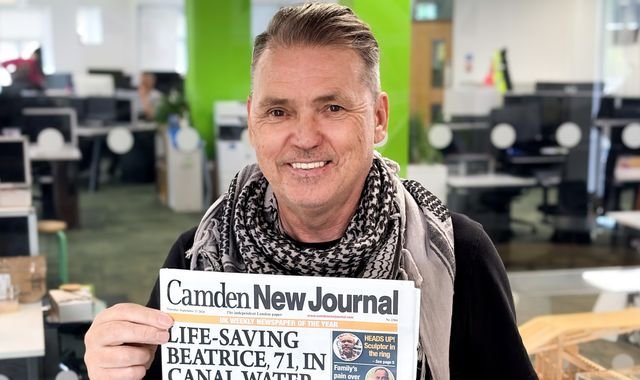
Green energy entrepreneur and Labour donor Dale Vince is planning to support the creation of a London-wide news operation as part of a proposed rescue package for a group of established local newspapers facing financial pressure.
The plan would involve investment in the organisation behind the Camden New Journal, Islington Tribune and Westminster Extra, with Vince saying he wants to strengthen the publications financially while helping them develop a broader digital presence. He is also considering expanding the Westminster edition so that it could cover issues affecting communities across the capital.
The proposal comes at a time when London’s traditional local journalism sector has faced substantial disruption. Although the capital has a population of about nine million people and remains one of the country’s largest concentrations of political, economic and cultural activity, several major newsrooms have closed, reduced their operations or changed their publishing models over the past two decades.
Vince said he intended to provide whatever level of financial support was necessary to help the newspaper group move towards a more sustainable future. He described the proposed investment as being motivated primarily by the importance of local journalism rather than by conventional business considerations.

The entrepreneur has also been outspoken about what he considers to be a rightwing bias in the British media. He said that concern was among the reasons he wanted to become involved in supporting the London newspaper group. His stated objective is therefore not simply to preserve existing publications but also to contribute to a wider media landscape in which he believes local voices have become increasingly difficult to sustain.
Under the proposal, the Camden New Journal would receive support to improve its financial position and develop its digital operation. Vince has also discussed transforming the Westminster edition into a publication with a much wider London focus.
He suggested that the expanded publication could potentially be organised around the capital’s different geographical areas, with a name reflecting its ambition to serve readers across north, south and east London as well as Westminster.
The proposal has not yet been formally finalised, meaning details of the investment, ownership arrangements and precise structure of the planned London-wide operation remain subject to further discussions.
Vince’s intervention is part of a broader debate about the future of local journalism in Britain. Newspapers that once relied heavily on print advertising, circulation revenue and large editorial operations have faced major changes as audiences have moved online and advertising has shifted towards digital platforms.
London has been particularly affected by this transformation. The Evening Standard, which had been a daily presence in the capital for almost two centuries, ended its daily newspaper operation in 2024 and subsequently moved to a weekly format under the London Standard name, with a greater emphasis on arts and culture.
Earlier efforts to establish other London-focused free daily newspapers also struggled to survive. The London Paper, launched by News International, closed in 2009 after three years, while London Lite, published by the owner of the Daily Mail, also ceased publication that year.
The Metro, meanwhile, remains a major free newspaper distributed in cities across Britain, including London, but has itself been undergoing structural changes as its owners seek to maintain a financially sustainable operation.
Against that difficult backdrop, smaller subscription-based news organisations have emerged as an alternative model for covering London. These operations have attempted to build audiences around journalism rather than depending exclusively on mass circulation and advertising.
One example is London Centric, a subscription-based news organisation founded by former Guardian journalist Jim Waterson. The publication has attracted thousands of paying subscribers and has focused on what its founder describes as a return to basic local journalism.
Waterson has welcomed Vince’s decision to support an established local newspaper organisation, arguing that the Camden New Journal group had maintained a commitment to quality journalism during a period when parts of the industry increasingly focused on maximising online traffic.
At the same time, Waterson has acknowledged the financial difficulties involved in expanding independent local journalism. Even a successful subscription-based publication can remain relatively small when compared with the large newsrooms that once operated across London.
The challenge is particularly significant because local journalism requires sustained investment in reporters, editors and other newsroom staff. The Camden New Journal group currently employs 18 people, according to recent financial records, while its cash reserves have come under pressure.
For supporters of local newspapers, the value of such organisations extends beyond the number of stories they publish. Local reporters often cover council decisions, planning disputes, community campaigns, local courts, public services and neighbourhood developments that may receive limited attention from national news organisations.
The decline of local newsrooms can therefore create what campaigners and journalists describe as news deserts, where communities have fewer dedicated reporters monitoring decisions and institutions that directly affect residents.
London presents a particularly complicated version of that problem. The capital has a large and diverse population, but its enormous scale makes comprehensive local coverage difficult. National media organisations frequently concentrate on Westminster, major political developments and high-profile events, while smaller neighbourhood issues can struggle to attract sustained coverage.
Vince believes the proposed London-wide operation could help address part of that gap. His plan would combine the existing reputation and local knowledge of the newspaper group with a broader digital strategy and coverage extending beyond its traditional geographic boundaries.
He has made clear, however, that he does not intend to become an active day-to-day manager of the publications. Vince has already launched an online publication called Babelfish and said he would generally take a hands-off approach to the London titles.
He has indicated that he may contribute opinion articles to the newspapers but does not intend to make such contributions a condition of his investment. That distinction could become important as questions arise over the relationship between ownership, editorial independence and political affiliations.
Vince is a prominent supporter of Labour and has previously donated to the party. His decision to invest in a news organisation while openly discussing his concerns about the political balance of the British media is likely to attract attention to the question of how financially supported journalism maintains editorial independence.
Vince has said the newspapers already broadly fit with his own view of the world and that there is no expected cultural conflict between him and the existing organisation. At the same time, his description of himself as a hands-off investor suggests that editorial decisions would remain with the newspaper operation rather than being directed personally by him.
The issue reflects a wider challenge facing privately supported journalism. Financial investment can provide struggling publications with the resources needed to retain reporters, develop digital products and reach new audiences. However, the involvement of politically connected or ideologically motivated investors can also raise questions about influence, even when investors say they will not interfere in editorial decisions.
For the Camden New Journal group, the immediate priority is likely to be financial stability. The proposed rescue package could give the organisation an opportunity to strengthen its digital operations while exploring whether its Westminster coverage can be expanded to reach a much larger London audience.
Whether the London-wide concept ultimately becomes a fully developed news operation will depend on the final investment arrangements, audience demand and the ability to build a sustainable financial model.

The proposal nevertheless highlights the changing nature of journalism in the capital. As traditional daily newspapers reduce their operations and smaller organisations attempt to build loyal subscription audiences, London’s media landscape is becoming increasingly fragmented.
Vince’s proposed involvement adds another dimension to that transition, combining financial support, local journalism and an openly stated concern about political balance in the wider British media. The success of the plan will ultimately depend on whether the organisation can expand its reach while preserving the local reporting that has helped its existing newspapers maintain their identities.
For readers, the potential expansion could mean more coverage of London-wide issues from an organisation with roots in neighbourhood journalism. For the newspaper group, it represents a possible route away from financial uncertainty. And for the wider industry, the proposal illustrates both the opportunities and the complications that can arise when struggling local journalism attracts new investment at a time of profound change in the media business.
Related News:
 Reform UK funding: mystery billionaire revealed
 Burnham unveils £65m drought aid for farmers
 RAF Barnham Protests Fuel Tensions in Norfolk Town
 Green Leader Targets Starmer’s Former Seat
 Reform Faces Fresh Financial Controversy
 UK retailers plan 100,000 placements for young people
 Councils spend £125m on illegal children’s care
 Patriot Platform Raises Concern Across Britain
 Reform UK Receives Record £36m Donation From Crypto Billionaire
 Thames Water Revises Oxfordshire Mega-Reservoir Plan
 Election Candidate Abuse Raises Alarm in England
 UK Retailers Accused of Breaking Refund Laws
 Fashion Firms Urge UK-Made NHS and Army Uniforms
 Slave-Trade Wealth Embedded in Britain’s Financial System
 Mayors Could Gain Greater Powers Over Water Firms
 Lords Call for Tobacco-Style Gambling Ad Ban
 Lib Dems Prepare for Election Amid Reform Challenge
 Thinktank Calls for Abolition of UK State Pension
 Elif Eralp Emerges as Berlin’s Next Political Force
 Free Speech Emerges as Key UK Election Issue
 Avanti West Coast Set for Public Ownership in March
 Trump’s UK Ambassador Urges North Sea Drilling to Strengthen US Ties
 Millionaires group urge Reeves to introduce wealth tax to ‘lift kids out of poverty’
 PM Highlights UK Business at G20 in South Africa
 Starmer Says Labour’s Economic Plan Needs Years to Deliver
 UK Government Borrowing Drops to £11.6bn in December
 UK shelves £110m border project amid trade strain
 Reeves Must Back Defence Plan or Face Dismissal, Says Unite Chief
 OBR Reform Row Deepens Before Spring Forecast
 Rising Costs Force Families to Rethink Days Out
 Kezia Dugdale Warns of Possible Reversal of Equal Rights Gains
 City & Guilds Sale Sparks Fees and Pay Uproar
 John Terry Faces Backlash Over Political Posts
 Silent Tracks: Rail Line Without Passengers
 Barrister Criticises Trial After Suicide Case Verdict
 Immigration Judges Fear Pressure in Trump Era
 Farage and Reform UK Reshape British Politics
 Starmer Leadership Under Pressure After Setbacks
 Andy Burnham Enlists Economic Heavyweights for Leadership Bid
 Westminster Council Threatens Charing Cross Soup Kitchen
 BBC Warned About Missing Clothes of Murder Victim
 Unions Warn Labour Over Zero-Hours Contract Reforms
 Ghent Professors Questioned Cofnas Appointment
 UK Risks Falling Behind in AI Race
 British Museum Faces Questions Over Peter Thiel’s Private Bayeux Viewing
 Internal Exclusions Surge in England’s Schools
 Trump Calls Iran War ‘Small Potatoes’ Despite US Deaths
 UK Subsidence Claims Surge After Record-Breaking Summer
 Swedish Mining Push Puts Sami Land Rights Under Pressure
 Billionaire Chris Rokos poised to leave UK
 UK plans tougher Israel stance with settlement trade ban
 Oil nears $100 as Saudi attacks shake markets
 Europe’s democracies face a growing far-right threat
 McLaren to Create 1,000 UK Jobs in £450m Investment
 JPMorgan Boss Warns Against UK Bank Tax Rise
 Iceland to Open First UK High Street Store in Falklands
 John Lewis Losses Widen to £124m as Confidence Falls
 Farage Threatens Union Funding Ban Over Reform Donations
 UK Pay Growth Slows to 3.9% as Rate Decision Nears
 Bank Urged to Slow Bond Sales as UK Costs Rise
 Horse Hill Oil Site Sold as New Drilling Bid Emerges
 Entain Plans 400 Job Cuts After Profit Update
 US Sanctions Open New Battle for Cuba Assets
 Omar Proposes Bill to Redirect ICE Funding
 Tom Watson Takes Senior Role at Palantir
 Mahmood Warns Far Right Over Asylum Protests
 Disabled Travellers Seek Fairer UK Care Rules
 UK Rent Gap Puts Low-Income Families Under Pressure
 Reform UK Faces Internal Debate Over £72m Spending
 Labour Apprenticeship Scheme Faces Slow Start
 Democrat Says ICE Restricted Detention Camp Oversight
 UK Unveils Centre to Counter Foreign Disinformation
 MPs Defend UK Economic Watchdog Against Critics
 UK Plans New Centre to Counter Information Warfare
 GP List Policy Risks Cutting Off Vulnerable Patients
 AO Acquires Jessops in Camera Retail Expansion
 Lula accuses Trump of seeking control over Brazil
 Frome Community Loses Bid for Major Regeneration Site
 TalkTalk Races to Sell Arms as Administration Looms
 The Tests Awaiting Andy Burnham After Labour Conference