Published: 02 October 2026. The English Chronicle Desk. The English Chronicle Online
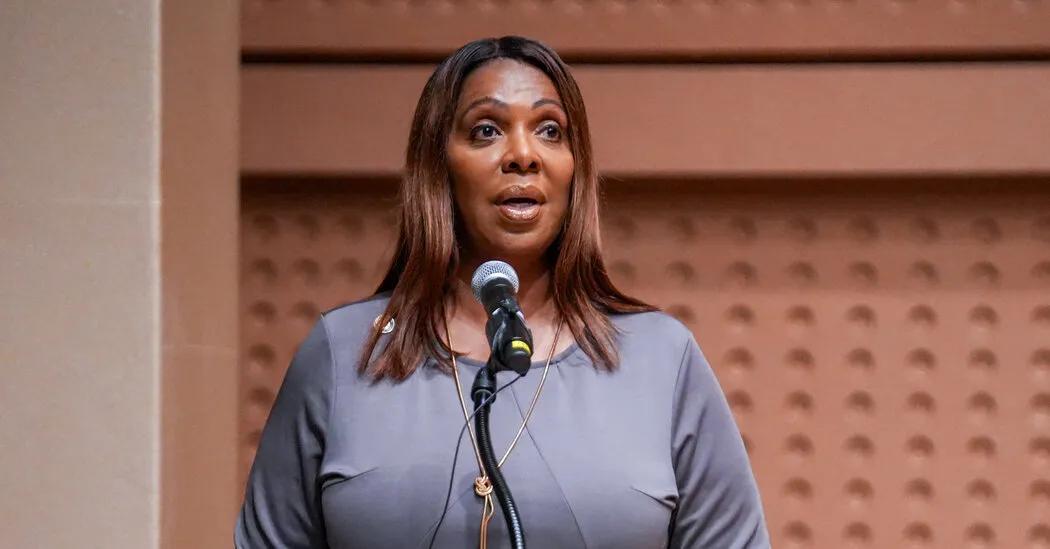
New York Governor Kathy Hochul has appointed Attorney General Letitia James as a special prosecutor to oversee an investigation into allegations of a sexual assault involving multiple men at a Cornell University fraternity house in 2024, saying recent developments had weakened her confidence in the local district attorney’s ability to handle the case.
The decision has brought renewed national attention to the way sexual assault allegations are investigated on university campuses, particularly when questions arise about the handling of evidence, communication between campus police and prosecutors, and the decision not to bring criminal charges.
Hochul signed an executive order transferring responsibility for the investigation to James’s office after new information emerged concerning the original inquiry. The governor said the developments raised serious questions about the investigation conducted by Cornell University police and the decision by Tompkins County District Attorney Matthew Van Houten not to prosecute the alleged assault.

Hochul said those developments had affected both her confidence and public confidence in the district attorney’s ability to investigate and prosecute the matter effectively. James will now oversee the investigation and could present evidence to a grand jury if prosecutors determine that criminal charges are warranted.
The allegations concern an incident reported to have occurred at a Chi Phi fraternity house near Cornell’s campus in October 2024. The woman at the centre of the case is identified as Jane Doe in court documents. She has alleged in a civil lawsuit filed in September that she was drugged and sexually assaulted by several men.
The allegations were reported to Cornell University police several weeks after the incident. However, criminal charges were not brought at the time. Van Houten’s office previously concluded that the available evidence did not establish the legal basis required to pursue prosecution, including questions surrounding consent and the information contained in the woman’s initial account.
The district attorney announced earlier this week that his office would reopen the investigation following the emergence of additional information contained in the civil lawsuit and related material. The reopening came after renewed public attention to the case and growing questions about how the original investigation had been conducted.
The subsequent appointment of James as special prosecutor means that the reopened investigation will now be handled at state level rather than remaining under the authority of the county district attorney.
James said her office would approach the case by examining the facts and applicable law. She has indicated that the investigation would be conducted fully and fairly, with the office taking seriously the responsibility entrusted to it by the governor.
The case has become particularly significant because of the questions it raises about the treatment of sexual assault allegations on university campuses. Advocates for survivors have long argued that victims can face substantial barriers when reporting alleged sexual violence, including uncertainty about how investigations will proceed, concerns about credibility and the difficulty of establishing consent in cases involving intoxication or alleged drug use.
At the same time, criminal investigations require prosecutors to assess evidence according to legal standards before charges can be filed. The distinction between allegations contained in a civil lawsuit and evidence sufficient to establish criminal responsibility remains important as the investigation proceeds.
The civil case filed by Jane Doe has provided new details about the alleged events and has prompted renewed examination of evidence gathered during the original investigation. Court documents and other recently disclosed material have raised questions about whether all relevant information was available to prosecutors when the decision not to charge was originally made.
The allegations have also generated scrutiny of Cornell University’s own response. The university has faced demands from students and members of the wider community for greater transparency concerning its handling of the incident and its disciplinary response to members of the fraternity.
Cornell has previously conducted its own internal processes relating to the allegations, separate from the criminal investigation. Such university proceedings operate under different standards and purposes from criminal prosecutions, meaning disciplinary action and criminal charges are not interchangeable.
The renewed investigation has also prompted discussion about whether existing New York laws provide prosecutors with adequate tools to deal with cases involving alleged sexual assault where alcohol, drugs or disputed accounts of consent are involved.
Van Houten has previously pointed to the legal difficulties involved in assessing allegations where the circumstances surrounding intoxication and consent are contested. His office’s decision not to prosecute in 2024 has nevertheless come under increased scrutiny following the emergence of additional information.
The governor’s intervention represents a significant development because the local district attorney had already announced that the investigation would be reopened. Hochul’s decision effectively places the matter under a different prosecutorial authority, reflecting the seriousness of the concerns surrounding the earlier handling of the case.
The appointment also comes at a time when universities across the United States continue to face pressure over how they respond to reports of sexual misconduct. Campus authorities often have responsibilities involving student safety, disciplinary proceedings and cooperation with law enforcement, while prosecutors must independently determine whether available evidence meets the requirements for criminal proceedings.
For students, the case has become a wider discussion about trust in institutions. Questions about whether allegations are investigated promptly, whether evidence is preserved and shared appropriately, and whether complainants and accused individuals receive fair treatment can have lasting consequences for university communities.
The attention surrounding Cornell has also highlighted the tension between the need to protect alleged victims and the requirement to respect due process for people accused of crimes. The allegations against the men named in the civil proceedings remain allegations unless established through legal proceedings, and the investigation must determine what evidence supports or contradicts the claims.
The next stage of the case is expected to involve a detailed review of the evidence gathered by Cornell police, information contained in the civil lawsuit, witness accounts and other material that may not have been fully considered during the original investigation. James’s office will determine whether the available evidence supports further criminal proceedings.
If prosecutors conclude that charges are justified, the case could be presented to a grand jury. A grand jury process would represent another step in determining whether criminal charges should formally proceed. It would not itself establish guilt.
Hochul and James are expected to provide an update on the investigation as public attention continues to grow. Their statements are likely to focus on the scope of the new investigation and the steps being taken to review the evidence.

The case has already moved beyond the boundaries of a single university investigation. It has become part of a broader national conversation about sexual violence, institutional accountability and the challenges prosecutors face when allegations emerge long after an incident is said to have occurred.
For Cornell students and the wider university community, the appointment of a special prosecutor creates a new phase in a case that has remained unresolved since 2024. For the alleged victim, it represents another opportunity for the claims to be examined by a prosecutorial authority outside the local system that initially declined to bring charges.
Whether the new investigation ultimately leads to criminal charges will depend on the evidence and the applicable law. For now, the appointment of James places the responsibility for determining the next legal steps with the New York attorney general’s office, while ensuring that the allegations receive a fresh examination at a time when public scrutiny of the case remains intense.
Related News:
 Cornell Fraternity Assault Investigation Reopened
 FBI Links Brown University Shooting to Long-Term Grievances
 Cambridge Professor Jason Arday Found Dead at Home
 Councils spend £125m on illegal children’s care
 Democrat Says ICE Restricted Detention Camp Oversight
 Undercover officer deceived women with ‘grotesque and cruel’ lies, spycops inquiry told
 Police Suspect Help in Missing Alice Springs Girl Case
 Florida Surgeon ‘Devastated’ Over Fatal Surgery Error
 Barrister Criticises Trial After Suicide Case Verdict
 Immigration Judges Fear Pressure in Trump Era
 Westminster Council Threatens Charing Cross Soup Kitchen
 BBC Warned About Missing Clothes of Murder Victim
 Internal Exclusions Surge in England’s Schools
 Armed Suspect Attacks Ohio Governor Candidate
 Patriot Platform Raises Concern Across Britain
 Man Arrested in Mississippi Woman’s Death
 Texas Charges Seven Noncitizens in Voting Crackdown
 Survivor Seeks Closure After Priest Dies in Prison
 Texas Transfers Raise Fears for Migrant Children
 Memphis Questions National Guard Crime Surge
 Patrick Clancy speaks publicly about children’s deaths
 Clancy Defense Seeks Inquiry Into Lone Juror
 Tennessee Set to Execute Woman After Clemency Denied
 Fayed Survivors Demand Inquiry Into Medical Regulator
 London Facial Recognition Trial Ends With False Alert
 French Student Protests Escalate Into Violent Clashes
 UK University Strikes Spread as Financial Pressure Grows
 Tennessee Execution Fails After Two Lethal Doses
 Senators warn US childcare policies could raise costs
 Hundreds of UK prisoners released early amid overcrowding
 Drumcree Talks End Without Agreement Ahead of Appeal
 Almost Half of Fayed Accusers May Be Trafficking Victims
 Calls Grow to Halt US Executions After Pike Failure
 French School Protests Escalate as 400 Schools Close
 Melania Trump Epstein remarks spark survivor backlash
 Prevent Failings Exposed After Southport Attack
 Ben Roberts-Smith Denies War Crime Allegations in First Statement
 City & Guilds Sale Sparks Fees and Pay Uproar
 NHS Safety Fears as Nurses Cover Doctor Gaps
 Two Children Die in Wolverhampton House Fire Tragedy
 US Court Weighs Fate of TPS for Migrants
 US Charges Sinaloa Governor in Major Cartel Case
 Cartel crackdown raises fears of fresh violence
 US states redraw maps after voting rights ruling
 US ‘Narco Boat’ Strikes Draw Global Outcry
 Victim says non-custodial rape sentence ‘rock in my face’
 Gunman Killed After White House Security Shootout
 New Footage Revives Peter Falconio Mystery
 Trump Orders Signs Criticising Smithsonian Museum
 Is America Ready for an AOC Presidential Run?
 Survivor Sues Musk’s xAI Over AI Abuse Images
 New Mexico Takes Facebook to Trial Over Data Scandal
 Reform UK Receives Record £36m Donation From Crypto Billionaire
 Israel Accused of Undermining Palestinian Life
 Election Candidate Abuse Raises Alarm in England
 Piddington Votes for Symbolic Independence Over Asylum Plan
 Iran School Strike Raises War Crimes Questions, UN Says
 Australia Post Worker Jailed Over Stolen Bank Cards
 Omar Proposes Bill to Redirect ICE Funding
 Gaza Strike Kills Child and Paramedic
 Mahmood Warns Far Right Over Asylum Protests
 NHS Breast Care Review Finds Serious Patient Harm
 Harrods Faces Dispute Over Fayed Abuse Compensation
 US Deportation Deals Send Migrants to Unfamiliar Countries
 US Networks Suspend Trump White House Pool Coverage
 Trump and Mamdani Hold Cordial Gracie Mansion Meeting
 Briton Faces Cyprus Court Over Son’s Fatal Fall
 UK Reviews Hague Child Abduction Cases Involving Abuse
 King Refers Jamaica Slavery Petition to Privy Council
 Court Says Judge Should Not Have Heard Case From Bed
 Elizabeth Holmes Set for Halfway House Transfer
 Yemen fighting forces children out of school and into work
 Portadown protest ends after tense Orange Order standoff
 Republican Senator Questions Trump Ad Spending
 Free Speech Emerges as Key UK Election Issue
 Israel-bound Plane Lands in Saudi Arabia After Cockpit Fight
 Drumcree Talks Falter as Legal Challenge Deepens
 UK-France Returns Deal Faces Expiry as Talks Stall
 US election threat checks face federal pullback
 Badenoch Raises Prospect of 2027 UK Election