Published: 03 October 2026. The English Chronicle Desk. The English Chronicle Online
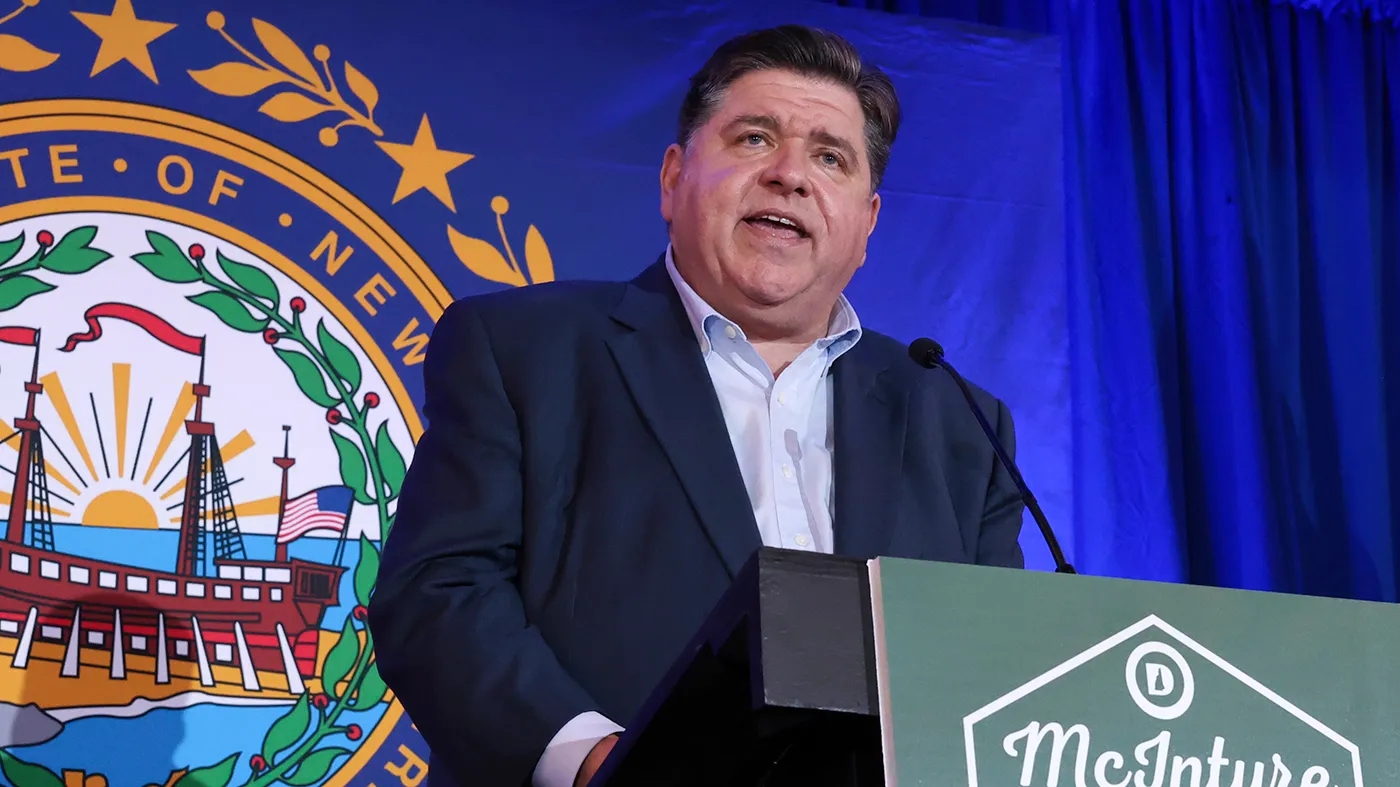
Illinois Governor JB Pritzker has become one of the most prominent Democratic critics of President Donald Trump, while his growing national political activity has fuelled continued speculation about whether he could eventually seek the White House.
Pritzker is currently focused on securing a third term as Illinois governor, but his appearances beyond the state, involvement in Democratic campaigns and repeated emphasis on national economic issues have placed him among the politicians being discussed in connection with the party’s 2028 presidential field.
The governor has not formally announced a presidential campaign. He has also avoided giving a definitive answer when asked whether he intends to seek the Democratic nomination. His immediate political task is the November gubernatorial election in Illinois, where he is seeking another term after winning the office twice.

At the same time, Pritzker has increasingly positioned himself as a prominent voice within a Democratic Party attempting to define its response to Trump’s second administration.
His relationship with Trump has been particularly confrontational. Shortly after Trump’s return to the White House, Pritzker warned that the president would face resistance in Illinois. He has subsequently criticised federal immigration policies and repeatedly argued that Democratic leaders should be more willing to challenge the administration.
Pritzker has described his approach as being part of a broader effort to confront the Trump administration rather than adopt a more cautious political strategy.
Other Democratic governors have also challenged Trump’s policies, although their approaches have differed. California Governor Gavin Newsom has pursued legislative and political measures aimed at limiting aspects of the federal immigration agenda, while other Democratic officials have combined opposition with efforts to maintain working relationships with the administration.
The differences within the Democratic Party have become increasingly visible as it prepares for the 2026 midterm elections and begins looking beyond them towards the next presidential contest.
Pritzker’s national profile has benefited from his position as governor of a large Democratic-led state and from his willingness to speak directly about issues including immigration, affordability and reproductive rights.
He has also used his political resources to support Democrats outside Illinois. His political organisation has committed significant funds to Democratic campaigns, while Pritzker has travelled to other states to participate in party events and promote Democratic candidates and policy messages.
His political activity has also included appearances in South Carolina, an important state in the Democratic presidential nomination process. Such visits have attracted attention because several politicians who could potentially seek the 2028 nomination are already travelling to early primary states and building national relationships.
For Pritzker, however, the immediate focus remains Illinois.
He first became governor in 2019 and has described his tenure as being shaped by several major challenges, including state finances, the Covid-19 pandemic, the arrival of large numbers of migrants transported to Chicago from Texas and the return of Trump to the presidency.
During his time in office, Pritzker has promoted policies involving wages, reproductive rights and state services. His administration has also pointed to improvements in Illinois’ financial position and credit ratings, although critics have continued to raise concerns about the state’s pension obligations and long-term fiscal challenges.
Pritzker’s record would become a major issue if he eventually sought national office. A presidential campaign would bring closer scrutiny of his decisions in Illinois, his political spending, his personal wealth and his record on economic and social policy.
His wealth is already one of the most distinctive features of his political profile.
Pritzker is an heir to the Hyatt hotel fortune and accumulated substantial wealth through his family’s business interests and his own work in finance and investment. His personal fortune has been estimated at several billion dollars, placing him among the wealthiest elected officials in the United States.
That creates an unusual political position for a Democrat who frequently focuses on the economic difficulties facing working families.
The question of wealth has become particularly sensitive within the Democratic Party as candidates increasingly campaign on affordability and economic inequality. Some Democratic primary contests have featured candidates who openly criticise concentrated wealth and established political elites.
Pritzker has acknowledged that voters have legitimate reasons to question whether a billionaire can convincingly represent working people. He has argued, however, that a politician’s policies and values should be judged alongside their personal financial circumstances.
The issue has particular resonance because Trump himself is a billionaire who has built a political identity partly around his business background and personal wealth.
Pritzker has repeatedly drawn a sharp political distinction between himself and Trump despite their shared status as wealthy businessmen. He has presented his own record in Illinois as evidence that wealth does not necessarily determine a politician’s approach to public policy.
The debate over Pritzker’s wealth is therefore likely to remain relevant if he decides to pursue national office.
Another element of his public profile has attracted attention in recent weeks after he disclosed that he had used a GLP-1 medication as part of a weight-loss effort. The revelation generated considerable media interest because of the continuing speculation about his possible presidential ambitions.
Pritzker has resisted attempts to connect his personal health disclosure directly to a future presidential campaign, while acknowledging that national political reporters frequently ask him about the possibility of running.
His reluctance to provide a definitive answer has nevertheless ensured that the question remains part of the political conversation.
Pritzker has been more direct when discussing what he believes went wrong for Democrats during the 2024 presidential election.
He has argued that the party should place greater emphasis on the economic pressures facing working families, middle-class households and vulnerable Americans. In his view, voters need to hear concrete proposals capable of producing visible improvements in their everyday lives.
Affordability has become one of the central themes of Democratic political debate as the party seeks to respond to concerns about wages, housing, healthcare and household expenses.
Pritzker has pointed to policies adopted in Illinois, including the state’s minimum wage increase, as examples of how Democratic governments can attempt to address those concerns.
He has also acknowledged setbacks during his time as governor. One of the most significant was the failure of a 2020 referendum that would have replaced Illinois’ flat income-tax structure with a graduated system. The proposal was closely associated with Pritzker’s administration but was rejected by voters.
The governor’s political future will therefore depend not only on his criticism of Trump but also on how voters assess his record in Illinois.
The 2026 midterm elections provide the next major test. Pritzker is seeking a third term while Democrats across the country are attempting to strengthen their position in state governments and Congress.
Governors have traditionally played an important role in American presidential politics. Several former governors, including Bill Clinton, George W Bush, Ronald Reagan and Jimmy Carter, went on to become president.
That history helps explain why successful governors often attract national attention when presidential nominations begin to take shape.
Pritzker is not the only Democratic governor whose name has been associated with the 2028 contest. Other prominent Democratic figures are also using the 2026 political cycle to build national profiles, support candidates and develop relationships with voters outside their home states.
For now, however, there is no Democratic nominee for 2028 and no formal indication that Pritzker will seek the nomination.
His political position is therefore best understood through what he is doing rather than what he may eventually decide to do. He is seeking another term in Illinois, supporting Democratic candidates in other states, speaking frequently about affordability and maintaining a highly visible opposition to Trump’s policies.
Whether those activities develop into a presidential campaign remains an open question.
The larger issue for Pritzker is how Democrats reconcile two competing aspects of his political identity. He is a billionaire who inherited significant wealth, yet he has built his political message around working families, economic opportunity and government support for vulnerable people.

Pritzker himself argues that the central question should not simply be how much money a politician has, but what that politician believes and what policies they pursue.
As the 2026 midterms approach and attention gradually begins to shift toward the 2028 presidential contest, those questions are likely to receive increasing scrutiny.
For Pritzker, the immediate test remains at home. His performance in Illinois, his ability to maintain his political coalition and his role in the wider Democratic Party will provide voters and party activists with additional information about his record.
Only after that election will the question of whether he intends to seek a national role become clearer.
Related News:
 US Labor Department in turmoil after secretary resigns
 Trump and Mamdani Hold Cordial Gracie Mansion Meeting
 Senators warn US childcare policies could raise costs
 Government Unveils Northern Powerhouse Rail Plans
 Trump Fed bid heads to Supreme Court
 Sanders Condemns Billionaire ‘Greed’ in California Tax Debate
 Can Congress Stop US Sports Teams From Moving Cities?
 Melania Trump Epstein remarks spark survivor backlash
 Iron Worker Challenges Trump Loyalist in Ohio
 Harry and Meghan’s Australia Visit Sparks Debate
 Athens Mayor Moves to Tackle Overtourism Crisis
 Reform UK funding: mystery billionaire revealed
 Trump DOJ Targets James Comey Again
 Judge Blocks Trump Bid for Arizona Voter Data
 US Court Weighs Fate of TPS for Migrants
 Trump approval plunges amid Iran war fears
 Trump Threatens UN Budget Cuts as US Pushes ‘Trade Over Aid’ Agenda
 US Awaits Iran Reply on New Ceasefire Proposal
 Immigration Judges Fear Pressure in Trump Era
 Hybrid village stores fight rural decline
 Kevin Warsh sworn in as Fed chair amid economic backlash
 Hormuz Talks Near Critical Stage
 Trump’s Revenge Drive Deepens GOP Divide
 Trump’s Mount Rushmore Speech: A Divisive Anniversary
 Trump Refuses to Sign Housing Bill, But Law Takes Effect
 Trump Orders Signs Criticising Smithsonian Museum
 Is America Ready for an AOC Presidential Run?
 Burnham unveils £65m drought aid for farmers
 Trump announces major US oil deal with Venezuela
 Trump Hardens Canada Trade Stance as Talks Stall
 Green Leader Targets Starmer’s Former Seat
 Trump Calls Iran War ‘Small Potatoes’ Despite US Deaths
 Armed Suspect Attacks Ohio Governor Candidate
 Trump Pledges $5,000 if Republicans Win Midterms
 Trump’s Washington Projects Face Architectural Criticism
 Omar Proposes Bill to Redirect ICE Funding
 Texas Transfers Raise Fears for Migrant Children
 Memphis Questions National Guard Crime Surge
 Macron and Carney deepen France-Canada ties
 Trump Eyes Major Belarus Fertiliser Deal Amid Canada Trade Dispute
 Democrat Says ICE Restricted Detention Camp Oversight
 Thinktank Calls for Abolition of UK State Pension
 Xi urges Trump to avoid US-China military conflict
 Lula accuses Trump of seeking control over Brazil
 Dale Vince Plans New London-Wide News Operation
 Trump Ads Trigger Fight Over Taxpayer Money
 Food Industry Mobilises Against the MAHA Movement
 Burnham Opens Door to Possible UK Return to EU
 Clay Travis Builds New Sports Media Venture
 Badenoch Raises Prospect of 2027 UK Election
 Salinas Struggles to Keep the American Dream Alive
 Families Await USS Abraham Lincoln Homecoming
 Trump’s UK Ambassador Urges North Sea Drilling to Strengthen US Ties
 Millionaires group urge Reeves to introduce wealth tax to ‘lift kids out of poverty’
 Canada Passes Carney’s First Budget in Tight Parliamentary Vote
 US National Guard Member Killed in DC Shooting
 Starmer Says Labour’s Economic Plan Needs Years to Deliver
 Trump press secretary attacks reporter over ICE question
 Partial US Government Shutdown Hits Homeland Security Funding
 Sinema payment row deepens after $9,000 transfer claim
 Rising Costs Force Families to Rethink Days Out
 Trump Signals Hope for New Iran Talks as Ceasefire Fades
 Investigation Into Anti-Trump Motives After Gala Shooting
 Silent Tracks: Rail Line Without Passengers
 Farage and Reform UK Reshape British Politics
 Is JD Vance the Ultimate Fall Guy for Trump’s Shaky Iran Deal?
 Trump Faces Backlash Over $2bn Earnings Since Return
 AOC Backs El-Sayed in Tight Michigan Senate Primary
 Unions Warn Labour Over Zero-Hours Contract Reforms
 Trump gives $45,000 holiday gifts to White House aides
 Man Arrested in Mississippi Woman’s Death
 Tom Watson Takes Senior Role at Palantir
 UK Rent Gap Puts Low-Income Families Under Pressure
 Trump gives Xi red-carpet welcome as trade truce extends
 The Tests Awaiting Andy Burnham After Labour Conference
 Republican Senator Questions Trump Ad Spending
 UK University Strikes Spread as Financial Pressure Grows
 Healey urged to act as UK energy bills rise 4%
 US Sends Third Carrier to Middle East
 Lula Warns of Bolsonaro Family Return as Brazil Votes