Published: 05 October 2026. The English Chronicle Desk. The English Chronicle Online.
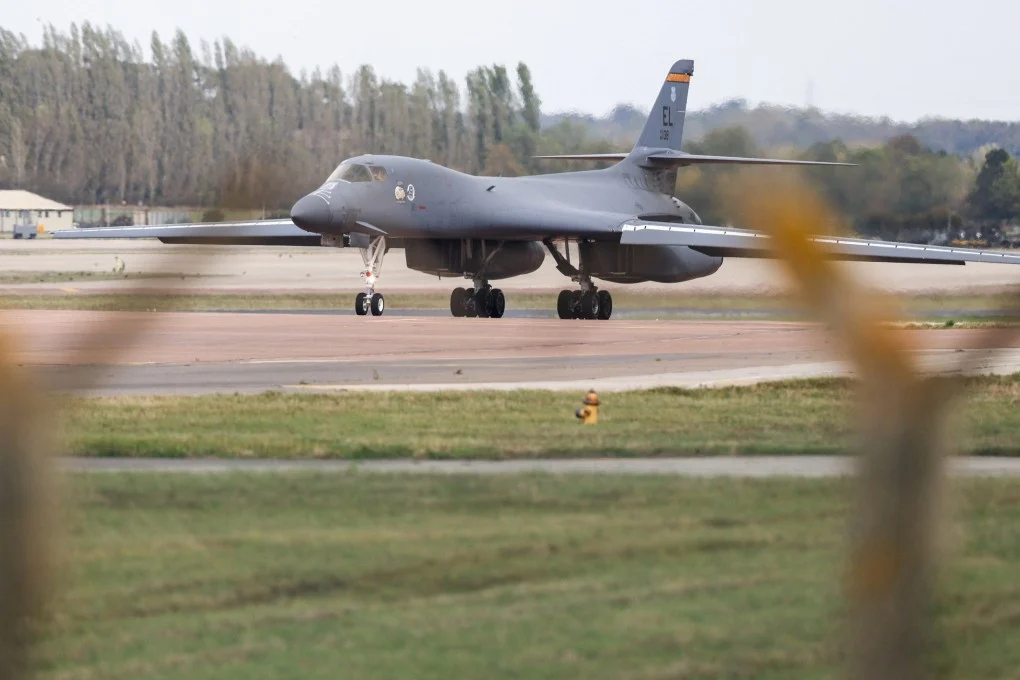
The United States Air Force has withdrawn its bomber aircraft from RAF Fairford in Gloucestershire following heightened security concerns linked to an alleged terrorist plot targeting the military base. The sudden departure of the aircraft has highlighted the seriousness with which American officials are treating the threat and raised fresh questions about security surrounding one of the UK’s most strategically important airbases.
A Pentagon official said the US bombers had been moved back to their home stations in the United States after commanders assessed new or renewed security information. The official was not authorised to discuss sensitive military movements publicly and spoke on condition of anonymity.
A Pentagon spokesperson later confirmed that all US bombers deployed to RAF Fairford had returned to their home stations, while stressing that operational security had prevented the United States from announcing the movements while they were taking place.

The withdrawal appeared to have been carried out with considerable urgency. At least 10 of the 12 B-1 bombers stationed at Fairford reportedly departed on Sunday. Some of the aircraft had arrived less than a week earlier as part of a routine rotation, making their rapid departure particularly notable.
The US decision comes amid an ongoing British counter-terrorism investigation following an alleged security incident at RAF Fairford in late September. A dual British-Iranian national was arrested in central London last week on suspicion of involvement in a planned terrorist attack. Six people have so far been taken into custody during the investigation and subsequently released on bail.
British authorities have reportedly examined possible links between the suspected plot and Iran. Tehran has denied any involvement, leaving the alleged connection between the investigation and the Iranian government contested.
The latest withdrawal has generated concern in communities surrounding RAF Fairford, particularly because the base has long served as an important location for US military aviation operations. The airfield is located roughly 100 miles west of London and has been used by American bomber aircraft during military operations connected to conflicts in the Middle East.
The base has become particularly significant in recent months as tensions between the United States and Iran have intensified. The British government previously granted Washington permission to use British military bases for what were described as defensive operations against Tehran.
The decision to remove the bombers does not necessarily indicate that the United States has reduced its wider military commitments in the region. Instead, the move appears to reflect a security decision concerning the safety of personnel and aircraft at Fairford at a time when American forces remain heavily engaged across the broader Middle East.
Reports from US media suggested that American officials had received new intelligence or threat information connected to warnings that had emerged several weeks earlier. While the precise nature of the information has not been publicly disclosed, officials reportedly became increasingly concerned during the 24 hours before the bombers were withdrawn.
The secrecy surrounding the decision reflects the sensitivity of the situation. Bomber movements are closely monitored because aircraft such as the B-1 form part of the United States’ long-range strike capabilities. Publicly confirming their location or movements while an operation or security response is under way could potentially expose military personnel and assets to additional risks.
For residents near RAF Fairford, however, the sudden movement of so many aircraft is likely to reinforce concerns about the security environment surrounding the base. The airfield has hosted major American military deployments for decades, making it a familiar presence in Gloucestershire, but the current international tensions have given its role a new significance.
The alleged terrorist plot is being investigated by British counter-terrorism authorities, and the arrest of a dual British-Iranian national has added an international dimension to the case. Authorities have not publicly established the full circumstances of the alleged plot, and no conclusion has been reached regarding responsibility or wider involvement.
The Iranian government has denied accusations linking it to the incident. The denial comes as relations between Tehran and Western governments remain highly strained over military operations, regional influence and the broader security situation in the Middle East.
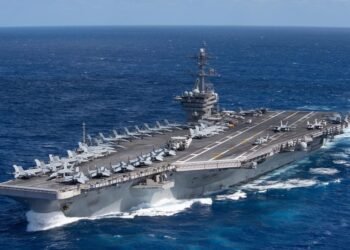
The withdrawal also takes place against the backdrop of a growing US military presence in the region. American officials have recently indicated that additional naval forces are moving towards the Middle East, including the USS Theodore Roosevelt aircraft carrier and the USS Makin Island amphibious readiness group.
Together, those forces represent thousands of sailors and Marines and significantly expand Washington’s military capacity in the region. US officials have indicated that the movement could result in three American aircraft carriers operating in the area by the end of October.
The combination of heightened security concerns in Britain and increased American military deployments in the Middle East illustrates the complicated strategic environment facing Washington and its allies. The US must balance the need to maintain military pressure and deterrence with the protection of its forces and facilities from possible attacks.
RAF Fairford has historically played an important role in that strategy because of its infrastructure and ability to support long-range American aircraft. B-1 bombers can conduct long-distance missions and carry out a variety of conventional military operations, making them valuable assets in periods of heightened regional tension.
Their withdrawal from Fairford could therefore temporarily reduce the visible American bomber presence in Britain, although it does not necessarily signal an end to US operations from the country. American forces maintain extensive military relationships and facilities across the UK and Europe.
The incident also raises questions about the security arrangements surrounding foreign military installations in Britain. RAF Fairford is a British base used extensively by the US, meaning security responsibilities involve cooperation between British and American authorities. Any credible threat therefore requires close coordination between intelligence services, counter-terrorism investigators and military security teams.
The decision to remove the bombers may have been intended to reduce the immediate risk to valuable aircraft while investigators assess the credibility and scope of the threat. Moving aircraft back to the United States also provides commanders with greater flexibility over where and how the bombers are deployed.
However, the wider strategic situation means that the aircraft could potentially be repositioned elsewhere if American commanders require them. The United States continues to maintain significant military capabilities in and around the Middle East, while tensions with Iran remain a major security concern.
The investigation in Britain is expected to continue as authorities seek to establish what prompted the alleged plot, whether the suspects acted alone or as part of a wider network, and whether any foreign state or organisation played a role. Until those questions are answered, officials are likely to remain cautious about releasing details.
For the UK government, the situation presents a delicate security and diplomatic challenge. Britain hosts important American military assets while simultaneously seeking to protect its territory from terrorist threats. Any evidence of an external state connection would carry significant diplomatic consequences, particularly given the already strained relationship between Britain and Iran.

For the United States, the rapid withdrawal demonstrates the importance placed on force protection at a time when American military assets are operating under heightened threat levels. The move may also serve as a reminder that military facilities in allied countries can become potential targets when geopolitical tensions escalate.
The departure of the B-1 bombers is therefore significant not simply because of the aircraft involved, but because of what it reveals about the wider security environment. A suspected terrorist plot, allegations of an Iranian connection, continuing tensions in the Middle East and the expansion of US military deployments are now intersecting in a way that has brought RAF Fairford into sharper international focus.
As British authorities continue their investigation and American commanders reassess security arrangements, attention will remain on whether the bombers eventually return to the Gloucestershire base or are kept elsewhere for operational and security reasons. For now, their sudden departure represents a visible sign of caution as Britain and the United States navigate an increasingly uncertain security landscape.
Related News:
 Thousands Protest Iran Strikes Outside US Embassy London
 US Bombers Arrive at RAF Base Amid Rising Iran Tensions
 UK Prepares Aircraft Carrier for Middle East Crisis
 California Democrats Vow Trump Reckoning
 Ukraine war briefing: Zelenskyy offers help to Saudi Crown prince on combatting Iranian drones
 Can King Charles Calm Trump on Key US Visit?
 Starmer would have blocked Mandelson role, says Lammy
 Richard Tice Faces £100k Tax Controversy
 Charles Faces Trump Test in High-Stakes US Visit
 UK Stands Firm on Falklands Amid US Rift
 US states redraw maps after voting rights ruling
 US ‘Narco Boat’ Strikes Draw Global Outcry
 Ceasefire Standoff Deepens in Ukraine War
 Immigration Judges Fear Pressure in Trump Era
 Murder Probe Continues After Arrest Release
 Houthis Strike Saudi Arabia as Middle East Tensions Rise
 Israeli Strike in Southern Lebanon Kills Seven
 Is America Ready for an AOC Presidential Run?
 Trump dismisses concerns over 250-day carrier deployment
 Trump Calls Strait of Hormuz ‘American Territory’
 Trump Faces Iran War Crisis Before Midterm Vote
 RAF Barnham Protests Fuel Tensions in Norfolk Town
 Judge Allows Pentagon Firings at Stars and Stripes
 Trump Calls Iran War ‘Small Potatoes’ Despite US Deaths
 Reform Faces Fresh Financial Controversy
 UN expert urges UK to rethink Israel policy
 Europe’s democracies face a growing far-right threat
 Experts Warn of Growing US Terrorism Risks 25 Years After 9/11
 New Mexico Takes Facebook to Trial Over Data Scandal
 Patriot Platform Raises Concern Across Britain
 Reform UK Receives Record £36m Donation From Crypto Billionaire
 Trump’s Washington Projects Face Architectural Criticism
 Election Candidate Abuse Raises Alarm in England
 UK Urged to Probe US Diplomat Case
 Trump Media Ban Triggers First Amendment Clash
 Lib Dems Prepare for Election Amid Reform Challenge
 Middle powers seek new alliances amid Trump era
 US Deportation Deals Send Migrants to Unfamiliar Countries
 US Networks Suspend Trump White House Pool Coverage
 Democrat Says ICE Restricted Detention Camp Oversight
 UK Unveils Centre to Counter Foreign Disinformation
 UK Plans New Centre to Counter Information Warfare
 UK Pauses Chagos Deal Amid US Opposition
 Netanyahu faces protests and pressure at UN
 Elif Eralp Emerges as Berlin’s Next Political Force
 Lula accuses Trump of seeking control over Brazil
 Trump Asked Xi About Buying US Weapons
 Republican Senator Questions Trump Ad Spending
 Free Speech Emerges as Key UK Election Issue
 Dale Vince Plans New London-Wide News Operation
 AI Deepfakes Put New Pressure on Election Trust
 Trump Ads Trigger Fight Over Taxpayer Money
 Food Industry Mobilises Against the MAHA Movement
 Drumcree Talks Falter as Legal Challenge Deepens
 UK-France Returns Deal Faces Expiry as Talks Stall
 Green Party faces dispute over Zionism motion
 US election threat checks face federal pullback
 Senators warn US childcare policies could raise costs
 Hundreds of UK prisoners released early amid overcrowding
 US Sends Third Carrier to Middle East
 Drumcree Talks End Without Agreement Ahead of Appeal
 Palantir Lobbyist Had Role in Burnham Campaign
 Badenoch Raises Prospect of 2027 UK Election
 Musk’s DOGE Sparks Turmoil Inside US Government
 Trump’s UK Ambassador Urges North Sea Drilling to Strengthen US Ties
 Wales Approves Assisted Dying Bill Consent
 Asylum Seekers to Work After Year-Long Wait
 Inquiry into HMRC child benefit errors launched by NAO
 Relationship with Trump may be beyond repair, Starmer warned
 UK Government Poised to Revive Stalled Hillsborough Law
 Investigation Into Anti-Trump Motives After Gala Shooting
 Silent Tracks: Rail Line Without Passengers
 Unions Warn Labour Over Zero-Hours Contract Reforms
 British Museum Faces Questions Over Peter Thiel’s Private Bayeux Viewing
 Bayeux Tapestry Revives Franco-British Ties
 Trump gives $45,000 holiday gifts to White House aides
 Tom Watson Takes Senior Role at Palantir
 The Tests Awaiting Andy Burnham After Labour Conference
 London Facial Recognition Trial Ends With False Alert
 Yemen government launches offensive against Houthis