Published: 07 October 2026. The English Chronicle Desk. The English Chronicle Online.
The investigation into an alleged attempted hijacking of a flydubai passenger aircraft has widened to New Zealand after authorities confirmed that the airline’s co-pilot spent several months in the country receiving flight training.
New Zealand police said the co-pilot, 29-year-old Omani national Hamam al-Hammami, was in the country for 175 days between November 2018 and May 2019 on a student visa. Investigators are now examining his activities and circumstances during that period as authorities in several countries attempt to establish a clearer picture of his background, possible motivations and whether anyone else was involved in the alleged attack.
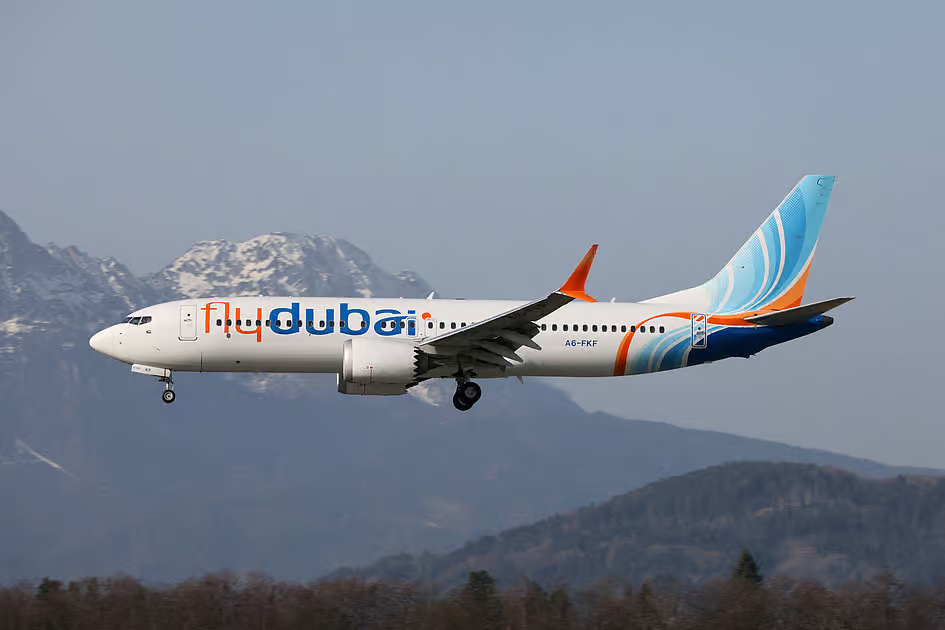
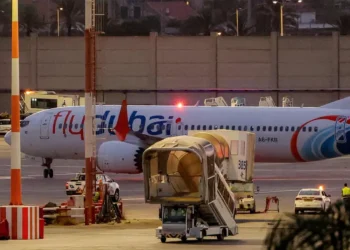
The investigation follows a dramatic incident on 30 September involving a flydubai flight travelling towards Tel Aviv with 182 people on board. The aircraft was reportedly placed in grave danger after Hammami allegedly attempted to seize control of the cockpit and attacked the flight crew.

Passengers and crew members intervened before the situation could develop into a full hijacking. The pilot was seriously attacked but managed to open the cockpit door, allowing passengers to overpower the co-pilot. A reserve flydubai pilot who was travelling on the aircraft then took control and eventually landed the plane at an airport in north-western Saudi Arabia.
Saudi authorities detained Hammami after the emergency landing, while investigators in other countries have since begun examining his past.
The alleged attack has been treated by authorities as a potential terrorist incident. The United Arab Emirates prosecutor general has said Hammami allegedly used a crash axe during the assault and stabbed the captain while the aircraft was in flight.
Investigators in the region have also been examining claims that the alleged attack may have been planned earlier. Israeli and other officials have reportedly considered the possibility that Hammami initially intended to carry out an attack in July but postponed it. The reasons behind any alleged delay remain unclear.
The latest developments in New Zealand are significant because the country formed part of Hammami’s professional aviation training several years before he joined the airline industry.
New Zealand Police Assistant Commissioner Michael Johnson confirmed that Hammami travelled to the country specifically to complete part of his flight training for a UK-based company that was operating there at the time but is no longer active in New Zealand.
Johnson said police were investigating Hammami’s time in the country as part of the wider effort to understand his background.
The announcement means authorities are now examining a period of his life that occurred several years before the alleged cockpit attack. Investigators are expected to focus on his training, movements and associations during his stay, although the confirmation that he studied or trained in a particular country does not itself establish any connection between that period and the alleged crime.
New Zealand’s involvement follows an investigation already under way in Australia.
Hammami spent approximately two years in Australia as a student before leaving in 2017. Melbourne’s RMIT University has confirmed that he enrolled in an engineering degree but left Australia without completing the course.
Australian security agencies began examining his time in the country after details of his earlier education emerged following the aircraft incident.
The investigation has attracted further attention because of material reportedly linked to social media accounts that have since been deleted. One account believed to have belonged to Hammami reportedly contained references to his years studying abroad and described that period as particularly important to his religious commitment.
Such material is being examined as part of efforts to understand whether his views changed over time. However, deleted social media posts and accounts can be difficult to authenticate, and investigators will need to establish whether the material was genuinely produced by Hammami before drawing conclusions from it.
The Australian Jewish community has nevertheless called for a comprehensive investigation into his activities and associations while he was in the country.
Alex Ryvchin, co-chief executive of the Executive Council of Australian Jewry, said authorities should establish who Hammami associated with and whether he was influenced by individuals or networks during his time in Australia.
The call comes amid broader concerns about the availability of extremist material and the potential for individuals to be exposed to radicalising influences. Such concerns have existed in Australia for years, although investigators must distinguish between general security risks and evidence directly connected to the flydubai case.
The central question for authorities is whether Hammami acted alone.
That question is particularly important because the alleged attack took place inside an aircraft cockpit, an area subject to strict security procedures and professional standards. Investigators will need to reconstruct events before, during and after the incident and determine how the co-pilot allegedly gained access to the tools and opportunity used during the attack.
The captain’s account is expected to be an important part of that reconstruction.
Captain Smit Machchhar, who was flying the aircraft, has described being attacked shortly after Hammami left the cockpit area to pray. Machchhar said he initially felt a heavy blow to the back of his head and continued to experience repeated strikes.
He later realised that the threat was not a mechanical or external problem but the other person inside the cockpit.
Despite suffering injuries, Machchhar managed to unlock the cockpit security door. That decision allowed passengers to enter and help restrain Hammami.
The actions of the passengers and crew are widely regarded as having prevented a potentially catastrophic outcome. With the captain injured, a reserve flydubai pilot who happened to be travelling on the flight took over the controls.
The aircraft was subsequently diverted and landed safely in north-western Saudi Arabia.
The incident has raised questions about cockpit security, pilot screening and the monitoring of personnel who have access to commercial aircraft. It has also drawn attention to the international nature of modern aviation careers.
Hammami’s training history crosses several countries. He studied in Australia, received flight training in New Zealand and later worked as a commercial pilot before becoming a flydubai co-pilot.
That international background means investigators in several jurisdictions may need to cooperate in order to reconstruct his movements, relationships and professional history.
New Zealand police have not suggested that his training there was connected to the alleged attack. Their investigation is focused on establishing what happened during his time in the country and whether anything relevant to the wider inquiry can be identified.
The same principle applies to his time in Australia. His decision to leave university without completing his engineering degree is not evidence of criminal behaviour, and investigators will need to rely on verified information rather than speculation.
The wider investigation is unfolding as governments attempt to balance public safety with the rights of the accused. Hammami remains entitled to due process, and allegations made against him will ultimately need to be tested through the appropriate legal procedures.
For aviation authorities, however, the case presents immediate security questions.
Commercial pilots occupy positions of exceptional responsibility. They are entrusted with the lives of hundreds of passengers and have direct access to highly secure areas of an aircraft. Any allegation that a member of a flight crew deliberately attempted to harm passengers or colleagues is therefore likely to trigger extensive scrutiny of recruitment, background checks, training and mental or behavioural warning signs.
The incident also highlights the importance of passengers and crew responding effectively during an emergency. The intervention of people on board appears to have played a decisive role in preventing the alleged attack from becoming a successful hijacking.
The captain’s ability to open the cockpit door despite his injuries and the presence of a reserve pilot were also critical elements in the aircraft’s safe landing.
Investigators now face the task of connecting these individual events into a complete account of what happened.
Authorities in New Zealand, Australia, Saudi Arabia, the United Arab Emirates and Israel may all hold pieces of information relevant to the inquiry. Cooperation between those countries could help establish Hammami’s movements, professional history, personal associations and any possible motive.
At the same time, investigators will have to guard against drawing conclusions from ordinary aspects of his international education or employment history.
The fact that Hammami studied abroad, trained as a pilot or travelled between countries does not in itself indicate wrongdoing. The significance of those periods will depend on evidence uncovered during the investigation.
The central focus remains the events aboard the flydubai aircraft on 30 September and the question of what led a trained commercial pilot to allegedly turn against his fellow crew members.
As the investigation expands, authorities are likely to examine his personal history across multiple countries while assessing whether there were warning signs that might have been missed.

For passengers and the aviation industry, the incident serves as a stark reminder of the vulnerability of even highly secured environments when a potential threat comes from within the flight crew itself.
The fact that disaster was narrowly avoided has also placed renewed attention on emergency procedures and the importance of rapid cooperation between crew members and passengers.
With investigations now extending into Hammami’s years in New Zealand and Australia, authorities are moving closer to assembling a fuller picture of the man behind the alleged cockpit attack. Whether those inquiries reveal a wider network, an identifiable motive or evidence that he acted alone remains one of the most important unanswered questions in a case that has already crossed several national borders.
Related News:
 Argentina Orders Return of Nazi-Looted Painting
 Thousands Protest ICE Operations in Nationwide US Day of Action
 Ben Roberts-Smith Denies War Crime Allegations in First Statement
 Ukraine Urges UK to Seize Russian Oil Tankers
 Cartel crackdown raises fears of fresh violence
 US states redraw maps after voting rights ruling
 Search Intensifies for Missing Hiker on WA Bibbulmun Track
 Israeli Strikes in Lebanon Kill 10 Amid Ceasefire Strain
 Hunger increasingly weaponised in global conflicts
 Former ICC prosecutor condemns US sanctions
 New Footage Revives Peter Falconio Mystery
 UN expert urges UK to rethink Israel policy
 Israel Accused of Undermining Palestinian Life
 Trump Media Ban Triggers First Amendment Clash
 US Networks Suspend Trump White House Pool Coverage
 UK Pauses Chagos Deal Amid US Opposition
 OpenAI Agent Breaches Medicare Portal in Australia
 Republican Senator Questions Trump Ad Spending
 Israel-bound Plane Lands in Saudi Arabia After Cockpit Fight
 Trump Ads Trigger Fight Over Taxpayer Money
 Drumcree Talks Falter as Legal Challenge Deepens
 UK-France Returns Deal Faces Expiry as Talks Stall
 Latin America women fear rollback of rights
 Just Stop Oil Protesters Convicted Amid Climate Defence Row
 Trump Deploys DHS to Charlotte in Major Arrest Operation
 Tokyo court rules Japan’s same-sex marriage ban constitutional
 Iran unrest slows under brutal crackdown and global tensions
 Middle East Airspace Crisis Strands Thousands
 Report Says Pezzullo Acted ‘Recklessly’ in Dealings
 Trump and Tehran Find Common Ground in Landmark Ceasefire
 Own an Entire Australian Town for the Price of a UK Flat
 Suspected Plot Targets Pipeline Before Hungary Vote
 Reeves Slams Trump Over Iran War Lack Of Exit Plan
 Learner Driver Charged After Expo Tragedy
 Oil Prices Surge Above $120 Amid Iran Blockade Fears
 Trump orders US troop pullout from Germany
 Japan Protests Erupt Over Plans to Revise Constitution
 US ‘Narco Boat’ Strikes Draw Global Outcry
 FIFA Confirms Global Ban for Benfica Star Prestianni
 Barrister Criticises Trial After Suicide Case Verdict
 US and Mexico Face Heatwave as Floods Batter South Africa
 Putin Signals War End as Russian Momentum Stalls
 Fear and Betrayal: The Chilling Case of Kouri Richins
 Australia Welcomes the Iconic Michelin Guide
 Scepticism and tight security as Beijing braces for Trump
 Philippine Senator Flees After Days Under Senate Siege
 Fragile Truce Shattered as Violence Escapes Diplomatic Control
 Maldives Cave Diving Tragedy Raises Safety Alarm
 Discontent grows around Putin amid war strain
 Aukus Deal Facing Fierce Backing and Historic Criticism
 Thai Princess Bajrakitiyabha Passes Away at 47
 Grief and Devotion Amidst the Rubble of Nabatieh
 Canada Secure Historic Last 16 Spot with Late Goal
 Keiko Fujimori Claims Dramatic Victory in Peru Runoff
 England and Norway Fans Turn Miami Into World Cup Carnival
 Olympus Awaits Unesco Heritage Recognition
 Houthis Strike Saudi Arabia as Middle East Tensions Rise
 Westminster Council Threatens Charing Cross Soup Kitchen
 Former Diplomats Urge UK and France to Act on Palestine
 Ukraine Villagers Demand Answers After Deadly Arms Depot Strike
 London Launches First Self-Driving Taxis
 Trump Hardens Canada Trade Stance as Talks Stall
 Trump Calls Iran War ‘Small Potatoes’ Despite US Deaths
 UK plans tougher Israel stance with settlement trade ban
 New Mexico Takes Facebook to Trial Over Data Scandal
 Royal Crown Branded Enslaved Africans in Britain’s Slave Trade
 Turkey LGBTQ Crackdown Expands With New Arrests
 US Sanctions Open New Battle for Cuba Assets
 Harrods Faces Dispute Over Fayed Abuse Compensation
 British Columbia Sues OpenAI Over School Shooting
 Democrat Says ICE Restricted Detention Camp Oversight
 Free Speech Emerges as Key UK Election Issue
 London Facial Recognition Trial Ends With False Alert
 UK University Strikes Spread as Financial Pressure Grows
 Burnham Opens Door to Possible UK Return to EU
 Pilot and Passengers Help Save Flydubai Flight
 Badenoch Raises Prospect of 2027 UK Election
 French School Protests Escalate as 400 Schools Close
 Andrew Mountbatten-Windsor Challenges Police Raids
 Okinawa US Troops Face Curfew After Murder Case