Published: 08 October 2026. The English Chronicle Desk. The English Chronicle Online.
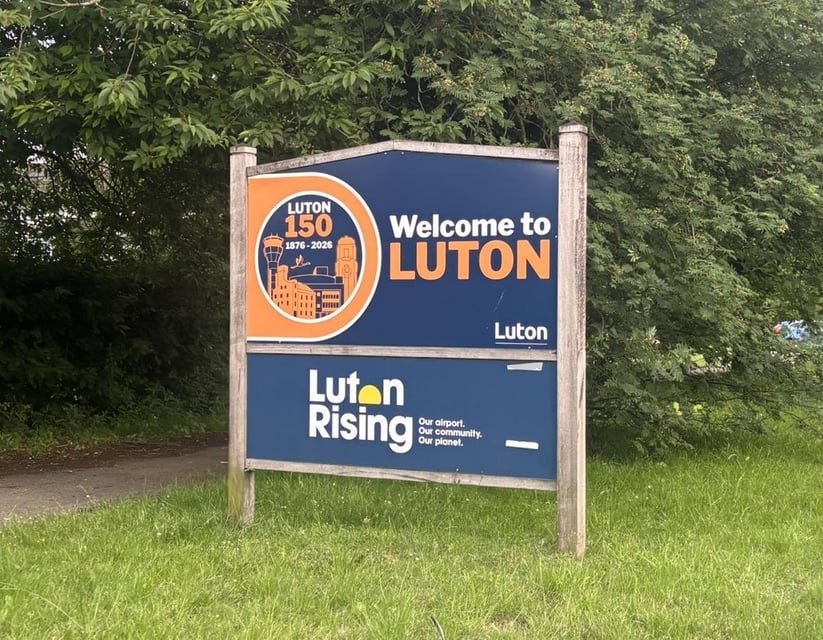
Claims that parts of Luton have become “no-go zones” for white people have been strongly challenged by residents, community leaders and local politicians, with people living and working in the town saying there is little evidence that some neighbourhoods are unsafe for people because of their race.
The controversy follows comments by Blake Stephenson, the Conservative MP for Mid Bedfordshire, who described Luton as a “very dangerous place” during the Conservative Party conference. Stephenson claimed that some communities were living in “ghettoes” and suggested there were parts of the town where white people would not go.
Those remarks have generated considerable criticism in Luton, where residents and local representatives have rejected the suggestion that the town is divided into racially defined areas that people are afraid to enter.

A visit to Bury Park, one of Luton’s most diverse neighbourhoods, offered a very different picture from the one presented in the political comments. The area remained busy with shoppers, workers, restaurant customers and people going about their daily lives, with no obvious indication that the neighbourhood was being avoided by members of any particular ethnic community.
Dunstable Road, one of the area’s main thoroughfares, was active with shoppers visiting restaurants, jewellery shops, supermarkets and businesses selling a wide range of food. People from different backgrounds could be seen using the shops and public spaces.
For Tanner Ahmed, a local fish and chip shop owner known as Mr T, the idea that the area should be regarded as a no-go zone for white people is difficult to reconcile with everyday life.
His business was established partly to serve the thousands of football supporters who travel through Bury Park when attending matches at nearby Luton Town’s stadium. The area’s commercial life depends heavily on people travelling into it, including visitors who do not live locally.
Ahmed’s experience reflects the wider economic and social character of Bury Park. The neighbourhood is home to a large Asian community, but its streets are used by people from a variety of backgrounds.
A traffic warden working in the area also rejected the suggestion that Bury Park was unsafe for white people. The warden, who chose not to give their name, said they had always felt perfectly safe while working there.
The worker added that when minor incidents had occurred, members of the public or local shopkeepers had generally offered assistance. Such experiences contrast sharply with the image of a neighbourhood where people from one ethnic group supposedly fear entering.
Other residents offered similarly nuanced accounts. Joshua Bozier, a 36-year-old homeless man, said he actually felt safer in Bury Park than in Luton town centre. He said he knew people in the area and had experienced unpleasant incidents elsewhere in the town.
His comments underline the difference between perceptions of an area and the experiences of individuals who actually live or spend time there. While Luton, like any town, has problems involving crime, deprivation and social tensions, residents’ experiences do not necessarily correspond with broad claims about racially defined danger zones.
Luton has long occupied a distinctive place in Britain’s debate about multiculturalism. According to the 2021 census, 54.8% of the town’s population was recorded as non-white, making Luton one of the places outside London where minority ethnic groups collectively represented a majority of the population.
That demographic reality has sometimes made Luton a focus of national debates about immigration, integration and community relations.
The town is also closely associated with Tommy Robinson, whose real name is Stephen Yaxley-Lennon, a prominent far-right activist who helped establish the English Defence League. The organisation’s emergence in Luton contributed to the town becoming an important symbol within far-right political narratives about Islam, multiculturalism and immigration.
Experts on extremism have argued that the relationship between far-right activists and a small number of Islamist activists during periods of tension helped reinforce opposing narratives. Local confrontations were subsequently used to construct a much larger national story about the supposed consequences of multiculturalism.
Dr William Allchorn, an expert on the far right, has described Luton as an unusually ready-made example for people seeking to portray multiculturalism as a threat. According to this analysis, a combination of real local disputes, political activism and highly visible personalities helped transform isolated incidents into a much broader narrative about the town.
One of the incidents frequently cited in discussions about Luton occurred in 2009, when a small group of Islamist activists protested against a homecoming parade involving the Royal Anglian Regiment following its deployment to Afghanistan.
The demonstration attracted widespread condemnation and became an important reference point for far-right campaigners. However, the involvement of only a small proportion of Luton’s Muslim population is important when considering the broader community.
For critics of the “no-go zone” claim, using isolated incidents to describe an entire neighbourhood or population risks reinforcing divisions rather than reflecting everyday life.
Sarah Owen, the Labour MP for Luton North, condemned Stephenson’s comments and accused him of repeating narratives associated with the far right. John Tizard, the Labour police and crime commissioner for Bedfordshire, also challenged the Conservative MP, saying the claims were not supported by evidence and risked dividing communities.
Luton’s independent mayor, Javed Hussain, expressed similar concerns. Walking through Bury Park, he pointed to the presence of Christian, Sikh and Muslim places of worship as evidence of the area’s diverse character.
Hussain described the town as multicultural, diverse and vibrant, arguing that people from across Luton and beyond visit Bury Park for shopping, food and other everyday activities.
The mayor acknowledged that Bury Park contains a large Asian population but rejected the idea that this makes the area inaccessible to others. Diversity within a neighbourhood, he suggested, should not automatically be interpreted as separation.
The discussion also raises broader questions about how community cohesion should be measured. Luton has experienced tensions in the past, and local authorities recognise that maintaining positive relationships between communities requires continued effort.
Research conducted by the council has indicated that community cohesion in Luton has remained sufficiently strong to prevent the kinds of serious fractures that have contributed to violence in some other English towns. At the same time, officials have acknowledged that there is more work to do.
Hussain highlighted the importance of ensuring that young people from different backgrounds have opportunities to understand each other’s experiences. He also pointed to the needs of children living on predominantly white council estates, arguing that supporting disadvantaged communities should form part of the broader effort to improve cohesion.
His comments reflect a more complex picture of Luton than the simple division suggested by the phrase “no-go zone”. Social challenges exist across different communities, but they do not necessarily follow racial boundaries.
The experiences of residents also demonstrate why perceptions of safety can vary significantly. Bozier, for example, said he felt more comfortable in Bury Park than in the town centre, despite the national narrative that has sometimes portrayed the neighbourhood as particularly problematic.
For people who work in the area, ordinary interactions appear to be a much more significant part of daily life than the political controversy. Shopkeepers serve customers, traffic wardens carry out their duties and residents move through streets that are busy with commercial and social activity.
The debate nevertheless illustrates the continuing sensitivity surrounding race, religion and integration in Britain. Political descriptions of towns and neighbourhoods can have consequences beyond party politics, particularly when they involve claims that a section of the population is effectively excluded from part of a community.
For Luton residents who reject the “no-go zone” narrative, such descriptions risk overshadowing the reality of everyday multicultural life. They argue that the town’s challenges should be addressed through evidence-based policies rather than generalisations about particular ethnic or religious communities.
That does not mean Luton is without problems. Like many urban areas, it faces questions surrounding deprivation, crime, housing, inequality and social integration. There have also been genuine episodes of political and religious tension. But acknowledging those problems is different from claiming that large parts of the town are effectively inaccessible to white residents.
The distinction is particularly important in a town whose identity has been shaped by decades of migration and cultural change. Bury Park’s restaurants, shops, places of worship and businesses reflect that history, while the people using those facilities demonstrate that the neighbourhood is not simply occupied by one community.
The latest controversy therefore offers two competing images of Luton. One portrays the town as a place increasingly divided along racial and religious lines, while the other points to busy streets, mixed communities and residents who say they feel safe going about their daily lives.
The evidence and experiences presented by residents do not support a straightforward picture of Bury Park as a “no-go zone”. Instead, they suggest a community that has experienced tensions but continues to function through everyday interaction between people of different backgrounds.
As debate over immigration and multiculturalism remains prominent in British politics, Luton is likely to remain a focus of attention. For those living there, however, the most important story may be less about political labels and more about whether communities can continue to live, work and participate in the same public spaces.

The challenge for local leaders is therefore not simply to deny negative portrayals but to address genuine social problems while protecting the relationships that allow a diverse population to coexist.
In Bury Park, the ordinary rhythm of daily life continues to provide a different perspective. People shop, work, eat, travel and interact across community boundaries. For many residents, that everyday experience is far removed from the image of a neighbourhood where one ethnic group is supposedly afraid to enter.
Luton remains a complicated and sometimes contested town, but the accounts of people who live and work there suggest that its story cannot be reduced to the idea of racially defined no-go zones.
Related News:
 Patriot Platform Raises Concern Across Britain
 Hundreds of UK prisoners released early amid overcrowding
 Drumcree Talks End Without Agreement Ahead of Appeal
 Undercover officer deceived women with ‘grotesque and cruel’ lies, spycops inquiry told
 NHS Safety Fears as Nurses Cover Doctor Gaps
 Walsall Rapist Jailed After Hate-Filled Online Trail
 Two Children Die in Wolverhampton House Fire Tragedy
 Barrister Criticises Trial After Suicide Case Verdict
 Murder Probe Continues After Arrest Release
 Westminster Council Threatens Charing Cross Soup Kitchen
 BBC Warned About Missing Clothes of Murder Victim
 Cambridge Professor Jason Arday Found Dead at Home
 RAF Barnham Protests Fuel Tensions in Norfolk Town
 Masked Protesters Bring Dover Port Traffic to Standstill
 Ministers Condemn Far-Right Unrest in Portsmouth
 Councils spend £125m on illegal children’s care
 Reform UK Receives Record £36m Donation From Crypto Billionaire
 Election Candidate Abuse Raises Alarm in England
 Piddington Votes for Symbolic Independence Over Asylum Plan
 Mahmood Warns Far Right Over Asylum Protests
 Lib Dems Prepare for Election Amid Reform Challenge
 UK Reviews Hague Child Abduction Cases Involving Abuse
 Democrat Says ICE Restricted Detention Camp Oversight
 King Refers Jamaica Slavery Petition to Privy Council
 Far-Right Activist Slashes Dinghy in Channel
 Elif Eralp Emerges as Berlin’s Next Political Force
 Far-Right Activist Arrested After Channel Dinghy Incident
 Portadown protest ends after tense Orange Order standoff
 Free Speech Emerges as Key UK Election Issue
 Three Die in Channel Crossing Attempt Near France
 Fayed Survivors Demand Inquiry Into Medical Regulator
 Dale Vince Plans New London-Wide News Operation
 London Facial Recognition Trial Ends With False Alert
 Drumcree Talks Falter as Legal Challenge Deepens
 UK-France Returns Deal Faces Expiry as Talks Stall
 Green Party faces dispute over Zionism motion
 Almost Half of Fayed Accusers May Be Trafficking Victims
 Badenoch Raises Prospect of 2027 UK Election
 Latin America women fear rollback of rights
 Gosport Protesters Clash With Police Over Migrant Rescue
 Royal Navy Sailor Charged With Alleged Spying
 FBI Director Kash Patel Defends Girlfriend Amid Government Jet Claims
 French Taxi Driver Cleared in David Lammy Theft Case After Fare Dispute
 ‘Reckless’ cuts to victims’ services will cost more than they save
 UK Candidate Moved to Safe House After Election Threats
 Most Tories Expect to Support a Farage-Led Government
 ‘It’s a Complete Scandal’: Aristocrat’s Fight for Prison Children
 Melania Trump Epstein remarks spark survivor backlash
 Kezia Dugdale Warns of Possible Reversal of Equal Rights Gains
 US ‘Narco Boat’ Strikes Draw Global Outcry
 Immigration Judges Fear Pressure in Trump Era
 Farage and Reform UK Reshape British Politics
 Starmer Leadership Under Pressure After Setbacks
 Burnham unveils £65m drought aid for farmers
 Ghent Professors Questioned Cofnas Appointment
 British Museum Faces Questions Over Peter Thiel’s Private Bayeux Viewing
 Ukraine Villagers Demand Answers After Deadly Arms Depot Strike
 Internal Exclusions Surge in England’s Schools
 Reform Faces Fresh Financial Controversy
 Europe’s democracies face a growing far-right threat
 Man Arrested in Mississippi Woman’s Death
 Royal Crown Branded Enslaved Africans in Britain’s Slave Trade
 Israel Accused of Undermining Palestinian Life
 Texas Charges Seven Noncitizens in Voting Crackdown
 Yemen War Displaces 125,000 as Fighting Intensifies
 Disabled Travellers Seek Fairer UK Care Rules
 Harrods Faces Dispute Over Fayed Abuse Compensation
 UK Unveils Centre to Counter Foreign Disinformation
 UK Plans New Centre to Counter Information Warfare
 GP List Policy Risks Cutting Off Vulnerable Patients
 Cornell Fraternity Assault Investigation Reopened
 Pelicot Trial Play Comes to London for One Night
 UK University Strikes Spread as Financial Pressure Grows
 Burnham Opens Door to Possible UK Return to EU
 French School Protests Escalate as 400 Schools Close
 New Prosecutor Takes Over Cornell Assault Case
 US bombers leave RAF Fairford after terror threat
 Andrew Mountbatten-Windsor Challenges Police Raids
 Palace Rejects Funding Andrew’s Police Legal Challenge
 Police accused of failing abuse victims