Published: 08 October 2026. The English Chronicle Desk. The English Chronicle Online
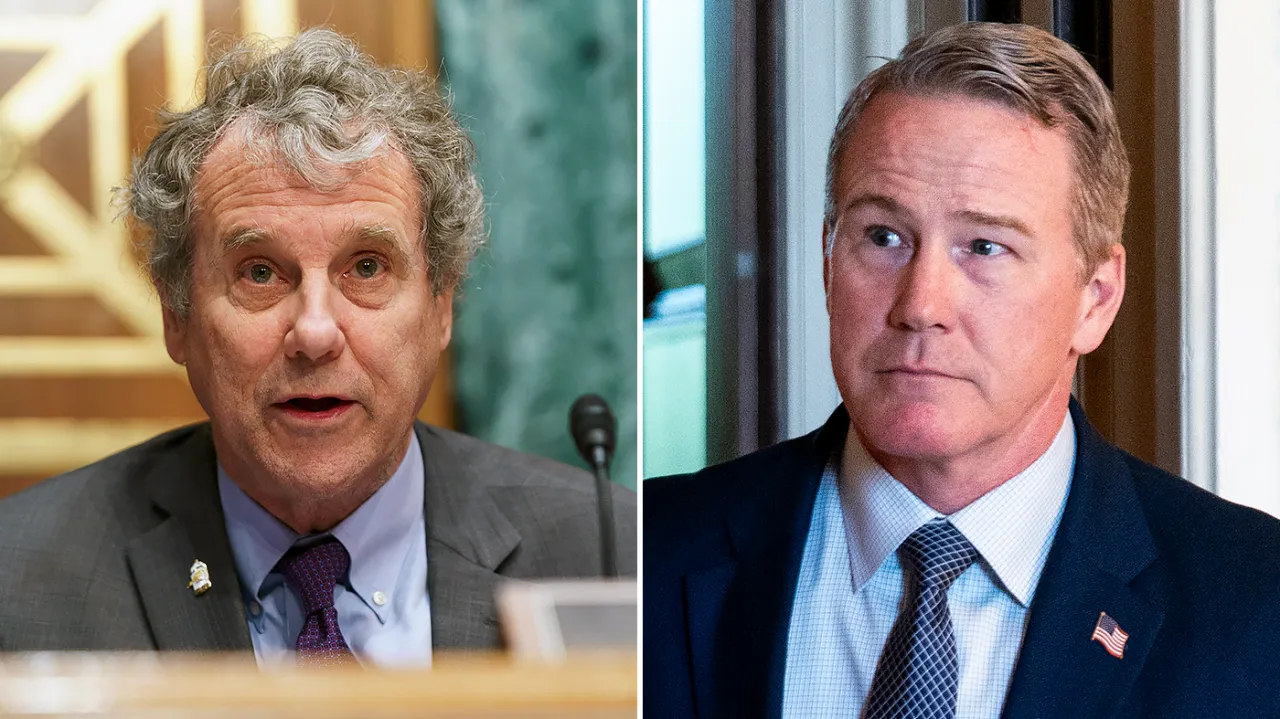
Sherrod Brown, the former Democratic senator from Ohio, is making opposition to the rapid expansion of data centers a central part of his campaign to return to the US Senate, arguing that the artificial intelligence boom is imposing hidden costs on ordinary residents while providing disproportionate benefits to wealthy technology investors.
At campaign events across Ohio, Brown has increasingly linked the construction of large data centers with the broader economic pressures facing working families. He says communities are being asked to absorb the consequences of the facilities through increased demands on land, water and electricity infrastructure, while receiving comparatively little influence over decisions about where the projects are built.
During a recent campaign stop in Lima, north-west Ohio, Brown described driving through rural areas where farmland and agricultural buildings suddenly gave way to enormous construction projects. He recalled seeing cranes and heavy trucks appearing beside fields and barns as data-center development expanded into areas that had previously been dominated by agriculture.

Brown argues that many residents do not know such projects are coming until construction is already underway. In his view, the scale of the facilities makes them fundamentally different from ordinary commercial developments because they can consume substantial amounts of electricity and water and require major infrastructure investment.
His criticism fits closely with the economic message that has defined much of his political career. Brown has long presented himself as a defender of workers against powerful corporations and political interests that he believes have benefited from economic policies while leaving working communities behind. He is now attempting to apply that same argument to the artificial intelligence industry and the infrastructure being built to support it.
The issue could prove particularly important because Brown is seeking a political comeback in a state that has moved sharply toward Republicans. He served for decades in Congress before losing his Senate seat in 2024, when Ohio voters supported Donald Trump by a significant margin. Brown nevertheless announced another Senate campaign months after leaving office, promising that his political career was not finished.
His Republican opponent is Senator Jon Husted, who was appointed to the Senate in 2025 after JD Vance left the seat to become vice-president. Brown has sought to make Husted personally responsible in voters’ minds for Ohio’s data-center expansion, repeatedly portraying him as the political face of the industry.
The campaign has intensified its attacks in recent weeks. Brown’s team has used billboards accusing Husted of bringing data centers to Ohio and has launched an online campaign highlighting their locations across the state. The strategy is designed to turn an abstract debate about artificial intelligence into a local issue that voters can see in their own communities.
The argument also draws on the substantial public incentives that have supported data-center development. An Ohio Chamber of Commerce report found that the state provided billions of dollars in tax breaks for such facilities between 2017 and 2024, a period when Husted served as lieutenant governor.
Husted’s campaign has rejected Brown’s characterization, arguing that the former lieutenant governor did not have the authority to grant the tax breaks. His supporters have also pointed to Husted’s own legislative efforts to address the impact of data centers on electricity customers.
One proposal Husted supported, the Ratepayer Protection Act, would have required electric utilities to consider standards intended to make large data-center developments contribute toward their impact on the power grid. The legislation passed the House with bipartisan support but failed to advance in the Senate after Democratic opposition.
Husted’s campaign has accused Brown of using the data-center debate for political advantage rather than offering practical solutions to reduce energy costs for Ohio households. The dispute illustrates the increasingly complicated politics surrounding AI infrastructure, where the promise of economic growth is colliding with concerns about electricity demand, environmental pressure and public subsidies.
Polling suggests Brown may have found an issue that resonates beyond traditional Democratic constituencies. Recent polling showed voters giving Brown an advantage over Husted when asked who would better manage data-center development. The overall Senate race remains closely contested, however, making the issue potentially significant in determining whether Brown can overcome Ohio’s Republican lean.
Republicans have privately expressed concern about the political vulnerability created by the data-center debate. A memo from the National Republican Senatorial Committee warned that the issue could become a serious problem for Husted if voters associate him too closely with rapid development.
The political landscape in Ohio has already begun to shift. Communities across the state have introduced or adopted moratoriums restricting new data-center construction. State officials have also reconsidered earlier policies encouraging development, with Governor Mike DeWine announcing a pause on certain tax exemptions for the facilities.
The change reflects a wider national debate. Data centers are essential to the expansion of artificial intelligence, cloud computing and other digital services, but their physical requirements have increasingly brought them into direct conflict with local communities. Projects can require large amounts of electricity and water, while their construction can transform rural landscapes and place pressure on existing infrastructure.
For Brown, that conflict provides an opportunity to revive the working-class coalition that once helped him dominate Ohio politics. His campaign has deliberately combined the data-center issue with concerns about inflation, energy prices, healthcare costs, tariffs and the economic consequences of the Trump administration’s policies.
He has also proposed expanding the child tax credit as part of his broader affordability agenda, seeking to demonstrate that his campaign is not solely focused on opposing Republicans or technology companies but also on providing direct economic assistance to families.
Brown’s political identity has always been built around challenging powerful interests. During his long congressional career, he opposed the North American Free Trade Agreement because of concerns about its effect on manufacturing communities and later supported legislation designed to increase Social Security payments for certain public-sector retirees.
His record has helped maintain strong relationships with organized labor, an important constituency for his campaign. But the data-center issue creates an unusual tension because the same projects Brown criticizes can generate significant employment for construction workers and union members.
Representatives of building trades in north-west Ohio have acknowledged that data centers are an important source of jobs. Construction projects can provide employment for workers during the building phase and potentially create longer-term opportunities associated with maintenance and expansion.
That means Brown cannot simply portray data centers as harmful. Instead, his campaign is attempting to distinguish between the economic opportunities created by construction and the terms under which communities allow the facilities to be built.
Brown argues that workers can support development while still demanding stronger protections for ratepayers and greater community involvement. He has emphasized that union members do not want their electricity bills to rise because of infrastructure serving large technology companies, nor do they necessarily want major projects imposed on their communities without meaningful public input.
The debate therefore reaches beyond the traditional political divide over artificial intelligence. It is becoming a question of who should pay for the infrastructure required to power the technology revolution and who should benefit from it.
For Brown, that question is central to his attempt to return to the Senate. His challenge is to persuade voters who have increasingly supported Republicans that his message about corporate power, household costs and local control is more relevant to their daily lives than partisan loyalties.
The strategy carries risks. Data centers represent one of the fastest-growing components of the technology economy, and Ohio officials have promoted them as symbols of investment and future economic growth. A campaign that appears too hostile to development could alienate workers and communities hoping to benefit from new construction.

But Brown appears convinced that the political costs of unchecked expansion may be greater. By portraying data centers as a symbol of a system that allows powerful companies to receive public benefits while ordinary households face higher costs, he is attempting to transform the AI infrastructure debate into a populist economic issue.
Whether that argument is enough to return him to the Senate will depend on whether Ohio voters see data-center development as an opportunity for jobs and investment or as another example of economic decisions being made without sufficient consideration for local communities. With the Senate race tightly contested, an issue once considered a niche concern of local planning debates has become an increasingly important part of Ohio’s political battle.
Related News:
 Xi urges Trump to avoid US-China military conflict
 Government Unveils Northern Powerhouse Rail Plans
 Trump Fed bid heads to Supreme Court
 Sanders Condemns Billionaire ‘Greed’ in California Tax Debate
 Can Congress Stop US Sports Teams From Moving Cities?
 Iron Worker Challenges Trump Loyalist in Ohio
 Reform UK funding: mystery billionaire revealed
 US Labor Department in turmoil after secretary resigns
 Trump approval plunges amid Iran war fears
 Trump Threatens UN Budget Cuts as US Pushes ‘Trade Over Aid’ Agenda
 US Awaits Iran Reply on New Ceasefire Proposal
 Kevin Warsh sworn in as Fed chair amid economic backlash
 Hormuz Talks Near Critical Stage
 Trump Refuses to Sign Housing Bill, But Law Takes Effect
 Trump announces major US oil deal with Venezuela
 Trump Hardens Canada Trade Stance as Talks Stall
 Trump Calls Iran War ‘Small Potatoes’ Despite US Deaths
 Trump Pledges $5,000 if Republicans Win Midterms
 Trump’s Washington Projects Face Architectural Criticism
 Why AI Doomsday Warnings Failed to Slow the Race
 Tom Watson Takes Senior Role at Palantir
 Macron and Carney deepen France-Canada ties
 Trump and Mamdani Hold Cordial Gracie Mansion Meeting
 Trump Eyes Major Belarus Fertiliser Deal Amid Canada Trade Dispute
 AI Takes Centre Stage in Trump-Xi Talks
 Trump gives Xi red-carpet welcome as trade truce extends
 Lula accuses Trump of seeking control over Brazil
 Why Americans Feel Ripped Off by Rising Prices
 AI Deepfakes Put New Pressure on Election Trust
 Trump Ads Trigger Fight Over Taxpayer Money
 Food Industry Mobilises Against the MAHA Movement
 Senators warn US childcare policies could raise costs
 Trump Immigration Policy Faces New Legal Tests
 Clay Travis Builds New Sports Media Venture
 Pritzker’s National Profile Grows Ahead of 2028
 IMF Warns Governments Over Rising Debt Burdens
 Doubts Grow Over Trump’s $15bn Iowa Steel Plant
 Tanker Attacked Near Qatar as Hormuz Tensions Escalate
 Trump’s UK Ambassador Urges North Sea Drilling to Strengthen US Ties
 Millionaires group urge Reeves to introduce wealth tax to ‘lift kids out of poverty’
 Canada Passes Carney’s First Budget in Tight Parliamentary Vote
 US National Guard Member Killed in DC Shooting
 Starmer Says Labour’s Economic Plan Needs Years to Deliver
 Trump press secretary attacks reporter over ICE question
 Partial US Government Shutdown Hits Homeland Security Funding
 Sinema payment row deepens after $9,000 transfer claim
 Nurses’ families fear breakup under UK immigration crackdown
 Trump’s Surgeon General Pick Evades Vaccine Questions
 Adelaide University Faces Backlash Over Event Cancellation
 Trump Signals Hope for New Iran Talks as Ceasefire Fades
 UK Stands Firm on Falklands Amid US Rift
 Investigation Into Anti-Trump Motives After Gala Shooting
 Trump Defiant After Washington Hotel Shooting
 Oil Prices Surge Above $120 Amid Iran Blockade Fears
 Trump orders US troop pullout from Germany
 Silent Tracks: Rail Line Without Passengers
 Tough Fiscal Realities Await Next Scottish Government
 Is JD Vance the Ultimate Fall Guy for Trump’s Shaky Iran Deal?
 Trump Faces Backlash Over $2bn Earnings Since Return
 AOC Backs El-Sayed in Tight Michigan Senate Primary
 Burnham unveils £65m drought aid for farmers
 Unions Warn Labour Over Zero-Hours Contract Reforms
 London Launches First Self-Driving Taxis
 Trump gives $45,000 holiday gifts to White House aides
 US Networks Suspend Trump White House Pool Coverage
 Democrat Says ICE Restricted Detention Camp Oversight
 MPs Defend UK Economic Watchdog Against Critics
 The Tests Awaiting Andy Burnham After Labour Conference
 Republican Senator Questions Trump Ad Spending
 Sheikh Tahnoon and the UAE’s AI Ambitions
 US Sends Third Carrier to Middle East
 Jessica Watkins Leads Record-Breaking SpaceX Flight
 Badenoch Raises Prospect of 2027 UK Election
 Lula Warns of Bolsonaro Family Return as Brazil Votes
 Salinas Struggles to Keep the American Dream Alive
 US bombers leave RAF Fairford after terror threat
 Quebec separatists return to power without majority
 South Korea Probes Fuel Shipments to Russia
 Ministers Push ATO to Reconsider Credit Card Ban
 Trump Says He Deserves Nobel Peace Prize