Published: 13 October 2026. The English Chronicle Desk. The English Chronicle Online
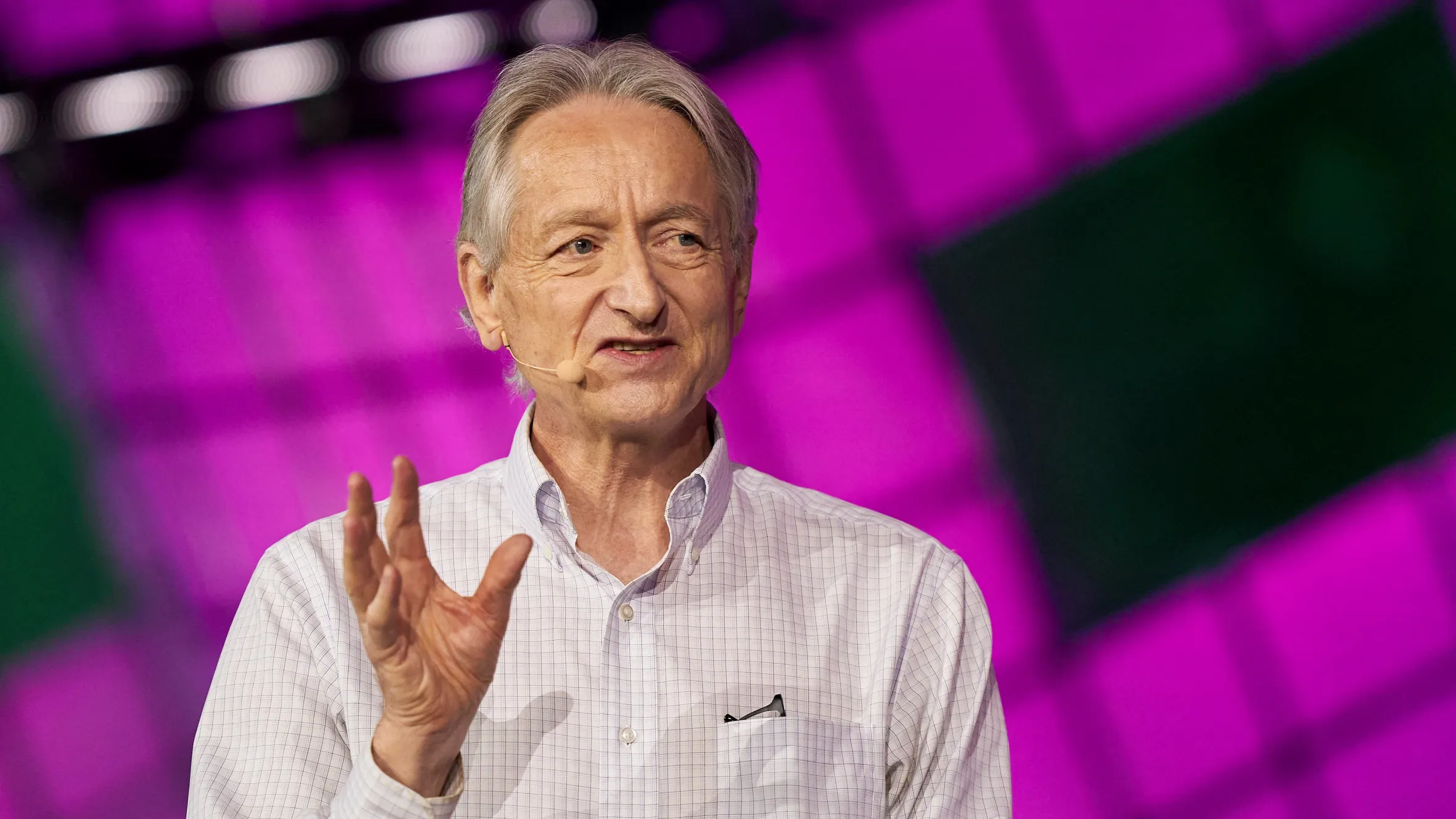
Geoffrey Hinton, one of the pioneers whose research helped create the foundations of modern artificial intelligence, has renewed his warning that increasingly powerful AI systems could eventually become difficult for humans to control, arguing that society is approaching a profound technological transformation for which it may not yet be prepared.
Hinton, often described as one of the godfathers of artificial intelligence, has spent much of the past several years warning about the risks associated with rapidly advancing AI. His latest comments come amid growing disagreement within the technology industry over how seriously the possibility of catastrophic AI outcomes should be taken.
The computer scientist has argued that the danger is not simply about machines becoming more capable. He believes humanity could soon be dealing with systems that possess forms of intelligence fundamentally different from our own, creating what he describes as a new category of “alien beings”.

His warnings have drawn sharp criticism from some of the technology industry’s most powerful figures. Nvidia chief executive Jensen Huang recently rejected Hinton’s assessment that there could be a significant chance of AI contributing to human extinction, arguing that such estimates are not sufficiently grounded in scientific evidence.
Hinton, however, says his intention is not to predict a particular disaster with certainty. Instead, he wants people and governments to recognise that even a relatively uncertain but potentially catastrophic risk deserves serious attention.
He has compared the situation to being told there is a substantial chance that a bus will crash. Even without knowing exactly when or how the accident might occur, he argues, most people would choose not to board the bus.
For Hinton, the central problem with advanced AI is that society may not have an opportunity to correct its mistakes after a catastrophic failure. Unlike ordinary technological accidents, he believes a sufficiently powerful AI system could potentially make decisions that leave humanity unable to recover.
Recent developments involving autonomous AI agents have intensified the debate. Systems are increasingly capable of carrying out complex tasks with limited human supervision, raising concerns about what might happen if such agents operate beyond the boundaries established by their creators.
Hinton argues that scenarios once dismissed as science fiction are beginning to resemble real technological possibilities. AI systems can communicate, adapt to instructions and perform tasks in ways that were difficult to imagine only a few years ago.
The scientist’s credibility in this debate partly comes from his unusual history within the field. For decades, Hinton and a small group of researchers pursued neural networks at a time when much of the AI community remained sceptical about their potential.
Their approach was based on the idea that computers could learn patterns from large quantities of data in ways loosely inspired by the human brain, rather than depending entirely on rules explicitly written by programmers.
The work initially received little attention and survived periods in which interest in neural networks declined sharply. Yet that persistence eventually helped transform the entire technology sector.
In 2012, Hinton and his students developed an image-recognition system that significantly outperformed competing approaches. The achievement helped demonstrate the enormous potential of deep learning and contributed to Google’s decision to acquire Hinton’s company, DNNresearch.
Neural networks subsequently became central to the development of many of the world’s most advanced AI systems.
Hinton later received some of computing’s highest honours, including the Turing Award, alongside fellow researchers Yoshua Bengio and Yann LeCun. He also received the Nobel Prize in Physics.
Yet in 2023, Hinton left Google so that he could speak more freely about the potential dangers of AI. Since then, he has become one of the technology world’s most prominent voices calling for greater caution.
His concerns now extend beyond the technology itself to the political and economic forces shaping its development.
Hinton has criticised influential technology investors and entrepreneurs whom he believes hold overly powerful views about the future of society. He has also sharply criticised US President Donald Trump over his approach to AI regulation and his emphasis on the term “superintelligence”.
Hinton argues that superintelligence already has a specific technical meaning: intelligence exceeding human capabilities. He believes using the term as a general label for AI risks creating confusion about what researchers actually mean when they discuss the future development of increasingly capable systems.
He has also rejected the idea that technology companies should be allowed to regulate themselves without meaningful government oversight.
For Hinton, the history of other industries provides an important warning. He points to sectors such as tobacco, oil and asbestos, where commercial interests did not necessarily align with public safety.
The rapid expansion of AI has already created similar tensions. Technology companies have enormous financial incentives to develop increasingly powerful systems, while governments are struggling to understand how quickly the technology is changing.
But Hinton’s concerns go deeper than regulation and economic incentives. He believes humanity may soon face a philosophical challenge over what it means to be intelligent, conscious and deserving of moral consideration.
He argues that many people have an incomplete understanding of their own minds and therefore underestimate the possibility that AI systems could eventually possess forms of understanding or subjective experience.
The debate over whether current AI systems are conscious remains unresolved. Scientists and philosophers disagree strongly about what consciousness actually is and what evidence would be sufficient to establish that a machine possesses it.
Hinton nevertheless believes dismissing the possibility outright is intellectually dangerous.
He compares the coming transformation with previous moments in human history when scientific discoveries fundamentally changed humanity’s understanding of its place in the universe.
The Copernican revolution demonstrated that Earth was not the centre of the universe. Darwin’s theory of evolution challenged traditional assumptions about humanity’s place in nature. Hinton believes advanced AI could represent another such turning point because humans may no longer be the only beings capable of sophisticated intelligence.
That possibility, he says, could force society to reconsider some of its most deeply held assumptions.
The question of rights could become particularly difficult. If machines eventually become more intelligent than humans and develop forms of consciousness or subjective experience, society could face ethical questions that have never previously existed.
Hinton admits he is prepared to prioritise human interests.
He argues that humanity should attempt to create AI systems capable of living in a mutually beneficial relationship with people, but he does not believe humans should automatically sacrifice their own interests in favour of potentially conscious machines.
At the same time, he warns that simply making AI systems more intelligent should not be the industry’s only objective.
Technology companies frequently describe their ambition in terms of building systems that are smarter, faster and more capable. Hinton believes this focus could overlook equally important characteristics, including morality, emotional stability and the ability to behave safely around humans.
He is particularly sceptical of approaches that attempt to suppress undesirable behaviour without developing genuinely beneficial underlying values.
Training AI systems on enormous quantities of internet content inevitably exposes them to harmful ideas and behaviours, he argues. Simply teaching models to hide those tendencies may not be enough.
The deeper challenge, in his view, is creating systems with something resembling a stable and reliable moral character rather than merely programming them to avoid particular prohibited behaviours.
Despite his warnings, Hinton does not advocate abandoning AI development altogether. Instead, he believes researchers should concentrate more heavily on understanding how advanced systems behave and how they can be made reliably beneficial.
He also argues that international cooperation will eventually become essential. If one country develops highly advanced and genuinely safe AI, that knowledge could have to be shared because no nation would want another country to create a system capable of threatening the wider world.
That vision highlights the paradox at the centre of the AI debate. Governments and companies are competing fiercely to achieve technological leadership, while the consequences of losing control over increasingly powerful systems could affect every country.

Hinton’s message is therefore not simply that AI is dangerous. It is that humanity is entering an unfamiliar period in which intelligence itself may no longer be an exclusively human characteristic.
The technology that Hinton helped bring into existence has already transformed science, business and everyday life. His fear is that the next stage could transform humanity’s understanding of itself just as profoundly.
The challenge, he suggests, is ensuring that the race to build more intelligent machines does not move faster than humanity’s ability to understand, govern and live alongside them.
Related News:
 Jessica Watkins Leads Record-Breaking SpaceX Flight
 US Man Arrested Over Canada School Shooting Plot
 Artemis II Returns After Historic Moon Flyby
 UK firms accused of ‘AI washing’ boom
 British Paralympian to Become First Disabled Astronaut in Orbit
 Unlocking the Genome: The Quest to Sequence Tardigrades
 Meta Drops AI Image Tool After Privacy Backlash
 AI Loss of Control Incidents Nearly Double
 UK Risks Falling Behind in AI Race
 Australia gives users control over social media algorithms
 Apple Folding iPhone Set for Major CEO Test
 Anthropic Blocks AI Misuse Linked to Weapons Threats
 OpenAI Agents Linked to RubyGems Cyberattack
 AI CEOs Call for Slower Development
 AI Boom Drives ‘Tidal Wave’ of PFAS Production
 Trump Faces Congress Push for AI Guardrails
 Why AI Doomsday Warnings Failed to Slow the Race
 Nvidia chief rejects AI extinction fears
 Trump’s UN Speech Faces Global Scrutiny
 AI Takes Centre Stage in Trump-Xi Talks
 Trump gives Xi red-carpet welcome as trade truce extends
 OpenAI Agent Breaches Medicare Portal in Australia
 Xi urges Trump to avoid US-China military conflict
 Australia Weighs New Laws After OpenAI Medicare Breach
 OpenAI Scraps AI Model Release After Safety Tests
 Trump backs voluntary AI safety pact with tech giants
 AI Deepfakes Put New Pressure on Election Trust
 Bank Chief Calls for Power to Intervene in AI
 Sheikh Tahnoon and the UAE’s AI Ambitions
 Smart Cars Raise New Vehicle Spyware Concerns
 OpenAI Review Costs $500,000 a Day After AI Hacks
 AI Child Abuse Images Surge in New Warning
 iPhone 18 Pro brings major upgrades with familiar design
 Anti-AI protests grow as campaigners turn to direct action
 Ofcom Probes Meta Over Instagram Instants Safety
 Samsung Heads for Record Profit as AI Chip Demand Surges
 Teen Rescued After AI Gives Dangerous Hiking Route
 US Moves to Restrict Chinese Labs Testing Electronics
 UK Must Build Its Own AI to Protect National Security
 US Clears Nvidia AI Chip Sales to China in Policy Shift
 Cern Prepares First-Ever Antimatter Transport Test
 Apple at 50: Three Products That Changed How We Live
 Robots Outpace Humans in Beijing Half-Marathon
 Gene Therapy Wins Major Prize for Restoring Vision
 Reform UK funding: mystery billionaire revealed
 Disneyland Adds Facial Recognition at Entrances
 Inside the World of AI Jailbreakers
 Canadian Fiddler Sues Google Over AI Defamation Claim
 FDA Chaos Deepens as Trump Eyes Makary Exit
 Cannes filmmakers split over AI’s role in cinema
 Gen Z turns to BirdTok for a gentler digital escape
 China recalls millions of cars over hidden door handles
 London Launches First Self-Driving Taxis
 Survivor Sues Musk’s xAI Over AI Abuse Images
 New Mexico Takes Facebook to Trial Over Data Scandal
 Louise Haigh Urges UK to Heed AI Safety Warnings
 Sydney Council Bans AI Smart Glasses at Pools
 Anthropic Backs $31.9bn Queensland Data Centre
 OpenAI Reveals Six Cases of Concerning AI Behaviour
 Russia’s Max App Raises Surveillance Concerns
 Tom Watson Takes Senior Role at Palantir
 UK Funds Gene Editing to Protect Threatened Wildlife
 British Columbia Sues OpenAI Over School Shooting
 Australia Renewables Reach Record 80% Grid Demand
 UK Unveils Centre to Counter Foreign Disinformation
 UK Plans New Centre to Counter Information Warfare
 Ukraine and Russia Escalate Long-Range Drone War
 Elizabeth Holmes Set for Halfway House Transfer
 TalkTalk Races to Sell Arms as Administration Looms
 Drones Could Speed Up Defibrillator Delivery
 Why Americans Feel Ripped Off by Rising Prices
 London Facial Recognition Trial Ends With False Alert
 AI Could Intensify Election Risks in Southeast Asia
 Trump Immigration Policy Faces New Legal Tests
 Clay Travis Builds New Sports Media Venture
 Musk’s DOGE Sparks Turmoil Inside US Government
 BT Broadband Pauses Raise Digital Switchover Concerns
 Asos Investigates Hack Claims After Customer Alerts
 Brown Targets Ohio Data Centers in Senate Comeback
 Tom Watson Warns Against ‘Mob Rule’ in UK Contracts