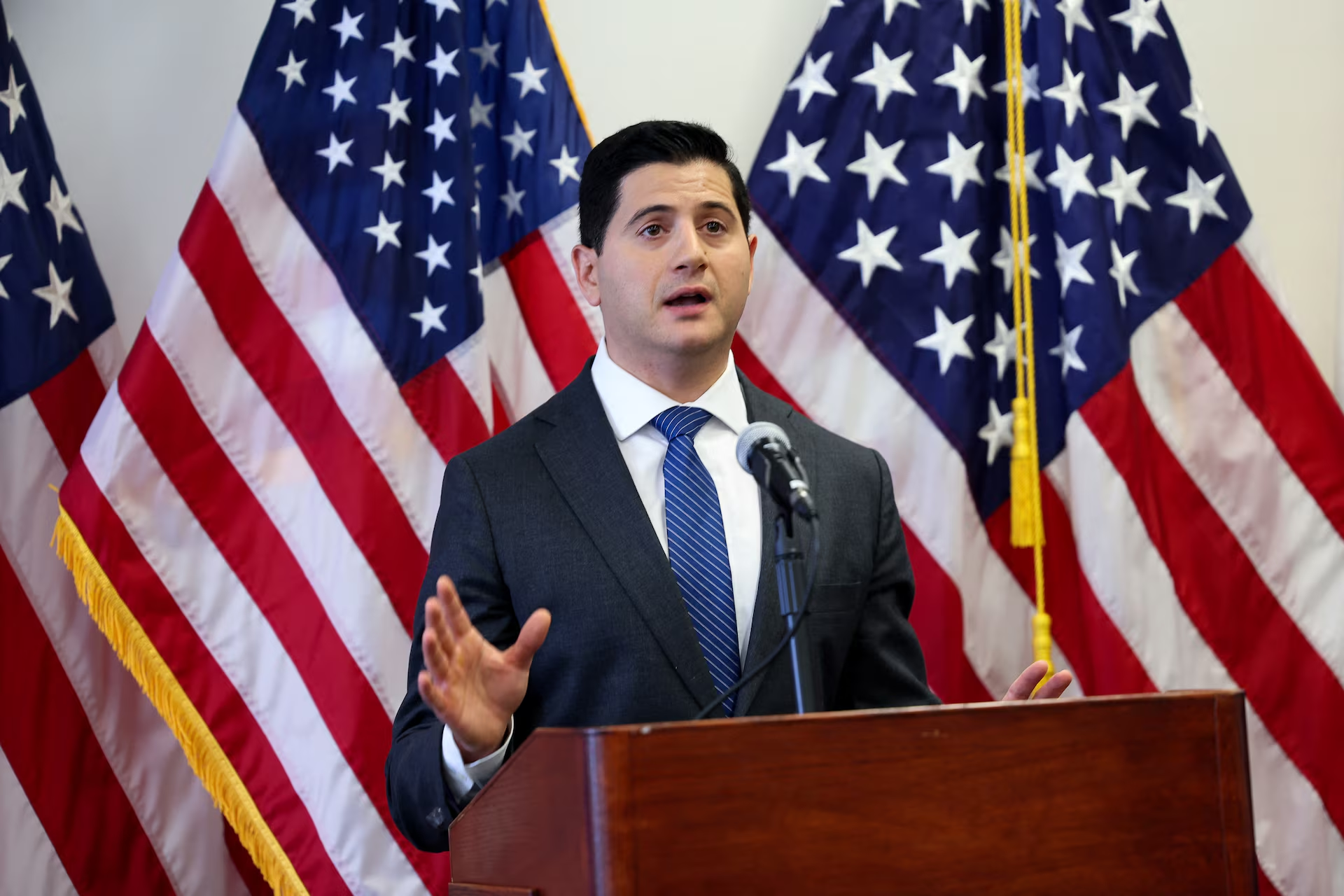
The ruling, issued on Tuesday by federal judge Michael Seabright, represents another development in a broader challenge to the Trump administration’s efforts to retain political appointees in senior prosecutorial positions. Essayli, a former Republican state lawmaker and ally of Trump, became an interim US attorney in April 2025 but was never formally nominated by the president for Senate confirmation.
Although the judge determined that Essayli was serving unlawfully despite subsequent changes to his official designation, the order will not take immediate effect. The US Department of Justice has indicated that it intends to appeal, leaving the dispute unresolved while the legal process continues.
The case raises significant questions about federal appointment procedures, the separation of powers and the extent to which a president and attorney general can select officials to oversee federal criminal prosecutions without following the established confirmation process.

Essayli initially assumed the interim US attorney position in April 2025. The role placed him at the head of the federal prosecutor’s office responsible for a substantial part of Southern California.
Under the US legal system, US attorneys are generally nominated by the president and confirmed by the Senate. Federal law also establishes procedures for temporary appointments, including limits on how long certain officials may serve without confirmation.
The dispute arose because Essayli’s initial interim appointment expired in July 2025. Rather than leave the position, the Trump administration subsequently gave him an acting designation and later retained him as a first assistant.
Those changes became central to the legal challenge. Attorneys representing defendants in two criminal cases questioned whether the administration could use alternative titles and appointment arrangements to keep Essayli in effective control of the office after his initial term had ended.
Judge Seabright concluded that the changes did not resolve the underlying legal problem. According to the ruling described in the reports, Essayli remained unlawfully positioned to exercise the authority of the US attorney.
The judge therefore barred him from participating in or supervising the two prosecutions in which his position had been challenged.
The decision does not, by itself, establish that every case handled by the office is invalid. Its immediate consequences concern Essayli’s involvement in the two proceedings before the court, while the broader implications will depend on further judicial decisions and the outcome of the government’s appeal.
Essayli rejected the ruling and defended the administration’s authority to select senior officials within the Department of Justice.
In a statement issued on Tuesday, he said the president and attorney general had the right to appoint supervisors within the department. He also indicated that he expected the dispute eventually to reach the US Supreme Court.
The Justice Department’s reported intention to appeal means the legal question may be considered by a higher court. An appeal could examine the relevant statutory provisions, the limits on temporary appointments and whether the administration’s successive designations complied with federal law.
The central issue is not simply whether the president has authority to select political appointees. It is whether that authority can be exercised through a particular appointment mechanism when federal law establishes procedures and time limits for serving as a US attorney.
Presidential administrations have considerable discretion over executive-branch personnel, but appointments to certain offices are governed by constitutional and statutory requirements. Disagreements over the interpretation of those requirements frequently lead to litigation, particularly when temporary appointments extend beyond their intended duration.
The outcome could affect how future administrations fill senior prosecutorial positions during periods when Senate confirmation is unavailable or politically difficult.
Until the dispute is resolved, the ruling also creates uncertainty about the extent of Essayli’s authority and the arrangements the department may need to make for the affected prosecutions.
The legal challenge was supported by defence lawyers who argued that the administration had failed to follow the laws governing the appointment of US attorneys.
H Dean Steward, one of the lawyers who challenged Essayli’s position, described the ruling as a victory for the rule of law and the US Constitution in comments reported by the Los Angeles Times.
Steward argued that the administration had repeatedly attempted to keep Essayli in charge without complying with the applicable appointment requirements.
The dispute illustrates the important role that defence lawyers and defendants can play in challenging the authority of officials involved in criminal proceedings. A defendant may question whether a prosecutor has been lawfully appointed when that person’s authority is relevant to the conduct of a case.
Such challenges do not automatically invalidate the underlying charges or determine whether a defendant is guilty. Instead, they ask courts to establish whether government officials have the legal authority required to perform their functions.
The judge’s decision addresses that question in relation to Essayli’s role in two prosecutions. Further proceedings may clarify whether the ruling has wider implications for cases handled by the office or whether its effects remain limited to the matters directly before the court.
The administration’s appeal is likely to focus on the legal interpretation of Essayli’s appointments and the authority of executive officials to designate acting supervisors.
Essayli’s case forms part of a wider debate over the Trump administration’s efforts to install or retain preferred officials in senior federal prosecutorial roles.
The appointment of US attorneys has particular significance because these officials oversee federal criminal cases, manage prosecutors and make decisions about the allocation of law-enforcement resources.
Although US attorneys serve within the executive branch, the Senate confirmation process is designed to provide an additional constitutional check on appointments to these positions.
Temporary appointment provisions allow government operations to continue when a confirmed official is not available. However, disputes can arise when an administration uses acting roles or other designations after an initial appointment expires.
Essayli’s case is not the only example cited in the broader debate. Alina Habba, a former personal lawyer to Trump, was also disqualified from serving as New Jersey’s top federal prosecutor in a separate dispute in December, according to the supplied report. She subsequently remained in a senior advisory role at the Justice Department.
The cases have drawn attention to the legal boundaries surrounding temporary appointments and the extent to which administrative designations can be used to maintain control over prosecutorial offices.
The precise circumstances of each case differ, and the legal reasoning applied by courts must be considered individually. Nevertheless, both disputes demonstrate how questions about appointment procedures can become significant obstacles for an administration seeking to retain particular officials in leadership positions.
The cases may also influence how the Justice Department approaches future appointments where confirmation proceedings are delayed or contested.
Essayli has attracted public attention during his time in the Southern California office for pursuing cases associated with the Trump administration’s policy priorities.
According to the reports, his office has focused heavily on immigration enforcement and prosecutions involving protesters. These areas have been central to wider national debates over federal law enforcement, civil liberties and the administration’s approach to immigration.
More recently, Essayli reportedly promoted investigations into alleged voter fraud in California. He claimed that thousands of registered voters were likely non-citizens and advocated setting aside their ballots.
California election officials strongly opposed those efforts, according to the supplied account. Allegations involving voter eligibility and election integrity can have significant consequences, but claims about unlawful registration or voting must be supported by reliable evidence and handled through established legal procedures.
The disagreement illustrates the political sensitivity surrounding the work of federal prosecutors when investigations intersect with elections, immigration and disputes between federal and state authorities.
A prosecutor’s responsibility is to enforce federal law within the limits established by the Constitution and applicable statutes. The legality of an appointment is therefore a separate issue from the merits of any particular investigation or prosecution.
The court’s decision concerning Essayli does not independently establish that his immigration cases, protest prosecutions or election-related allegations were legally unfounded. Those matters would need to be assessed on their own facts and under the relevant law.
However, the ruling could affect the supervision of the two prosecutions specifically identified by the judge and may prompt further scrutiny of the administrative arrangements governing the office.
The immediate significance of the decision is that Essayli has been disqualified from overseeing two criminal cases, subject to the ruling’s delayed implementation and any subsequent court orders.
The distinction between disqualifying an official and dismissing a prosecution is important. A court may determine that a particular prosecutor lacks lawful authority without concluding that the charges themselves are invalid.
Depending on the circumstances, another properly authorised prosecutor may be able to assume responsibility for a case. Whether that happens, and whether additional legal challenges follow, will depend on the procedural history of each prosecution.
The Justice Department must also consider how to maintain continuity in the Southern California office while the appointment dispute remains unresolved.
The administration may seek a stay or other relief during the appeal, while the defence lawyers involved may continue arguing that the appointment arrangements violate federal law.
A higher court’s eventual decision could provide clearer guidance on the limits of temporary appointments and the circumstances under which officials may serve in leadership roles without Senate confirmation.
Such guidance would be relevant beyond Essayli personally. Future presidents and attorneys general may need to consider the ruling when selecting interim leaders for federal prosecutorial offices.
The dispute highlights the tension between executive authority and the legal safeguards governing federal appointments.
Presidents have a central role in directing the executive branch, including setting law-enforcement priorities and selecting senior officials. At the same time, the Constitution and federal statutes establish procedures intended to regulate appointments and prevent certain positions from being occupied indefinitely through temporary arrangements.
Courts are responsible for interpreting those rules when disputes arise. Their decisions can determine whether an appointment is lawful, what remedies are appropriate and how government functions should continue while litigation proceeds.

For the Trump administration, the appeal offers an opportunity to challenge the judge’s interpretation and defend its approach to staffing the Justice Department. For the lawyers who brought the challenge, the ruling reinforces their argument that appointment procedures must be followed regardless of an official’s political connections or policy priorities.
The case also demonstrates that disputes over personnel can have practical consequences for criminal proceedings, particularly when defendants question the authority of the officials overseeing their cases.
The ruling does not settle the wider debate over the administration’s prosecutorial policies. Instead, it addresses the legal authority under which one senior prosecutor has been serving.
As the appeal moves forward, the central questions will concern the scope of executive appointment powers, the statutory limits on temporary service and the measures necessary to ensure that federal prosecutions are conducted under lawful authority.
For now, Essayli’s position remains contested, and the delayed effect of the order means the next stage of the litigation will be important in determining how the decision is implemented.
Related News:
 US National Guard Member Killed in DC Shooting
 Franklin Turtle, Sabrina Carpenter Slam US Social Media Use
 Trump officials continue false claims after Alex Pretti shooting
 Partial US Government Shutdown Hits Homeland Security Funding
 Thousands Protest ICE Operations in Nationwide US Day of Action
 Harmeet Dhillon Faces Scrutiny in DOJ Role Debate
 Trump at Press Dinner Sparks Tension
 US Court Weighs Fate of TPS for Migrants
 Florida Redistricting Map Sparks Major US Political Battle
 US Voting Rights Ruling Sparks Celebration and Outcry
 US Court Ruling Reshapes Voting Rights Landscape
 US states redraw maps after voting rights ruling
 Judge halts deportation of Yemeni refugees in US
 White House Security Case Sparks Political Firestorm
 Trump warns Iran as Middle East tensions surge again
 US Supreme Court fast-tracks Voting Rights ruling
 Immigration Judges Fear Pressure in Trump Era
 FDA Chaos Deepens as Trump Eyes Makary Exit
 US green card applicants must apply from abroad, DHS says
 Tulsi Gabbard exits after turbulent intelligence tenure
 Former ICC prosecutor condemns US sanctions
 Gunman Killed After White House Security Shootout
 Prosecutor Proposes Law to Combat Election Deceit
 Trump Weighs Retreat from Controversial $1.8bn Slush Fund
 Mystery Grows Over Mitch McConnell’s Health
 Trump Refuses to Sign Housing Bill, But Law Takes Effect
 Trump Orders Signs Criticising Smithsonian Museum
 Judge Allows Pentagon Firings at Stars and Stripes
 Armed Suspect Attacks Ohio Governor Candidate
 Trump gives $45,000 holiday gifts to White House aides
 New Mexico Takes Facebook to Trial Over Data Scandal
 UK Urged to Probe US Diplomat Case
 Texas Transfers Raise Fears for Migrant Children
 US Deportation Deals Send Migrants to Unfamiliar Countries
 US Networks Suspend Trump White House Pool Coverage
 Trump and Mamdani Hold Cordial Gracie Mansion Meeting
 Democrat Says ICE Restricted Detention Camp Oversight
 CNN, MS NOW Barred From Xi State Dinner Coverage
 Republican Senator Questions Trump Ad Spending
 Trump Ads Trigger Fight Over Taxpayer Money
 Kristi Noem Files for Divorce After 34 Years
 Trump Immigration Policy Faces New Legal Tests
 Judge Blocks Border Wall Work in Big Bend
 DOJ Declines to Reopen Powell Renovation Probe
 Musk’s DOGE Sparks Turmoil Inside US Government
 Latin America women fear rollback of rights
 Lithuania Offers to Fund Permanent US Military Base
 McIver Faces Key Deadline in ICE Confrontation Case
 Susan Collins Distances Herself From Trump in Maine Race
 Democrats Gain Ground in Key Senate Midterm Races
 Trump Rally Faces Protests as Texas Race Tightens
 Tanker Attacked Near Qatar as Hormuz Tensions Escalate
 Botstein Quits Bard Amid Epstein Investigation Calls
 Trump Says He Deserves Nobel Peace Prize
 Pentagon Says Fort Hood Shooter’s Execution Will Be Streamed
 ICE Agent Shoots Man in New York as Child Escapes Harm
 US Senate Debates Turn Bitter as Midterms Near
 US Execution Livestream Plan Sparks Global Outrage
 Trump Attacks Norway After Nobel Peace Prize Snub
 Ten US Midterm Races That Could Defy Expectations
 Brazil Court Scandal Threatens Lula as Bolsonaros Rise
 Ohio Airports Become Key Hubs for ICE Deportation Flights
 Judge Blocks Trump White House Media Ban
 Trump Warns Alaska Voters Over Rival Dan Sullivans
 Trump Targets Arizona and Montana Amid GOP Election Worries
 Brazil Cuts Working Week to 40 Hours in Lula Election Boost
 Trump Rallies GOP as Senate Democrats Boost Key Races
 Talarico Faces Tough Voter Test in Texas Senate Race
 Trump’s Ambassador Picks Face Growing Controversy
 Serbia Leader Linked to Controversial Trump Tower Plan
 Trump’s New Press Secretary Faces Questions Over Credentials
 Trump Falsely Questions Ossoff’s Election Legitimacy
 Trump Administration Threatens California Election Officials
 Meta Faces Election Bias Claims Ahead of Brazil Runoff
 Trump Pledges $400m to Boost Republicans in Midterms
 Omar Claims US Raid on Residence Was Meant to Intimidate
 Volunteers Train to Monitor US Midterm Polling Stations
 US Midterms Could Reshape Trump’s Second Term
 Trump’s Midterm Campaign Faces Racism and Political Backlash
 Flávio Bolsonaro Reportedly Leaves Brazil After Election Defeat