


Published: 16 October 2026. The English Chronicle Desk. The English Chronicle Online
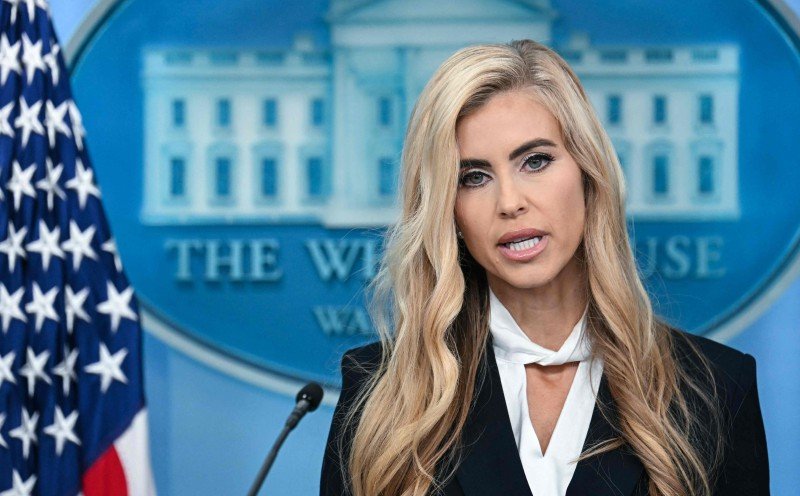
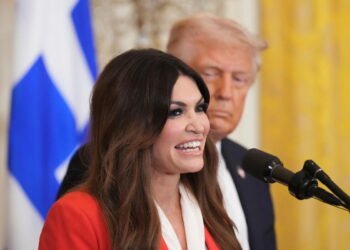
US President Donald Trump’s newly appointed White House press secretary, Katie Zacharia, has declined to say how frequently she intends to brief journalists or engage with the media, adding uncertainty to the administration’s approach to press relations as she faces growing scrutiny over her professional qualifications. Her appointment, rapid transition into one of the White House’s most visible positions and widely criticised first briefing have placed her under intense public attention just days after she took office.
In a brief interview on Thursday, Zacharia told the Guardian that the frequency of future press briefings remained “unknown at this time”. She indicated that her approach would depend largely on the president, saying Trump was “his best spokesperson” and that she would interact with reporters as necessary.
“I follow the president’s lead,” she said.
Her comments raise questions about whether the White House intends to maintain regular briefings as a central feature of presidential communication or rely more heavily on the president’s own public statements, social media posts and interviews with selected media outlets. The press secretary traditionally serves as a key link between the administration and journalists, providing information about government decisions, responding to questions and explaining the president’s policies to the public.

Zacharia’s reluctance to establish a clear schedule comes at a time when the administration is facing questions about transparency, access to officials and the role of independent journalism in holding political leaders accountable. Although she has not ruled out regular briefings, her remarks suggest that the frequency and format of media engagement have yet to be settled.
The uncertainty follows an unusually swift appointment process. Zacharia received a call from a White House official on Wednesday, 7 October, asking her to travel from Los Angeles, where she lives with her family, to Washington for a meeting. She declined to identify the person who contacted her.
She travelled to Washington the following day and met officials on Pennsylvania Avenue on Friday. Later that day, she was offered the position and accepted it. After returning to Los Angeles, she packed two bags, briefly reunited with her husband, children and dogs, and travelled back to Washington on Sunday.
“I flew home, packed two bags, said hi to my kids and husband and dogs,” she recalled.
Zacharia began her new role on Monday and was asked to conduct her first press briefing on Tuesday, just days after accepting the position. She said she had been asked to undertake the briefing on her second day in the job, leaving little time to settle into the demanding responsibilities of the position.
Nevertheless, the debut attracted widespread criticism, with observers questioning the clarity of her answers and her ability to respond confidently to reporters’ questions. The performance quickly became a major subject of discussion, shifting attention away from the administration’s policy agenda towards the qualifications and preparedness of its new spokesperson.
One of the most contentious moments involved questions about her legal background. During the briefing, reporters asked Zacharia to identify the state in which she had passed the bar examination, a qualification generally required to practise law in the United States. She responded, “When I moved to China,” an answer that did not address the question and prompted further scrutiny.
Zacharia subsequently told the New York Times that she had misheard the reporter because of noise from Marine One, the presidential helicopter, on the White House South Lawn. She said she believed the question concerned where she had gone after law school rather than whether she had passed the bar examination.
However, she did not confirm to that newspaper whether she had passed the examination, leaving the central question unresolved at the time of the interview.
The issue became more prominent after the Wall Street Journal reported, citing a person familiar with the matter, that Zacharia had failed the California bar examination after graduating from law school. The State Bar of California also told the Guardian that it had no record of her being licensed in the state under either her married name or her maiden name, Katie Black.
The distinction matters because graduating from law school and being licensed to practise law are separate achievements. A law degree demonstrates completion of an academic programme, while admission to a state bar generally involves meeting additional requirements, including examinations and professional standards. Without the relevant licence, a graduate cannot ordinarily represent themselves as authorised to practise law in that jurisdiction.
Trump has referred to Zacharia as an attorney, a title commonly associated in the United States with individuals licensed to practise law. The reports about her examination history have therefore prompted questions about how she has described her professional background and whether those descriptions could mislead the public.
In a separate interview on Thursday with the conservative outlet Human Events, Zacharia acknowledged that she had not passed the California bar examination. She explained that she had been distracted, overwhelmed and excited about joining her new husband in China, where he was working, after the couple had spent more than a year in a long-distance relationship.
Her comments provided additional information about the circumstances surrounding her legal education but did not end the controversy over her use of professional titles.
A person familiar with the matter said Zacharia stood by her description of herself as a lawyer, arguing that she considered the designation valid because of her law degree and experience in international transactional law. According to that account, she had consulted other legal professionals before deciding that the description was appropriate.
The same source said Zacharia had never provided legal advice and had instead undertaken legal analysis. However, legal experts note that the terms “lawyer” and “attorney” are frequently used interchangeably in the United States, making the distinction between academic training, legal experience and professional licensing particularly important.
The controversy has also attracted attention from a non-profit watchdog organisation. On Wednesday, the Campaign for Accountability asked the State Bar of California to investigate whether Zacharia had misled the public about her qualifications and whether her descriptions of herself could have violated state law. The request does not itself establish wrongdoing, and any determination would depend on the relevant rules and the findings of an investigation.
Zacharia’s professional history has become another focus of scrutiny. According to her LinkedIn profile, she graduated from Pepperdine University’s law school in 2011 and subsequently worked as an associate at the Beijing law firm Zhong Lun from 2011 to 2013.
Her profile then contains a gap of approximately a decade, prompting questions about her activities during that period. Wired reported on Thursday that she worked as an affiliate marketer for Beachbody, a multi-level marketing company. Zacharia reportedly described the business to the publication as “sort of a pyramid scheme”.
She later claimed to have served as general counsel for Fix California, a conservative organisation founded by Richard Grenell, a longtime Trump ally who serves as special presidential envoy for special missions. Further details about the nature and extent of her responsibilities in these roles remain unclear.
The Guardian had approached Zhong Lun and Fix California for additional information about her work with the organisations. Until further details are available, the precise scope of her legal responsibilities and the basis for the professional titles she has used remain subjects of public interest.
Zacharia’s route to the White House also reflects the importance of political loyalty and media visibility within Trump’s political circle. Before becoming press secretary, she served as an adviser to Trump Media Group, which owns the president’s Truth Social platform, and had a brief period as a spokesperson for the Department of Homeland Security.
She also described monitoring Trump’s social media posts and appearing on conservative talk shows as ways of demonstrating her suitability for the press secretary position. In her interview with Human Events, she said she had not wanted to be seen openly lobbying for the job but had effectively used her appearances to audition for the role.
When Trump announced her appointment, he praised her as a devoted supporter of the Make America Great Again movement and described her record of support as unwavering. He also called her a loyal and brilliant supporter who had backed him from the beginning.
Asked by the Guardian what reasons the White House had provided for offering her the position, Zacharia declined to comment. Her refusal left unanswered questions about the administration’s selection process and the specific experience it considered most important for the role.
The press secretary’s position is among the most demanding communications jobs in American politics. The office requires an ability to explain policy decisions, respond to unexpected developments, manage difficult exchanges with journalists and maintain credibility under sustained public scrutiny. Press secretaries also face the challenge of defending administration decisions while providing accurate information about government activities.
Regular briefings allow journalists to question officials directly and seek clarification on issues affecting the public. If briefings become less frequent or are replaced by more selective communication, reporters may have fewer opportunities to challenge statements, follow up on unanswered questions or obtain explanations of complicated policy decisions.
At the same time, a president can communicate directly with the public through interviews, speeches and digital platforms. Trump has frequently used social media and direct public statements to communicate his positions, making his own voice a central feature of his political strategy. Zacharia’s comments indicate that she expects her media engagement to follow that broader approach, although the practical implications remain uncertain.
Her immediate challenge will be to establish credibility with journalists while demonstrating that she can perform the responsibilities of the position effectively. The scrutiny surrounding her bar examination history is likely to remain a distraction until the outstanding questions about her qualifications and professional experience are clarified.

The controversy also presents a test for the White House, which must decide how to address questions about the credentials of one of its most prominent public representatives. Clear explanations could help distinguish legitimate professional experience from claims that require further examination. Continued uncertainty, however, risks allowing questions about the press secretary to overshadow the administration’s wider agenda.
For now, Zacharia has offered few details about how often she will face the media or how she intends to approach the role. Her first briefing has already drawn criticism, while reports about her legal qualifications have prompted calls for further scrutiny.
As she settles into office, the balance between presidential messaging, public accountability and direct engagement with reporters will become an important measure of her performance. Whether she adopts a regular briefing schedule or follows a more flexible approach remains unclear. What is certain is that her early days in the position have placed both her credentials and the administration’s communication strategy under close examination.
Related News:
 US states redraw maps after voting rights ruling
 Immigration Judges Fear Pressure in Trump Era
 Judge Allows Pentagon Firings at Stars and Stripes
 New Mexico Takes Facebook to Trial Over Data Scandal
 Trump Media Ban Triggers First Amendment Clash
 US Deportation Deals Send Migrants to Unfamiliar Countries
 US Networks Suspend Trump White House Pool Coverage
 Democrat Says ICE Restricted Detention Camp Oversight
 CNN, MS NOW Barred From Xi State Dinner Coverage
 Republican Senator Questions Trump Ad Spending
 Trump Ads Trigger Fight Over Taxpayer Money
 Musk’s DOGE Sparks Turmoil Inside US Government
 Latin America women fear rollback of rights
 Trump Says He Deserves Nobel Peace Prize
 ICE Agent Shoots Man in New York as Child Escapes Harm
 Trump Attacks Norway After Nobel Peace Prize Snub
 Trump Names Katie Zacharia as Next White House Spokesperson
 Brazil Court Scandal Threatens Lula as Bolsonaros Rise
 Ohio Airports Become Key Hubs for ICE Deportation Flights
 Judge Blocks Trump White House Media Ban
 Serbia Leader Linked to Controversial Trump Tower Plan
 US National Guard Member Killed in DC Shooting
 Trump officials continue false claims after Alex Pretti shooting
 Partial US Government Shutdown Hits Homeland Security Funding
 Thousands Protest ICE Operations in Nationwide US Day of Action
 Trump at Press Dinner Sparks Tension
 US Court Weighs Fate of TPS for Migrants
 Cartel crackdown raises fears of fresh violence
 Judge halts deportation of Yemeni refugees in US
 White House Security Case Sparks Political Firestorm
 Trump warns Iran as Middle East tensions surge again
 US ‘Narco Boat’ Strikes Draw Global Outcry
 Florida Surgeon ‘Devastated’ Over Fatal Surgery Error
 US green card applicants must apply from abroad, DHS says
 Tulsi Gabbard exits after turbulent intelligence tenure
 Former ICC prosecutor condemns US sanctions
 Gunman Killed After White House Security Shootout
 Prosecutor Proposes Law to Combat Election Deceit
 Trump Refuses to Sign Housing Bill, But Law Takes Effect
 Trump Orders Signs Criticising Smithsonian Museum
 Is America Ready for an AOC Presidential Run?
 Trump Calls Iran War ‘Small Potatoes’ Despite US Deaths
 Trump gives $45,000 holiday gifts to White House aides
 Israel Accused of Undermining Palestinian Life
 Trump’s Washington Projects Face Architectural Criticism
 Texas Charges Seven Noncitizens in Voting Crackdown
 Omar Proposes Bill to Redirect ICE Funding
 Trump and Mamdani Hold Cordial Gracie Mansion Meeting
 Lula accuses Trump of seeking control over Brazil
 Free Speech Emerges as Key UK Election Issue
 Cornell Fraternity Assault Investigation Reopened
 Drumcree Talks Falter as Legal Challenge Deepens
 UK-France Returns Deal Faces Expiry as Talks Stall
 Kristi Noem Files for Divorce After 34 Years
 Trump Immigration Policy Faces New Legal Tests
 Badenoch Raises Prospect of 2027 UK Election
 New Prosecutor Takes Over Cornell Assault Case
 DOJ Declines to Reopen Powell Renovation Probe
 US bombers leave RAF Fairford after terror threat
 White House defends new aide over anti-Biden photo
 McIver Faces Key Deadline in ICE Confrontation Case
 Susan Collins Distances Herself From Trump in Maine Race
 Botstein Quits Bard Amid Epstein Investigation Calls
 Royal Navy Sailor Charged With Alleged Spying
 Sri Lanka Ex-First Lady Arrested Over Donation Probe
 Bolsonaro Gains Key Endorsement Ahead of Brazil Runoff
 Delhi Tightens Security Ahead of Election Protest
 US Execution Livestream Plan Sparks Global Outrage
 Controversial Vaccine Trial Approved in Guinea-Bissau
 Trump Names Katie Zachariah as Next White House Press Secretary
 ABC Reporter Faces Possible Disciplinary Action Over Opinion Piece
 Millions Face Tougher Medicaid Rules From January
 England and Wales Begin Second Wave of Early Prison Releases
 India’s Voter Roll Crisis Sparks Nationwide Protests
 Ukrainian Soldier Faces Trial Over Nord Stream Blast
 Farage Calls for Prosecution of Asylum Seeker Charities
 Gadi Eisenkot: Israel’s Anti-Netanyahu Challenger
 Trump Rallies GOP as Senate Democrats Boost Key Races
 Talarico Faces Tough Voter Test in Texas Senate Race
 Trump’s Ambassador Picks Face Growing Controversy







