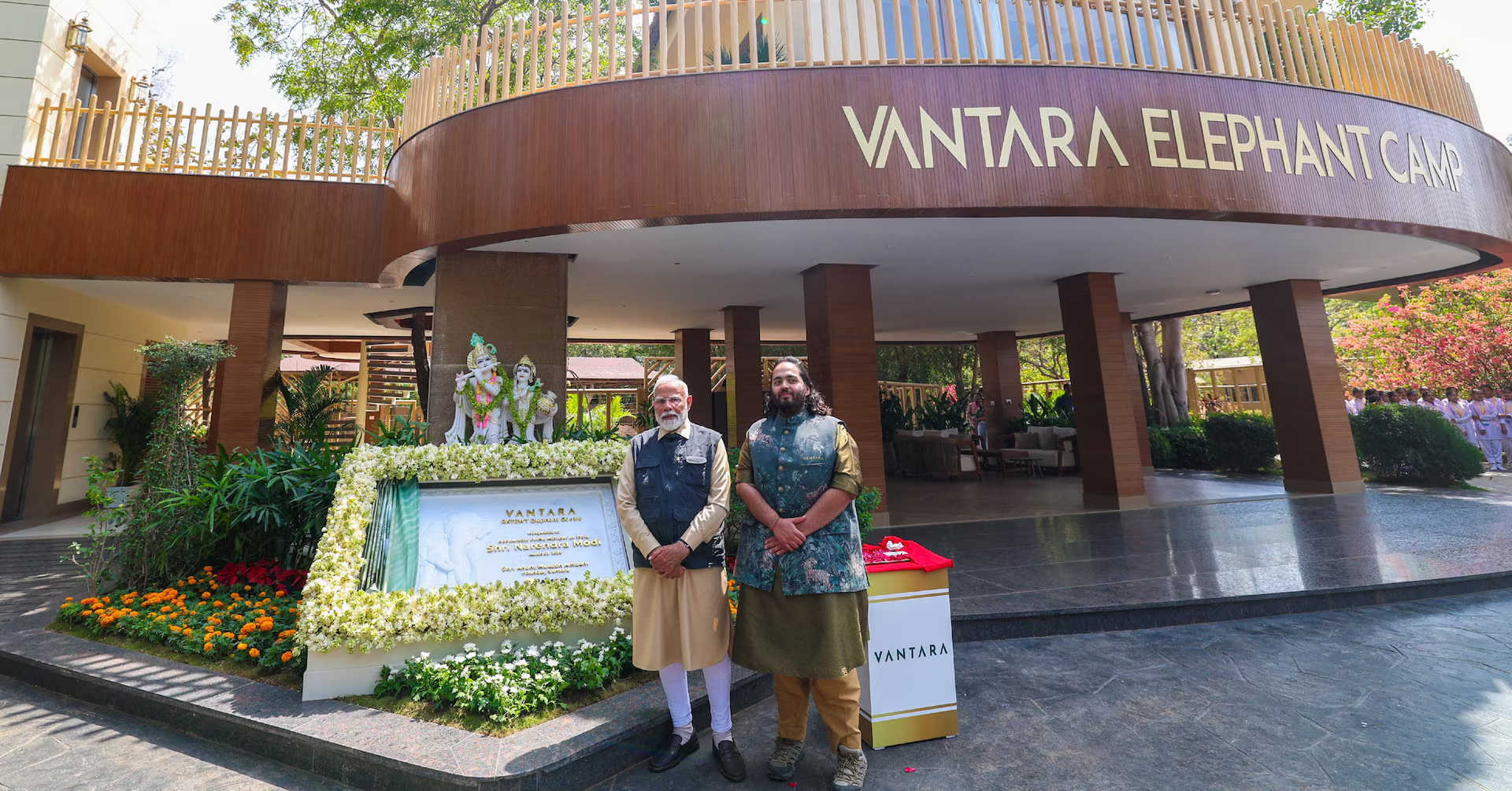
British government ministers and officials were advised against formal engagement with Vantara, a controversial private wildlife sanctuary in India owned by billionaire Anant Ambani, following lobbying efforts ahead of an important international meeting on endangered animal trade. The development has raised questions about political influence, wildlife conservation standards and the responsibility of governments to ensure that international animal transfers comply with established environmental regulations.
The issue has emerged shortly before the United Kingdom takes a leading role in a meeting of the Convention on International Trade in Endangered Species of Wild Fauna and Flora (CITES), the international body responsible for regulating trade in endangered wildlife. The 32-country committee meeting, being held in Geneva, is expected to examine India’s response to concerns about compliance with international rules governing the import of endangered animals.
Documents obtained through freedom of information requests by investigative journalists have revealed that representatives working on behalf of Vantara approached British government officials, ministers and politicians in an effort to present the organisation’s position. The documents indicate that the lobbying activities took place during preparations for the international meeting, creating concerns about the potential influence of private interests on discussions involving wildlife protection.

Vantara is a large private animal sanctuary established by Anant Ambani, the son of Indian industrialist Mukesh Ambani, one of Asia’s wealthiest business figures. The 31-year-old businessman established the facility near his family’s extensive oil-refining operations in Gujarat. Covering approximately 1,400 hectares, equivalent to around 3,500 acres, the sanctuary has attracted international attention because of its extraordinary size and the large number of animals housed within its grounds.
Since its establishment in 2022, Vantara has reportedly accumulated more than 150,000 animals, including numerous species requiring specialised care. The organisation presents itself as a major wildlife rescue and conservation facility, highlighting its veterinary services, rehabilitation programmes and infrastructure designed to support animals with complex medical and welfare needs.
Among its facilities is an elephant hydrotherapy pool, while the sanctuary also provides specialised treatments for elephants, including oil therapies and traditional Ayurvedic massages. According to the organisation, its approach focuses on improving animal welfare and providing care for creatures rescued from difficult circumstances.
However, the extraordinary scale of the facility has generated considerable debate among conservation organisations and wildlife experts. Critics have questioned how such a large collection of animals, including endangered species, was assembled within a relatively short period. They have also raised concerns about the sources of imported animals, the documentation accompanying international transfers and whether all transactions comply with wildlife protection regulations.
The controversy has attracted attention beyond India because international wildlife trade is governed by strict rules designed to prevent endangered species from being exploited or illegally captured. CITES plays a central role in ensuring that international trade does not threaten the survival of vulnerable animal populations.
India’s handling of animal imports into Vantara previously came under international scrutiny. A CITES fact-finding mission examining the issue in 2025 raised questions about compliance with international requirements. Its report warned that importing large numbers of animals into private facilities could unintentionally create demand for illegally sourced wildlife.
The investigation recommended that international authorities consider temporary restrictions on certain wildlife trade involving India. However, the recommendation was subsequently withdrawn, leaving questions about the country’s compliance and the appropriate level of international oversight unresolved.
The latest revelations concern lobbying activities conducted in Britain during the months leading up to the Geneva meeting. In May, officials from the Department for Environment, Food and Rural Affairs (Defra) met representatives associated with Vantara and an American government relations company called Checkmate Government Relations.
The company was founded by Ches McDowell, who has been described as a hunting friend of Donald Trump Jr. According to internal government briefing documents, Checkmate was seeking to persuade British officials to take a more sympathetic position towards India’s handling of animal imports into Vantara.
One of the central arguments presented during the lobbying effort concerned responsibility for verifying the legality of international wildlife transfers. The representatives reportedly argued that the exporting or re-exporting countries should carry primary responsibility for confirming the legal status of animals rather than placing the principal burden on India as the importing country.
This position is significant because international wildlife trade involves responsibilities for both exporting and importing countries. Authorities must ensure that required permits, documentation and conservation assessments are properly completed. Any weaknesses in these procedures could create opportunities for illegal wildlife trafficking and undermine international conservation efforts.
During the May meeting, a Vantara representative invited British officials to visit the sanctuary in India. However, the invitation was declined because the UK government wanted to protect its impartiality in its role as chair of the CITES committee. Officials considered that accepting hospitality or conducting a visit under the circumstances could raise questions about the independence of Britain’s position during the international discussions.
The lobbying efforts reportedly continued after the meeting. A representative from another consultancy, Atlas Strategy, approached the then environment secretary, Emma Reynolds, and the former nature minister, Mary Creagh. The representatives also raised the possibility of arranging a visit to Vantara.
When Reynolds sought advice about the approaches, an internal government note recommended that ministers should not engage formally with the organisation. The advice reflected concerns about maintaining appropriate distance from private lobbying interests while the government was preparing to lead discussions on international wildlife trade.
The documents also revealed questions surrounding a proposed application by Vantara to import falcons and falcon hybrids from the United Kingdom. According to the records, an unnamed organisation made a £50,000 donation to a British breeder whose identity was not disclosed in the documents.
British CITES officials classified the transaction as commercial rather than treating it as an ordinary conservation-related arrangement. The falcons were ultimately not exported to India. The circumstances surrounding the payment and the proposed importation have added another dimension to the questions surrounding the sanctuary’s international activities.
Vantara has rejected aspects of the reported account. A spokesperson said the organisation had not imported falcons from Britain and had neither hired nor paid lobbying companies. It is understood that Checkmate and Atlas Strategy worked on a voluntary basis for Vantara, meaning their involvement did not necessarily trigger registration requirements under Britain’s rules governing consultant lobbyists.
Following the international scrutiny, Vantara has attempted to demonstrate greater transparency and strengthen confidence in its conservation activities. The organisation has voluntarily suspended animal imports for one year and appointed John Scanlon, a former senior CITES official, to oversee its operations.
The decision appears intended to address concerns about the acquisition of animals and the organisation’s compliance with international wildlife protection standards. However, the temporary suspension and appointment of an experienced conservation official are unlikely to end questions about the sanctuary’s previous activities.
Anant Ambani has consistently defended the organisation’s approach to animal welfare. In an interview with the Sunday Times earlier this year, he said animals had been an important part of his life since childhood and described caring for them as a personal passion. He maintained that animals brought to Vantara were obtained legally and highlighted examples of animals he said had been rescued from difficult conditions.
Among the examples he discussed were hippopotamuses reportedly saved from a hunting lodge in South Africa and jackass penguins rescued from a shopping centre in Qatar. Such examples form part of Vantara’s argument that its activities are focused on rescuing animals and providing them with appropriate care.
The sanctuary has also attracted attention because of its association with the Ambani family’s high-profile social and business activities. It hosted events connected with Anant Ambani’s lavish pre-wedding celebrations in 2024, which attracted international celebrities, business leaders and politicians.
In September 2026, Newcastle University awarded Ambani a professorship of practice recognising his reported contributions to conservation, biodiversity protection, animal welfare and environmental stewardship. The decision generated criticism from some conservationists, who questioned whether the recognition was appropriate given the continuing debate surrounding Vantara’s animal acquisitions and international operations.
The British government has sought to emphasise that its approach to wildlife trade remains governed by established legal requirements. A Defra spokesperson said the UK maintained strict rules to protect endangered species and ensure international wildlife trade was legal and sustainable. The department also stressed that every application was assessed individually against domestic requirements and internationally agreed standards.
The controversy highlights the difficult balance between supporting legitimate wildlife rescue initiatives and preventing private organisations from acquiring endangered animals through questionable international arrangements. Large-scale sanctuaries may require international cooperation, specialised veterinary facilities and substantial financial resources. However, their activities must remain transparent and consistent with conservation laws.

For the UK, the Geneva meeting represents an important opportunity to demonstrate that international wildlife protection rules are applied consistently, regardless of the financial influence or political connections of organisations involved. As chair of the CITES committee, Britain will face expectations that its decisions remain independent and based on scientific evidence, legal obligations and conservation priorities.
The revelations about lobbying have therefore placed additional attention on the relationship between private wildlife organisations and government decision-makers. While Vantara maintains that its primary objective is animal welfare, questions surrounding imports, documentation and lobbying will continue to influence international discussions about its operations.
Ultimately, the broader issue extends beyond one private sanctuary or one country’s wildlife policy. The protection of endangered species depends on international cooperation, responsible trade practices and strong oversight. Ensuring that commercial interests do not weaken conservation standards will remain essential as governments attempt to protect vulnerable wildlife for future generations.
Related News:
 Australia Races to Find Tourists Missing in Nepal
 British Man Faces Deportation Threat in Sweden
 Nepal Flood Survivors Face Unimaginable Loss
 Nepal Tunnel Rescue Offers Hope Amid Flood Devastation
 British widow says deportation from Sweden feels like a death sentence
 Briton Faces Cyprus Court Over Son’s Fatal Fall
 King Refers Jamaica Slavery Petition to Privy Council
 Greece Pushes for Parthenon Marbles Reunification
 Nepal PM calls deadly flood a global climate warning
 Israel-bound Plane Lands in Saudi Arabia After Cockpit Fight
 Burnham Opens Door to Possible UK Return to EU
 Drumcree Talks Falter as Legal Challenge Deepens
 UK-France Returns Deal Faces Expiry as Talks Stall
 Pacific Climate Summit Draws Limited Global Leaders
 Delhi Braces for Youth Protests Over Voter Roll Dispute
 Delhi Detains Protest Leaders as Youth Rally Escalates
 Farage Rejects Claims Reform Would Let Troops Shoot Migrants
 Gadi Eisenkot: Israel’s Anti-Netanyahu Challenger
 UK Visa Refusal Threatens Baby’s Family Christmas
 Suu Kyi Appears in Rare Photos After Royal Gift
 Zelenskyy Accuses US of Delaying Ukraine Missile Supplies
 Fifth Foreign Firm Withdraws From Jerusalem Cable Car Plan
 MoD Seeks Out-of-Court Resolution in LGBT Veterans Compensation Fight
 Briton Faces Deportation from Sweden and Separation from Infant Son
 UK Land Registry Plan Faces Opposition From Landowners
 Montenegro Embassy Sparks London Neighbourhood Legal Row
 El Niño Drought Pushes Papua New Guinea Into Crisis
 King Charles Faces Reparations Protests at Antigua Summit
 Bedouin Women Drive Historic Arab Election Gains
 UK Weighs Tougher Firework Rules Over Animal Welfare
 Just Stop Oil Protesters Convicted Amid Climate Defence Row
 Synagogue Arson Attempt Sparks Security Fears
 Crackdown Backfires on UK Climate Protesters
 Greens Face Internal Row Over Antisemitism Claims
 China Fireworks Factory Blast Kills 21 in Hunan
 Barrister Criticises Trial After Suicide Case Verdict
 Pope Meets Families in Italy Toxic Waste Zone
 Farage and Reform UK Reshape British Politics
 Starmer Leadership Under Pressure After Setbacks
 Le Pen’s Popularity Holds Despite Conviction
 UK Schools Struggle as Classrooms Top 40C
 London Tube Heat Reaches Dangerous Levels
 Olympus Awaits Unesco Heritage Recognition
 Powerful 7.7-Magnitude Earthquake Hits Eastern Indonesia
 Westminster Council Threatens Charing Cross Soup Kitchen
 BBC Warned About Missing Clothes of Murder Victim
 Burnham unveils £65m drought aid for farmers
 Internal Exclusions Surge in England’s Schools
 UK Subsidence Claims Surge After Record-Breaking Summer
 Typhoon Saudel Triggers Mass Evacuations in China
 UK plans tougher Israel stance with settlement trade ban
 Councils spend £125m on illegal children’s care
 UK Retailers Accused of Breaking Refund Laws
 Mahmood Warns Far Right Over Asylum Protests
 Lib Dems Prepare for Election Amid Reform Challenge
 Tropics May Wait Longest for Net-Zero Climate Benefits
 Japan PM Backs International Criminal Court
 Free Speech Emerges as Key UK Election Issue
 London Facial Recognition Trial Ends With False Alert
 UK University Strikes Spread as Financial Pressure Grows
 Badenoch Raises Prospect of 2027 UK Election
 French School Protests Escalate as 400 Schools Close
 Gosport Protesters Clash With Police Over Migrant Rescue
 Okinawa US Troops Face Curfew After Murder Case
 Police accused of failing abuse victims
 UK Mission in East Jerusalem to Remain Open
 UK Water Firms Earn Millions From Industrial Wastewater
 Panama Hit by Powerful 7.7-Magnitude Earthquake
 Hanson Attacks Taylor as Australian Conservatives Clash
 British Military School Abuse Victims Denied Justice
 Mexico Storms Leave Five Dead as Flooding Worsens
 India’s Voter Roll Crisis Sparks Nationwide Protests
 UK Shoppers Urged to Avoid Hake and Coley
 UK Bill Faces Warning Over Fayed Trafficking Victims
 UK Could Rejoin EU Through a Switzerland Plus Deal
 UK Pledges Stronger Protections for Disabled Air Passengers
 Zelenskyy Says US Failed to Warn Kyiv of Russian Strikes
 Greens Face Leadership Test as Jordon Steele-John Misconduct Claims Leave Party in Limbo
 UK Chancellor Moves to Scrap Gas Standing Charges
 Global Crises Test Diplomacy as Trump’s Policies Face Scrutiny