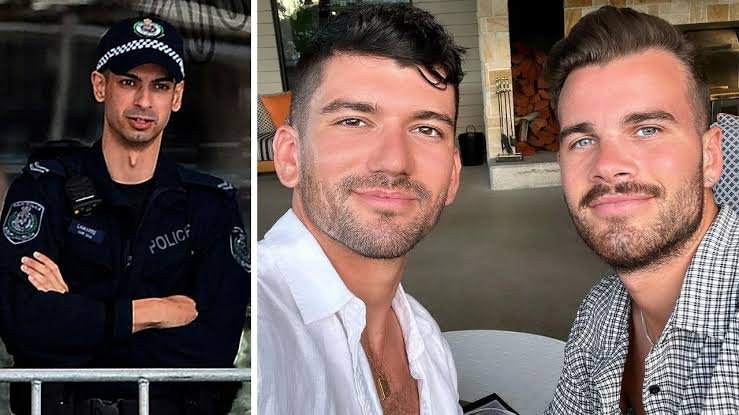
Former New South Wales police officer Beau Lamarre-Condon has told a court that he still believes firing the first shot at television presenter Jesse Baird’s shoulder was the “right move”, despite being accused of murdering Baird and his partner, Luke Davies, in Sydney in February 2024. Giving evidence for a second day at the New South Wales Supreme Court, Lamarre-Condon maintained that he did not intend to kill Baird and claimed the shooting occurred during a violent confrontation inside the victim’s home.
Lamarre-Condon has pleaded not guilty to two counts of murder and one charge of aggravated break and enter. The prosecution alleges that he fatally shot Baird and Davies using his police service firearm at Baird’s home in Paddington on 19 February 2024. His testimony is central to the trial because he has offered an account of the events that differs significantly from the prosecution’s case.
During his evidence, Lamarre-Condon described the moment he allegedly fired at Baird, claiming that the television presenter had lunged towards him with a knife. He told the jury that he deliberately aimed at Baird’s right shoulder because he believed the shot would stop the confrontation without killing him.

“That first shot into Jesse’s right shoulder was the right move. I stand by it,” he told the court.
He said his actions were influenced by his police training, which he claimed had prepared him to respond to situations involving immediate threats. According to his testimony, he had only a split second to decide what to do when Baird allegedly approached him with a knife.
Lamarre-Condon told the court that police officers were trained to aim at the centre of a person’s body mass when using firearms. However, he claimed that he consciously chose the shoulder because he did not want Baird to die. He said he had warned Baird to drop the knife and believed that failing to act could have resulted in him being stabbed in the throat.
Despite defending the decision to fire the first shot, Lamarre-Condon repeatedly insisted that he never wanted to kill Baird. He acknowledged that Baird did not deserve to suffer such an outcome and said the television presenter had done nothing to justify being killed.
His statements came as the prosecution began questioning him about his account of the shooting. Crown prosecutor Brett Hatfield SC challenged aspects of his evidence, including the circumstances surrounding the shots and whether Baird had been shot in the back. Lamarre-Condon rejected that suggestion, saying the prosecutor’s description was inaccurate.
The accused also admitted that the shooting was his fault but argued that the fatal outcome was not intentional. He told the court that the two men continued struggling after the first shot and that his finger remained on the trigger. He claimed they subsequently tripped over a storage box, causing the firearm to discharge accidentally.
Lamarre-Condon described the second discharge as an unintended consequence of the physical struggle. He accepted responsibility for the shooting while arguing that his actions amounted to manslaughter rather than murder. The distinction is important to the trial because the prosecution must establish the legal elements of the murder charges, while the defence is seeking to persuade the jury that the deaths did not result from an intentional killing.
The former officer also explained why he entered Baird’s home on the day of the incident. He told the court that he wanted to retrieve personal belongings he believed were still inside the property. These reportedly included a Cartier ring and a shirt valued at approximately $2,000.
According to his testimony, he did not want to meet Baird because he believed that doing so could expose him to legal consequences. He said Baird had previously asked him to refrain from contacting him and that he feared Baird might seek an apprehended violence order.
Lamarre-Condon told the court that he noticed what he believed was a delivery motorcycle outside the property. He said this gave him the idea of wearing clothing associated with a delivery rider so that he could approach the house without being recognised.
He described seeing a high-visibility hooded jacket, waterproof trousers and gloves. He claimed he believed that wearing the clothing and a motorcycle helmet would allow him to knock on Baird’s door while appearing to be a food delivery worker. He said he hoped to avoid a verbal interaction with Baird.
The accused acknowledged during his testimony that he now regretted making that decision. His account suggested that the disguise was intended to conceal his identity while he entered the property and searched for his belongings. The circumstances surrounding his arrival and entry are also relevant to the aggravated break and enter charge he faces.
Lamarre-Condon said he initially believed Baird’s bedroom was empty when he entered the home. He began searching through storage boxes, looking for the belongings he claimed he wanted to recover. He was still wearing the motorcycle helmet, with its visor down, and had his firearm secured in a holster beneath his shirt.
He told the jury that Baird suddenly appeared carrying a knife and sealing boxes with tape. According to Lamarre-Condon, Baird began shouting that the property was being robbed. The accused said Baird could not recognise him because his helmet visor was lowered.
He claimed Baird then pushed him against a wall using his left forearm while holding and moving the knife with his other hand. Lamarre-Condon said he attempted to identify himself, shouting that he was Beau and telling Baird to calm down.
The accused said he then made what he described as a clear decision to shoot Baird in the shoulder in an attempt to make him drop the knife. He maintained that the decision was intended to prevent a more serious injury rather than cause a fatal outcome.
However, the prosecution has challenged the account, particularly the circumstances in which the firearm was discharged and the nature of the confrontation. The jury must consider the evidence presented by both sides rather than accept the accused’s version as established fact.
The court also heard Lamarre-Condon’s explanation of what happened after the first two shots. He said he contacted the emergency hotline because he wanted assistance for Baird. However, while attempting to obtain help, he claimed he noticed another man, later identified as Luke Davies, holding his firearm.
Lamarre-Condon told the jury that he did not recognise Davies at first. He alleged that Davies pointed the gun towards his chest and threatened to shoot him. According to his testimony, he lowered his body and pleaded with Davies not to fire, saying he was not there to hurt him and did not pose a threat.
He claimed Davies subsequently raised the firearm towards his head. Lamarre-Condon said his police training then influenced his response, prompting him to attempt to redirect the weapon away from himself.
He described grabbing Davies’s left wrist with one hand while pushing against the other forearm to change the direction of the firearm. According to his account, the gun discharged during that movement and struck Davies.
The accused maintained that Davies had fired the weapon during the struggle, rather than being deliberately shot by him. This claim forms a significant part of his defence against the murder charge relating to Davies. The prosecution will have to address his account as the trial continues, and the jury will ultimately assess whether it is consistent with the other evidence.
The testimony has placed considerable attention on the sequence of events inside Baird’s home, including the initial confrontation, the subsequent struggle and the circumstances in which Davies was fatally shot. The court is examining not only what happened but also the accused’s intentions and the reliability of his explanation.
The emotional impact of the proceedings was also visible in the courtroom. Baird’s mother, Helen, left during part of Lamarre-Condon’s evidence. Her departure came as the accused continued describing the fatal encounter involving her son and Davies.

The deaths of Baird and Davies have remained a deeply sensitive case, particularly because the accused was a serving police officer at the time of the alleged killings. The use of a police service weapon and the involvement of a former law enforcement officer have added further scrutiny to the proceedings.
Lamarre-Condon’s decision to give evidence has provided the jury with a detailed account of how he says the confrontation unfolded. However, his claims remain contested, and his testimony does not determine the outcome of the trial. The prosecution’s questioning is intended to test the consistency of his account and examine whether it can withstand scrutiny.
The trial is continuing before Justice Natalie Adams at the New South Wales Supreme Court. The jury will ultimately have to consider the evidence and determine whether the prosecution has proved the charges beyond reasonable doubt. Until that decision is reached, Lamarre-Condon remains an accused person who has pleaded not guilty to the allegations against him.
Related News:
 NSW Police Bid Delays Inquiry Into Sydney Protest
 Sam Wood Denied Bail Over Alleged Domestic Assault
 Baby Boy Found Dead at Adelaide Motel: Two Charged
 Elizabeth Struhs Inquest Examines Child Safety Failures
 Camera Discovery Triggers Navy Ship Investigation
 Former RAAF Pilot Accused of Murdering Wife
 Erin Patterson Faces Life in Prison After Appeal Loss
 Victorian Magistrate Reprimanded Over Courtroom Remarks
 Alan Jones Trial Paused for Melbourne Cup Viewing
 Undercover officer deceived women with ‘grotesque and cruel’ lies, spycops inquiry told
 Police Suspect Help in Missing Alice Springs Girl Case
 Barrister Criticises Trial After Suicide Case Verdict
 Westminster Council Threatens Charing Cross Soup Kitchen
 BBC Warned About Missing Clothes of Murder Victim
 Cambridge Professor Jason Arday Found Dead at Home
 Councils spend £125m on illegal children’s care
 Patriot Platform Raises Concern Across Britain
 Democrat Says ICE Restricted Detention Camp Oversight
 Cornell Fraternity Assault Investigation Reopened
 Fayed Survivors Demand Inquiry Into Medical Regulator
 London Facial Recognition Trial Ends With False Alert
 Hundreds of UK prisoners released early amid overcrowding
 Drumcree Talks End Without Agreement Ahead of Appeal
 Almost Half of Fayed Accusers May Be Trafficking Victims
 New Prosecutor Takes Over Cornell Assault Case
 Latin America women fear rollback of rights
 Flydubai Co-Pilot Studied in Australia Before Attack
 Detective Breaks Down Recalling Double Murder Scene
 Christa Pike Wakes After Failed Tennessee Execution
 ICE Agent Shoots Man in New York as Child Escapes Harm
 Three Convicted in Mexico Surfing Trip Murders
 UAE Says Co-Pilot Planned Suicide Attack on Israel
 British Military School Abuse Victims Denied Justice
 Former Students Raise Concerns Over School Culture
 England and Wales Begin Second Wave of Early Prison Releases
 Senegal LGBTQ+ Crackdown Drives People Into Hiding
 French Police Face Scrutiny Over Injured Teenagers
 UK Bill Faces Warning Over Fayed Trafficking Victims
 Helen Haines Loses Leg in Alleged Targeted Attack
 Helen Haines Loses Both Legs After Alleged Attack
 Serbia’s Student Victory Sparks a ‘Smell of Freedom’
 Trump’s Midterm Campaign Faces Racism and Political Backlash
 Brisbane Pub Shooting Claims Life of 19-Year-Old Woman
 Russell Brand Trial Enters Crucial Week of Evidence
 WA Facial Recognition Trial Scans 1.38m Faces
 Domestic Abuse Survivor Fears Attacker Without Tag
 CPS Prosecutor Cites Fictitious Case in High Court
 Henry Nowak Family Rejects Political Use of His Death
 Ben Roberts-Smith Denies War Crime Allegations in First Statement
 Florida Surgeon ‘Devastated’ Over Fatal Surgery Error
 Immigration Judges Fear Pressure in Trump Era
 New Footage Revives Peter Falconio Mystery
 Internal Exclusions Surge in England’s Schools
 Abusive ex used Tesla to control and harass former partner
 Man Arrested in Mississippi Woman’s Death
 Israel Accused of Undermining Palestinian Life
 Texas Charges Seven Noncitizens in Voting Crackdown
 Mahmood Warns Far Right Over Asylum Protests
 Harrods Faces Dispute Over Fayed Abuse Compensation
 OpenAI Agent Breaches Medicare Portal in Australia
 Free Speech Emerges as Key UK Election Issue
 Tennessee Set to Execute Woman After Clemency Denied
 UK University Strikes Spread as Financial Pressure Grows
 Badenoch Raises Prospect of 2027 UK Election
 French School Protests Escalate as 400 Schools Close
 Gosport Protesters Clash With Police Over Migrant Rescue
 Andrew Mountbatten-Windsor Challenges Police Raids
 Police accused of failing abuse victims
 Royal Navy Sailor Charged With Alleged Spying
 Sri Lanka Ex-First Lady Arrested Over Donation Probe
 South Africa Withdraws Directive on Asylum Applications
 Delhi Tightens Security Ahead of Election Protest
 US Execution Livestream Plan Sparks Global Outrage
 Australian Advocates Seek Subsidised Drugs for PMOS
 ABC Reporter Faces Possible Disciplinary Action Over Opinion Piece
 Pakistan School Roof Collapse Kills 27 Students
 Gadi Eisenkot: Israel’s Anti-Netanyahu Challenger
 US Military Failed to Notify UK Police Over Airman Crime
 Greens Face Leadership Test as Jordon Steele-John Misconduct Claims Leave Party in Limbo
 Queensland Hospital to Close Labs After Safety Probe