Seven people have been arrested following a night of violence across Scotland during Bonfire Night, after emergency service workers were attacked with fireworks, a police vehicle was set on fire and firefighters were forced to withdraw from several areas because of antisocial behaviour. The incidents, which affected Glasgow and a number of other communities, raised fresh concerns about the safety of frontline workers and members of the public during large-scale public celebrations.
Police Scotland launched a major operation, named Operation Amberlight, to manage disorder and prevent further violence on 5 November. The force deployed an unusually large number of officers, describing the operation as its biggest policing mobilisation since the visit of US President Donald Trump to Aberdeenshire in 2025. Officers from several police forces in England and Wales were also brought in to support the operation.
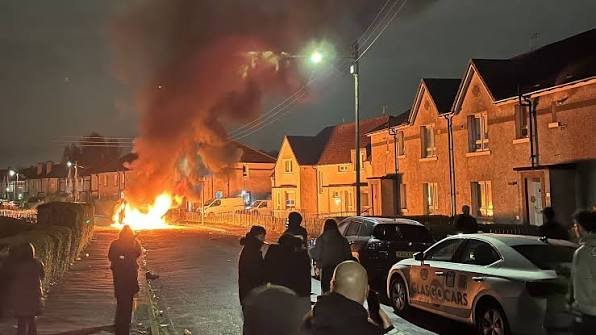
The most serious incident occurred in Greenside Street, Glasgow, shortly before 8pm. Police officers and ambulance personnel had been responding to a report of an injured man when their crews came under attack from people throwing fireworks. During the incident, a police vehicle was set alight and sustained serious damage. One police officer and an ambulance staff member suffered minor injuries.

The attack highlighted the risks faced by emergency workers who are expected to provide assistance during dangerous and unpredictable situations. Police officers and ambulance crews had attended the area to help someone reportedly injured, but instead found themselves exposed to fireworks and violence. The incident also raised questions about the willingness of some individuals to obstruct emergency services while they are carrying out essential duties.
Police Scotland confirmed that specialist resources from Operation Amberlight were deployed following the incident. One man was arrested in connection with the violence in Greenside Street, while investigations continued. Police maintained a presence in the area as officers worked to establish the circumstances surrounding the attack and identify anyone else who may have been involved.
The violence was not limited to Glasgow city centre. Several communities across Scotland experienced disorder involving fireworks, illegal fires and attacks on emergency personnel. In Clydebank, fireworks were thrown towards members of the public, creating further concerns about the possibility of serious injuries. People attending or passing through areas affected by the disorder were exposed to risks from fireworks being used as weapons rather than as part of organised celebrations.
Fire crews were also targeted in different parts of Glasgow, including Knightswood and Castlemilk. Similar incidents were reported in Cumnock in Ayrshire, Larkhall in South Lanarkshire and Blackridge in West Lothian. These attacks made it more difficult for firefighters to carry out their responsibilities, particularly when they were called to deal with fires that could threaten nearby homes, property and public spaces.
In Edinburgh, firefighters faced antisocial behaviour while responding to bin fires in the south of the city. The situation became sufficiently difficult that crews were forced to withdraw from the affected locations. Police officers were also targeted with fireworks in other parts of Edinburgh, adding to the pressure on emergency services already dealing with incidents across the country.
The withdrawal of firefighters from dangerous situations illustrates the difficult decisions emergency crews sometimes have to make when their own safety is threatened. Firefighters are trained to respond to fires and other emergencies, but they cannot safely continue operations when they are being attacked or when conditions become too dangerous. Such incidents can delay responses, increase the risk of property damage and potentially leave people in affected neighbourhoods without immediate assistance.
Police Scotland also attended the Kirkton area of Dundee following reports that a significant group of individuals had gathered and started illegal fires. The presence of large groups, combined with the use of fireworks and unauthorised bonfires, created additional challenges for officers attempting to prevent disorder from spreading.
Operation Amberlight involved extensive planning and support from police forces beyond Scotland. Officers from Avon and Somerset, Hampshire, Hertfordshire and south Wales were among those expected to assist with policing duties. Their involvement reflected the scale of the operation and the need for additional personnel to respond to potential trouble across multiple locations.
The decision to seek support from forces in England and Wales demonstrated how seriously Police Scotland regarded the risks associated with Bonfire Night. Large public gatherings can place considerable pressure on police resources, particularly when fireworks are used irresponsibly or when groups gather with the intention of causing disruption. Additional officers can help maintain a visible police presence, respond to emerging incidents and support local teams dealing with serious disorder.
The scale of the deployment was particularly notable because Police Scotland had not mobilised such a large number of officers since the US president’s visit to Aberdeenshire in 2025. That comparison provides an indication of the operational resources considered necessary to manage the Bonfire Night celebrations and the possibility of widespread antisocial behaviour.
Fireworks and bonfires remain a traditional part of Bonfire Night celebrations across the United Kingdom. For many families, the occasion is associated with organised displays, community gatherings and private celebrations. However, the events in Scotland demonstrated how quickly the misuse of fireworks can turn a night of celebration into a public safety emergency.
Fireworks are designed to produce powerful explosions and bright displays, but when they are deliberately directed towards people, emergency workers or vehicles, they can cause serious injuries and significant damage. Their use in crowded residential areas can also create dangers for children, older people, pedestrians and anyone who happens to be nearby.
The Scottish Fire and Rescue Service received more than 800 calls relating to fireworks and bonfires between 5.30pm and 11.30pm on 5 November. The volume of calls reflected the considerable workload placed on firefighters during the evening, when crews were required to respond to reports of fires and other incidents across the country.
The number of fireworks-related reports received by Police Scotland was also substantial. Between Halloween and 5 November, the force recorded 1,024 calls connected with fireworks. This represented an increase from the 833 calls recorded during the corresponding period in 2025.
Despite the rise in calls, police said there had been a reduction in the number of incidents requiring a specialist public order response across Scotland. The distinction suggests that a higher volume of fireworks-related reports did not necessarily translate into an equivalent increase in serious public disorder. Nevertheless, the attacks on emergency workers and the destruction of a police vehicle demonstrated that significant incidents continued to occur.
The figures also underline the challenges faced by emergency services during periods when fireworks are widely used. A large number of calls can stretch operational capacity, even when many reports do not develop into major incidents. Police officers, firefighters and ambulance personnel must assess competing demands, prioritise emergencies and respond to situations that can change rapidly.
For communities affected by the disorder, the consequences extend beyond the immediate damage caused by fireworks and fires. Residents may experience disruption, fear and concern about the safety of their neighbourhoods. Attacks on emergency workers can also undermine public confidence and make it harder for essential services to provide timely assistance when people need help.
The arrests made following the violence are part of the police response, but investigations will be necessary to establish individual responsibility for the different incidents. Authorities will need to examine available evidence, identify those involved and determine whether further arrests or charges are appropriate. The seven arrests reported after the Bonfire Night disorder represent an initial response rather than the conclusion of the investigations.

The events have renewed attention on the need for responsible fireworks use, stronger community awareness and effective cooperation between residents and public authorities. Organised displays, appropriate safety arrangements and respect for emergency services are important elements of keeping seasonal celebrations safe.
Police Scotland’s large-scale deployment also demonstrated the importance of preparation when authorities anticipate a heightened risk of disorder. However, the attacks across Glasgow, Edinburgh and other Scottish communities show that operational planning alone cannot prevent every incident. Public cooperation and individual responsibility remain essential to ensuring that celebrations do not place lives and public services at risk.
As investigations continue, the focus will remain on identifying those responsible for the attacks, assessing the damage and supporting the emergency personnel who were injured or placed in danger. Bonfire Night is intended to bring communities together, but the violence across Scotland offered a stark reminder that the reckless use of fireworks can turn a public celebration into a serious threat to public safety.
Related News:
 Undercover officer deceived women with ‘grotesque and cruel’ lies, spycops inquiry told
 Barrister Criticises Trial After Suicide Case Verdict
 Westminster Council Threatens Charing Cross Soup Kitchen
 BBC Warned About Missing Clothes of Murder Victim
 Cambridge Professor Jason Arday Found Dead at Home
 Councils spend £125m on illegal children’s care
 Patriot Platform Raises Concern Across Britain
 Briton Faces Cyprus Court Over Son’s Fatal Fall
 King Refers Jamaica Slavery Petition to Privy Council
 Fayed Survivors Demand Inquiry Into Medical Regulator
 London Facial Recognition Trial Ends With False Alert
 Drumcree Talks Falter as Legal Challenge Deepens
 UK-France Returns Deal Faces Expiry as Talks Stall
 Hundreds of UK prisoners released early amid overcrowding
 Drumcree Talks End Without Agreement Ahead of Appeal
 Almost Half of Fayed Accusers May Be Trafficking Victims
 Latin America women fear rollback of rights
 Police accused of failing abuse victims
 UAE Says Co-Pilot Planned Suicide Attack on Israel
 British Military School Abuse Victims Denied Justice
 England and Wales Begin Second Wave of Early Prison Releases
 Farage Rejects Claims Reform Would Let Troops Shoot Migrants
 French Police Face Scrutiny Over Injured Teenagers
 UK Bill Faces Warning Over Fayed Trafficking Victims
 Serbia’s Student Victory Sparks a ‘Smell of Freedom’
 Trump’s Midterm Campaign Faces Racism and Political Backlash
 Russell Brand Trial Enters Crucial Week of Evidence
 Domestic Abuse Survivor Fears Attacker Without Tag
 Alan Jones Trial Paused for Melbourne Cup Viewing
 CPS Prosecutor Cites Fictitious Case in High Court
 Henry Nowak Family Rejects Political Use of His Death
 Just Stop Oil Protesters Convicted Amid Climate Defence Row
 Prevent Failings Exposed After Southport Attack
 Ben Roberts-Smith Denies War Crime Allegations in First Statement
 Two Children Die in Wolverhampton House Fire Tragedy
 Cartel crackdown raises fears of fresh violence
 New Footage Revives Peter Falconio Mystery
 Internal Exclusions Surge in England’s Schools
 Masked Protesters Bring Dover Port Traffic to Standstill
 Royal Crown Branded Enslaved Africans in Britain’s Slave Trade
 Israel Accused of Undermining Palestinian Life
 Iran School Strike Raises War Crimes Questions, UN Says
 Mahmood Warns Far Right Over Asylum Protests
 NHS Breast Care Review Finds Serious Patient Harm
 Harrods Faces Dispute Over Fayed Abuse Compensation
 Lib Dems Prepare for Election Amid Reform Challenge
 Democrat Says ICE Restricted Detention Camp Oversight
 Elif Eralp Emerges as Berlin’s Next Political Force
 Free Speech Emerges as Key UK Election Issue
 Cornell Fraternity Assault Investigation Reopened
 French Student Protests Escalate Into Violent Clashes
 UK University Strikes Spread as Financial Pressure Grows
 Burnham Opens Door to Possible UK Return to EU
 Green Party faces dispute over Zionism motion
 Badenoch Raises Prospect of 2027 UK Election
 French School Protests Escalate as 400 Schools Close
 New Prosecutor Takes Over Cornell Assault Case
 Gosport Protesters Clash With Police Over Migrant Rescue
 Andrew Mountbatten-Windsor Challenges Police Raids
 Royal Navy Sailor Charged With Alleged Spying
 Luton Residents Reject Claims of ‘No-Go Zones’
 Three Convicted in Mexico Surfing Trip Murders
 Controversial Vaccine Trial Approved in Guinea-Bissau
 UK Greens Face Crisis Over Zionism and Extremism Row
 Elizabeth Struhs Inquest Examines Child Safety Failures
 Ohio Airports Become Key Hubs for ICE Deportation Flights
 Senegal LGBTQ+ Crackdown Drives People Into Hiding
 Gadi Eisenkot: Israel’s Anti-Netanyahu Challenger
 Jenrick Defends Farage Amid Fresh Reform Racism Claims
 UK Visa Refusal Threatens Baby’s Family Christmas
 Macron Condemns Violence as France Faces 2,400 Arrests
 Four Dead in Fast-Moving Fire at Canadian Military Base
 US Military Failed to Notify UK Police Over Airman Crime
 MoD Seeks Out-of-Court Resolution in LGBT Veterans Compensation Fight
 Former RAAF Pilot Accused of Murdering Wife
 Montenegro Embassy Sparks London Neighbourhood Legal Row
 Erin Patterson Faces Life in Prison After Appeal Loss
 King Charles Faces Reparations Protests at Antigua Summit
 Bedouin Women Drive Historic Arab Election Gains
 Exiled Journalists Defy Putin’s Growing Media Crackdown