The world is moving towards a dangerous climate future as governments continue to fall behind their commitments to reduce greenhouse gas emissions, with a new international analysis warning that global temperatures could exceed critical thresholds and expose billions of people to increasingly destructive environmental consequences. Despite years of international negotiations, ambitious climate promises and growing investment in renewable energy, current government policies remain insufficient to prevent severe global warming, raising concerns that some climate damage may become impossible to reverse.
According to a new assessment by Climate Action Tracker (CAT), the world is on course for approximately 2.7 degrees Celsius of warming by the end of this century compared with pre-industrial levels if governments continue implementing their existing policies. The projection represents a deterioration from the organisation’s previous estimate of 2.6 degrees Celsius, highlighting the widening gap between international climate commitments and the actions being taken to fulfil them.

The assessment has renewed concerns about the future of the planet as international representatives gather in Antalya, Turkey, for the United Nations climate conference. Discussions at the meeting have increasingly focused on the possibility of exceeding internationally agreed temperature limits and the consequences of failing to bring global emissions under control.
The 1.5-degree Celsius threshold, established under the Paris climate agreement a decade ago, has become a central reference point in international efforts to limit global warming. Scientists have repeatedly warned that exceeding this level would significantly increase the risks associated with extreme weather events, ecosystem destruction and long-term environmental instability. The latest projections suggest that the threshold could be crossed within the coming years, making the challenge of limiting further temperature increases increasingly difficult.
A rise of 2.7 degrees Celsius would have serious consequences for communities across different regions. More frequent and intense heatwaves could threaten public health, particularly among older people, children, outdoor workers and those living in areas with limited access to cooling facilities. Prolonged periods of extreme heat could also reduce labour productivity, damage agricultural production and place additional pressure on electricity and healthcare systems.
The consequences would extend well beyond rising temperatures. More severe storms, prolonged droughts, destructive flooding and changing rainfall patterns could threaten food production, water availability and essential infrastructure. Coastal communities would face growing risks from rising sea levels, while countries with limited financial resources could struggle to protect vulnerable populations from repeated climate-related disasters.
Scientists have also warned that continued warming could increase the likelihood of crossing critical climate tipping points. These are thresholds beyond which major environmental systems may undergo substantial changes that are difficult or impossible to reverse on human timescales. The possibility of such developments has intensified concerns that climate change could produce consequences extending far beyond the immediate effects of rising temperatures.
However, the Climate Action Tracker assessment suggests that the future is not entirely predetermined. If governments implement stronger policies and fulfil their existing long-term climate commitments, the projected level of warming could be reduced considerably. Even under its most optimistic scenario, which assumes that countries deliver on their announced pledges, targets and long-term promises, global temperatures would still rise by approximately 1.9 degrees Celsius by the end of the century.
That projection nevertheless represents a significant improvement over the 2.7-degree trajectory associated with existing policies. It also demonstrates why climate experts continue to emphasise the importance of immediate emissions reductions rather than relying exclusively on promises about future action.
One of the central problems identified by climate researchers is the repeated failure of governments to translate international commitments into effective domestic policies. Countries have announced ambitious targets for reducing emissions, expanding renewable energy and achieving net-zero economies, but implementation has frequently fallen behind schedule. Political disagreements, economic interests, dependence on fossil fuels and insufficient investment in sustainable infrastructure have all complicated progress.
Bill Hare, chief executive of Climate Analytics, a partner organisation of Climate Action Tracker, warned that governments face a critical choice between continuing to support the fossil fuel industry and accelerating the transition towards cleaner energy systems.
He argued that continued dependence on fossil fuels could expose humanity to enormous economic losses, increasing mortality from extreme heat and climate-related diseases, and environmental disasters that affected communities may be unable to manage. According to Hare, governments should recognise that many available clean-energy solutions are becoming more affordable and economically attractive.
He also cautioned against treating the possible failure to maintain the 1.5-degree limit as a reason to abandon climate action. Every additional fraction of a degree of warming matters, he stressed, because the severity of climate impacts increases as global temperatures rise.
The assessment is broadly consistent with recent findings from the United Nations, which have also highlighted the inadequacy of current national climate commitments. The repeated warnings from international organisations suggest that the gap between political promises and actual emissions reductions remains one of the greatest obstacles to addressing the climate emergency.
Despite the concerning overall outlook, the report identified several developments that offer reasons for cautious optimism. Investment in clean energy has expanded substantially, with global spending on renewable and other clean-energy technologies now estimated to be approximately twice the investment directed towards fossil fuels. This shift indicates that governments, businesses and investors are increasingly recognising the economic importance of transitioning away from carbon-intensive energy sources.
The rapid expansion of electric vehicles is another positive development. Growing adoption of electric cars, supported by technological improvements and expanding charging infrastructure, could help reduce emissions from road transport. The sector remains an important part of efforts to limit dependence on petrol and diesel, particularly as countries seek to reduce pollution in urban areas.
Developments in Brazil have also offered encouragement. Deforestation in the Amazon rainforest has fallen sharply, representing an important step towards protecting one of the world’s most significant natural ecosystems. The Amazon plays a crucial role in regulating regional and global climate patterns, storing carbon and supporting extraordinary biodiversity. Continued protection of the rainforest is therefore considered essential for broader climate objectives.
Climate Action Tracker has also pointed to the possibility of a slight decline in carbon pollution from fossil fuels during 2026. However, such a development does not necessarily indicate that the world is moving towards a sufficiently rapid emissions reduction pathway. Temporary changes in energy consumption and investment patterns cannot replace long-term structural reforms across electricity generation, transport, industry and agriculture.
The international climate conference in Antalya has consequently become an important platform for discussing how governments can respond to the widening climate challenge. Representatives from countries around the world, with the United States absent from the gathering, are facing growing pressure to strengthen their climate policies and demonstrate measurable progress.
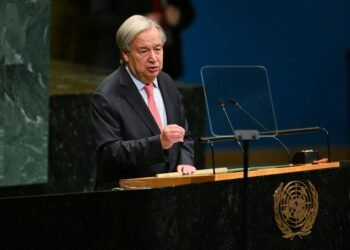
United Nations Secretary-General António Guterres has urged governments to accelerate the transition away from fossil fuels, arguing that the possibility of exceeding the 1.5-degree threshold should make climate action more urgent rather than weaken international determination.
The issue has also increasingly been linked to national security. Climate-related disasters can intensify competition over water and food, damage economic infrastructure, displace communities and place additional pressure on governments already facing social and financial challenges. The growing frequency of extreme weather events means that climate change is no longer viewed exclusively as an environmental concern but also as a major threat to economic stability and international security.
Swedish climate campaigner Greta Thunberg also arrived in Antalya during the conference, warning that the failure to confront climate change places the future of people, communities and the natural environment at risk. Her remarks reflected the frustration of climate campaigners who argue that international negotiations have not produced progress at the speed required by scientific evidence.
Sarah Heck, lead author of the Climate Action Tracker report, said governments collectively were not moving quickly enough to introduce policies capable of preventing a dangerous climate overshoot. She also expressed concern that some countries, including the United States, Canada and New Zealand, were significantly slowing their climate action.
The situation highlights the uneven nature of global climate commitments. While some economies are expanding renewable energy and introducing stronger environmental regulations, others continue to prioritise fossil fuel production and have weakened or delayed climate-related measures. Such differences make it harder to achieve coordinated international progress, particularly when emissions produced in one part of the world contribute to environmental consequences across the entire planet.
For developing countries, the potential consequences are particularly concerning. Nations with limited financial resources and vulnerable agricultural systems may face greater difficulties adapting to rising temperatures, unpredictable rainfall, flooding and coastal erosion. Communities dependent on farming, fishing and natural resources could experience increasing economic insecurity, while governments may need to redirect substantial public funds towards disaster management and climate adaptation.

The latest assessment therefore sends a serious warning that the consequences of delayed climate action will extend across generations. Although the 1.5-degree threshold may become increasingly difficult to maintain, experts insist that reducing every additional fraction of warming remains essential.
The coming years will be critical in determining whether governments can move beyond declarations and deliver meaningful reductions in emissions. Expanding renewable energy, protecting forests, improving energy efficiency and reducing dependence on fossil fuels will all be necessary to change the current trajectory. The challenge is no longer simply to promise a safer climate future, but to take immediate and measurable action before the environmental, economic and human costs become even more difficult to manage.
Related News:
 UN Warns Record El Niño Could Supercharge Global Heat
 Europe Faces Climate Reckoning After Extreme Summer
 Super El Niño Threatens Hundreds of Thousands of Lives
 Swiss Glaciers Lose Nearly One-Fifth of Ice in Five Years
 UN Warns World Must Cut Emissions by 18% by 2030
 Warming UK Seas Threaten Marine Life and Food Security
 Paris Climate Agreement Faces a Critical Test After 10 Years
 Ocean Warming Drives Massive Marine Life Loss, Study Warns
 Musk’s xAI Permit Sparks Fury Over Power Plant Expansion
 Chornobyl Still at Risk 40 Years After Disaster
 Capitalism ‘Suicidal’, Warns Petro at Climate Summit
 Record May Heat to Cold Front in Eastern Australia
 Doomsday Clock Nears Midnight Amid Global Crises
 UN Issues Urgent Warning: Imminent Return of El Niño
 Wildfires rage across Europe as hundreds arrested in France
 Battery Fires Cost UK Recycling Industry £1bn
 Turkmenistan Begins Fixing Major Methane Mega-Leaks
 Nepal seeks $20m climate compensation after deadly floods
 Tropics May Wait Longest for Net-Zero Climate Benefits
 Norfolk Broads Housing Levy Faces Environmental Criticism
 Nepal PM calls deadly flood a global climate warning
 Thai downpours shift north-westwards after Bangkok floods
 UN Warns of Narrowing Window to Restore Forests
 Berlin App Helps Residents Protect City Trees
 Edinburgh Glasshouses Reopen After Major Restoration
 Bangkok Floods Push City to Breaking Point
 Argentina Protesters Resist Milei’s Land Sale Drive
 Drax Datacentre Faces Major Carbon Emissions Concerns
 New Zealand Faces Rising Climate Threats as Glaciers Shrink
 Tech-Optimist Scientists Less Likely to Take Climate Action
 Norway Fjord Faces Fresh Mine Waste Dumping
 Britons Demand Greater Honesty on Climate Crisis
 Panama Hit by Powerful 7.7-Magnitude Earthquake
 UK Shoppers Urged to Avoid Hake and Coley
 Indonesia Tests Dry Ice as Toxic Haze Spreads Across Asia
 Climate Change Makes Tap Water Unsafe in Arctic Norway
 Magnitude-7 Earthquake Strikes Tibet, Killing at Least 16
 Melting Dolomites Glaciers Reveal 250 WWI Explosives
 Zelenskyy Seeks Urgent Help as Russia Hits Ukraine’s Power Grid
 Democrats Bring New Hope to Global Climate Talks
 Britain deploys RAF specialists to assist Belgium with drone threats
 ‘Extinct’ Antelope Returns to Sahara, Bringing Hope
 Half the World’s Largest Cities Face Rising Water Stress
 Greenpeace $345m Ruling Sparks Appeal Battle
 The Kill Line: A Shifting Vision of the American Dream
 The Truth Behind Rising Energy Costs and Fossil Fuel Myths
 ‘Drinking from a Fetid Pond’: Superbug Genes in Lough Neagh
 Extreme Weather: Europe Shivers as Cyclone Narelle Hits
 Trump to Deploy “God Squad” Over Gulf Wildlife Protections
 Artemis II: Humanity Returns to the Moon After Decades
 Artemis II Returns After Historic Moon Flyby
 Coalition pushes fossil fuel phaseout plan
 UK Faces Mass Water Shortages by 2055, Lords Warn
 Pope Meets Families in Italy Toxic Waste Zone
 Man killed in shark attack on Great Barrier Reef
 Sydney Records Hottest June Since 1859 as Expert Warns New High a ‘Signature’ of Global Warming
 UK Heatwaves Ignite Crisis of Sleep and Public Safety
 Olympus Awaits Unesco Heritage Recognition
 Wildfires Force Mass Evacuations in France And Spain
 Powerful 7.7-Magnitude Earthquake Hits Eastern Indonesia
 Gen Z turns to BirdTok for a gentler digital escape
 Swedish Mining Push Puts Sami Land Rights Under Pressure
 Heathrow Expansion Faces New Climate Conditions Over CO₂
 British Columbia Sues OpenAI Over School Shooting
 Australia Renewables Reach Record 80% Grid Demand
 Trump gives Xi red-carpet welcome as trade truce extends
 Chinese Hybrid Car Surge Raises EU Auto Industry Concerns
 OpenAI Agent Breaches Medicare Portal in Australia
 Xi urges Trump to avoid US-China military conflict
 Europe’s Record Heat Summer Signals Climate Risks
 UK Water Firms Earn Millions From Industrial Wastewater
 Australian Advocates Seek Subsidised Drugs for PMOS
 Hanson Attacks Taylor as Australian Conservatives Clash
 Hall and Woodford Win Nobel Economics Prize
 Mexico Storms Leave Five Dead as Flooding Worsens
 Zelenskyy Says US Failed to Warn Kyiv of Russian Strikes
 Spain Deepfake Ad Sparks Election Outrage
 China’s AI Ambitions Hit $2.4 Trillion Market Setback
 Global Crises Test Diplomacy as Trump’s Policies Face Scrutiny
 Labor Minister Defends Chalmers Amid Budget Tensions