
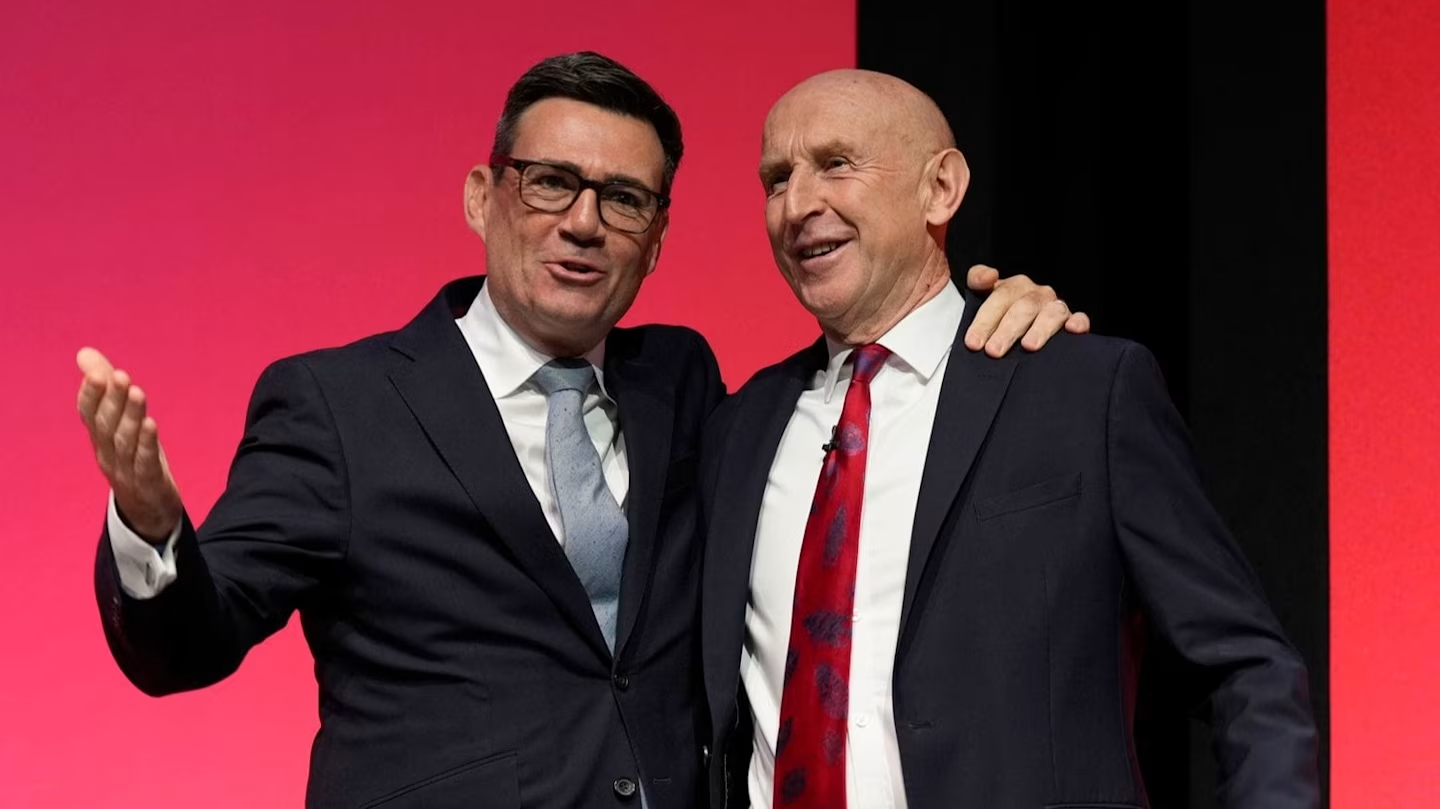
UK Prime Minister Andy Burnham has indicated that his government could consider reducing employers’ National Insurance contributions for younger workers as part of a wider effort to tackle rising youth unemployment. The proposal, included in an independent review led by former Labour health secretary Alan Milburn, aims to encourage businesses to recruit more people under the age of 25 by reducing the financial burden associated with employing them.
Burnham said he would examine the possibility of National Insurance cuts very carefully, although he stopped short of making a firm commitment. He stressed that any decision would depend on the available evidence, the potential impact on employment and whether the government could afford the changes within its wider budget plans.

The issue has become increasingly important as the UK faces a significant challenge involving young people who are neither working nor studying. Official figures cited in the report indicate that nearly one million people aged between 16 and 24 are not in employment, education or training. The group is commonly referred to as NEETs, and its growing size has raised concerns about the country’s labour market, economic prospects and the future opportunities available to younger generations.
Milburn’s report, published on Tuesday, recommends a gradual reduction in the National Insurance contributions paid by employers when they recruit workers under 25. The proposed changes would initially focus on industries such as retail and hospitality, where younger people traditionally find entry-level employment and gain their first experience of the workplace.
One of the central recommendations is to double the threshold at which employers begin paying National Insurance contributions for workers aged 21 to 24. Under the proposal, the threshold would rise from £5,000 to £10,000 a year. The intention is to make employing younger workers more financially attractive, particularly for businesses that operate with tight profit margins and rely heavily on entry-level staff.
The recommendation reflects concerns that employment costs can discourage some companies from recruiting inexperienced workers, especially when businesses are uncertain about demand and operating expenses. By reducing the tax burden on employers, policymakers hope companies will have a stronger incentive to create additional vacancies and offer opportunities to young people who are struggling to enter the labour market.
Speaking to LBC, Burnham was asked whether the previous government had made a mistake by increasing National Insurance contributions. He responded cautiously, saying the issue needed careful consideration and that he had inherited the existing financial and economic circumstances.
He acknowledged that the previous government had introduced support for employers taking on young people through its Youth Guarantee programme. Burnham said he believed the earlier administration had been right to offer such assistance, while adding that his government would assess all available evidence before deciding whether further changes to National Insurance were justified.
The prime minister also emphasised the importance of affordability. Any reduction in employer contributions could affect the amount of money flowing into public finances, creating a challenge for a government that must balance support for businesses and employment with the need to fund public services.
Burnham noted that some exemptions already exist for younger workers. Employers currently do not pay National Insurance contributions for employees under 21, subject to the relevant rules. There are also special arrangements for apprentices under 25, although the exemption does not apply in the same way when their earnings exceed the applicable threshold.
For non-apprentice employees aged between 21 and 24, employers currently pay National Insurance at a rate of 15 per cent on annual earnings above £5,000. Raising that threshold to £10,000, as proposed by Milburn, would reduce the amount of earnings on which businesses pay employer contributions.
The prime minister said he could not offer a definite commitment before the next budget because decisions about National Insurance would need to be considered as part of the government’s wider fiscal strategy. His comments nevertheless suggest that the proposal has reached the level of serious political consideration rather than being dismissed outright.
The debate is closely connected to the government’s broader plans for welfare reform and youth employment. Burnham sought to distinguish his approach from the policies pursued by his predecessor, Keir Starmer, and former chancellor Rachel Reeves, arguing that the new proposals represented a fundamentally different direction.
The previous government’s proposed welfare changes had faced opposition from Labour backbenchers, with concerns about the effects on vulnerable people and those unable to work. Burnham said his approach was different because its central purpose was to expand support and opportunities for young people rather than impose arbitrary reductions in welfare spending.
He argued that policies based mainly on cutting benefits or reducing support would not solve the underlying problems affecting people who are outside employment, education and training. Referring to the large number of NEETs, he criticised what he described as a crude approach to reducing public expenditure and said the government needed to adopt a more fundamental strategy.
The prime minister also pointed to the recommendations made by Milburn as a possible framework for that strategy. He suggested that tackling youth unemployment would require not only changes to taxation but also a different model of support, with greater emphasis on local communities and individual circumstances.
Under the approach Burnham described, support would move away from what he called an outdated, top-down system based on standardised requirements and administrative procedures. Instead, he wants a more localised model that can respond to the different barriers preventing young people from finding work.
Those barriers can vary considerably. Some young people may lack formal qualifications or practical experience, while others may face difficulties involving mental health, transport, housing or family responsibilities. A system that recognises these differences could potentially provide more targeted assistance than a uniform programme applied across the country.
The proposed National Insurance changes are therefore part of a wider debate about how the government can encourage businesses to recruit younger workers while ensuring that those seeking employment receive appropriate support. Lower employment costs could help companies expand recruitment, but tax reductions alone may not be sufficient to address the range of difficulties faced by young people.
Retail and hospitality are among the sectors most likely to be affected by the proposed initial phase of the reform. Both industries provide substantial numbers of entry-level positions, but they also face financial pressures, changing consumer demand and uncertainty over operating costs. Employers in these sectors may welcome lower contributions if the savings make additional recruitment more affordable.
For smaller businesses in particular, the cost of taking on new staff can influence decisions about whether to expand. Reducing employer contributions on younger workers’ earnings could help some companies offer additional hours or create vacancies. However, the extent to which businesses would use the savings to recruit rather than meet other operating expenses remains an important question.
There are also wider economic considerations. Young people who remain outside work or education for extended periods can face difficulties developing skills, building professional experience and achieving financial independence. Prolonged unemployment may also increase pressure on public services and reduce the economy’s available workforce.
Addressing the problem could therefore bring benefits beyond the immediate creation of jobs. Better access to employment may help young people develop confidence, gain qualifications through workplace experience and establish more secure career paths. It could also help businesses address labour shortages and build a workforce with the skills required for future economic growth.
Nevertheless, the financial implications of the proposed tax changes will require careful assessment. A reduction in National Insurance receipts could affect public revenue, while the government would need to establish whether the additional employment generated would provide sufficient economic and fiscal benefits to justify the cost.
The timing and structure of any reform will also matter. A gradual introduction, beginning with retail and hospitality, could allow the government to evaluate the effects before considering wider changes. Such an approach may help determine whether lower contributions actually lead to more recruitment, particularly among people who have been unemployed for long periods.

Burnham’s comments suggest that the government is considering a combination of employer incentives and locally delivered support rather than relying on a single policy to tackle youth unemployment. However, the final decision will depend on the government’s assessment of the Milburn recommendations and the resources available in the next budget.
For now, the prime minister has left the door open to National Insurance reductions but has made clear that no commitment has been made. The proposal could become an important part of the government’s employment strategy if ministers conclude that the potential benefits outweigh the loss of revenue.
With nearly one million young people outside employment, education or training, the challenge is significant. Whether tax incentives, improved local support and closer cooperation with employers can reverse the trend will be an important test of Burnham’s economic and social policy agenda.
Related News:
 Thinktank Calls for Abolition of UK State Pension
 Burnham Opens Door to Possible UK Return to EU
 Badenoch Raises Prospect of 2027 UK Election
 Labour MP Urges Billions for Affordable Homes
 Labour Fears Budget Will Fail to Lift Living Standards
 Brexit Deal Not Good Enough for Britain, Burnham Says
Burnham Admits First Budget Fell Short of His Ambitions
 UK Doubles Steel Tariffs to 50% to Protect Domestic Plants
 Reform UK funding: mystery billionaire revealed
 BBC News Faces Deep Cuts in 2,000 Job Plan
 UK Pushes for New EU Goods Trade Deal
 Reeves Fights to Keep Treasury Role Amid Labour Turmoil
 Burnham unveils £65m drought aid for farmers
 UK Households Could Save £173 on Fixed Energy Deals
 Burnham Faces Mounting Budget Challenges
 Green Leader Targets Starmer’s Former Seat
 UK House Prices Fall as Mortgage Rates Rise
 Thames Water Revises Oxfordshire Mega-Reservoir Plan
 Fashion Firms Urge UK-Made NHS and Army Uniforms
 UK Pay Growth Slows to 3.9% as Rate Decision Nears
 Bank Urged to Slow Bond Sales as UK Costs Rise
 UK Inflation Hits 3.1% as Household Pressure Grows
 UK Youth Jobs Gap Reveals Deep Regional Divide
 Mayors Could Gain Greater Powers Over Water Firms
 UK Rent Gap Puts Low-Income Families Under Pressure
 Labour Apprenticeship Scheme Faces Slow Start
 Burnham Leaves Door Open to Future Brexit Reversal
 MPs Defend UK Economic Watchdog Against Critics
 Tony Blair Calls for Britain to Rejoin EU Within a Decade
 Burnham Opens Debate on Pension Triple Lock for Care
 New UK Homes in Flood Zones Face Insurance Risk
 Dale Vince Plans New London-Wide News Operation
 Poundland Rescue Bid Could Protect 11,000 Jobs
 Healey urged to act as UK energy bills rise 4%
 London Council Warns of 150% Council Tax Rise
 Informa Agrees £2.24bn Deal to Buy Clarion
 France Urges UK to Consider Returning to EU
 France Faces Debt Crisis as Protests and Markets Clash
 Milburn Proposes Pre-Apprenticeship Route for Young People
 IFS Warns UK Budget Faces £35bn Spending Gap
IMF Raises UK Growth Forecast Ahead of Healey’s Budget
 Business Chief Urges Burnham to Fix Brexit Damage
 UK Could Rejoin EU Through a Switzerland Plus Deal
 Cormann Warns Australia Against Populist Migration Caps
 UK Plans Higher Training Costs for Older Apprentices
 Bradford Rail Hub Promises Faster Northern Connections
UK Borrowing Hits £24.5bn Ahead of Healey’s Budget
 Middleton Revitalisation Blueprint for UK Towns
Tax Online Sales to Save High Street, Burnham Urged
 Older Worker Training Plan Faces Business Backlash
 UK Aid Set to Fall Short of Reduced 2027 Target
 Labour MPs Urge Burnham to Lead UK Reindustrialisation
 UK Land Registry Plan Faces Opposition From Landowners
UK Devolution Plan Faces Test Over Regional Inequality
 UK Budget Leaves Households Facing Higher Energy Bills
 MPs Urge UK to Write Off Most British Council Debt
 UK Side-Hustle Tax-Free Limit to Rise to £3,000
 UK House Price Growth Slows to Two-Year Low
 Avanti West Coast Faces £70m Refund Bill
 Denmark Seeks EU-Wide Ban on Fast-Growing Turbo Chickens
 Australia Reviews UK Visa Rules Amid Worker Influx
 UK Parliament Faces Risk of Notre Dame-Style Fire
 UK Review Urges Jobs Revolution for Disabled Youth
 UK Employers to Be Forced to Publish Job Salaries
 Burnham’s Christmas Homelessness Pledge Faces Uncertainty
 TUC Chief Urges Major Investment to Tackle UK Youth Jobs Crisis
 UK Youth Face Jobs Crisis as Economy Loses Momentum
 Badenoch Unveils £36bn Tory Welfare Cuts Plan
 UK Civil Service Chief Vows Radical Whitehall Reform
 Tories Face Pension Age Rise Beyond 70, Labour Warns
 Burnham Unveils Major Plan to Tackle Youth Unemployment
 UK Unemployment Falls to 4.6% Amid Youth Jobs Crisis
 Starmer Says Labour’s Economic Plan Needs Years to Deliver
 Rising Costs Force Families to Rethink Days Out
 Unions Warn Labour Over Zero-Hours Contract Reforms
 North Sea Firms Urge Early End to Windfall Tax
 Entain Plans 400 Job Cuts After Profit Update
 Tom Watson Takes Senior Role at Palantir
 The Tests Awaiting Andy Burnham After Labour Conference
 Ministers Push ATO to Reconsider Credit Card Ban