Published: 16 October 2026. The English Chronicle Desk. The English Chronicle Online
A devastating shooting at an elementary school in Bend, Oregon, has left three children and a teacher dead, prompting renewed grief across the local community and intensifying concerns about gun violence in American schools. The suspected gunman, a 16-year-old boy, was also killed after a community member intervened during the attack, while two other victims remained in critical condition in hospital, according to authorities.
The shooting occurred on Thursday at Silver Rail Elementary School, which serves children from kindergarten through fifth grade, generally between the ages of five and 11. Police said the victims who died included children aged five, eight and 11, alongside an adult teacher. The tragedy has shaken Bend, a city of approximately 100,000 people in central Oregon, where families, educators and residents are struggling to comprehend the loss of young lives in a place intended to provide safety, learning and stability.
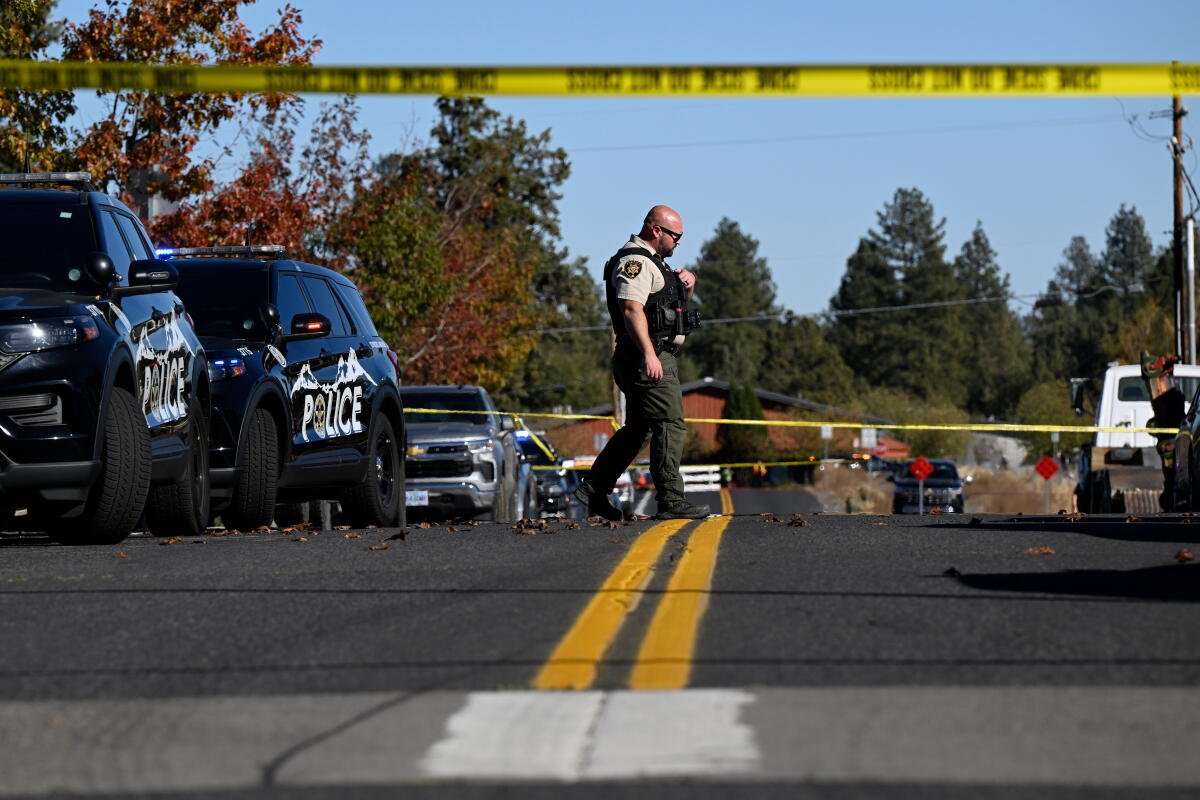
Authorities said the emergency began at approximately 1.02pm local time on Thursday, when police received multiple reports of an active shooter. One emergency caller reportedly described a person carrying a long gun and firing at their vehicle. As further calls came in, witnesses reported that the gunman had entered the school and was continuing to fire inside the building.

Police said the suspect forced his way into the school by shooting at locked doors. The precise sequence of events remains under investigation, including how the attack developed inside the building and whether the gunman had any prior connection to the school or its students.
By the time officers arrived at the scene, the suspected attacker had been shot and killed by a bystander who intervened and apprehended him inside the school, officials said. Oregon Governor Tina Kotek praised the intervention, describing the circumstances as deeply distressing while acknowledging the emotional burden carried by the person who acted.
“Your actions carry a heavy emotional burden,” Kotek said in a statement expressing appreciation for the intervention.
Authorities have not publicly identified the 16-year-old suspect. Investigators are continuing to establish his background, possible motives and any connections he may have had with the school community. A law enforcement official briefed on the shooting told the Associated Press that the attacker used a pump-action shotgun. The official spoke anonymously because they were not authorised to discuss the investigation publicly.
The circumstances surrounding the suspect’s access to the firearm, his movements before the shooting and the events leading to the confrontation are likely to form important parts of the ongoing inquiry. Officials have not yet established a definitive motive, and any explanation for the attack would be premature until investigators have gathered and assessed the available evidence.
The immediate priority following the shooting was to secure the school, assist the injured and reunite children with their families. Students were transported by bus to a nearby church that had been designated as a family reunification centre. There, parents waited anxiously for information before being reunited with their children.
The reunions brought moments of relief amid the wider tragedy. Parents embraced their children, kissed them and held their hands as they walked towards waiting vehicles. Some families brought familiar belongings, including stuffed animals and other comforting items, to help children cope with the frightening experience.
For many children, the school environment is among the first places outside the home where they learn to build friendships, develop independence and trust adults beyond their immediate families. An attack of this nature can undermine that sense of security, leaving children with difficult questions and parents facing the challenge of explaining an event that even adults struggle to understand.
Silver Rail Elementary School has approximately 450 students and 40 staff members, according to officials. The school serves children during a particularly formative stage of their lives, making the deaths of three pupils especially painful for families and educators who had expected an ordinary school day to end safely.
The attack began about an hour before the school day was due to finish. Its timing meant that many pupils and staff were still inside the building when the violence occurred, while parents may have been preparing for the usual afternoon collection routine. What should have been an ordinary end to the school day instead became an emergency involving police, medical responders and frightened families seeking news of their loved ones.
Bend-La Pine Schools Superintendent Steven Cook urged residents to support one another as the community began to process the deaths. In an emotional statement, he encouraged parents to spend time with their children, listen to them and allow them to express their feelings.
“Please hold your children, hold your loved ones tight tonight,” Cook said. “Let them talk. Let them cry. Let them know we are going to rally and care for one another in this community.”
He acknowledged that recovery would take time, emphasising that the community needed space to grieve before it could begin to move forward.
“We will get through this – but not yet. We must grieve for the loss of our community members,” he said.
The school district subsequently cancelled classes, sports activities and extracurricular programmes for Friday across all 32 schools in the Bend-La Pine district. The closures are intended to give students, families and staff time to respond to the tragedy while allowing the wider community to access support and prepare for the difficult days ahead.
Bend Mayor Melanie Kebler also expressed sorrow, highlighting the importance of schools as places where children should be able to learn without fear of violence.
“A school should be a safe place where children can learn and feel secure,” Kebler said. She added that she, like many residents, was struggling to make sense of a loss that felt unimaginable.
The Federal Bureau of Investigation is assisting local authorities with the investigation, according to FBI Director Kash Patel. Federal involvement is expected to support the examination of evidence and other investigative work as officials attempt to establish how the attack occurred and whether any warning signs were present beforehand.
Investigators will also need to determine whether the suspect acted alone, how he obtained the weapon and whether his actions were preceded by threats or other behaviour that might help explain the violence. Authorities have not publicly established answers to those questions, and the investigation remains ongoing.
As the immediate shock gives way to grief, the shooting has once again brought America’s longstanding struggle with school gun violence into focus. The deaths of three children and a teacher add to a wider pattern of attacks that have repeatedly forced schools to reconsider emergency procedures, security arrangements and the emotional support available to pupils and staff.
According to figures cited by Everytown for Gun Safety, there had been at least 100 incidents involving gunfire on school grounds across the United States during 2026, resulting in 33 deaths. Such incidents vary in their circumstances and severity, but the continuing toll has strengthened calls for policymakers to address the availability of firearms and the conditions that allow violence to reach educational settings.
Gabrielle Giffords, a former US congresswoman who survived a mass shooting in 2011 and became a prominent gun-control advocate, said she was heartbroken by the attack in Oregon. Her response reflected the frustration of campaigners who argue that repeated tragedies have not produced sufficient national action to prevent further deaths.
“This cannot continue to be a reality in our country. Leaders at every level must step up and act,” Giffords said.
The debate over gun safety in the United States remains deeply divided. Supporters of stricter regulations argue that stronger safeguards can help prevent firearms from reaching people who may pose a danger, while opponents of additional restrictions frequently emphasise constitutional rights and the responsibilities of individual gun owners. The Oregon shooting is likely to renew those arguments, although the facts of the current investigation must be established before specific conclusions can be drawn about how the attack might have been prevented.
Oregon has adopted several gun-safety measures in recent years. Among them is a law requiring firearm applicants to undergo a criminal background check and safety training before receiving approval for a permit. The effectiveness of such measures, and whether existing laws were followed in the circumstances surrounding the shooting, may become relevant as investigators examine how the teenager obtained the weapon.
However, questions about firearm regulation are only one part of the broader response to school violence. Schools and communities must also consider emergency preparedness, the identification of potential threats, access to counselling and the long-term support needed by children who witness or experience traumatic events.
For survivors, returning to school may be especially difficult. Familiar classrooms, corridors and playgrounds can become associated with fear and loss, while the absence of classmates and a teacher can make the consequences of the attack visible long after the initial emergency has ended. Mental health professionals and educators may therefore play an important role in helping pupils understand their reactions and rebuild a sense of security.
The emotional impact will also extend to families whose children escaped physical injury but may struggle with anxiety, nightmares or uncertainty. Parents and teachers will face the challenge of offering reassurance without minimising what happened. The process of recovery is likely to require patience, communication and sustained support from the wider community.
For Bend, the immediate days will be marked by mourning, questions and efforts to care for those affected. Vigils and community gatherings can provide opportunities for residents to express grief and remember the victims, while also demonstrating solidarity with families facing an unimaginable loss.
Yet expressions of sympathy cannot erase the lives lost or fully answer the questions raised by the attack. Families will want to understand how a teenager was able to carry out such violence, why the school was targeted and whether anything could have been done to prevent the deaths.
Those answers may emerge only gradually as police complete interviews, examine evidence and reconstruct the sequence of events. Until then, officials have urged the public to rely on confirmed information rather than speculation about the suspect or his motives.

The tragedy at Silver Rail Elementary School has left three children and a teacher dead, two people critically injured and a community confronting the consequences of sudden violence. The intervention that ended the immediate threat may have prevented further harm, but it could not undo the devastating losses already suffered.
As investigators continue their work, Bend faces the difficult task of supporting grieving families and helping its youngest residents recover from an event that has shattered their sense of safety. Beyond Oregon, the shooting has renewed a painful national question: how can schools remain places of learning, friendship and childhood when gun violence continues to threaten the people who gather inside them?
Related News:
 Cornell Fraternity Assault Investigation Reopened
 New Prosecutor Takes Over Cornell Assault Case
 FBI Links Brown University Shooting to Long-Term Grievances
 Cambridge Professor Jason Arday Found Dead at Home
 Councils spend £125m on illegal children’s care
 Man Arrested in Mississippi Woman’s Death
 Democrat Says ICE Restricted Detention Camp Oversight
 Senators warn US childcare policies could raise costs
 Latin America women fear rollback of rights
 Christa Pike Wakes After Failed Tennessee Execution
 ICE Agent Shoots Man in New York as Child Escapes Harm
 French Police Face Scrutiny Over Injured Teenagers
 Undercover officer deceived women with ‘grotesque and cruel’ lies, spycops inquiry told
 Melania Trump Epstein remarks spark survivor backlash
 NHS Safety Fears as Nurses Cover Doctor Gaps
 Walsall Rapist Jailed After Hate-Filled Online Trail
 Two Children Die in Wolverhampton House Fire Tragedy
 US Labor Department in turmoil after secretary resigns
 Trump DOJ Targets James Comey Again
 Police Suspect Help in Missing Alice Springs Girl Case
 US ‘Narco Boat’ Strikes Draw Global Outcry
 Florida Surgeon ‘Devastated’ Over Fatal Surgery Error
 Barrister Criticises Trial After Suicide Case Verdict
 Immigration Judges Fear Pressure in Trump Era
 Westminster Council Threatens Charing Cross Soup Kitchen
 BBC Warned About Missing Clothes of Murder Victim
 Is America Ready for an AOC Presidential Run?
 Internal Exclusions Surge in England’s Schools
 Armed Suspect Attacks Ohio Governor Candidate
 Patriot Platform Raises Concern Across Britain
 NBC Helicopter Crash in Los Angeles Kills Three
 Texas Charges Seven Noncitizens in Voting Crackdown
 Survivor Seeks Closure After Priest Dies in Prison
 Gaza Strike Kills Child and Paramedic
 Texas Transfers Raise Fears for Migrant Children
 Memphis Questions National Guard Crime Surge
 Patrick Clancy speaks publicly about children’s deaths
 Clancy Defense Seeks Inquiry Into Lone Juror
 Yemen fighting forces children out of school and into work
 Tennessee Set to Execute Woman After Clemency Denied
 Fayed Survivors Demand Inquiry Into Medical Regulator
 London Facial Recognition Trial Ends With False Alert
 French Student Protests Escalate Into Violent Clashes
 UK University Strikes Spread as Financial Pressure Grows
 Tennessee Execution Fails After Two Lethal Doses
 US election threat checks face federal pullback
 Hundreds of UK prisoners released early amid overcrowding
 Drumcree Talks End Without Agreement Ahead of Appeal
 Almost Half of Fayed Accusers May Be Trafficking Victims
 Calls Grow to Halt US Executions After Pike Failure
 French School Protests Escalate as 400 Schools Close
 US Man Arrested Over Canada School Shooting Plot
 Botstein Quits Bard Amid Epstein Investigation Calls
 Luton Residents Reject Claims of ‘No-Go Zones’
 NSW Police Bid Delays Inquiry Into Sydney Protest
 Sam Wood Denied Bail Over Alleged Domestic Assault
 France Promises 3,000 Teachers as Student Protests Grow
 Bolsonaro Gains Key Endorsement Ahead of Brazil Runoff
 US Execution Livestream Plan Sparks Global Outrage
 UAE Says Co-Pilot Planned Suicide Attack on Israel
 Trump Attacks Norway After Nobel Peace Prize Snub
 Trump Names Katie Zacharia as Next White House Spokesperson
 British Military School Abuse Victims Denied Justice
 French Students Protest Poor Conditions in Paris Suburbs
 Former Students Raise Concerns Over School Culture
 Baby Boy Found Dead at Adelaide Motel: Two Charged
 Elizabeth Struhs Inquest Examines Child Safety Failures
 Greta Thunberg Backs French Students in School Protests
 Millions Face Tougher Medicaid Rules From January
 Ohio Airports Become Key Hubs for ICE Deportation Flights
 England and Wales Begin Second Wave of Early Prison Releases
 Camera Discovery Triggers Navy Ship Investigation
 US Report Exposes Scale of Dating App Scams
 Pakistan School Roof Collapse Kills 27 Students
 Senegal LGBTQ+ Crackdown Drives People Into Hiding
 Ben Roberts-Smith Denies War Crime Allegations in First Statement
 British Museum Faces Questions Over Peter Thiel’s Private Bayeux Viewing
 Badenoch Raises Prospect of 2027 UK Election
 South Africa Withdraws Directive on Asylum Applications
 Trump Names Katie Zachariah as Next White House Press Secretary