Published: August 10, 2026. The English Chronicle Desk. The English Chronicle Online
As wildfires continue to burn across Canada, some residents of remote and rural communities are choosing to remain behind and protect their homes, raising difficult questions about how the country should respond to increasingly severe fire seasons.
For Hubert Wigwas, the decision was deeply personal. When a wildfire approached Gull Bay First Nation in northern Ontario, the 58-year-old community councillor refused to leave immediately. Instead, he placed sprinklers on the roof of his home, checked on elderly residents who had remained and prepared four boats on the nearby lake in case an emergency escape became necessary.
“This is everything I’ve built in my 58 years,” Wigwas said. “I’m just not going to run away and let it burn.”
His decision came despite evacuation warnings from local leaders. It also illustrates a growing debate in Canada over whether residents of isolated communities should simply evacuate when fires approach or whether better training and locally organised emergency teams could allow some people to protect homes safely before professional crews arrive.

Canada has experienced increasingly destructive wildfire seasons in recent years. The country’s worst fire season on record came in 2023, when fires burned an area of forest roughly comparable in size to Syria. By August this year, more than 750 wildfires were still active across the country, placing significant pressure on emergency services and firefighting resources.
The effects have extended beyond Canada’s borders. Smoke from Canadian fires has repeatedly drifted into the United States, affecting air quality across parts of the Midwest and elsewhere. The issue has even become a point of political tension, with US President Donald Trump previously threatening additional tariffs on Canada over what he described as polluted air crossing the border.
For communities surrounded by Canada’s vast boreal forests, however, the wildfire crisis is not an abstract environmental problem. It is increasingly a question of whether homes, livelihoods and entire communities can survive a rapidly changing fire environment.
Gull Bay leaders have urged residents to leave. In late July, the community’s chief issued an appeal asking those who remained to evacuate, warning that firefighters could not operate safely while residents were still in their homes.
Wigwas nevertheless questioned whether enough resources were reaching his community. He said he had not seen outside firefighters arrive to protect properties or assist elderly residents who had stayed behind, despite a wildfire burning about 24km away.
That experience convinced him that remote First Nations communities should develop their own emergency-response capacity. He believes residents could be trained to protect buildings, prepare evacuation routes and tackle smaller fires before they become uncontrollable.
Ontario officials say firefighting resources are allocated according to factors including fire behaviour, weather conditions and risks to communities. The province also maintains contact with First Nations leaders, according to the Ministry of Natural Resources.
But similar concerns have prompted residents elsewhere in Canada to develop local firefighting initiatives.
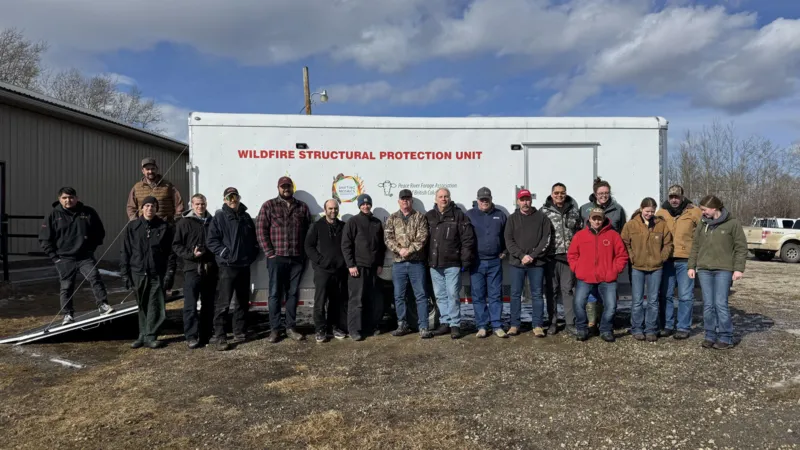
In British Columbia, where wildfire emergencies have become a recurring feature of summer life, some rural communities are training residents to assist with fire prevention and suppression. The approach is intended not to replace professional firefighters but to give communities greater capacity to act during the crucial period before outside crews arrive.
One of the people driving this effort is wildfire researcher Sonja Leverkus, who has helped train more than 400 people in and around Fort Nelson over the past three years.
Her organisation, the Northeast BC Rural Incident Management Team, focuses particularly on rural and Indigenous communities that can be hundreds of kilometres from larger population centres.
Leverkus argues that Canada does not have enough trained personnel to deal with the scale and intensity of modern wildfire seasons.
Her team has conducted prescribed burns designed to reduce the amount of vegetation available to fuel future fires. Members have also used firefighting equipment purchased through grants and fundraising to tackle smaller fires before they develop into major emergencies.
The approach gained particular significance during the 2024 wildfire that threatened Fort Nelson. Leverkus and dozens of members of her team stayed behind and were subsequently hired by the provincial government to clear combustible material and assist with firefighting operations.
The group has also provided structural-protection training, teaching residents how to reduce the vulnerability of homes to embers. Such embers can travel significant distances and ignite buildings even when the main fire front is some distance away.
Former helicopter pilot Cam Allen, 70, is among those who have taken the training. He said the experience has helped him understand how residents might contribute if a wildfire reaches their community.
The idea of residents defending their own properties has attracted attention elsewhere, including in the United States and Australia, where the “stay and defend” approach has been used in some fire-prone areas.
But Canadian authorities remain cautious.
Fire evacuation orders are issued primarily to protect lives and to ensure emergency personnel can operate without having to rescue residents who chose not to leave. When people remain behind, firefighters may be forced to divert resources from fighting the fire to rescuing them.
That concern was highlighted in British Columbia when crews recently had to rescue a man whose home became surrounded by flames after he refused to evacuate.
Provincial emergency officials have repeatedly stressed that evacuation orders should be followed. British Columbia’s emergency management minister, Kelly Greene, said such orders are made as a last resort because authorities may not be able to reach people once conditions deteriorate.
Paul Kovacs, a researcher at the University of Western Ontario and director of the Catastrophic Loss Reduction Institute, argues that Canada’s emphasis on evacuation has helped keep the country’s wildfire fatality rate relatively low despite the frequency of major fires.
He says the preservation of life must remain the primary objective during an emergency.
At the same time, Kovacs believes rural communities can play a much greater role in preparing for wildfires. Residents can fireproof properties, clear vegetation and help authorities understand local conditions. But he cautions that such preparations should take place before flames arrive, rather than during an active emergency.
British Columbia officials have indicated that locally organised firefighting groups can sometimes be employed by the province during active wildfires when professional crews are unavailable. However, these groups remain subject to official command structures and safety requirements.
The province says its full-time wildfire workforce has grown significantly in recent years, with staffing increasing by 56% alongside additional seasonal personnel.
Leverkus wants her community-based programme to eventually receive formal recognition from provincial authorities. Her aim is to establish a system in which properly trained residents can support professional crews without being automatically penalised for remaining in their communities.
Safety is central to her approach. Participants learn about fire behaviour, emergency planning and escape routes. Those who choose to remain during an incident operate under trained commanders and are expected to leave when conditions become too dangerous.
The distinction is important. Community preparedness does not necessarily mean encouraging people to ignore evacuation orders. Instead, supporters say it could give remote communities more tools to protect homes before an emergency reaches its most dangerous stage.
For First Nations such as Gull Bay, the issue carries an additional dimension. Many communities are geographically isolated, have limited infrastructure and face long distances between themselves and outside emergency services. Residents may therefore feel that evacuation does not always provide the same sense of security as it might in a densely populated urban area.
For Wigwas, the immediate consequences of his decision are now being dealt with through the legal system. He faces a potential fine for remaining despite an evacuation order and says he intends to challenge it.
His argument reflects the emotional conflict at the centre of Canada’s wildfire debate. People are being told to leave their homes to protect their lives, yet many fear that leaving could mean returning to find everything they own destroyed.
The broader challenge is how Canada can balance those competing realities.
As climate change contributes to hotter, drier conditions in many fire-prone regions, communities are facing fires that can spread faster and behave in ways residents have not experienced before. The pressure on professional firefighters is increasing, while remote populations remain particularly vulnerable because of their distance from emergency resources.

The experience of people such as Wigwas and Leverkus suggests that communities are searching for a middle ground: stronger preparation, better local knowledge and carefully regulated community participation alongside professional firefighting services.
Whether that model can become part of Canada’s national wildfire strategy remains uncertain. What is increasingly clear, however, is that the country’s fire seasons are forcing authorities and residents alike to reconsider what preparedness means.
For Wigwas, the decision remains straightforward. He believes his community should have the ability to protect what it has built, while also recognising the dangers posed by a rapidly advancing wildfire.
“I might as well be in jail,” he said, describing the prospect of losing his home after being ordered to leave it.
His words capture the difficult reality facing communities across Canada: evacuation can save lives, but for those who remain behind, the desire to defend their homes is often rooted in years of memories, work and community ties.
As the wildfire threat continues to intensify, Canada’s challenge will be finding ways to protect both people and places without putting either at unnecessary risk.
Related News:
 Canada wildfire surges as residents brace for worst
 At Least 19 Killed After Powerful Earthquake Hits Southern Philippines
 Venezuela Quake Death Toll Surpasses 4,000
 Thousands Evacuated in France as Wildfires Spread Across Regions
 Venezuelans Still Seek Answers One Month After Quakes
 Wildfires Force Mass Evacuations in France And Spain
 Two Killed as Firefighting Helicopters Collide During Greece Wildfire Mission
 Canada-China trade gains momentum in new strategic partnership
 South Africa’s Garden Route Gem Faces Looming Water Crisis
 Draft Severe Weather Plan Following Storm Flooding
 Cameras Installed to Monitor Flood Levels Across Vulnerable Areas
 What is Groundwater Flooding and Why Dorset is Seeing ‘Historical Highs’
 Dozens of Flood Warnings in England After Days of Non-Stop Rain
 Aberdeen Chosen for GB Energy HQ at Marischal Square
 ‘Canadians Are With You,’ Says PM at Tumbler Ridge Vigil
 Red Eyes and Black Beaches: Oil Spill’s Lasting Scars
 BRRRITAIN: Met Office Issues Yellow Weather Warning for More Snow
 Temperatures Dip Below Freezing as Arctic Air Sweeps Across the UK
 How Do You Modernise Mango Farming? India’s Growers Urged to Innovate as Climate Change Hits
 Major 7.1 Earthquake Strikes Off Malaysian Tourist Coast
 Victorian Bridge Could Be Saved by Traffic Ban
 UK’s First Geothermal Plant Powers 10,000 Homes
 UK Winter Nowhere Near a Record Breaker Despite Floods and Storms
 Conservation Budgets Hit by Increased Fly‑Tipping Costs
 Study Says Only Two Nations May Survive Nuclear War
 Community farm appeal to cover thousands in repairs
 Dramatic Rescue as Ice Shelf Detaches on Lake Huron
 Net Zero by 2050 ‘Cheaper Than One Fossil Fuel Crisis’
 UK Energy Reform Could Cut Bills by £200
 A Global Voice For Justice: Stephen Lewis Dies At Age 88
 7.4-Magnitude Earthquake Jolts Eastern Indonesia; Tsunami Warning Lifted
 Evacuations Ordered as California Wildfires Spread Fast
 Moldova River Crisis Exposes War’s Hidden Cost
 Heavier SUVs Accelerate Britain’s Pothole Crisis
 Cyclone Vaianu Forces Mass Evacuations in New Zealand
 OpenAI CEO Apologizes After Canada Shooting Case
 Crackdown Backfires on UK Climate Protesters
 Older Than Dinosaurs: Secrets of Mayfly Dance Revealed
 Capitalism ‘Suicidal’, Warns Petro at Climate Summit
 Coalition pushes fossil fuel phaseout plan
 Record May Heat to Cold Front in Eastern Australia
 Norway Doubles Down on Oil and Gas for Europe Energy Security
 Tractor Breakdown Tests Lincolnshire Farmers
 Britons Build Emergency Supplies Amid Rising Fears
 “The Climate Multiplier”: Assessing the Dual Threat of Disease-Bearing Mosquitoes and Heat-Related Mortality
 Sycamore Gap Artwork Chosen After Public Vote
 Pope Meets Families in Italy Toxic Waste Zone
 UK rejects EV charging VAT cut amid Treasury clash
 Hope for mountain bongos returns to Kenya
 UN Issues Urgent Warning: Imminent Return of El Niño
 Trump Approves $700m Coal Industry Investment
 Family Says Heatwave Drownings Reopen Grief
 Deadly Earthquake Hits Philippines
 Airline Leaders Warn 2050 Net Zero Target May No Longer Be Achievable
 Hundreds of Aftershocks Shake Philippines as Fears Grow Over Rising Death Toll
 Temperatures Set to Fall This Week, But Forecasters Warn Heat Could Return Soon
 Net Zero School Remains Cool and Open as Heatwave Tests Britain’s Buildings
 Why Extreme Heat Can Cause Trees to Collapse and What Experts Say Can Be Done
 Mum Rescued from Venezuela Earthquake Rubble Says Newborn Baby Gave Her Strength to Survive
 Headline: Three-Year-Old Rescued Alive Six Days After Devastating Venezuela Earthquake
 Sydney Records Hottest June Since 1859 as Expert Warns New High a ‘Signature’ of Global Warming
 Girl Survives 32 Hours Under Rubble After Venezuela Quake
 Parents Fundraise to Cool Overheated School Classrooms
 Europe Scorched as Record Heatwaves Grip the Continent
 London Tube Heat Reaches Dangerous Levels
 UK Heatwaves May Have Claimed Thousands of Lives
 UK Heatwave Nears Two-Week Milestone as High Temperatures Continue Across the Country
 Britain Set for ‘Bumper Year’ for Butterflies as Conservationists Predict Strong Season
 Tokyo’s Push for Shorts at Work Sparks Debate as Some Women Raise Concerns Over ‘Leg Hair Harassment’
 Canada’s ‘Powerful’ Dairy Sector Lands in Trump’s Trade Crosshairs
 France Evacuates Tourist Area as Wildfires Spread
 Three-Quarters of England’s Riverbanks Still Off Limits
 French Firefighters Battle ‘David vs Goliath’ Wildfire
 Wildfires Intensify in South-West France as Region Braces for 40C Heatwave
 Amber Heat Health Alerts Issued as UK Heatwave Set to Reach 35C Peak
 Storms Set to End UK Heatwave with Flood Warnings
 Suspect Planned Spokane Wildfire on Dry, Windy Day
 Drone Warnings Issued as South Korea Battles Historic Heatwave
 US, RWE Reach Major Deal as Offshore Wind Projects End