Published: 13 August 2026 | The English Chronicle Desk | The English Chronicle Online
In Kingsport, Tennessee, religion and politics are deeply woven into everyday life. The Appalachian city of about 58,000 people is home to hundreds of churches, a strong conservative political culture and an industrial complex that has become increasingly important to America’s military supply chain.
At the Holston Army Ammunition Plant, explosives and other components used in major US weapons systems are manufactured on an enormous site surrounded by the green landscape of the Appalachian Mountains. The facility’s production includes materials used in Patriot missile systems and other military hardware, giving the community a particularly direct economic connection to America’s expanding military commitments.
That connection has become more significant as the United States’ war with Iran continues to shape national politics and household finances.
Yet despite rising fuel and food prices and growing criticism of President Donald Trump elsewhere in the country, many people in Kingsport remain strongly supportive of the president and his military policy.
The contrast between national political discontent and local support is striking. Recent polling has placed Trump’s approval rating at around 32%, a significant decline from the level recorded when he began his second term in January 2025. The cost of living and the war with Iran have emerged as major sources of dissatisfaction.

In Kingsport, however, those concerns have not translated into a widespread rejection of Trump.
For many residents, political and religious convictions remain more important than frustration over economic conditions.
“If he can stop anyone from having a nuclear bomb, then I’m for it,” said Pam Robinson, a 65-year-old former chemical plant worker and committed Christian.
Her view is shared by many veterans and families with connections to the military. Veterans make up roughly 10% of the wider region’s population, while numerous households have relatives serving in the armed forces.
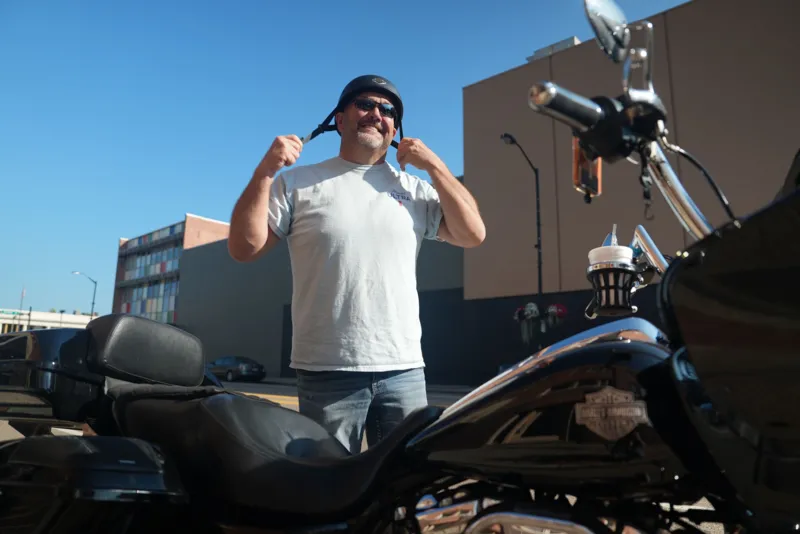
David Carter, a 66-year-old veteran and Christian who also plays Santa Claus during the Christmas season, believes American military intervention overseas is ultimately intended to protect people at home.
He argues that maintaining American influence abroad helps prevent threats from reaching the United States.
Others express their support for the military campaign in much harsher terms.
James Camper, a 63-year-old veteran wearing a Trump lanyard, said the United States should take an uncompromising approach towards Iran.
Such views reflect the strength of conservative politics in the region. Kingsport and surrounding areas have consistently voted heavily Republican, while Tennessee itself has been firmly Republican for more than two decades.
For many residents, the question is not simply whether they approve of Trump’s policies but whether they could ever support a Democratic candidate.
Abortion remains one of the most important issues influencing political choices. Opposition to socialism, progressive cultural issues and what some residents describe as “woke” politics also feature prominently in conversations about elections.
This means that even residents who acknowledge shortcomings in Trump’s presidency can remain firmly committed to voting Republican.
Robinson, for example, has criticisms of the administration but continues to support Trump.
She believes some of the president’s decisions have been influenced by advisers and argues that he could improve his performance in several areas. But those reservations do not outweigh her broader political and religious convictions.
The local economy also provides a different perspective on the war.
Holston Army Ammunition Plant employs around 1,000 people and occupies an important position in the US defence manufacturing system. It is described as the country’s only domestic supplier of certain essential explosive and propellant components.
For workers and families connected to the plant, military demand represents a source of employment and economic stability regardless of whether the United States is formally at war.
Daniel Overstreet, 53, who supports Trump, says the plant will continue operating regardless of the country’s military situation.
“The plant’s going to be open regardless of whether we’re at war or whether we’re not,” he said.
Overstreet also sees limits to the president’s ability to influence the cost of living.
He supports Trump but argues that Congress and the Senate have significant influence over economic policy. Rising petrol and food prices, therefore, do not automatically translate into anger directed at the president.
That distinction may help explain why national polling can sometimes conceal the strength of Trump’s support among his most committed voters.
Trump’s popularity has weakened among some traditional Republicans and independent voters, but the core of his Make America Great Again movement remains considerably more loyal.
In Kingsport, that loyalty is reinforced by a shared religious and cultural identity.
The city has more than 300 churches in its wider area, and Christianity is highly visible in public life. A sign above the historic Lamplight Theatre in downtown Kingsport declares “Jesus first in all things”, reflecting the prominence of faith in the community.
For people such as Carter, religious beliefs are inseparable from political decisions.
He accepts that Trump is imperfect and believes the president could show greater humility. But he says he would only support candidates who share what he considers the moral values of the community, including opposition to abortion.
That political environment can be intimidating for residents who hold different views.
Adam Teague, a 44-year-old Democrat and tattoo artist, is among those who feel politically isolated. Raised Baptist and openly gay, Teague says he became more cautious about expressing his political identity after Trump returned to office.
Before the president took office, he regularly wore rainbow-coloured clothing. Now, he says, he has toned down such expressions because he feels safer doing so.
His experience illustrates another side of Kingsport’s political identity: conservative dominance can make liberal residents reluctant to speak openly.
Nevertheless, signs of change are beginning to appear among some younger residents.
Mary Herron, a 21-year-old student who works part-time, says she has noticed some young people reconsidering their support for Trump.
She describes the shift as unusual in a community where conservative politics are deeply established. Some people who voted for Trump have begun telling friends that they no longer support him.
Her friend Emily Villalpando, also 21, believes age and economic circumstances may be contributing to the change.
Many young people in Kingsport grew up surrounded by parents and relatives who supported Trump. But as they enter adulthood, they are increasingly dealing with housing, employment, education and other economic pressures themselves.
Villalpando is studying biomedical science and hopes to become a doctor. She and her friends cite women’s rights and immigration enforcement among their concerns.
Yet they recognise how difficult political change would be in a region where Republicans dominate local elections.
The imbalance is visible on the ballot. During recent local elections, only one Democratic candidate appeared in the relevant contest, while several county commission districts featured only Republican candidates. Some Republicans were unopposed.
For younger progressives, changing that political landscape could take years.
The situation also raises broader questions about the relationship between military spending, local employment and political opinion.
Kingsport’s defence industry does not necessarily determine how residents vote, and conservative political identity existed in the region long before the current conflict. But the presence of a major ammunition facility means that national security policy has a tangible economic dimension for the community.
At a time when the war with Iran is increasing pressure on US households, the plant represents both a strategic national asset and a local source of employment.
The war itself remains divisive across the country. Trump’s decision to strike Iran followed unsuccessful negotiations, with the president arguing that military action was necessary to eliminate what he described as an imminent threat and prevent Iran from acquiring a nuclear weapon.
For Kingsport residents who strongly prioritise national security, that argument resonates.
For others, particularly younger and more progressive Americans, the conflict raises concerns about civilian casualties, economic costs and the prospect of another prolonged military engagement.
Those competing views are unlikely to disappear soon.
Kingsport therefore provides a snapshot of a broader American political divide. National approval ratings may be falling, economic pressures may be intensifying and younger voters may be reassessing their political loyalties. But in deeply conservative communities across the Bible Belt, Trump’s most committed supporters continue to view him through a combination of political, cultural and religious values.

Evangelist William Bogle, 75, who has voted for Trump in every election in which he has run, acknowledges that the president is not perfect. He also admits that his own wife has to stretch the household grocery budget considerably further than before.
Yet Bogle still believes Trump is the best political alternative available to him.
His message to outsiders captures the strength of Kingsport’s identity.
“If you’re not conservative, don’t come here,” he says. “Because you wouldn’t be a good fit. But if you’re conservative, come here, and we’ll embrace you.”
For now, that conservative identity remains firmly rooted in Kingsport. But the voices of younger residents suggest that beneath the surface, attitudes may slowly be changing.
Whether those changes become a meaningful political shift will depend not only on Trump’s performance but also on how the next generation responds to the economic pressures, cultural conflicts and political divisions shaping their lives.
Related News:
 Trump Administration Probe of Fed’s Powell Draws Pushback
 Japan Braces as Takaichi Begins New Term with Huge Mandate for Low‑Tax, Ultra‑Conservative Agenda
 Inside Kyiv’s resolve as conflict nears five‑year mark
 What to Watch for During Trump’s State of the Union Address
 US Partially Evacuates Beirut Embassy Amid Rising Iran Tensions
 Trump’s Iran Endgame Unclear After Mixed Messaging on War Aims
 UK Prepares Aircraft Carrier for Middle East Crisis
 Iran Rejects Ceasefire, Warns Trump With Chilling Message
 Trump Faces New Warning Signs as Iran War Hits Home
 PM Seeks to Reassure Australians Over Fuel Supply
 The $100 Billion Peace: Trump’s ‘Grand Bargain’ Ends Iran Conflict at a Staggering Cost
 The Horns of Dilemma: Why the 2026 Iran War Ignited and Where It Goes Next
 Tectonic Tension: Trump Blasts NATO Costs as Rutte Admits to ‘Very Frank’ Exchange
 Midnight Fire: Israel and Hezbollah Exchange Strikes as Trump Lashes Out at Tehran
 Relief at the Pump: Irish PM Unveils €505m Package to Stem Fuel Crisis
 Athens Mayor Moves to Tackle Overtourism Crisis
 US Labor Department in turmoil after secretary resigns
 RAF Typhoons scrambled amid Russian drone threat near Nato
 Trump orders US troop pullout from Germany
 Trump likens US Navy actions to ‘pirates’
 Trump approval plunges amid Iran war fears
 Trump Threatens UN Budget Cuts as US Pushes ‘Trade Over Aid’ Agenda
 US Awaits Iran Reply on New Ceasefire Proposal
 Hormuz Talks Near Critical Stage
 Trump’s Revenge Drive Deepens GOP Divide
 Trump Ballroom Project Faces Rising Costs
 Royal Navy Mourns Devastating Helicopter Loss
 Why Some African Nations Are Rejecting Trump Aid
 Canada Signs Major Deal for 12 German Submarines
 Trump’s Major Recruitment Drive Targets Border Patrol Growth
 Trump’s New Vision for 250 Years of US Expansion
 Israel Angered by Trump Backing Turkey Fighter Deal
 US-Iran Exchange Fire as Hormuz Tensions Escalate
 US Launches New Strikes as Iran Says Civilian Infrastructure Hit
 US Unveils Fresh Tariffs on Global Trading Partners
 Trump Warns Iran Over Strait of Hormuz Blockade
 AOC Reveals Egg-Freezing Decision Amid Political Future
 Canada Passes Carney’s First Budget in Tight Parliamentary Vote
 Russia losses Ukraine war peace talks intensify amid rising deaths
 Trump Escalates Minnesota Immigration Surge Amid Rising Tensions
 EU Says US Ties Have Suffered ‘Big Blow’ After Greenland Crisis
 Starmer Weighs Fast-Tracking Defence Boost
 US Civil Rights Leader Jesse Jackson Dies Aged 84
 Musk Cuts Starlink Access for Russian Forces – Giving Ukraine an Edge at the Front
 Bill Gates ‘Took Responsibility’ Over Epstein Ties in Staff Meeting, Foundation Says
 American Citizen Killed in Cuba Boat Shooting, U.S. Officials Say
 Trump Faces Questions Over Iran Conflict Plan
 Minister Meets Crews Who Will ‘Take Out’ Iranian Drones
 UK–US Tensions Ease as Starmer and Trump Hold First Call Since Iran Row
 Iran War Puts Trump at Political Risk Amid Rising Prices
 Trump’s Confidence Undimmed — But Every Iran Option Carries Risk
 Can Congress Stop US Sports Teams From Moving Cities?
 Oil and Diplomacy: Russian Refineries Burn as Zelenskyy Secures Middle East Shield
 ‘The Soul of Spain’: Politicians Clash Over Renewed Push to Move Picasso’s Guernica
 The Changing Face of Georgia: Trump-Backed Clay Fuller Wins Election
 The Great Chokehold: Why the Strait of Hormuz is the Epicenter of the 2026 Crisis
 Moldova River Crisis Exposes War’s Hidden Cost
 Diplomatic Deadlock: Lebanon Enters High-Stakes Border Talks with ‘No Cards to Play’
 MoD Has Lost Track of Veteran Recall List, Says Adviser
 The Fog of War and the Ticker Tape: Suspicious Trades Rile Washington
 Brinkmanship in Islamabad: Tehran Vows ‘New Battlefield Cards’ as Ceasefire Wanes
 “Jobs Will Go”: Rishi Sunak Warns AI is Already Eroding Entry-Level Opportunities
 “Industrial-Scale Extraction”: White House Memo Accuses China of Mass AI Theft
 Ukraine Urges UK to Seize Russian Oil Tankers
 Capitalism ‘Suicidal’, Warns Petro at Climate Summit
 Reality Check on Reform: Minister Says Outright Abolition of Leasehold “Impossible”
 US Court Restores Abortion Pill Access Temporarily
 “The Pivot to Pakistan”: Trump Pauses ‘Project Freedom’ in Hormuz Amid Iran Deal Hopes
 “The New Silk Road”: India and Vietnam Forge Strategic Maritime Alliance to Counter Regional Volatility
 Discontent grows around Putin amid war strain
 UK Faces Most Dangerous Era, Military Chief Warns
 Trump Approves $700m Coal Industry Investment
 Israel Strikes Iran After Missile Attack
 Spain Sees Tourism Boom as Travellers Shift Away From Middle East
 US Launches Strikes on Iran After Military Helicopter Downed Near Strait of Hormuz
 Bangladesh Balances China Ties as India Relations Improve
 Trump Helps Clear Balogun for Belgium World Cup Clash
 Le Pen’s Popularity Holds Despite Conviction
 Trump Refuses to Sign Housing Bill, But Law Takes Effect
 Trump Renews Push to End Birthright Citizenship