Published: 17 September 2026. The English Chronicle Desk. The English Chronicle Online
The US House of Representatives has passed a sweeping Russia and Iran sanctions bill that would expand the president’s authority to impose tariffs on countries buying Russian energy, while Democratic House leader Hakeem Jeffries has raised concerns about provisions he says could leave significant loopholes in the legislation.
The Lindsey O. Graham Sanctioning Russia and Iran Act of 2026 passed the House by 262 votes to 159 on Wednesday, sending the legislation to President Donald Trump after the Senate approved it in August. The measure is intended to increase economic pressure on Russia over its war in Ukraine and also extends sanctions-related provisions concerning Iran.
The legislation has attracted support from members of both major US parties, but it has also exposed differences within the Democratic caucus over the extent of presidential authority provided by the bill.
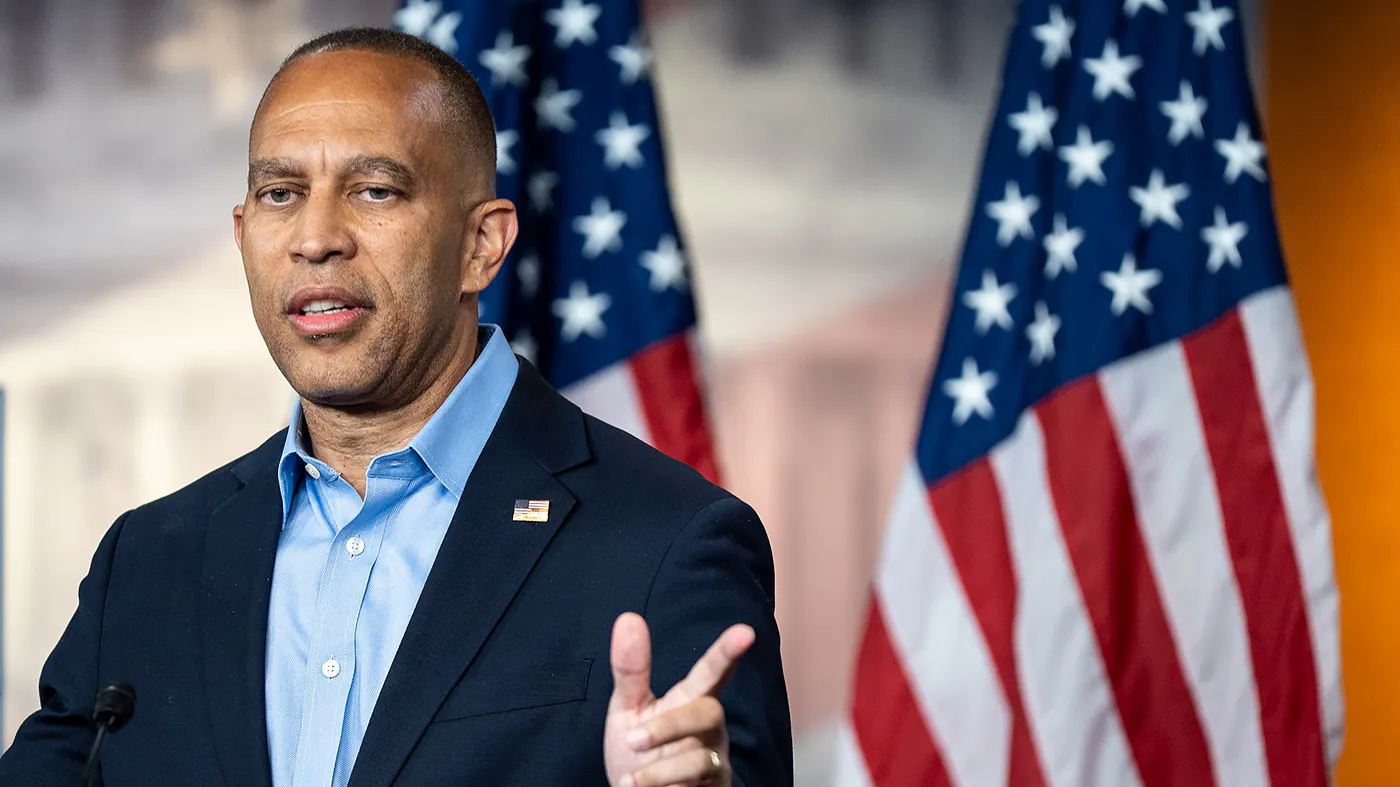
Jeffries, a New York Democrat and House Democratic leader, said he would vote against the legislation. He argued that the bill contained numerous loopholes and could give Trump broad authority to impose tariffs with consequences for American consumers and businesses.

His objections focus particularly on the tariff provisions. The legislation would allow the president to impose tariffs of up to 100% on goods from major purchasers of Russian oil and gas and countries judged to be helping Russia evade existing sanctions. China and India are among the countries that could potentially be affected by the measure because of their purchases of Russian energy.
Jeffries’ concern is not that the legislation contains no sanctions against Russia. Rather, his criticism centres on how the law would operate in practice and how much discretion it would give the president.
Supporters of the bill argue that its purpose is to increase pressure on Moscow by targeting the revenues and networks that support Russia’s war effort. The measure includes sanctions aimed at Russian political and military figures, foreign networks involved in helping Russia evade sanctions and vessels associated with the transportation of Russian oil outside existing restrictions.
The legislation also addresses Russia’s so-called shadow tanker fleet, a term used for vessels involved in transporting Russian crude while attempting to operate around Western restrictions. The bill seeks to increase pressure on those networks as part of a broader effort to reduce Moscow’s ability to generate revenue from energy exports.
The House vote represented a significant bipartisan split. Reuters reported that 58 Democrats joined most Republicans in supporting the legislation, while seven Republicans voted against it. The final margin was 262 to 159.
The bill had already cleared the Senate in August, meaning the House vote was the final congressional step before the legislation could be sent to the president. The measure was originally introduced more than a year earlier by Republican Senator Lindsey Graham, who died earlier this year. Congress subsequently renamed the legislation in his honour.
Supporters have presented the measure as a means of increasing economic pressure on Russia and strengthening US leverage over the war in Ukraine. Ukrainian President Volodymyr Zelenskiy has supported the legislation, while lawmakers backing it have argued that stronger economic measures could reduce Moscow’s ability to finance its military campaign.
Republican Representative Don Bacon of Nebraska described the vote as a major moment in US policy toward Russia. Other supporters have argued that Congress needs to maintain pressure on Moscow while diplomatic efforts over the war remain unresolved.
The legislation’s tariff provisions have nevertheless created concerns beyond the immediate US-Russia relationship. Because the measure could affect major buyers of Russian energy, countries such as India and China could face additional US trade measures if the president uses the authority provided by the bill.
India has already warned that such tariffs could damage US-India relations. India’s government has said it remains focused on maintaining reliable and affordable energy supplies and obtaining oil from a range of international sources. Reuters reported that Indian officials have indicated they may take measures to protect the country’s economic interests if new US tariffs are imposed.
The potential economic consequences could therefore extend beyond Russia itself. Tariffs on major energy-consuming economies could affect international trade relationships and potentially influence the cost of energy and other goods, depending on how the authority is used.
The legislation’s supporters argue that this broader reach is intentional. By placing pressure on countries that continue purchasing Russian energy, the measure seeks to make it more difficult for Russia to maintain export revenues while continuing its war in Ukraine.
Opponents, however, have focused on the possibility that expanded presidential tariff authority could have consequences for US economic interests. Jeffries specifically warned that the measure could allow the president to take actions that harm Americans economically.
The disagreement reflects a wider debate in Washington about the balance between congressional control over economic policy and presidential authority over foreign policy and trade. Tariffs can be used as instruments of foreign policy, but they can also affect domestic businesses, consumers and international supply chains.
The timing of the legislation is also significant. Congress is entering its recess ahead of the US midterm elections, and the House’s passage of the bill came during a period of heightened attention to the administration’s approach to Russia and Ukraine.
Russia has responded negatively to the legislation. Kremlin spokesperson Dmitry Peskov said the proposed sanctions, if signed into law, would further complicate efforts to reach a peace agreement over Ukraine. Russian officials have described the measures as unfriendly actions.
The Kremlin’s response adds another dimension to the debate over whether economic pressure and sanctions can influence diplomatic negotiations. Supporters of the bill see tougher sanctions as a way to increase pressure on Moscow, while Russian officials argue that additional restrictions could make negotiations more difficult.
The legislation comes as fighting continues in Ukraine. Reuters reported that Russia launched a major overnight missile and drone attack against Kyiv and other Ukrainian cities following the House vote, causing injuries and damage across several regions. Ukraine has also continued attacks against Russian infrastructure.
The continuing military activity has increased the focus on measures intended to affect Russia’s capacity to sustain the war. The new US legislation is therefore being considered alongside military assistance, diplomatic efforts and existing economic restrictions.
The bill also contains provisions relating to Iran, reflecting the legislation’s broader focus on countries and networks that Washington considers security concerns. Its central economic provisions, however, are directed toward Russia and countries involved in purchasing or facilitating the trade of Russian energy.
For the Trump administration, the legislation would provide additional authority to use tariffs as a foreign-policy instrument if the president signs it. The practical effect would depend on whether and how that authority is exercised.
For Congress, the vote demonstrates that support for increased pressure on Russia remains bipartisan, even though lawmakers differ over the mechanisms used to achieve that goal.

Jeffries’ objections highlight the question of presidential discretion, while supporters emphasise the potential value of additional economic pressure. Neither position changes the immediate legislative fact: the House has approved the Senate-passed measure and sent it to the president.
The next stage will therefore depend on the administration’s decision on the legislation and, if it becomes law, how its provisions are implemented. Any tariffs imposed under the new authority could have implications for Russia, its major energy customers, US businesses and wider international trade.
The legislation’s passage also ensures that sanctions policy toward Russia will remain an important issue in Washington as the war in Ukraine continues. With diplomatic efforts still unresolved and economic restrictions forming a central part of Western policy, the debate over how far the United States should go in applying pressure is likely to continue.
For now, the House vote has established a new framework for possible sanctions and tariffs, while the objections raised by Jeffries illustrate the continuing disagreement in Congress over how that authority should be used and what economic consequences it could create.
Related News:
 Trump Threatens EU With Tariffs Over Canada Proposal
 Trump Threatens EU Over Canada Partnership Proposal
 Reeves Fights to Keep Treasury Role Amid Labour Turmoil
 Trump Refuses to Sign Housing Bill, But Law Takes Effect
 Firms on both sides fear damage from US-Canada trade war
 Trump orders US to rename Lake Ontario ‘Lake America’
 Trump Hardens Canada Trade Stance as Talks Stall
 Trump Pledges $5,000 if Republicans Win Midterms
 EU Opens Door to Canada as Associate Member
 Tories Press Healey Over Tax Rises Ahead of Budget
 Thousands Protest ICE Operations in Nationwide US Day of Action
 UK Wage Growth Slows as Jobs Market Holds Firm
 Trump Faces Crisis as Iran Reopens Hormuz Tensions
 US Court Ruling Reshapes Voting Rights Landscape
 US states redraw maps after voting rights ruling
 BBC News Faces Deep Cuts in 2,000 Job Plan
 Judge halts deportation of Yemeni refugees in US
 Trump likens US Navy actions to ‘pirates’
 Trump approval plunges amid Iran war fears
 Ohio’s Battle for Trust: Democrats Vying to Flip the Buckeye State
 Trump Threatens UN Budget Cuts as US Pushes ‘Trade Over Aid’ Agenda
 Trump warns Iran as Middle East tensions surge again
 US Court Restores Abortion Pill Access Temporarily
 US Awaits Iran Reply on New Ceasefire Proposal
 Kevin Warsh sworn in as Fed chair amid economic backlash
 US green card applicants must apply from abroad, DHS says
 Hormuz Talks Near Critical Stage
 UK Pushes for New EU Goods Trade Deal
 Trump’s Revenge Drive Deepens GOP Divide
 Former ICC prosecutor condemns US sanctions
 Gunman Killed After White House Security Shootout
 Trump Claims Iran Peace Deal Near Completion
 Labour MPs Urge Burnham to Revive UK Aid Target
 Mystery Grows Over Mitch McConnell’s Health
 Trump announces major US oil deal with Venezuela
 Burnham Faces Mounting Budget Challenges
 Dutch Bank Moves 86 Tonnes of Gold to London
 Trump Calls Iran War ‘Small Potatoes’ Despite US Deaths
 Swedish Mining Push Puts Sami Land Rights Under Pressure
 UK plans tougher Israel stance with settlement trade ban
 Oil nears $100 as Saudi attacks shake markets
 Trump gives $45,000 holiday gifts to White House aides
 Oil Prices Surge as Saudi Pipeline Closure Deepens Crisis
 Reform Faces Questions Over £72m Donations
 Farage Threatens Union Funding Ban Over Reform Donations
 North Sea Firms Urge Early End to Windfall Tax
 UK Pay Growth Slows to 3.9% as Rate Decision Nears
 Bank Urged to Slow Bond Sales as UK Costs Rise
 Fugitive Developer Rants at NSW Corruption Inquiry
 JLR Eyes NATO Market With New Defender Military Vehicle
 UK Inflation Hits 3.1% as Household Pressure Grows
 Slave-Trade Wealth Embedded in Britain’s Financial System
 UK Youth Jobs Gap Reveals Deep Regional Divide
 Entain Plans 400 Job Cuts After Profit Update
 Trump Administration Dismisses 17 Immigration Judges, Sparking Debate Over Judicial Independence
 Trump Urges Herzog to Grant Netanyahu Full Pardon
 Trump Deploys DHS to Charlotte in Major Arrest Operation
 Canada Passes Carney’s First Budget in Tight Parliamentary Vote
 US National Guard Member Killed in DC Shooting
 Greenland Crisis Forces Europe to Draw a Line With Trump
 South Korea Jails Ex-President in Martial Law Ruling
 Trump Fed bid heads to Supreme Court
 Partial US Government Shutdown Hits Homeland Security Funding
 Report Says Pezzullo Acted ‘Recklessly’ in Dealings
 Suspected Plot Targets Pipeline Before Hungary Vote
 UK Stands Firm on Falklands Amid US Rift
 Albanese Rejects Gas Export Tax Push
 Oil Prices Surge Above $120 Amid Iran Blockade Fears
 Trump orders US troop pullout from Germany
 US ‘Narco Boat’ Strikes Draw Global Outcry
 Trump Sends 5,000 More US Troops to Poland
 Discontent grows around Putin amid war strain
 Ukraine Creates Long-Range Strike Command
 Houthis Strike Saudi Arabia as Middle East Tensions Rise
 Unions Warn Labour Over Zero-Hours Contract Reforms
 UK Cost Squeeze Deepens as Mortgages and Gas Rise
 New Mexico Takes Facebook to Trial Over Data Scandal
 UK Retailers Accused of Breaking Refund Laws
 Mayors Could Gain Greater Powers Over Water Firms
 Turkey LGBTQ Crackdown Expands With New Arrests