Published: 18 September 2026. The English Chronicle Desk. The English Chronicle Online.
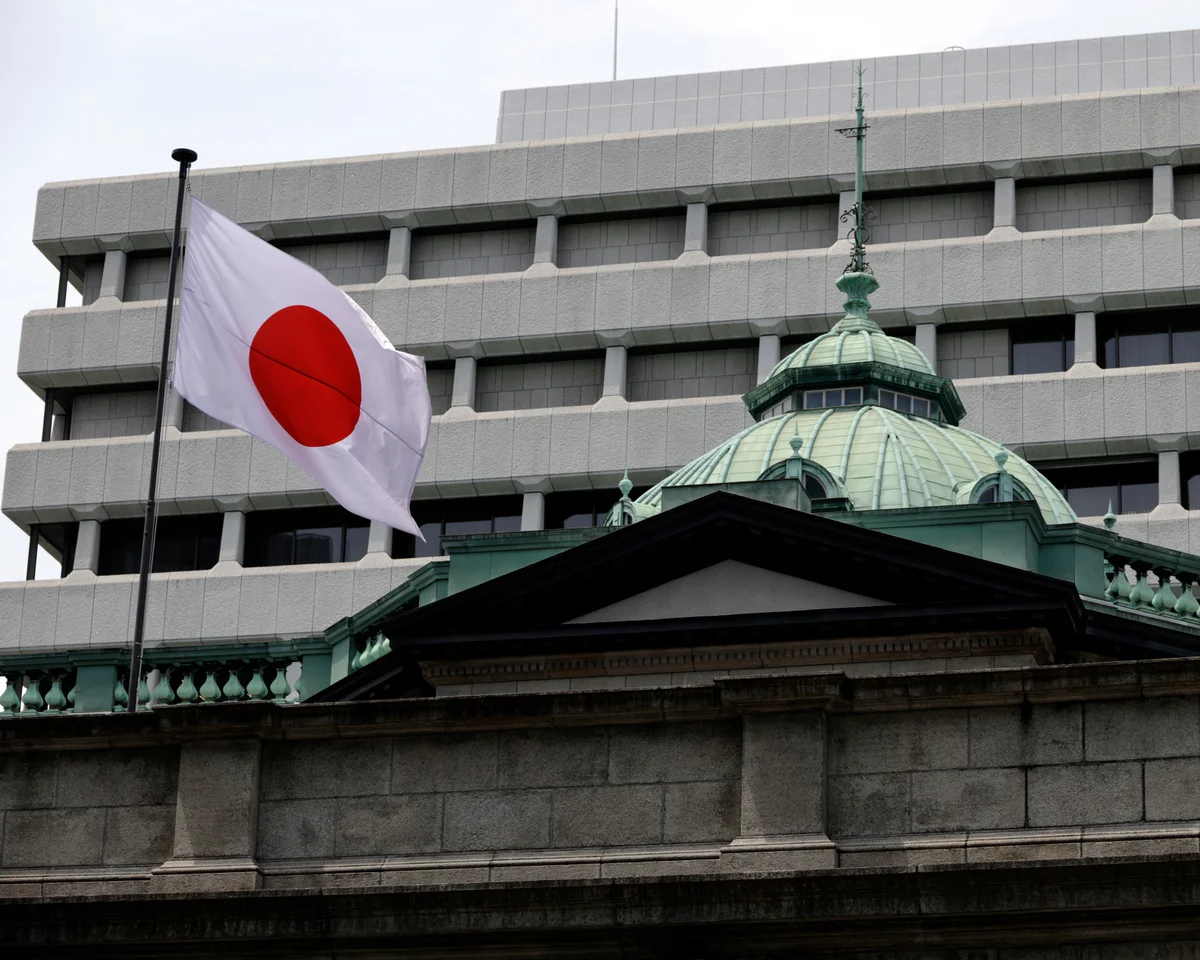
Japan’s central bank has raised its benchmark interest rate to its highest level in more than three decades, as policymakers respond to persistent inflationary pressure and the economic effects of higher energy costs associated with the conflict in the Middle East.
The Bank of Japan voted to increase its target short-term interest rate from 1% to 1.25%, taking borrowing costs to their highest level since 1995. The decision places Japan among a group of major economies that have tightened monetary policy this month as central banks attempt to contain the impact of rising prices.
The move comes at a particularly important time for Japan, where monetary policy has undergone a significant transformation since the country ended its long period of negative interest rates. The Bank of Japan began moving away from ultra-loose monetary policy in 2024, when it raised its benchmark rate above zero for the first time in years.

The latest increase reflects continuing concerns about inflation and the possibility that price pressures could remain above the central bank’s 2% target. The Bank of Japan has been under additional pressure from movements in the Japanese yen, which has weakened against the US dollar during the year and contributed to higher import costs.
Japan depends heavily on imported energy and raw materials. A weaker yen can increase the local currency cost of those imports, potentially placing additional pressure on households and businesses. The relationship between exchange rates, energy prices and inflation has therefore become an important consideration for Japanese policymakers.
The latest decision was not unanimous. Two members of the Bank of Japan’s policy board voted against the increase, highlighting differences within the central bank over the appropriate pace of monetary tightening.
The dissenting votes are being closely watched by financial markets because they may provide clues about how quickly the Bank of Japan intends to raise interest rates in the future. The central bank has already moved considerably away from the extraordinary monetary accommodation that characterised Japanese policy for much of the previous decade.
Fred Neumann, chief Asia economist at HSBC, said the tone of the Bank of Japan’s statement and the presence of two dissenting policymakers suggested that there remained uncertainty over further tightening.
Financial markets were also assessing whether another rate increase could come before the end of the year. Investors are particularly interested in whether policymakers could consider another move in December, although analysts have said that an immediate sequence of rate increases appears unlikely.
Prashant Newnaha, a senior rates strategist at TD Securities, said the central bank had again highlighted the possibility that underlying inflation could move above its 2% objective. However, he said there was no clear indication that another increase was imminent.
Newnaha said his expectation remained for Japanese interest rates to rise roughly once a quarter, with another 25-basis-point increase potentially coming in December.
The Bank of Japan’s decision also had an immediate effect on financial markets. The yen weakened by around 0.7% against the US dollar on Friday despite the increase in borrowing costs.
Ordinarily, higher interest rates can support a currency by making assets denominated in that currency more attractive to investors. However, currency movements depend on a wide range of factors, including expectations about future policy, interest-rate differences between countries and investor sentiment.
The weaker yen helped lift Japan’s Nikkei share index, which gained nearly 2%. A weaker currency can benefit major Japanese exporters because overseas earnings may translate into more yen, although it can simultaneously increase costs for companies and consumers that rely on imported goods.
Japanese government bond markets also responded to the decision. The yield on two-year government bonds, which tends to be particularly sensitive to expectations about monetary policy, fell by four basis points to 1.82%.
The market reaction illustrates the uncertainty surrounding Japan’s monetary policy transition. Investors are not only responding to the current rate but also attempting to determine how future decisions will affect borrowing costs, currency markets, corporate investment and economic growth.
Japan’s monetary policy shift is taking place against a wider global backdrop. The US Federal Reserve and European Central Bank have also tightened monetary policy this month as policymakers in major economies deal with renewed inflationary pressures.
The Bank of England took a different immediate approach on Thursday, leaving its benchmark rate unchanged at 3.75%. British policymakers nevertheless warned that interest rates could rise again if inflationary pressures associated with the Middle East conflict become more persistent.
Energy prices have become a particularly important factor in the global inflation outlook. The conflict involving Iran has created concerns about the security of oil supplies from the Middle East, while disruptions or uncertainty around regional energy routes can quickly affect international markets.
On Friday, Brent crude futures fell as much as 1.5% to $103.29 a barrel after expectations emerged that alternative routes could help maintain oil supplies to global markets. However, concerns remained over potential strikes involving Saudi Arabia and Yemen’s Houthi forces.
For Japan, movements in oil prices are especially significant because the country is heavily dependent on imported energy. Higher crude prices can increase transportation, electricity and production costs, eventually affecting consumer prices.
The combination of a weaker yen and elevated energy prices therefore presents a complicated policy environment for the Bank of Japan. Raising interest rates could help support the currency and restrain domestic demand, but tighter monetary conditions can also increase borrowing costs for households and companies.
The latest rate increase comes after years in which Japanese policymakers struggled with low inflation and weak economic growth. For much of that period, the Bank of Japan maintained extremely low interest rates and implemented unconventional monetary policies designed to encourage borrowing, investment and consumer spending.
The return of sustained inflation has changed that environment. Policymakers are now attempting to prevent price increases from becoming entrenched while avoiding an overly rapid tightening cycle that could weaken economic activity.
The yen’s performance will remain an important consideration. Japanese authorities have previously taken steps to stabilise the currency when sharp declines have raised concerns about imported inflation and financial market volatility.
The central bank’s gradual approach suggests that policymakers are attempting to balance these competing pressures rather than moving rapidly towards significantly higher borrowing costs.
Businesses and households will be watching the consequences closely. Higher interest rates can increase mortgage and corporate financing costs, while savers may receive improved returns on deposits and other interest-bearing assets. The overall economic impact will depend on how quickly rates rise and how inflation and wages develop.
Financial markets will now focus on upcoming economic data and comments from Bank of Japan officials for evidence about the timing of the next policy move. Inflation figures, wage developments, consumer spending, economic growth and currency movements are likely to influence the central bank’s assessment.
The latest increase to 1.25% marks another step in Japan’s gradual departure from its long-standing ultra-low-interest-rate environment. At the same time, the divided policy vote and the market reaction indicate that the future path remains uncertain.

With inflationary pressures influenced by both domestic conditions and global energy markets, the Bank of Japan faces a delicate task. Its policymakers must determine how far interest rates need to rise to keep inflation under control while avoiding unnecessary damage to economic activity.
For global investors, Japan’s policy shift also carries wider significance. Changes in Japanese interest rates can influence international bond markets, currency trading and investment flows, particularly as investors reassess the attractiveness of Japanese assets relative to those in the United States and Europe.
The decision on Friday therefore represents not simply another quarter-point adjustment, but another stage in Japan’s broader monetary-policy transformation. The coming months will show whether policymakers continue with gradual increases or adopt a more cautious approach as they assess inflation, currency movements and the wider effects of the Middle East conflict on the Japanese economy.
Related News:
 Dutch Bank Moves 86 Tonnes of Gold to London
 Oil nears $100 as Saudi attacks shake markets
 UK Wage Growth Slows as Jobs Market Holds Firm
 Reeves Fights to Keep Treasury Role Amid Labour Turmoil
 Canada to Match Trump’s 50% Tariffs Dollar for Dollar
 Firms on both sides fear damage from US-Canada trade war
 Europe Faces Winter Gas Supply Anxiety
 Trump Hardens Canada Trade Stance as Talks Stall
 UK House Prices Fall as Mortgage Rates Rise
 Oil Prices Surge as Saudi Pipeline Closure Deepens Crisis
 Thames Water Revises Oxfordshire Mega-Reservoir Plan
 Global markets face turmoil as Hormuz crisis deepens
 Wealthy Britons Flee Gulf War but Avoid UK Taxes
 UniCredit’s Bold Move to Reshape European Banking
 Albanese Rejects Gas Export Tax Push
 $13bn World Cup Set to Break All Revenue Records
 BBC News Faces Deep Cuts in 2,000 Job Plan
 Spirit Airlines shuts down after 34 years amid crisis
 New UK advice scheme to boost savings and investing
 US Awaits Iran Reply on New Ceasefire Proposal
 UK Pushes for New EU Goods Trade Deal
 UK rejects EV charging VAT cut amid Treasury clash
 Severn Trent CEO Reward Package Doubled Despite Public Anger
 Europe Weighs Hormuz Navigation Fee Plan
 Weight-Loss Drugs Transform Fashion Shopping Habits
 Labour MPs Urge Burnham to Revive UK Aid Target
 EasyJet Takeover Sparks Fears Over Passengers’ Future
 Shein targets $27bn valuation in Hong Kong debut
 US CEOs Earn 614 Times More Than Workers
 UK Households Could Save £173 on Fixed Energy Deals
 Burnham Faces Mounting Budget Challenges
 UK Cost Squeeze Deepens as Mortgages and Gas Rise
 Swedish Mining Push Puts Sami Land Rights Under Pressure
 Billionaire Chris Rokos poised to leave UK
 Trump Pledges $5,000 if Republicans Win Midterms
 JPMorgan Boss Warns Against UK Bank Tax Rise
 John Lewis Losses Widen to £124m as Confidence Falls
 Saudi Arabia Shuts Oil Pipeline After Drone Attack
 UK State Pension Set to Rise 3.9% as Triple Lock Holds
 UK Parents Cut School Uniform Costs as Prices Rise
 UK Pay Growth Slows to 3.9% as Rate Decision Nears
 Bank Urged to Slow Bond Sales as UK Costs Rise
 UK Inflation Hits 3.1% as Household Pressure Grows
 Trump Threatens EU With Tariffs Over Canada Proposal
 UK Productivity Improves as Bank Weighs Interest Rates
 Trump Threatens EU Over Canada Partnership Proposal
 US House Passes Russia Sanctions Bill Amid Debate
 Canada Passes Carney’s First Budget in Tight Parliamentary Vote
 India’s Labour Law Overhaul Sparks Fierce Debate
 ‘Black Tax’: Burden, Pride and Survival for African Workers
 Gulf shipping crisis as war risk cover pulled
 The Truth Behind Rising Energy Costs and Fossil Fuel Myths
 Oil Slides, Stocks Jump on Trump Peace Signals
 Trump to Deploy “God Squad” Over Gulf Wildlife Protections
 Iran Drone Strike Hits Kuwaiti Oil Tanker in Dubai Port
 US Senators Slam Ticketmaster Over Sneaky New Fee Hikes
 City Firms See Sharpest Fortune Reversal in Thirty Years
 IMF Warns Iran War Could Spark Deep Global Recession
 Capitalism ‘Suicidal’, Warns Petro at Climate Summit
 Oil Prices Surge Above $120 Amid Iran Blockade Fears
 Coalition pushes fossil fuel phaseout plan
 Trump approval plunges amid Iran war fears
 Ohio’s Battle for Trust: Democrats Vying to Flip the Buckeye State
 Global Conflict Hits Home As Bullock Warns Of Economic Pain
 High Street Crisis: Fears Grow Over Post Office Closures
 Oil Markets Face ‘Red Zone’ Threat Amid Iran Crisis
 Kevin Warsh sworn in as Fed chair amid economic backlash
 Albanese Defends Tax Reforms Amid Emotional Speech
 Discontent grows around Putin amid war strain
 UK Economy Suffers a Sharp Downturn as Iran Conflict Bites
 Apollo Launches £5.7bn Bid for Aviation Giant easyJet
 Ukraine Creates Long-Range Strike Command
 Trump Calls Iran War ‘Small Potatoes’ Despite US Deaths
 UK Subsidence Claims Surge After Record-Breaking Summer
 UK plans tougher Israel stance with settlement trade ban
 Iceland to Open First UK High Street Store in Falklands
 UK Retailers Accused of Breaking Refund Laws
 North Sea Firms Urge Early End to Windfall Tax
 Entain Plans 400 Job Cuts After Profit Update
 US Sanctions Open New Battle for Cuba Assets