Published: 08 October 2026. The English Chronicle Desk. The English Chronicle Online.
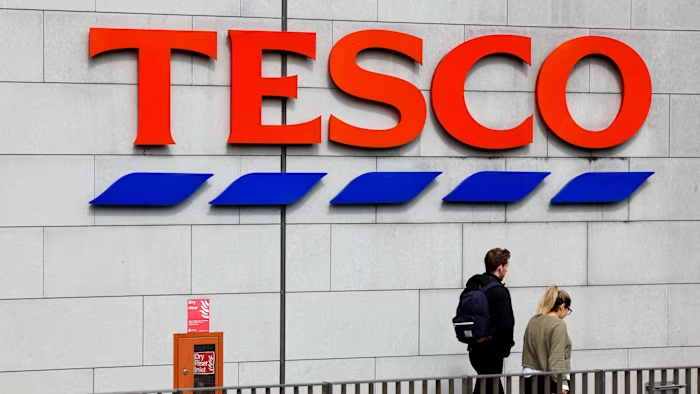
Tesco has raised its forecast for annual underlying profit after reporting stronger-than-expected trading during the first half of its financial year, with the UK’s largest supermarket group saying consumer confidence has proved more resilient than initially feared despite continuing geopolitical uncertainty.
The retailer reported sales of £33.8bn for the six months, an increase of 2% compared with the same period a year earlier. Although the rise in overall revenue was relatively modest, underlying profit increased by 6.5% to £1.8bn, reflecting continued efforts to control costs, strengthen its customer proposition and improve efficiency across its operations.
Tesco’s performance offers a potentially encouraging indication of the state of household spending in the UK. Consumers have faced persistent pressure from living costs, uncertainty surrounding the economy and international conflicts that have affected energy and commodity markets. Yet the supermarket said shoppers had continued to demonstrate relatively robust spending patterns during the first half of the year.

Chief executive Ken Murphy said growth had been supported particularly by the company’s online business. Tesco’s online sales increased by 8%, considerably faster than its overall sales growth, highlighting the continued importance of digital shopping to the supermarket’s business model.
The company also reported strong demand for its premium own-label Finest range. Revenue from the range increased by 9%, suggesting that consumers are not simply moving towards the cheapest available products despite economic uncertainty. Instead, some shoppers appear willing to spend more on products they perceive to offer better quality or value.
That development provides an interesting picture of changing consumer behaviour. While household budgets remain an important consideration, customers may be increasingly selective about where they spend their money. Supermarkets have therefore been competing not only on price but also on quality, convenience, loyalty schemes and the overall shopping experience.
Tesco said consumer confidence had remained relatively resilient during the first half of its financial year. At the same time, however, the retailer warned that geopolitical tensions continued to create uncertainty. The company said it remained focused on helping customers obtain the best possible value from their weekly shopping.
The improved outlook marks a notable change from Tesco’s more cautious assessment earlier in the year. In April, the company had warned that profits could fall in the year ahead, pointing to heightened uncertainty associated with the conflict in Iran, which began in late February.
At the time, concerns over international instability raised questions about the potential impact on energy prices, supply chains and household spending. Retailers are particularly exposed to such changes because food and household goods depend on extensive domestic and international supply networks.
Tesco’s latest results suggest that the anticipated economic shock has so far been less severe than the company feared. Broader economic indicators have also provided some reassurance. Recent official figures showed that UK economic growth during the second quarter was stronger than previously estimated, contributing to a more positive assessment of the wider economic environment.
Tesco now expects underlying annual profit to be between £3.15bn and £3.3bn. The new forecast represents an increase from its previous expectation of at least £3bn, indicating that management has become more confident about the company’s performance during the remainder of the financial year.
Nevertheless, the lower end of the new forecast would still represent a decline compared with the previous year. The company therefore remains cautious about the challenges facing consumers and the broader retail sector.
Performance across Tesco’s different operations was also uneven. Sales at established Tesco stores in the UK increased by 1.5%, with food sales providing the strongest contribution. Food remains the central component of Tesco’s retail business, and the company has continued to compete aggressively for customers by focusing on affordability and product range.
However, its Booker wholesale division continued to experience difficulties. Sales at Booker fell by 2.6%, contrasting with the stronger performance of Tesco’s core supermarket operations.
Booker supplies independent retailers, caterers and other businesses, meaning its performance can provide a different indication of conditions in the wider retail and hospitality economy. The decline suggests that some parts of the consumer and business market remain under pressure even as Tesco’s supermarket operations perform comparatively well.
Another important feature of Tesco’s strategy is its increasing use of artificial intelligence. The company said AI technologies were being introduced across different areas of the business to improve efficiency, reduce costs and enhance services for customers.
One example is a meal-planning assistant that Tesco initially tested among 280,000 employees from April. Following the trial, the service was launched for customers in September.
The technology is intended to assist shoppers with planning meals and potentially make it easier for them to decide what products to purchase. Such tools could become increasingly significant as supermarkets seek to combine digital services with traditional grocery shopping.
Tesco is also using AI behind the scenes. The company said the technology was helping make in-store stock replenishment more efficient, potentially allowing staff to identify and replace products more effectively.
Improving stock availability is particularly important for supermarkets because customers can quickly switch to competitors when products they want are unavailable. Better forecasting and replenishment could therefore improve both customer satisfaction and operational efficiency.
The company also said AI was being used to improve energy efficiency in its supermarkets. Energy represents a significant operating expense for large retailers, which must power lighting, refrigeration, heating and other equipment across extensive store networks. Even relatively small improvements in efficiency can produce substantial savings when applied across hundreds of locations.
The adoption of AI reflects a wider transformation taking place across the retail industry. Supermarkets are increasingly using technology to analyse customer behaviour, forecast demand, manage inventories and personalise shopping experiences. For Tesco, the technology push comes as the company seeks to strengthen profitability while continuing to offer competitive prices.
The latest results also underline the importance of Tesco’s online operation. The 8% increase in online sales indicates that digital grocery shopping remains an important growth area, even as physical supermarkets continue to account for the majority of the group’s business.
For customers, the combination of online growth, premium own-label demand and greater use of technology could lead to further changes in how Tesco delivers its services. The retailer faces the challenge of balancing investment in digital innovation with the need to keep prices competitive at a time when many households remain cautious about spending.
Murphy’s comments suggest that Tesco intends to maintain that balance. The company’s focus on value reflects the reality that consumer confidence, while resilient, cannot be taken for granted. Geopolitical tensions, energy costs and economic uncertainty can quickly influence household budgets.
The improved profit forecast nevertheless represents a positive development for Tesco and provides evidence that the retailer has so far managed to navigate a difficult economic environment relatively effectively. Rising online sales, stronger demand for its Finest products and improved efficiency have helped offset weaker performance in parts of the business.
The results will also be closely watched as an indicator of broader consumer behaviour in Britain. Supermarkets have a unique position in the economy because their sales provide a regular view of household spending patterns. Continued food sales growth could suggest that consumers are maintaining essential spending even while remaining selective about discretionary purchases.
For Tesco, the immediate priority will be to sustain that momentum through the second half of the year. The company has raised its expectations, but it remains aware that international events and economic conditions can change rapidly.

The retailer’s latest performance therefore presents a mixed but broadly encouraging picture. Sales growth remains relatively modest, and some parts of the business are struggling, but stronger underlying profit, robust online demand and resilient consumer confidence have given Tesco greater confidence in its prospects.
As competition within Britain’s supermarket sector remains intense, Tesco’s ability to combine affordability, convenience, premium products and technological innovation will be crucial. The company’s upgraded forecast indicates that, despite continuing uncertainty, it believes its strategy is delivering enough strength to withstand the challenges ahead.
Related News:
 Oil nears $100 as Saudi attacks shake markets
 Thames Water Revises Oxfordshire Mega-Reservoir Plan
 Chinese Hybrid Car Surge Raises EU Auto Industry Concerns
 UK Trade Losses Grow Without EU Product Deal
 Poundland Rescue Bid Could Protect 11,000 Jobs
 UK Diesel Reaches £2 as Inflation Surges Across Europe
 Minister Rejects Fears of UK Diesel Shortage
 Informa Agrees £2.24bn Deal to Buy Clarion
 EU-China Talks Target Surge in Hybrid Car Imports
 Firms on both sides fear damage from US-Canada trade war
 Dutch Bank Moves 86 Tonnes of Gold to London
 UK House Prices Fall as Mortgage Rates Rise
 Billionaire Chris Rokos poised to leave UK
 JPMorgan Boss Warns Against UK Bank Tax Rise
 John Lewis Losses Widen to £124m as Confidence Falls
 Oil Prices Surge as Saudi Pipeline Closure Deepens Crisis
 UK Productivity Improves as Bank Weighs Interest Rates
 Japan Raises Rates to 31-Year High
 UK Retail Sales Rebound as Consumers Spend More
 UK Borrowing Hits £18.3bn Ahead of Budget
 Thinktank Calls for Abolition of UK State Pension
 MPs Defend UK Economic Watchdog Against Critics
 AO Acquires Jessops in Camera Retail Expansion
 Saudi intercepts Houthi missiles as oil fears grow
 Should Savers Lock Into 5.25% Fixed Rates?
 Beaverbrooks Boss Calls for Relief on Business Costs
 Why Americans Feel Ripped Off by Rising Prices
 UK Diesel Prices Hit Record High Amid Iran Conflict
 Ukraine Faces $45m Hourly Cost From Missile Alerts
 UK house price growth slows as mortgage rates rise
 UK borrowing costs surge as global bond sell-off deepens
 Boots Sale Nears as Weston Family Eyes $9bn Deal
 French Debt Fears Put Euro Markets Under Pressure
 UK Assures Public Over Diesel Supply
 UK Faces Calls to Review Bank Failure Bets
 UK Weighs Chinese Car Tariffs Amid EU Trade Push
 BT Agrees £400m TalkTalk Rescue Deal
 Asos Investigates Hack Claims After Customer Alerts
 Shell Refineries Set for Record Refining Profits
 IMF Warns Governments Over Rising Debt Burdens
 Japan Beer Giants Face Cartel Probe
 Google Maps Brings Live Fuel Prices to UK Drivers
 Albanese Rejects Gas Export Tax Push
 BBC News Faces Deep Cuts in 2,000 Job Plan
 Reeves Fights to Keep Treasury Role Amid Labour Turmoil
 UK rejects EV charging VAT cut amid Treasury clash
 Weight-Loss Drugs Transform Fashion Shopping Habits
 EasyJet Takeover Sparks Fears Over Passengers’ Future
 Canada to Match Trump’s 50% Tariffs Dollar for Dollar
 Pubs and Hotels Face Business Rates Reform Review
 Shein targets $27bn valuation in Hong Kong debut
 US CEOs Earn 614 Times More Than Workers
 Europe Faces Winter Gas Supply Anxiety
 UK Households Could Save £173 on Fixed Energy Deals
 Burnham Faces Mounting Budget Challenges
 Trump Hardens Canada Trade Stance as Talks Stall
 UK Cost Squeeze Deepens as Mortgages and Gas Rise
 Swedish Mining Push Puts Sami Land Rights Under Pressure
 Spire Healthcare Agrees £1bn Takeover by Toscafund
 UK Retailers Accused of Breaking Refund Laws
 UK State Pension Set to Rise 3.9% as Triple Lock Holds
 UK Pay Growth Slows to 3.9% as Rate Decision Nears
 Bank Urged to Slow Bond Sales as UK Costs Rise
 UK Inflation Hits 3.1% as Household Pressure Grows
 Entain Plans 400 Job Cuts After Profit Update
 Barclays Staff Push Back Against Office Return Plan
 UK Rent Gap Puts Low-Income Families Under Pressure
 Calls Grow to Expand UK National Wealth Fund
 Trump Eyes Major Belarus Fertiliser Deal Amid Canada Trade Dispute
 Iran Rejects Claims of Shift in US Talks
 Tony Blair Calls for Britain to Rejoin EU Within a Decade
 TalkTalk Races to Sell Arms as Administration Looms
 Bank Chief Calls for Power to Intervene in AI
 Healey urged to act as UK energy bills rise 4%
 UK Bookmakers Linked to Offshore Casino Deal
 BBC Three and Scotland Face Online-Only Future
 London Luxury Homes Face a Prolonged Property Slump
 North Sea Strike Threatens UK Fuel Supplies
 UK house prices stall as mortgage costs rise
 Doubts Grow Over Trump’s $15bn Iowa Steel Plant