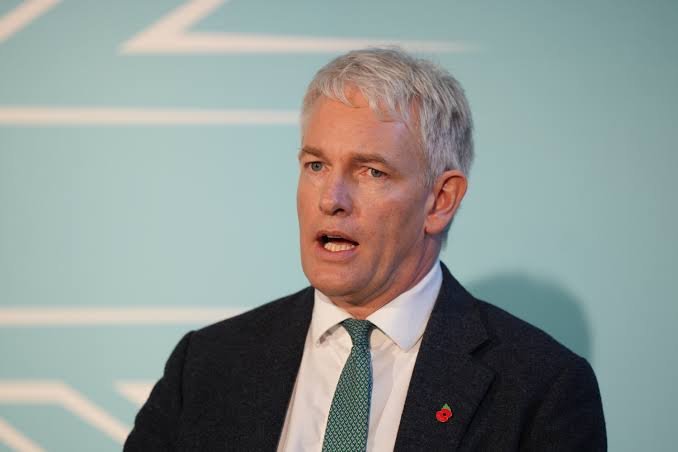
The United Kingdom’s most senior civil servant has called for a fundamental transformation of the country’s government administration, warning that Whitehall has become too cautious, reactive and divided to respond effectively to the challenges facing modern Britain. Cabinet Secretary Antonia Romeo has pledged to introduce a significantly different approach to managing public servants, rewarding exceptional performance, addressing persistent underperformance and improving the government’s ability to deliver results.
In a major speech at the London School of Economics on Wednesday, 11 November, Romeo described the civil service as an organisation that needs to become more ambitious, strategic and adaptable. Her remarks highlighted growing concerns about the effectiveness of government institutions at a time when technological developments, international political tensions and financial pressures are reshaping the responsibilities of the state.

The speech was attended by Andy Burnham and his deputy, Louise Haigh, among other political and public-sector figures. Romeo used the occasion to outline her vision for what she described as a new direction for Whitehall, the central administrative machinery of the British government. Her proposed reforms are intended to improve productivity, strengthen accountability and ensure that public institutions can respond more effectively to the needs of communities across the country.
At the heart of her message was a commitment to “rewire” the civil service. The phrase reflects a broader ambition to change not only the way government departments operate but also the culture surrounding public administration. Romeo argued that traditional working practices must evolve if the civil service is to remain effective in an increasingly uncertain environment.
She acknowledged that the organisation faces several longstanding criticisms. These include allegations that officials are too risk-averse, too dependent on responding to immediate developments rather than planning strategically, and too focused on departmental responsibilities instead of working collaboratively across government.
According to Romeo, these weaknesses can prevent public institutions from delivering meaningful improvements. She suggested that a more flexible and coordinated administrative structure would be necessary to address complicated national challenges, many of which cannot be resolved by individual departments acting independently.
Her proposed changes also reflect the difficult financial circumstances facing the government. Ministers are under pressure to increase defence expenditure in the coming years while protecting essential public services, including healthcare, education and other areas of social provision. Balancing these priorities will require greater efficiency and improved use of available resources.
Romeo stressed that fundamental civil service reform was essential within the government’s tight fiscal environment. Rather than relying entirely on additional public spending, she believes improvements in management, productivity and the allocation of expertise could help government departments achieve better outcomes.
One of the most significant elements of her proposed programme concerns the way civil servants are assessed and rewarded. Romeo said the government must establish a performance management system that recognises outstanding contributions and deals more decisively with persistent poor performance.
Recent measures to increase bonuses for high-performing senior officials, she explained, represent only the beginning of a much wider transformation. Her ambition is to create a working environment in which employees are recognised for delivering meaningful results, demonstrating valuable professional expertise and maintaining commitment to difficult assignments until they are completed.
She argued that poor performance can have consequences beyond the individual employee concerned. When inadequate work is tolerated, capable and motivated colleagues may become discouraged, reducing their willingness to contribute additional effort. This can gradually weaken the overall effectiveness of an organisation.
“Poor performance drives out good performance and discretionary effort, and we must urgently address that,” Romeo said during her address.
She indicated that managers would receive stronger support, training and resources to identify outstanding contributions and respond appropriately to underperformance. The proposed approach would strengthen existing management procedures while giving leaders greater responsibility for ensuring that public servants meet the standards expected of them.
The cabinet secretary also highlighted the problem of frequent staff movement within government departments. Some civil servants reportedly move sideways between positions primarily to secure higher salaries rather than developing deeper expertise through longer periods in particular roles.
Romeo wants to reduce this practice by creating stronger incentives for employees to remain in positions where their knowledge and experience can deliver lasting benefits. Retaining skilled officials, she suggested, could improve institutional memory, strengthen professional expertise and reduce the disruption caused by frequent changes in personnel.
Her comments point towards a broader reassessment of how careers are developed within the civil service. Instead of making career progression excessively dependent on moving between departments or accepting different positions, the government wants to place greater value on expertise, consistent performance and the ability to deliver complex projects successfully.
Alongside performance management, Romeo is overseeing a wider review of the organisation and structure of the civil service. The review is expected to report in the spring and will examine whether existing departmental arrangements remain suitable for the challenges facing modern government.
The review will consider whether traditional departmental boundaries are preventing effective cooperation. Many public policy issues, including economic development, healthcare, housing, climate change and regional inequality, require coordinated action involving several government departments and different levels of administration.
The government is also expected to examine how artificial intelligence could influence the future structure and responsibilities of public administration. Rapid advances in AI are creating opportunities to improve government services, but they are also raising concerns about employment, accountability and the appropriate role of technology in public decision-making.
Some civil servants fear that the increasing use of AI could eventually lead to substantial job reductions. Romeo, however, presented a different perspective, arguing that technology could make public administration more human rather than less.
She suggested that artificial intelligence could reduce unnecessary administrative work and allow officials to devote more time to activities requiring professional judgement, creativity, communication and personal interaction.
In her view, technology should support public servants rather than simply replace human involvement. By automating repetitive processes and improving access to information, AI could help government employees focus on complex decisions and the individual circumstances of the people they serve.
Romeo pointed to healthcare screening and the prevention of homelessness as examples of areas where technology could make a meaningful difference. Better predictive systems could help identify potential health risks earlier and allow authorities to intervene before vulnerable people experience severe housing difficulties.
Such applications could help public services become more predictive, preventative and personalised. However, she emphasised that technological developments must operate under appropriate safeguards and controls.
The challenge will be to ensure that efficiency does not come at the expense of privacy, fairness or public confidence. Government institutions will need to establish clear standards governing how artificial intelligence is used, particularly when decisions affect people’s access to essential services and support.
The review will also consider the implications of what Romeo described as “devolution by default”. This approach reflects the ambition to move decision-making power away from central government and towards regional and local communities.
The issue has become increasingly important as political leaders consider how to address regional inequalities and improve the responsiveness of public services. Central government departments have traditionally exercised considerable influence over policy decisions, funding and administrative priorities. However, greater local authority could allow communities to develop solutions based on their own circumstances.
A spokesperson for the government said Andy Burnham supported Romeo’s vision of a civil service prepared for the future. Burnham, the spokesperson added, was committed to transforming the state by transferring power from Whitehall to the regions and communities it serves.
The government also emphasised the importance of responsible AI adoption, reducing unnecessary bureaucracy and rebuilding public trust. These objectives are intended to contribute to better public services and stronger economic growth across the country.
Nevertheless, translating the proposed ambitions into practical improvements will be a significant undertaking. Changing an institution as large and established as the British civil service requires more than new performance targets or organisational reviews. It involves changing management culture, professional incentives, departmental relationships and the way government employees understand their responsibilities.
There will also be questions about how performance will be measured fairly, how managers will distinguish between individual shortcomings and wider institutional problems, and how experienced officials will be encouraged to remain in demanding positions. The government’s approach to artificial intelligence will similarly require careful implementation to ensure that efficiency gains do not undermine accountability or human judgement.
For millions of people who depend on public services, the ultimate measure of reform will not be the language used in government speeches but whether everyday services become more accessible, reliable and effective. Improvements in healthcare, housing support, administrative processes and regional development will be essential in demonstrating that the changes are producing tangible benefits.

Romeo’s intervention signals an effort to place civil service performance and institutional reform at the centre of the government’s future agenda. Her message is that Britain’s administrative system cannot continue relying on established practices if it is to respond to rapidly changing economic, political and technological conditions.
The forthcoming review in the spring will therefore be an important test of the government’s commitment to transforming Whitehall. Whether the proposed reforms can produce a more innovative, accountable and responsive civil service will depend on how effectively the government turns its ambitions into lasting institutional changes.
For now, the cabinet secretary has made clear that she wants a civil service that takes greater responsibility, rewards excellence and focuses on delivering results. The wider challenge will be ensuring that this transformation strengthens public institutions while preserving the professionalism, independence and public-service values on which effective government depends.
Related News:
 Reform UK funding: mystery billionaire revealed
 Burnham unveils £65m drought aid for farmers
 Green Leader Targets Starmer’s Former Seat
 Tom Watson Takes Senior Role at Palantir
 Thinktank Calls for Abolition of UK State Pension
 Dale Vince Plans New London-Wide News Operation
 Burnham Opens Door to Possible UK Return to EU
 Badenoch Raises Prospect of 2027 UK Election
 Labour MP Urges Billions for Affordable Homes
 Milburn Proposes Pre-Apprenticeship Route for Young People
 Labour Fears Budget Will Fail to Lift Living Standards
 UK Must Build Its Own AI to Protect National Security
 Bradford Rail Hub Promises Faster Northern Connections
 Middleton Revitalisation Blueprint for UK Towns
 Older Worker Training Plan Faces Business Backlash
 UK Aid Set to Fall Short of Reduced 2027 Target
 Brexit Deal Not Good Enough for Britain, Burnham Says
 UK Land Registry Plan Faces Opposition From Landowners
 MPs Urge UK to Write Off Most British Council Debt
Burnham Admits First Budget Fell Short of His Ambitions
 Denmark Seeks EU-Wide Ban on Fast-Growing Turbo Chickens
 Australia Reviews UK Visa Rules Amid Worker Influx
 UK Parliament Faces Risk of Notre Dame-Style Fire
 UK Review Urges Jobs Revolution for Disabled Youth
 UK Warned Over Dangerous Dependence on China for Minerals
 UK Employers to Be Forced to Publish Job Salaries
 Burnham’s Christmas Homelessness Pledge Faces Uncertainty
 TUC Chief Urges Major Investment to Tackle UK Youth Jobs Crisis
 Badenoch Unveils £36bn Tory Welfare Cuts Plan
 Trump’s UK Ambassador Urges North Sea Drilling to Strengthen US Ties
 Millionaires group urge Reeves to introduce wealth tax to ‘lift kids out of poverty’
 Starmer Says Labour’s Economic Plan Needs Years to Deliver
 UK Government Borrowing Drops to £11.6bn in December
 UK shelves £110m border project amid trade strain
 Reeves Must Back Defence Plan or Face Dismissal, Says Unite Chief
 Rising Costs Force Families to Rethink Days Out
 Kezia Dugdale Warns of Possible Reversal of Equal Rights Gains
 Silent Tracks: Rail Line Without Passengers
 Farage and Reform UK Reshape British Politics
 Starmer Leadership Under Pressure After Setbacks
 Unions Warn Labour Over Zero-Hours Contract Reforms
 RAF Barnham Protests Fuel Tensions in Norfolk Town
 London Launches First Self-Driving Taxis
 UK Subsidence Claims Surge After Record-Breaking Summer
 UK plans tougher Israel stance with settlement trade ban
 UK Retailers Accused of Breaking Refund Laws
 UK Pay Growth Slows to 3.9% as Rate Decision Nears
 Bank Urged to Slow Bond Sales as UK Costs Rise
 Mayors Could Gain Greater Powers Over Water Firms
 Mahmood Warns Far Right Over Asylum Protests
 UK Rent Gap Puts Low-Income Families Under Pressure
 Lib Dems Prepare for Election Amid Reform Challenge
 MPs Defend UK Economic Watchdog Against Critics
 Xi urges Trump to avoid US-China military conflict
 Frome Community Loses Bid for Major Regeneration Site
 The Tests Awaiting Andy Burnham After Labour Conference
 Free Speech Emerges as Key UK Election Issue
 UK University Strikes Spread as Financial Pressure Grows
 Poundland Rescue Bid Could Protect 11,000 Jobs
 Healey urged to act as UK energy bills rise 4%
 Gosport Protesters Clash With Police Over Migrant Rescue
 IMF Warns Governments Over Rising Debt Burdens
 UK Water Firms Earn Millions From Industrial Wastewater
 Aardman Cuts Losses but Fails to Return to Profit
 UK Could Rejoin EU Through a Switzerland Plus Deal
 NHS Trusts Reject Palantir’s £330m Patient Data Platform
 Brexit Debate Returns as UK Voters Reconsider EU Exit
 Up to 20 English Maternity Units Face Possible Closure
 UK Pledges Stronger Protections for Disabled Air Passengers
 UK Borrowing Hits £24.5bn Ahead of Healey’s Budget
Tax Online Sales to Save High Street, Burnham Urged
 Labour MPs Urge Burnham to Lead UK Reindustrialisation
 UK Chancellor Moves to Scrap Gas Standing Charges
 Yvette Cooper Reverses NHS Patient Watchdog Abolition Plan
 King Charles Faces Reparations Protests at Antigua Summit
 Avanti West Coast Faces £70m Refund Bill
 Elon Musk’s $446m Midterm Gamble Ends in Defeat
 Early-Release Prisoners Face Rising Risk of Homelessness
 EU Citizens Sue Home Office Over UK Residency Rights
 Starbucks to Create 7,500 UK Jobs in Major Expansion