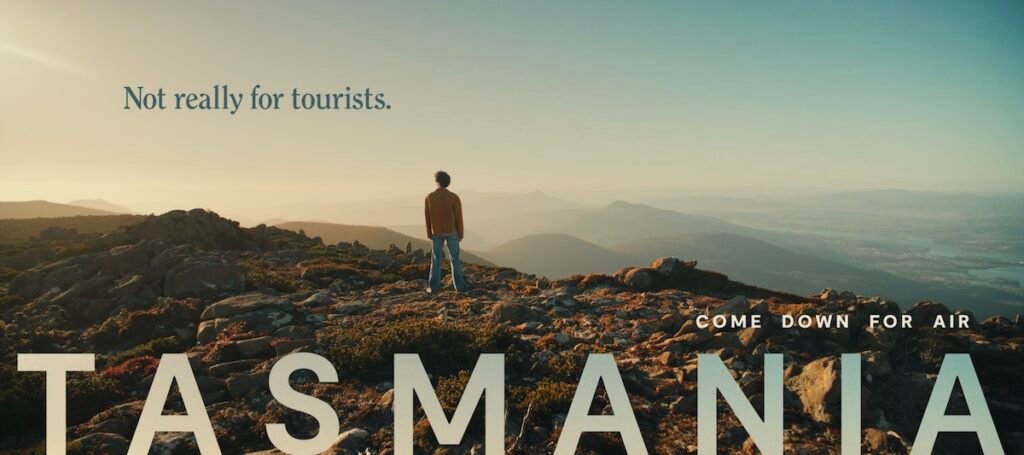
Tasmania has adopted an unusual approach to attracting visitors, telling potential tourists that the Australian island state is “not really for tourists” in a new campaign designed to appeal to people who want to escape crowded destinations and experience a quieter way of travelling. Rather than promoting conventional holiday attractions through familiar advertising language, Tourism Tasmania is using humour, reverse psychology and a deliberately provocative message to encourage visitors to reconsider what they want from a holiday.
The campaign, which features former SBS newsreader Lee Lin Chin, is built around a growing tension in modern tourism: many people enjoy travelling but increasingly dislike the crowds, queues and commercial experiences associated with popular tourist destinations. Its central idea is that people would rather identify themselves as independent travellers seeking authentic experiences than as tourists following the same routes as everyone else.
Tourism Tasmania’s message is therefore not an attempt to reject visitors altogether. Instead, it challenges the conventional image of tourism and invites people to discover an alternative experience in a destination known for its natural landscapes, walking trails and comparatively peaceful atmosphere.
The campaign’s central video illustrates the message through a familiar situation. A man arrives at an apparently endless queue for a supposedly world-famous pastry. As he waits behind a long line of people, the experience becomes less appealing. Eventually, he decides to abandon the queue and head towards the Tasmanian outdoors, where he can enjoy space, quietness and a sense of freedom.
The contrast is deliberate. While many holiday advertisements present popular attractions, busy restaurants and famous food destinations as essential parts of a successful trip, Tasmania’s campaign suggests that the most memorable experiences may come from avoiding the crowds altogether.
Lee Lin Chin adds another distinctive element to the campaign. Known for her unconventional personality and distinctive presentation style, the former television newsreader appears in videos exploring walking trails during her visit to the island. Her involvement gives the campaign a recognisable public figure while reinforcing its understated humour.
Chin’s largely offline lifestyle, including her decision to live without a mobile phone, also fits the broader message of slowing down and stepping away from the constant demands of modern life. Rather than presenting travel as a race to visit as many attractions as possible, the campaign encourages people to appreciate their surroundings and spend time away from everyday pressures.
Tourism Tasmania chief executive Sarah Kingston Clark said the campaign was intentionally wry rather than genuinely hostile towards visitors. She explained that its tone reflects the tensions surrounding contemporary travel, particularly the difference between the experience people imagine when planning a holiday and the reality they sometimes encounter at heavily visited destinations.
The campaign draws attention to a contradiction in modern tourism. Travellers often want to visit famous places, experience well-known attractions and enjoy destinations recommended by friends or promoted through social media. However, when large numbers of visitors arrive at the same locations, the resulting crowds can undermine the very experience people were hoping to enjoy.
Long queues, busy streets and crowded attractions can turn a relaxing holiday into an exhausting exercise in waiting and navigating other people. The more popular a destination becomes, the more difficult it can be for visitors to find the quietness and personal space they originally sought.
Professor Can-Seng Ooi, a cultural and heritage tourism expert at the University of Tasmania, believes the campaign understands this contradiction. Referring to research into tourist behaviour, he suggested that many people dislike the experience of being surrounded by other tourists and prefer to distinguish themselves from conventional holidaymakers.
“Studies have shown that tourists hate themselves,” Ooi said, describing how people often want to avoid other visitors even though they are travelling as tourists themselves.
His observation highlights the negative associations that have increasingly become attached to the word “tourist”. For some travellers, the term suggests following crowded routes, visiting commercial attractions and participating in predictable holiday activities. The word “traveller”, by contrast, can imply independence, curiosity and a desire to discover places beyond the usual tourist circuit.
Ooi suggested that Tasmania’s campaign appeals directly to this preference. It offers visitors an opportunity to imagine themselves as people seeking meaningful experiences rather than simply joining crowds at famous attractions.
The professor, who spent 20 years living in Scandinavia while researching tourism, culture and heritage in regional destinations, also identified similarities between Tasmania’s message and the atmosphere associated with Nordic travel. He pointed to the campaign’s imagery, including references to saunas, vinyl records and books, as elements that communicate a slower and more reflective lifestyle.
He described Tasmania as a destination that offers an alternative to the cold northern landscapes commonly associated with Scandinavian tourism. Instead, the island represents a quieter southern setting where visitors can take a break from busy urban environments and allow time to move at a different pace.
This approach could be particularly attractive to people living in Australia’s mainland cities, where work commitments, traffic, crowded public spaces and constant digital communication can make opportunities for relaxation difficult to find.
For those visitors, Tasmania’s appeal may extend beyond individual attractions. Its value lies in the possibility of experiencing a different rhythm of life, spending time outdoors and enjoying places without feeling compelled to follow a tightly organised holiday schedule.
Tourism and marketing specialists believe the campaign could also deliver benefits beyond the island’s most established destinations. Char-lee McLennan, an associate professor at Queensland University of Technology’s School of Management, said the strategy uses an element of reverse psychology.
Instead of openly encouraging everyone to visit, the campaign appears to discourage conventional tourists. That message could make the destination more attractive to people who want to avoid overcrowded places and discover less familiar locations.
Such an approach may help direct visitors towards regional communities that do not always receive the same attention as major tourist hotspots. If travellers become interested in exploring quieter parts of Tasmania, local businesses and communities could gain opportunities to benefit from tourism spending.
The economic implications are important for regional destinations. Tourism can support accommodation providers, restaurants, transport operators, guides, retailers and other small businesses. However, the benefits are not necessarily distributed evenly. Popular attractions may receive substantial visitor numbers while less familiar communities struggle to attract attention.
A campaign that encourages exploration beyond established hotspots could help broaden the economic impact of tourism. Visitors who spend more time in regional areas may create demand for local services and provide additional income for businesses outside the most heavily promoted locations.
Professor David Waller, a marketing expert at the University of Technology Sydney, also believes the campaign should not be understood as being against tourists themselves. Rather, he interprets its message as criticism of overcrowded destinations, long queues and the repetitive experiences often associated with mass tourism.
Waller said the campaign’s broader “Come down for air” theme communicates an invitation to escape pressure and enjoy a more relaxed environment. He also highlighted Chin’s contribution, describing her as an iconic figure whose intelligence, unconventional character and dry humour help make the message distinctive.
Her appearance gives the campaign a personality that differs from traditional tourism advertisements. Instead of relying entirely on spectacular landscapes or enthusiastic promotional language, it uses wit and an unusual message to attract attention. The humour also makes the campaign more memorable, potentially encouraging people to discuss Tasmania as a destination.
However, the success of the strategy will depend on more than its ability to generate publicity. McLennan warned that the actual experience of visiting Tasmania must match the expectations created by the advertising. If visitors are promised peaceful surroundings but encounter crowded attractions and limited opportunities to enjoy the outdoors, the campaign could struggle to maintain its credibility.
The economic benefits must also reach regional communities in meaningful ways. Attracting visitors is only one part of a successful tourism strategy. Ensuring that local businesses, workers and communities gain from increased travel activity is equally important.

There is also a wider question about how destinations should manage popularity. Tourism can create employment and support local economies, but excessive concentration of visitors in particular locations can place pressure on infrastructure, public spaces and the quality of the visitor experience. Encouraging travellers to explore more widely may help address some of these challenges, although it cannot guarantee that quieter locations will remain uncrowded as their popularity grows.
Tasmania’s campaign offers a different way of thinking about travel at a time when many people are questioning the appeal of conventional tourist experiences. Its message is not that visitors are unwelcome, but that they should consider what they actually want from a journey.
By telling tourists to stay away, the island is attempting to attract people who value space, nature, independence and a slower pace of life. Whether the reverse-psychology strategy produces lasting economic benefits remains to be seen. But its central proposition is clear: sometimes the most appealing reason to visit a destination is the promise of escaping the crowds.
Related News:
 Man killed in shark attack on Great Barrier Reef
 Italy’s Beach Lunch Ban Sparks Holiday Backlash
 Olympus Awaits Unesco Heritage Recognition
 Sydney Town Square Plans Face New Planning Hurdle
 Trader Wins Unfair Dismissal Case After Overseas Work
 Hanson Attacks Taylor as Australian Conservatives Clash
 Australian Mortgages Now Cheaper Than Rent in Some Suburbs
 Cormann Warns Australia Against Populist Migration Caps
 Victorian Labor Faces Election Crisis as Poll Slumps to 18%
 Athens Mayor Moves to Tackle Overtourism Crisis
 Ukraine Urges UK to Seize Russian Oil Tankers
 Two Dead in Adelaide Airport Plane Crash Fire
 Search Intensifies for Missing Hiker on WA Bibbulmun Track
 Essex valley emerges as rising English wine hub
 Thailand Tightens Visa Rules to Curb Tourist Misbehavior
 England and Norway Fans Turn Miami Into World Cup Carnival
 France Eases Cheese Rules as Drought Hits Farms
 Green Leader Targets Starmer’s Former Seat
 Australia gives users control over social media algorithms
 Iceland to Open First UK High Street Store in Falklands
 Israel-bound Plane Lands in Saudi Arabia After Cockpit Fight
 Burnham Opens Door to Possible UK Return to EU
 Pilot Recalls Fight to Save Flydubai Passengers
 Rome Cracks Down on Rising Golf Cart Tours
 Spain Sets Snap Election as Housing Crisis Deepens
 BA flight returns to Heathrow after steep descent
 Houthi Missile Claim Sparks Riyadh Airport Disruption
 UK Pharmacy Body Drops Teva After Ethical Concerns
 Turkey Rules Out Troops in Saudi Arabia’s Houthi Conflict
 Three Convicted in Mexico Surfing Trip Murders
 UAE Says Co-Pilot Planned Suicide Attack on Israel
 France Faces Debt Crisis as Protests and Markets Clash
 Premier League Faces a Crisis of Trust After City Verdict
 Australian Advocates Seek Subsidised Drugs for PMOS
 Australia Rejects Russian Fuel as Trump Strikes Deal
 Bedbug Infestation Grounds Qantas Plane in Rome
 Millions Face Tougher Medicaid Rules From January
 Brazil Cuts Working Week to 40 Hours in Lula Election Boost
 One Nation Pledges $2,000 Baby Subsidy in Victoria
 Mexican Court Sentences Three Men to 158 Years Each
 Alberta Referendum Exposes Deep Divisions Over Independence
 Milan Luxury Stores Shut as Italy Plans Troop Deployment
 Alberta Voters Reject Push for Canadian Independence
 Bradford Rail Hub Promises Faster Northern Connections
 Fifth Foreign Firm Withdraws From Jerusalem Cable Car Plan
 Helen Haines Loses Both Legs After Alleged Attack
 Jim Chalmers Navigates Hard Economic Choices as Inflation
 Greens Face Leadership Test as Jordon Steele-John Misconduct Claims Leave Party in Limbo
 Nearly One in Four European Pilots Fly While Fatigued
 Taylor Faces Backlash Over Response to Haines Attack
 UK Aid Set to Fall Short of Reduced 2027 Target
 Brexit Deal Not Good Enough for Britain, Burnham Says
 Melting Dolomites Glaciers Reveal 250 WWI Explosives
 McKenzie Warns MP Safety Fears Could Weaken Democracy
 Campbell Urges Australia to Defend Democratic Politics
 Spain Mourns 68 Dead After High-Speed Train Crash
 Avanti West Coast Faces £70m Refund Bill
 Denmark Seeks EU-Wide Ban on Fast-Growing Turbo Chickens
 Alan Jones Trial Paused for Melbourne Cup Viewing
 Australia Raises Interest Rates to 18-Year High
 Queensland Hospital to Close Labs After Safety Probe
 Australia Reviews UK Visa Rules Amid Worker Influx
 Inquiry Calls for Australia to Scrap AUKUS Submarine Deal
 UK Parliament Faces Risk of Notre Dame-Style Fire
 Hanson Takes Racial Discrimination Case to High Court
 New Zealand’s Opportunity Party Challenges Populist Politics
 Pope Leo Rebukes Milei Over Argentina’s Austerity Policies
 Labor Minister Defends Chalmers Amid Budget Tensions
 Burnham’s Christmas Homelessness Pledge Faces Uncertainty
 Australian Mortgage Confidence Hits 32-Year Low
 EU Border System Errors Put Britons at Risk of Travel Bans
 One Nation Candidate Apologises for Offensive Posts
 Teenager Found Alive After Six Days Lost in Australian Bush
 Middle East Airspace Crisis Strands Thousands
 Rising Costs Force Families to Rethink Days Out
 Trump gives Xi red-carpet welcome as trade truce extends
 Healey urged to act as UK energy bills rise 4%
 Badenoch Raises Prospect of 2027 UK Election
 Ministers Push ATO to Reconsider Credit Card Ban
 Trump Names Katie Zachariah as Next White House Press Secretary