Hundreds of students at the University of Melbourne were forced to abandon their final examinations on Monday after a technical failure prevented many of them from accessing the digital platform required to complete their tests. The disruption left students waiting in examination halls with little information about what had gone wrong, before coordinators eventually instructed them to leave. The incident has raised concerns about the reliability of digital examination systems, the university’s contingency arrangements and the uncertainty now facing students during an already demanding assessment period.
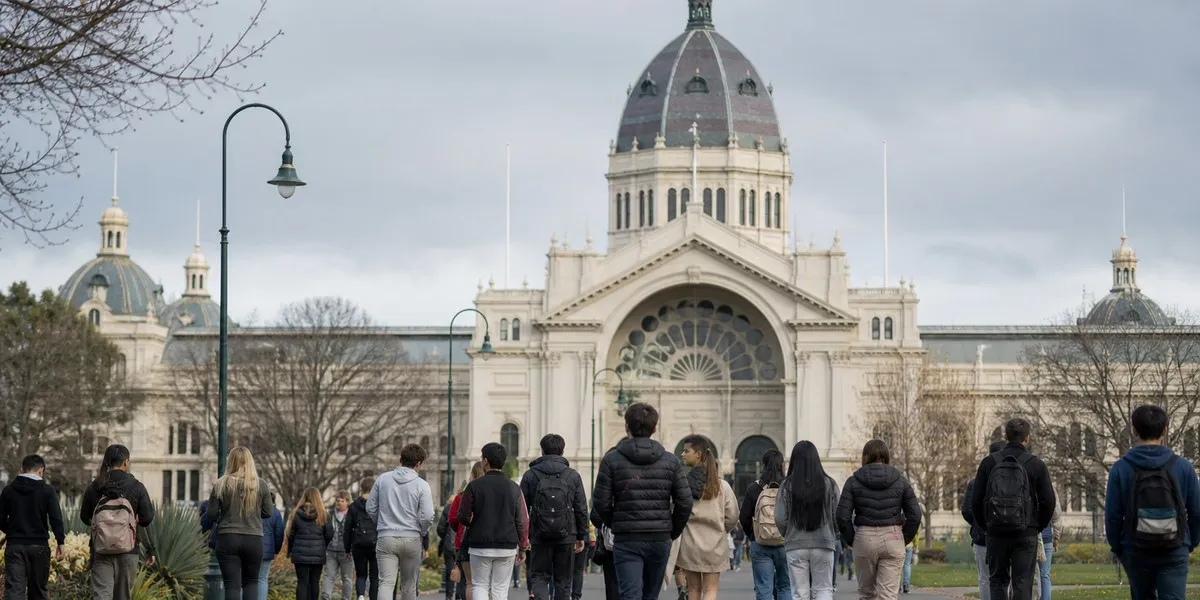
The failure occurred at the Royal Exhibition Building in Carlton, where students from several subjects had gathered to sit their examinations. Many had spent weeks preparing for the tests, expecting to complete them according to the university’s published schedule. However, when the examination session began, a significant number were unable to log in to the digital system.

Jol Scobie, a first-year student preparing to sit an Australian politics examination, said the experience was particularly frustrating because students had made substantial preparations for the assessment. The examination had originally been expected to take the form of a handwritten essay, but instructors later changed the format to a digital test. Students therefore had to adjust to a different examination arrangement before arriving at the venue.
According to Scobie, approximately half of the students were able to access the platform and begin their examinations, while many others remained unable to proceed. Those affected sat at their desks looking at blank screens for around 50 minutes as staff attempted to address the problem. The situation created confusion across the examination venue, with students uncertain whether the system would eventually become available or whether the test would be postponed.
The Australian politics examination required students to complete two essays of 1,000 words each within a two-hour period. For those who had prepared carefully for the assessment, losing a substantial portion of the scheduled examination time was a serious concern. With the platform still unavailable for many candidates, examination coordinators eventually decided that the test could not continue.
Scobie recalled that students were told the technical problem could not be resolved and that everyone would have to leave. He described watching hundreds of students pour out of the building after the announcement. The sudden cancellation meant that students who had arrived expecting to complete an important academic requirement instead left without knowing when they would be given another opportunity.
A spokesperson for the University of Melbourne confirmed that technical problems had resulted in the cancellation of a small number of examinations on both 11 and 16 November. The university said early indications suggested that the issue was connected to third-party technical partners involved in delivering its digital examination services.
The spokesperson said university teams were following established contingency procedures to address the disruption and communicate alternative arrangements to affected students. The institution also acknowledged that examination interruptions could cause considerable stress and said support services were available for students who needed assistance.
However, the university did not immediately provide details about the total number of students affected by the latest incident. It also did not clarify whether replacement examinations could be arranged before Friday, leaving students uncertain about how the disruption would affect their academic schedules.
That uncertainty has become a major source of frustration for those whose examinations were cancelled. Millie Mountford, another first-year student, said communication about the timing of replacement tests had been limited. She expressed concern about how the university would accommodate postponed examinations during a week in which thousands of other students were already scheduled to complete their assessments.
Mountford was particularly worried because she had another examination planned for Tuesday. The disruption on Monday had left her questioning whether the next test would proceed as scheduled or encounter similar technical difficulties. For students facing several examinations within a short period, uncertainty over the reliability of the system can make preparation significantly more difficult.
She said the incident had affected her motivation to continue studying because she did not know whether the effort would lead to an examination taking place as planned. The problem, she explained, was not simply the inconvenience of losing one examination session but the difficulty of organising study around a schedule that could change without warning.
The experience also highlights the emotional pressure associated with high-stakes university assessments. Students typically organise their revision around fixed examination dates, balancing preparation with coursework, employment and personal responsibilities. When an examination is cancelled unexpectedly, they may have to maintain their preparation for an extended period without knowing the replacement date or whether the format and questions will remain unchanged.
For Charlotte Wickham, the disruption could have consequences beyond her academic commitments. She said the cancellation threatened her travel plans to Tasmania, where she intended to visit her family during the holiday break. Changing flights at short notice can be expensive, while limited availability may make alternative arrangements difficult to secure.
Wickham said the greatest source of stress was not knowing whether the cancelled examinations would be moved to the supplementary assessment period. Students had already prepared for specific examination questions, but a lengthy delay could create uncertainty about whether they would need to revise different material. She also expressed concern that personal plans made around the published examination timetable might have to be reconsidered.
Her concerns illustrate how a technical failure at a university can affect students’ lives well beyond the examination room. Travel bookings, accommodation arrangements, family commitments and work schedules may all depend on the academic calendar. When institutions cannot quickly provide replacement dates, students can face additional financial and personal pressures through no fault of their own.
The latest disruption comes during a challenging period for the University of Melbourne and the wider Australian higher education sector. In October, the National Tertiary Education Union organised a 24-hour strike and a four-day teaching ban amid concerns over academic workloads, protections relating to artificial intelligence and fair pay. Union members voted earlier in November to approve a proposed new enterprise agreement intended to address some of those concerns.
The industrial action had already drawn attention to pressures affecting university staff and the organisation of academic services. Although Monday’s examination failure was attributed by the university to third-party technical partners, the incident has added another issue to the broader discussion about the reliability and management of university operations.
Financial pressures have also been reported at the institution. The Age reported last week that the University of Melbourne was planning to cut almost 180 jobs, mainly among non-academic staff, following what it described as disappointing financial results. The reported plans have raised questions about the university’s financial position and its ability to manage staffing and operational demands.
There is no established evidence that the reported job reductions or industrial disputes caused the examination platform failure. The university has instead pointed to third-party technical partners as the likely source of the digital disruption. Nevertheless, the combination of staffing uncertainty, financial pressures and problems affecting essential academic services may increase concerns among students about the institution’s ability to maintain a reliable learning and assessment environment.
Digital examinations have become an increasingly important part of university education, offering institutions the ability to organise large numbers of assessments and manage submissions electronically. However, their effectiveness depends on reliable platforms, stable technical infrastructure and clear contingency arrangements. When a system fails during a scheduled examination, the consequences can extend to hundreds of students at once.
Universities using digital assessment systems must therefore ensure that technical partners can provide dependable services and that alternative procedures are ready when unexpected failures occur. Clear communication is equally important. Students need timely information about cancellations, replacement dates, assessment formats and the support available to them.

For the affected University of Melbourne students, the immediate priority is now to receive a clear timetable for completing the examinations they were unable to sit. They also need reassurance that future assessments will be supported by reliable systems and that technical problems will not unfairly disadvantage candidates.
The university’s response in the coming days will be closely watched by students who have already experienced an unexpected interruption to their final examination period. While the institution has acknowledged the disruption and said it is following contingency procedures, the effectiveness of those measures will ultimately be judged by how quickly and fairly affected students are given another opportunity to complete their assessments.
Related News:
 Australia gives users control over social media algorithms
 WA Facial Recognition Trial Scans 1.38m Faces
 Australia Defends Teen Social Media Ban in High Court
 Canadian astronaut French words ease language row
 Older Than Dinosaurs: Secrets of Mayfly Dance Revealed
 Sydney Council Bans AI Smart Glasses at Pools
 Australia Renewables Reach Record 80% Grid Demand
 OpenAI Agent Breaches Medicare Portal in Australia
 Australia Weighs New Laws After OpenAI Medicare Breach
 London Facial Recognition Trial Ends With False Alert
 Feeld Founders Receive Record Dividend as Sales Rise
 OpenAI Review Costs $500,000 a Day After AI Hacks
 BT Broadband Pauses Raise Digital Switchover Concerns
 Teen Rescued After AI Gives Dangerous Hiking Route
 Australian Advocates Seek Subsidised Drugs for PMOS
 Personalized mRNA Vaccine Cuts Melanoma Recurrence Risk by 42 Percent
 Australia Faces Growing Scrutiny Over Paraquat Risks
 Queensland Hospital to Close Labs After Safety Probe
 AI Crisis Forces UK Universities to Rethink Exams
 Microsoft Outage Sparks Billion-Dollar Fears in Australia
 Government urges schools to ban phones to curb classroom disruption
 NSW to Introduce Minimum Age for Ebike Riders
 Artemis II Returns After Historic Moon Flyby
 Exhibition Revisits Life of 18th-Century Black Court Figure
 Germany to Return Rare Irritator Dinosaur Skull to Brazil
 Tech Trends and the Battle Against Exam Hall Cheating
 British Teens in EU Face Soaring UK University Fees
 UK Schools Struggle as Classrooms Top 40C
 Weight-Loss Drugs Offer Food Savings Mainly to High Earners
 Gen Z turns to BirdTok for a gentler digital escape
 Ghent Professors Questioned Cofnas Appointment
 AI Loss of Control Incidents Nearly Double
 UK Risks Falling Behind in AI Race
 Internal Exclusions Surge in England’s Schools
 Councils spend £125m on illegal children’s care
 Abusive ex used Tesla to control and harass former partner
 AI CEOs Call for Slower Development
 Essential Books for Understanding the AI Debate
 Russia’s Max App Raises Surveillance Concerns
 Headteachers Warn New Ofsted System Is Harming Wellbeing
 Labour Apprenticeship Scheme Faces Slow Start
 Tropics May Wait Longest for Net-Zero Climate Benefits
 TalkTalk Races to Sell Arms as Administration Looms
 Africa Urged to Transform Universities for Young Talent
 Drones Could Speed Up Defibrillator Delivery
 Cornell Fraternity Assault Investigation Reopened
 UK University Strikes Spread as Financial Pressure Grows
 Sheikh Tahnoon and the UAE’s AI Ambitions
 Jessica Watkins Leads Record-Breaking SpaceX Flight
 French School Protests Escalate as 400 Schools Close
 New Prosecutor Takes Over Cornell Assault Case
 US Man Arrested Over Canada School Shooting Plot
 Kagan and Soai Win 2026 Nobel Chemistry Prize
 Sardinia Village Emerges as Longevity Hotspot
 UK Water Firms Earn Millions From Industrial Wastewater
 Three Convicted in Mexico Surfing Trip Murders
 Hanson Attacks Taylor as Australian Conservatives Clash
 French Students Protest Poor Conditions in Paris Suburbs
 UK Must Build Its Own AI to Protect National Security
 Former Students Raise Concerns Over School Culture
 Elizabeth Struhs Inquest Examines Child Safety Failures
 Greta Thunberg Backs French Students in School Protests
 UK Shoppers Urged to Avoid Hake and Coley
 Albania’s Rama Defies Calls to Quit Amid Student Protests
 Up to 20 English Maternity Units Face Possible Closure
 Zelenskyy Says US Failed to Warn Kyiv of Russian Strikes
 Greens Face Leadership Test as Jordon Steele-John Misconduct Claims Leave Party in Limbo
 Nearly One in Four European Pilots Fly While Fatigued
 Former RAAF Pilot Accused of Murdering Wife
 Erin Patterson Faces Life in Prison After Appeal Loss
 NHS Rolls Out Child Illness Warning System Across England
 Alan Jones Trial Paused for Melbourne Cup Viewing
 UK Employers to Be Forced to Publish Job Salaries
 TUC Chief Urges Major Investment to Tackle UK Youth Jobs Crisis
 Australian Mortgage Confidence Hits 32-Year Low
 One Nation Candidate Apologises for Offensive Posts
 Teenager Found Alive After Six Days Lost in Australian Bush
 CEU Eyes Budapest Return as Hungary Enters New Era
 Zelenskyy Warns Starshield Curbs Weaken Ukraine Defences
 Helen Haines Leaves Hospital After Double Amputation