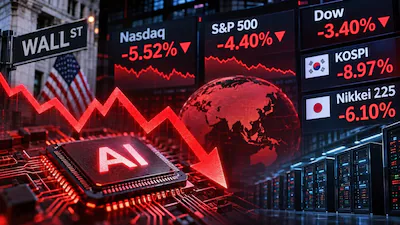
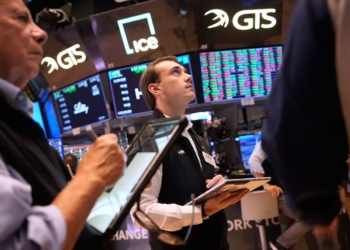
Global stock markets have suffered significant losses as growing concerns over the sustainability of artificial intelligence investments triggered a widespread sell-off in technology shares. An eagerly anticipated public market debut by AI company Anthropic failed to restore investor confidence, with markets across Asia, Europe and the United States continuing to experience substantial declines. The latest developments have raised fresh questions about the financial stability of the AI investment boom and whether technology companies can generate sufficient profits to justify the enormous sums being spent on artificial intelligence infrastructure.
Asian markets were among the hardest hit, with several major indexes heading towards their worst weekly performance since 2020. Investors increasingly moved away from technology stocks, particularly semiconductor manufacturers and companies with significant exposure to artificial intelligence. The selling pressure reflected growing uncertainty about corporate valuations, future earnings and the long-term returns expected from the rapidly expanding AI industry.

Taiwan experienced one of the sharpest market declines on Friday, with its main stock market falling 6.7 per cent to reach its lowest level since mid-April. Shares in Taiwan Semiconductor Manufacturing Company, widely known as TSMC, declined by approximately 6 per cent. The company is a critical supplier of advanced semiconductor chips used in artificial intelligence systems, data centres and high-performance computing infrastructure. Its declining share price highlighted the extent to which investor concerns have spread across the global technology supply chain.
Japan’s financial markets also faced heavy pressure. The Nikkei index dropped 5 per cent as investors reduced their exposure to technology-related investments and reassessed the risks associated with the global AI industry. South Korea’s technology-heavy Kospi index recorded a similar decline, falling 5.5 per cent during the trading session.
South Korea is particularly exposed to fluctuations in the global semiconductor industry because major technology companies play an important role in its economy and stock market. Concerns about future demand, investment costs and the profitability of AI-related businesses have therefore contributed to the recent weakness.
Among the most significant corporate casualties was SoftBank, the Japanese technology investment group known for its substantial investments in artificial intelligence and emerging technologies. Its shares plunged 14.5 per cent in Tokyo, marking the company’s worst single-day performance in more than two years. The decline reflected investor concerns about SoftBank’s aggressive exposure to AI businesses and the financial risks associated with large-scale investments in the sector.
The company’s market performance has become an important indicator of investor sentiment towards artificial intelligence. While SoftBank has positioned itself to benefit from the anticipated expansion of AI technology, its investment strategy also exposes it to significant market volatility. Any doubts about the future profitability of AI companies can therefore have a considerable impact on its valuation.
European markets were also heading towards their weakest weekly performance since March. The pan-European Stoxx 600 index fell 1.3 per cent during the first 90 minutes of trading on Friday, extending losses across several major sectors. The decline indicated that the market weakness was no longer restricted to Asian technology companies but was increasingly affecting international investment markets.
The latest European sell-off followed a difficult trading session on Wall Street on Thursday, when all three major American stock indexes declined by more than 2 per cent. The losses came despite considerable attention surrounding Anthropic’s highly anticipated stock market debut, which had initially generated strong enthusiasm among investors seeking exposure to the artificial intelligence industry.
Anthropic, one of the world’s prominent artificial intelligence developers, attracted significant attention after its shares began trading publicly. The company’s initial public offering was widely viewed as a major milestone for the AI industry, demonstrating the growing appetite among investors for businesses developing advanced artificial intelligence systems.
Shares in Anthropic initially surged by almost 40 per cent after trading began on Thursday before finishing the session approximately 17 per cent higher. The strong opening performance suggested that investors remained interested in gaining exposure to leading AI companies despite increasing concerns about valuations across the technology sector.
However, the initial enthusiasm quickly weakened. By Friday, Anthropic shares had fallen approximately 6 per cent to $91.30, moving closer to their initial public offering price of $83. The reversal demonstrated that even a high-profile market debut was unable to overcome broader concerns affecting technology stocks.
The company’s public listing had generated expectations that it could restore confidence in the wider AI investment market. Instead, the continued decline in technology shares suggested that investors were becoming more cautious about the financial prospects of the industry.
At the centre of the market uncertainty is a growing debate about whether artificial intelligence companies can generate enough revenue and sustainable profits to justify their enormous investment requirements. Technology businesses have committed billions of dollars to developing advanced AI models, expanding data centres, purchasing specialised chips and building the computing infrastructure required to support increasingly sophisticated systems.
Although artificial intelligence has created significant commercial opportunities, the financial returns remain uncertain for many companies. Investors are increasingly questioning whether the enormous spending associated with AI development will translate into sufficiently strong earnings or whether some businesses have become excessively valued because of expectations about future growth.
The concern is particularly relevant for semiconductor manufacturers, cloud computing providers and technology investment groups. These businesses have benefited from expectations of rapidly increasing demand for AI infrastructure. However, any indication that investment growth could slow or that expected returns may take longer to materialise can create substantial pressure on their share prices.
Daniela Hathorn, a senior market analyst at Capital.com, said Anthropic’s stock market debut demonstrated that investor demand for artificial intelligence exposure remained strong. However, she noted that this enthusiasm had not been sufficient to overcome concerns about elevated valuations, profitability and the sustainability of investment spending.
Her assessment reflects a broader change in investor behaviour. Previously, market participants frequently viewed declines in technology stocks as opportunities to purchase shares at lower prices. However, the latest developments suggest that some investors are becoming increasingly concerned that the correction could continue further.
Hathorn also highlighted weakness in equal-weighted stock indexes, suggesting that selling pressure was spreading beyond a small group of major technology companies. This is significant because market declines concentrated among a handful of large technology businesses can create a misleading impression of wider market weakness. When equal-weighted indexes also fall, it indicates that a broader range of companies may be experiencing declining investor confidence.
Europe’s recent relative market strength has also begun to fade. European shares had previously performed comparatively well against some international markets, but the latest developments have weakened that advantage. The interconnected nature of global financial markets means that uncertainty surrounding major American and Asian technology companies can quickly influence investment decisions across Europe.
Britain has also experienced substantial market pressure. The FTSE 100, the country’s leading share index, fell to a five-month low on Friday morning. The index had declined by 4.8 per cent over the week, placing it on course for its largest weekly fall since the beginning of the Iran war.
The decline represents another challenge for British financial markets, which have been dealing with uncertainty surrounding the international economic environment, geopolitical developments and corporate earnings. Although the FTSE 100 includes companies from several industries beyond technology, global investment uncertainty can affect its performance through changes in investor confidence and international capital flows.
The latest market turbulence also raises concerns for pension funds, institutional investors and individual shareholders with significant exposure to international equities. Sharp declines in major indexes can reduce the value of investment portfolios and create additional uncertainty for people relying on financial markets to support long-term savings.
For businesses, sustained market weakness could make it more expensive to raise capital and finance new projects. Technology companies that depend heavily on external investment may face greater scrutiny from shareholders, particularly if their spending plans are not supported by clear evidence of future profitability.
Nevertheless, the recent declines do not necessarily mean that the long-term prospects of artificial intelligence have weakened. The technology continues to attract substantial interest because of its potential applications in healthcare, manufacturing, finance, education, scientific research and other industries. However, investors appear increasingly determined to distinguish between companies with sustainable business models and those whose valuations depend heavily on expectations of future success.
Anthropic’s market debut has therefore become an important moment in the wider debate about the future of AI investment. Its initial share price performance demonstrated strong demand, but the subsequent reversal highlighted the limitations of investor enthusiasm when broader financial concerns remain unresolved.

As trading continues across international markets, investors will be watching technology company earnings, capital expenditure plans and developments in the semiconductor industry for indications of whether the current correction will deepen or begin to stabilise.
The immediate outlook remains uncertain, particularly as Asian, European and American markets continue to respond to changing expectations about artificial intelligence spending. What is increasingly clear is that investors are demanding stronger evidence that the billions being invested in AI can produce lasting financial returns. The coming weeks could prove important in determining whether the current market downturn represents a temporary correction or the beginning of a more prolonged reassessment of the global technology sector.
Related News:
 China’s AI Ambitions Hit $2.4 Trillion Market Setback
 Oil nears $100 as Saudi attacks shake markets
 UK Diesel Reaches £2 as Inflation Surges Across Europe
 Minister Rejects Fears of UK Diesel Shortage
 EU-China Talks Target Surge in Hybrid Car Imports
 EU Caps Chinese Hybrid Car Imports at 350,000
 Nvidia and Jensen Huang Face Shareholder Lawsuit
 EU Manufacturers Face Growing Chinese Competition
 UK Wage Growth Slows as Jobs Market Holds Firm
 Reeves Fights to Keep Treasury Role Amid Labour Turmoil
 Firms on both sides fear damage from US-Canada trade war
 Dutch Bank Moves 86 Tonnes of Gold to London
 Swedish Mining Push Puts Sami Land Rights Under Pressure
 John Lewis Losses Widen to £124m as Confidence Falls
 Oil Prices Surge as Saudi Pipeline Closure Deepens Crisis
 Thames Water Revises Oxfordshire Mega-Reservoir Plan
 Japan Raises Rates to 31-Year High
 Chinese Hybrid Car Surge Raises EU Auto Industry Concerns
 Tony Blair Calls for Britain to Rejoin EU Within a Decade
 UK Trade Losses Grow Without EU Product Deal
 AO Acquires Jessops in Camera Retail Expansion
 Saudi intercepts Houthi missiles as oil fears grow
 Beaverbrooks Boss Calls for Relief on Business Costs
 Why Americans Feel Ripped Off by Rising Prices
 Ukraine Faces $45m Hourly Cost From Missile Alerts
 Poundland Rescue Bid Could Protect 11,000 Jobs
 Bank Chief Calls for Power to Intervene in AI
 French Debt Fears Put Euro Markets Under Pressure
 BT Agrees £400m TalkTalk Rescue Deal
 Informa Agrees £2.24bn Deal to Buy Clarion
 IMF Warns Governments Over Rising Debt Burdens
 Tesco Raises Profit Forecast as Consumer Confidence Holds
 Ministers Push ATO to Reconsider Credit Card Ban
 Oil Shock Sends Markets Lower as Middle East Risks Grow
 Australia Delays Tax Credit Card Payment Ban After Backlash
 Firmus Abandons Major ASX Listing Amid Investor Doubts
 France Faces Debt Crisis as Protests and Markets Clash
 Hall and Woodford Win Nobel Economics Prize
 IMF Warns Global Economy Is Nearing Its Limits
 Healey Plans £1bn Online Marketplace Tax Crackdown
 Global Tech Sell-Off Deepens on Inflation and AI Debt Fears
 Poland’s Economic Rise Reverses Decades of Brain Drain
 Cormann Warns Australia Against Populist Migration Caps
 Sainsbury’s Warns of Tough Christmas Ahead
 Labour MPs Urge Burnham to Lead UK Reindustrialisation
 US Bans BYD Vehicles at Japan Military Base
 Anthropic IPO Reveals AI Boom’s Huge Costs and Risks
 Fed Expected to Hold Rates Steady Ahead of US Midterms
 Lloyds Warns Against Extending Higher Bank Tax
 North Korea Linked to Record $6.3bn Binance Crypto Heist
 BP Profits Surge as Middle East Conflict Lifts Margins
 G20 Photo Cancelled as Russia Deepens Western Rift
 Australia Faces Deeper Economic Slowdown
 Australia Raises Interest Rates to 18-Year High
 Virgin Media O2 Plans Thousands of Job Cuts
 David Jones Faces Administration After Talks Collapse
 M&S Profits Rebound to £355m After Cyber-Attack
 Poundland Remains Vulnerable as Rescue Talks Continue
 UK House Prices Suffer Sharpest Fall in Three Years
 California Voters Reject One-Time Billionaire Tax
 Nvidia Board Weighs Jensen Huang’s Future as Shares Plunge
 Nvidia Scandal Fuels US-China Security Crisis
 Megaspeed Mystery Deepens After Nvidia CEO Resigns
 Microsoft Outage Sparks Billion-Dollar Fears in Australia
 Elon Musk Leads 165,000 Calls to Reinstate Nvidia CEO
 Imperial Brands to Cut 4,600 Jobs Amid AI Expansion
 Bank of England Faces £160m Renovation Challenge
 EDF Expands UK Market With 1.3m Utilita Accounts
 UK Retail Sales Surge as Families Stockpile Emergency Supplies
 Billionaire Chris Rokos poised to leave UK
 JPMorgan Boss Warns Against UK Bank Tax Rise
 UK Retailers Accused of Breaking Refund Laws
 Entain Plans 400 Job Cuts After Profit Update
 Trump Threatens EU With Tariffs Over Canada Proposal
 UK Rent Gap Puts Low-Income Families Under Pressure
 Trump gives Xi red-carpet welcome as trade truce extends
 Healey urged to act as UK energy bills rise 4%
 UK Inflation Hits 3.5% as Middle East War Drives Fuel Costs
 Labor Minister Defends Chalmers Amid Budget Tensions
 US Treasury Chief Moves to Military Base Over Iran Threat