Published: 17 September 2026. The English Chronicle Desk. The English Chronicle Online
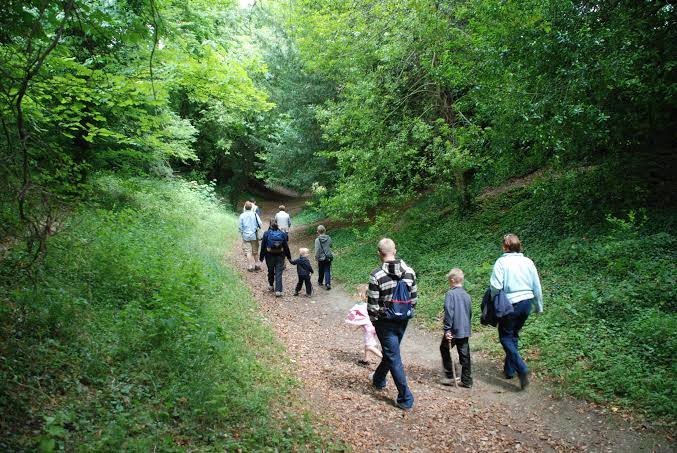
Access to parks, rivers, woodlands and other natural spaces remains uneven across England, with new research highlighting a significant gap between communities that can easily reach nature and those that cannot. The findings have renewed pressure on the government to move faster on its commitment to ensure people can reach green or blue space within a 15-minute walk of home.
Research commissioned by The Wildlife Trusts and Liberal Democrats for Nature and Climate found that 238 English parliamentary constituencies, representing 44% of the total, have at least 20% of local properties more than a 15-minute walk from a green or blue space. The Wildlife Trusts argue that the pattern reveals a strong relationship between economic deprivation and limited access to nature.
The findings come as The Wildlife Trusts publishes its own proposals for improving access to nature. The organisation says it has developed the proposals because a government green paper on access to nature, promised as part of its environmental programme, has not yet appeared.
The issue has gained additional importance following an exceptionally hot spring and summer in parts of England. During periods of extreme heat, parks, tree-covered areas, riversides and other natural environments can provide places where people can find shade and cooler surroundings. The Wildlife Trusts says this makes unequal access not simply an environmental concern but an issue connected with public health and resilience to climate-related weather.

The government’s own statistics provide a broader national picture. Official figures published by the Department for Environment, Food and Rural Affairs in March 2026 found that 80% of households in England had access to at least one qualifying green or blue space within a 15-minute walk. The figure was higher for rural households, at 91%, compared with 78% for urban households.
Those statistics form part of the government’s attempt to establish a baseline for its 15-minute access commitment. Defra’s methodology considers several types of space, including parks, playing fields, woodland, nature reserves and accessible waterside areas. A household can qualify through different access standards, including larger neighbourhood spaces within roughly a kilometre walking distance.
The national figure, however, does not mean access is evenly distributed. Defra has acknowledged that substantial differences exist between places and has said the new data can be used to identify areas where access is limited and help target future action. The government’s 2025 Environmental Improvement Plan reaffirmed its commitment that everyone should have access to green or blue space within a 15-minute walk from home.
For The Wildlife Trusts, the remaining gap is particularly important because the benefits of nature are not limited to recreation. Dom Higgins, the organisation’s head of health and education, said access to nearby natural spaces can support physical and mental wellbeing and argued that it should be treated as a basic part of healthy communities.
Research into green and blue spaces has increasingly examined their relationship with health, particularly in densely populated areas. Trees and vegetation can provide shade and contribute to cooler local environments, while parks and walking routes can encourage physical activity. Government policy documents also recognise the relationship between access to nature, health and wellbeing. Natural England’s current action plan includes expanding and connecting green and blue spaces as part of its objective of enabling everyone to live within a 15-minute walk of nature.
The Wildlife Trusts has also gathered evidence from members of the public. Its consultation involved 5,000 people, with participants describing how they used natural spaces during periods of high temperatures. Some reported seeking shade and cooler conditions in woodland and parks, while others highlighted the importance of accessible outdoor areas for maintaining everyday activity.
The organisation says these experiences demonstrate why access should be considered alongside the quality and maintenance of natural spaces. A park that exists on a map may not provide the same benefit as a space that is safe, accessible, maintained and realistically reachable on foot.
The Wildlife Trusts is therefore calling for changes in the way land, planning and public investment are handled. Among its proposals are making it more affordable for local authorities to use compulsory purchase powers when acquiring land for nature access and creating stronger opportunities for community groups to purchase land.
It also wants natural spaces to be treated as essential infrastructure, allowing capital funding to support their continuing maintenance. The organisation argues that creating a park or natural area is only part of the challenge because councils and communities must also have the resources to keep those places usable over time.
Planning is another major part of its proposals. The Wildlife Trusts is calling for developers to be required to create housing developments that are friendly to both nature and the climate. It also wants access to major rivers, particularly those running through urban areas, to become a statutory right.
The proposals come against a backdrop of government programmes that are already intended to improve access. The Environmental Improvement Plan includes plans for nine new National River Walks, one in each region of England, as well as three new national forests. The government says work is also under way to identify areas with limited access and reduce barriers faced by people who are currently less likely to spend time outdoors.
Natural England’s 2026–27 action plan similarly places access to nature within its health and wellbeing priorities. It identifies the expansion and connection of green and blue spaces, improved National Trails and the completion of the King Charles III England Coast Path among its priorities.
The government has also developed a formal statistical framework to measure progress. Its March 2026 figures found that around 26 million residential addresses were assessed using detailed information on households, walking routes and accessible natural spaces. The methodology calculates walking distances rather than simply measuring straight-line distances, providing a more practical assessment of how easily people can reach nature.
However, the government has faced criticism over the timetable for its proposed Access to Nature Green Paper. The 2025 Environmental Improvement Plan said the paper would consult on measures to ensure people could access nature close to home and consider ways to strengthen public rights of access, including possible access to currently unregulated waterways.
The Office for Environmental Protection has also called for a clearer timeframe for achieving the 15-minute access commitment. In its response, the government accepted the recommendation but deferred a full response, while pointing to the integration of the access metric into programmes such as the River Walks initiative.
The Wildlife Trusts says it does not believe communities should have to wait for further policy development before action begins. Its argument is that improving access to nature can address several challenges at once, from public health and urban heat to biodiversity and the quality of neighbourhoods.

The government, meanwhile, says it is already increasing access through new walking routes and wider countryside programmes. A spokesperson pointed to nine new National River Walks, the Coast-to-Coast route in northern England and the 2,700-mile King Charles III England Coast Path as examples of work intended to expand opportunities for people to experience nature.
The disagreement is therefore less about whether access to nature has value and more about the pace, scale and mechanisms required to achieve the government’s stated objective. Official statistics show that most households currently have some qualifying green or blue space within a 15-minute walk, but they also demonstrate that access varies substantially between communities.
For campaigners, the remaining gap represents an inequality that is becoming more significant as England adapts to hotter weather and increasing pressure on urban environments. Their case is that natural spaces should be planned and funded as part of essential community infrastructure rather than treated solely as amenities.
For policymakers, the challenge will be turning the existing 15-minute commitment into measurable improvements in places where access remains limited, while ensuring that newly created or opened spaces remain accessible and well maintained. As the government develops its programmes and The Wildlife Trusts presses for faster action, the question of who can easily reach nature is becoming increasingly connected to wider debates over health, climate resilience, planning and the quality of everyday life in England.
Related News:
 Chornobyl Still at Risk 40 Years After Disaster
 Barrister Criticises Trial After Suicide Case Verdict
 UK Schools Struggle as Classrooms Top 40C
 London Tube Heat Reaches Dangerous Levels
 London’s 2026 ‘Great Stink’ Raises Sewer Concerns
 Ghent Professors Questioned Cofnas Appointment
 Election Candidate Abuse Raises Alarm in England
 UK Heatwaves Set to Worsen Pothole Damage, RAC Warns
 Horse Hill Oil Site Sold for £1m as Drilling Bid Returns
 Fiji Declares National HIV Emergency as Cases Surge
 Enhertu Approved for Eligible Breast Cancer Patients in England
 UK Launches World-First Gonorrhoea Vaccine Amid Record Infection Surge
 AI Tools Used by English Councils Found to Downplay Women’s Health Issues, Raising Concerns Over Gender Bias in Care
 Breakthrough Clinical Trial Lets 12-Year-Old Boy with Rare Skin Disorder Play Football
 Shocking Rise in Children’s Exposure to Violent Online Pornography Raises Alarm
 Omeprazole Alert: NHS Issues Guidance on Safe Use for Heartburn and Indigestion
 Eligibility Confusion Over COVID Vaccination Leaves Pharmacies Struggling Across the UK
 Majority of UK Men Would Opt for Prostate Cancer Screening, Survey Finds
 Scientists Announce First Potentially Accurate Blood Test for Chronic Fatigue Syndrome
 NHS May Pay 25% More for Medicines Amid US Drug Talks
 Survey Shows Most GPs Rushing Appointments
 Genetic Tests May Predict Return of Blood Cancer
 UK Woman Becomes Longest Survivor of Heart-Lung Transplant
 Thousands in the UK sue Johnson & Johnson over alleged talcum powder, linked to cancer
 ‘Game-Changing’ HIV Prevention Jab Set for NHS Approval
 How Bringing Forests Into Preschools Boosts Children’s Health
 Experts Urge Legal Right to Timely Cancer Care
 Patients to Test Health at Home to Ease NHS Winter Pressure
 North Sea oil workers must lose weight or face job loss
 No link found between paracetamol in pregnancy and autism
 UK launches major AI drive to fight deadly superbugs
 Coffins Now Too Large to Cremate Amid Rising Obesity Crisis
 Thinktank Urges Smaller Hospitals to End NHS ‘Permacrisis’
 NHS paediatric leave parents waiting months for answers
 Cancer Death Rate in Britain Falls by Nearly a Third
 Moldova River Crisis Exposes War’s Hidden Cost
 GSK cancer drug shows early promise in trials
 NHS Safety Fears as Nurses Cover Doctor Gaps
 Walsall Rapist Jailed After Hate-Filled Online Trail
 Two Children Die in Wolverhampton House Fire Tragedy
 Reform UK funding: mystery billionaire revealed
 Older Than Dinosaurs: Secrets of Mayfly Dance Revealed
 Florida Surgeon ‘Devastated’ Over Fatal Surgery Error
 Tractor Breakdown Tests Lincolnshire Farmers
 Britons Build Emergency Supplies Amid Rising Fears
 Father’s diaries reveal doubts over Hawking
 Sycamore Gap Artwork Chosen After Public Vote
 Pope Meets Families in Italy Toxic Waste Zone
 UK rejects EV charging VAT cut amid Treasury clash
 Three-Quarters of England’s Riverbanks Still Off Limits
 Westminster Council Threatens Charing Cross Soup Kitchen
 BBC Warned About Missing Clothes of Murder Victim
 Weight-Loss Drugs Offer Food Savings Mainly to High Earners
 Cambridge Professor Jason Arday Found Dead at Home
 Burnham unveils £65m drought aid for farmers
 Gen Z turns to BirdTok for a gentler digital escape
 Australia Races to Find Tourists Missing in Nepal
 Drought Raises Flood Risk as UK Autumn Approaches
 RAF Barnham Protests Fuel Tensions in Norfolk Town
 British Museum Faces Questions Over Peter Thiel’s Private Bayeux Viewing
 Internal Exclusions Surge in England’s Schools
 Nepal Flood Survivors Face Unimaginable Loss
 Daughter Finds Bones in Parents’ Burned-Out Car
 UK Subsidence Claims Surge After Record-Breaking Summer
 Nepal Tunnel Rescue Offers Hope Amid Flood Devastation
 Councils spend £125m on illegal children’s care
 Pavlohrad Strike Kills Five, Injures 67
 Patriot Platform Raises Concern Across Britain
 Reform UK Receives Record £36m Donation From Crypto Billionaire
 Thames Water Revises Oxfordshire Mega-Reservoir Plan
 Australia’s Indigenous Population Was Far Larger Before Colonisation
 DRC Ebola Outbreak Peaks as New Infections Slow
 Britain Records Second-Best Butterfly Season in 16 Years
 Heathrow Expansion Faces New Climate Conditions Over CO₂
 Lisa Nandy Calls for Tougher Action on Social Media Doxxing
 Piddington Votes for Symbolic Independence Over Asylum Plan
 Mayors Could Gain Greater Powers Over Water Firms
 Horse Hill Oil Site Sold as New Drilling Bid Emerges
 2025 Among World’s Driest Years for Rivers
 English Heritage Revives Traditional Scything Skills