Published: 22 September 2026. The English Chronicle Desk. The English Chronicle Online.
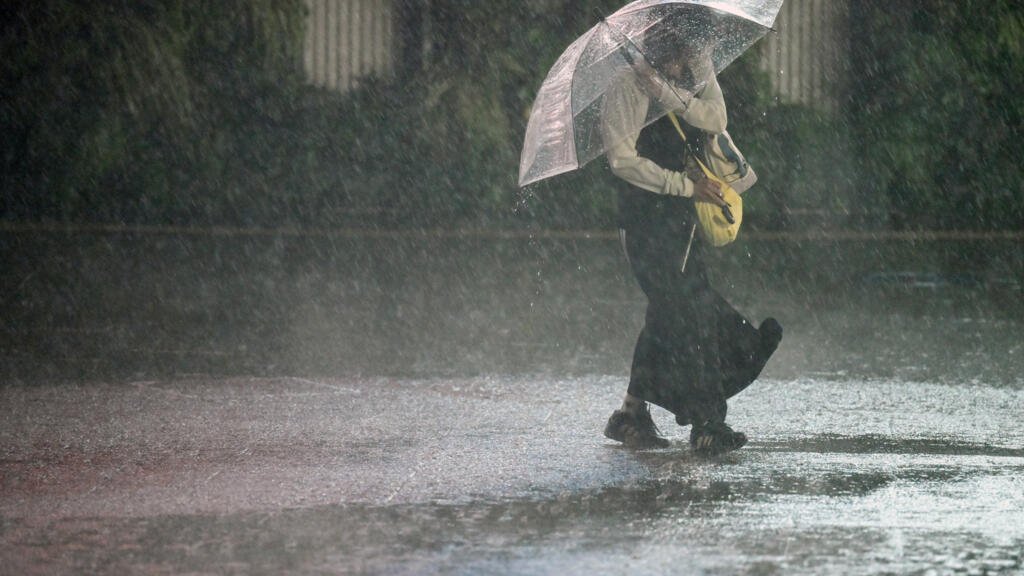
Typhoon Dujuan has left at least four people dead and 22 others injured in Japan after powerful winds and exceptionally heavy rain triggered landslides, flooded streets and widespread disruption across the Tokyo region and surrounding areas. As the storm moved away from the country on Tuesday, emergency workers continued searching damaged homes for missing residents while authorities assessed the scale of destruction caused by the powerful weather system.
Dujuan brought winds reaching 144 kilometres per hour as it passed through parts of Japan, creating dangerous conditions for residents and emergency services. Torrential rain caused multiple landslides, particularly in areas close to Tokyo, while power failures affected tens of thousands of households. Although the typhoon had weakened and moved north-east by Tuesday morning, its effects continued to be felt through transport disruptions, damaged homes and difficult rescue operations.
In Yokosuka, in Kanagawa prefecture near Tokyo, heavy rain caused several landslides. A woman in her 60s was killed after mud entered her home, according to Japanese public broadcaster NHK. Police and firefighters were also searching for a couple in their 70s who were believed to have been inside a home affected by the landslides.
The situation was also serious in neighbouring Chiba prefecture, where local authorities reported three deaths in a series of landslides. Two other people were reported missing and were believed to have been inside homes that collapsed during the storm. Rescue teams were working through damaged areas as authorities attempted to determine whether anyone else remained trapped.

The landslides demonstrated the danger created when intense rainfall strikes densely populated communities. Soil and debris moved rapidly down slopes, damaging houses and blocking roads in several locations. For residents whose homes were affected, the storm turned what had initially been a period of heavy rain into an emergency involving evacuation, rescue operations and uncertainty over missing relatives.
Power supplies were another major concern. Officials in Chiba said around 45,000 households remained without electricity on Tuesday morning. The outages added another layer of difficulty for communities dealing with flooded streets, damaged buildings and disrupted transport. Emergency crews faced the challenge of restoring essential services while continuing rescue and recovery operations.
The storm also caused significant disruption to travel. Japan Airlines cancelled 135 flights, while All Nippon Airways cancelled 140 flights as Dujuan passed through the region. Rail and road services were also affected by the severe weather in different areas, adding to travel difficulties for residents and visitors.
More than 1.6 million people in and around Tokyo were advised to evacuate on Monday as the storm approached. The evacuation advice was not mandatory, but authorities urged residents in vulnerable locations to take precautions because of the threat posed by flooding and landslides.
The impact of the storm extended beyond homes and transport. Several events connected to the Asian Games were disrupted, while a major video game trade fair in Tokyo was forced to close earlier than planned. The cancellations and interruptions reflected the broader consequences of severe weather in a country where large public events, business activities and transport networks can be affected rapidly by typhoon conditions.
Despite the widespread disruption, Dujuan was beginning to lose strength as it moved away from Japan. Authorities were able to downgrade many of the warnings for heavy rain and landslides as the immediate threat from the storm decreased. However, emergency officials remained cautious because saturated ground can continue to produce landslides even after the worst rainfall has passed.
The amount of rain recorded in some locations was particularly striking. Oshima, an island roughly 120 kilometres south of central Tokyo, received 832 millimetres of rain over a 48-hour period. That amount was more than twice the island’s average rainfall for the entire month of September. The figure illustrates the extraordinary intensity of the rainfall brought by the storm.
Tokyo also recorded exceptional rainfall. In the capital’s Edogawa ward, 282.5 millimetres of rain fell within 24 hours, setting a record for the area. Such intense rainfall can overwhelm drainage systems, rapidly raise water levels and increase the risk of flooding, particularly in urban areas where large populations live close to rivers, roads and low-lying land.
Japan is accustomed to powerful typhoons, particularly during late summer and early autumn. The country has developed extensive systems for monitoring storms, issuing warnings and organising evacuations. Even so, the combination of strong winds, extreme rainfall and landslides can present serious risks, especially when weather conditions deteriorate quickly.
The latest storm has also renewed attention on the wider issue of extreme rainfall and climate change. Scientists have warned that a warmer atmosphere can hold more moisture, potentially increasing the amount of water released during intense rainfall events. This does not mean that every individual storm can be attributed solely to climate change, but changing climatic conditions are increasingly being examined as one factor that can influence the severity of extreme precipitation.
Dujuan comes during a year marked by significant episodes of heavy rain, flooding and tropical cyclone activity in different parts of the world. Communities across Asia, North America and Europe have experienced damaging weather events, placing renewed pressure on emergency services and governments to prepare for increasingly disruptive conditions.
For Japan, the immediate priority is now recovery. Rescue teams must continue searching for missing people, while local authorities assess damaged homes, roads and public infrastructure. Electricity must be restored to affected households, and residents in areas exposed to landslides may need to remain cautious even after the typhoon itself has moved away.

The human cost of the storm is already clear. At least four people have lost their lives, 22 have been injured and several others remain missing. Behind the figures are families dealing with damaged homes, disrupted lives and the uncertainty that follows a major natural disaster.
As the skies begin to clear in parts of the affected region, the focus is shifting from immediate survival to rescue, restoration and assessment. Authorities will have to determine the full extent of the damage and identify areas where further landslides or flooding remain possible. For communities struck by Dujuan, the end of the storm will not immediately mean the end of the emergency.
The experience is another reminder of how quickly extreme weather can disrupt modern life. A powerful typhoon can affect homes, electricity, transportation, businesses and public events within hours. While Japan’s emergency systems provide important protection, the destruction caused by Dujuan shows the continuing challenge posed by increasingly intense rainfall and severe tropical storms.
Related News:
 Nepal Rescuers Race to Save Hundreds Trapped Underground
 Nepal seeks $20m climate compensation after deadly floods
 Japan Braces for Dujuan as Storm Threat Grows
 Cyclone Vaianu Forces Mass Evacuations in New Zealand
 Venezuela Quake Death Toll Surpasses 4,000
 Powerful 7.7-Magnitude Earthquake Hits Eastern Indonesia
 Wildfires rage across Europe as hundreds arrested in France
 Heavy Casualties Feared as Flash Flood Sweeps Nepal-Tibet Border
 Australia Races to Find Tourists Missing in Nepal
 Nepal Flood Death Toll Tops 300 as Second Flood Feared
 Nepal-Tibet Flood Death Toll Rises as 2,478 Remain Missing
 UN Warns Record El Niño Could Supercharge Global Heat
 Nepal Flood Survivors Face Unimaginable Loss
 Nepal Tunnel Rescue Offers Hope Amid Flood Devastation
 Typhoon Saudel Triggers Mass Evacuations in China
 Storm Leonardo Triggers Election Delay Calls in Iberia
 Nine Killed in Karachi Consulate Protest
 North Korea Fires Missiles Amid US-South Korea Drills
 Evacuations Ordered as California Wildfires Spread Fast
 Queensland Braces for Potential Second Severe Cyclone Hit
 Chornobyl Still at Risk 40 Years After Disaster
 Southeast Asia Turns to Russia Amid Energy Crisis
 Escobar’s Hippos May Be Moved to India Zoo
 Capitalism ‘Suicidal’, Warns Petro at Climate Summit
 Coalition pushes fossil fuel phaseout plan
 China Fireworks Factory Blast Kills 21 in Hunan
 Australia pushes Pacific security pact amid China tension
 BJP Sweeps West Bengal in Historic Breakthrough
 Norway Doubles Down on Oil and Gas for Europe Energy Security
 Doomsday Clock Nears Midnight Amid Global Crises
 US Awaits Iran Reply on New Ceasefire Proposal
 One Nation Stuns Australia With Historic Farrer Win
 Hormuz Talks Near Critical Stage
 China mine blast death toll rises to 90
 Maldives Cave Diving Tragedy Raises Safety Alarm
 Pope Meets Families in Italy Toxic Waste Zone
 Discontent grows around Putin amid war strain
 UN Issues Urgent Warning: Imminent Return of El Niño
 Germany Summons Chinese Envoy Over Russian Troop Training
 Sydney Records Hottest June Since 1859 as Expert Warns New High a ‘Signature’ of Global Warming
 Millions Gather for Khamenei’s Six-Day State Funeral
 Olympus Awaits Unesco Heritage Recognition
 Houthis Strike Saudi Arabia as Middle East Tensions Rise
 Wildfires Force Mass Evacuations in France And Spain
 Taliban global ties grow as rights fears mount
 Seoul proposes historic peace talks to replace Korean War armistice
 Israeli Strike in Southern Lebanon Kills Seven
 Five Years of Taliban Rule Leave Afghanistan in Crisis
 Families Fly to Nepal in Search of 33 Missing Britons
 Turkmenistan Begins Fixing Major Methane Mega-Leaks
 Nepal Flood Death Toll Tops 1,000 as Tunnel Search Intensifies
 Daughter Finds Bones in Parents’ Burned-Out Car
 North Korea Expands Uranium Facility at Yongbyon
 Saudi Arabia Shuts Oil Pipeline After Drone Attack
 Nearly 50,000 Flee as Houthis Advance in Yemen

 Indonesia Receives First Aircraft Carrier
 South Korea Rules Out Military Role in Iran War
 Saudi Pact Raises Risk of Pakistan Entering War
 Europe Faces Climate Reckoning After Extreme Summer
 Middle powers seek new alliances amid Trump era
 Zelenskyy Signs Fighter Jet Deal Amid Russian Drone Attacks
 Shadow Fleet at Sea: Europe’s Battle Against Illicit Oil Shipping
 US Suspends Afghan Immigration After White House Shooting
 ‘Extinct’ Antelope Returns to Sahara, Bringing Hope
 Irish Beach Tragedy: Irish Drown at Whitehaven Beach in Australia
 UK and US Drop in Global Corruption Index Rankings
 Canberra Poster Seizure Sparks Free Speech Row
 Jacinda Ardern Move Sparks Kiwi Reflection
 Middle East Airspace Crisis Strands Thousands
 Kelly Wilkinson Inquest Reveals Bail Failure
 Injured Mojtaba Khamenei Elevated as Iran Leader
 The Kill Line: A Shifting Vision of the American Dream
 Air Canada CEO Faces Outcry Over Recent Language Misstep
 Britain’s Crowning Butterfly Takes the Nation by Storm
 Fifa Official Under Investigation Over Hand Gesture Controversy
 Grief and Devotion Amidst the Rubble of Nabatieh
 England and Norway Fans Turn Miami Into World Cup Carnival
 Nepal-Tibet Flood Leaves 270 Dead and 1,400 Missing
 Bayeux Tapestry Revives Franco-British Ties