Published: 22 September 2026. The English Chronicle Desk. The English Chronicle Online.
The world’s tropical regions could remain among the last areas to experience the benefits of cutting greenhouse gas emissions to net zero, according to new research suggesting that the unequal effects of climate change could persist for decades even after global emissions stop adding to atmospheric carbon dioxide.
The findings highlight a significant geographical imbalance in the climate crisis. Although temperatures have increased across the planet, researchers say tropical regions have experienced warming that is particularly large relative to their historical climate. Many of the countries most exposed to these changes are also among those with lower levels of wealth and have contributed comparatively less to cumulative greenhouse gas emissions.
A team of Australian climate scientists led by Dr Andrew King of the University of Melbourne examined how global temperatures could evolve under different emissions scenarios. Their research considered three sets of computer modelling experiments and compared projected temperature changes with the gross domestic product of countries around the world.
The study found that reaching net zero would not automatically eliminate the existing inequality in warming between wealthier and poorer regions. Instead, the geographical pattern of unequal warming could continue for a prolonged period.

“If we follow a path that is close to net zero, then the inequality we see in present day warming persists indefinitely,” King said.
His research suggests that the countries and regions that have historically contributed more to global greenhouse gas emissions are not necessarily those experiencing the greatest temperature increases. Many tropical areas, particularly those close to the equator, remain highly exposed despite having contributed a smaller share of historical emissions.
The researchers also examined what could happen if the world moved beyond net zero and began removing more carbon dioxide from the atmosphere than it emitted. Such a situation is commonly described as net-negative emissions.
Under that scenario, the researchers found that the current geographical imbalance in warming could eventually begin to reverse, but the process could take many decades. The study therefore indicates that the consequences of accumulated greenhouse gas emissions cannot simply be eliminated when global emissions reach net zero.
King said the timing of the transition to net zero would be critical. The longer the world continues to release large quantities of carbon dioxide before reaching net zero, the greater the amount of long-lasting warming that could remain after emissions are brought into balance.
Even after net zero is achieved, carbon dioxide already accumulated in the atmosphere will continue to influence the climate system for a long period. This means that reaching net zero is important for limiting additional warming, but it does not immediately return global temperatures to historical conditions.
“Even when we get to net zero, we have still emitted an enormous amount of carbon into the atmosphere and its effects will continue for centuries,” King said.
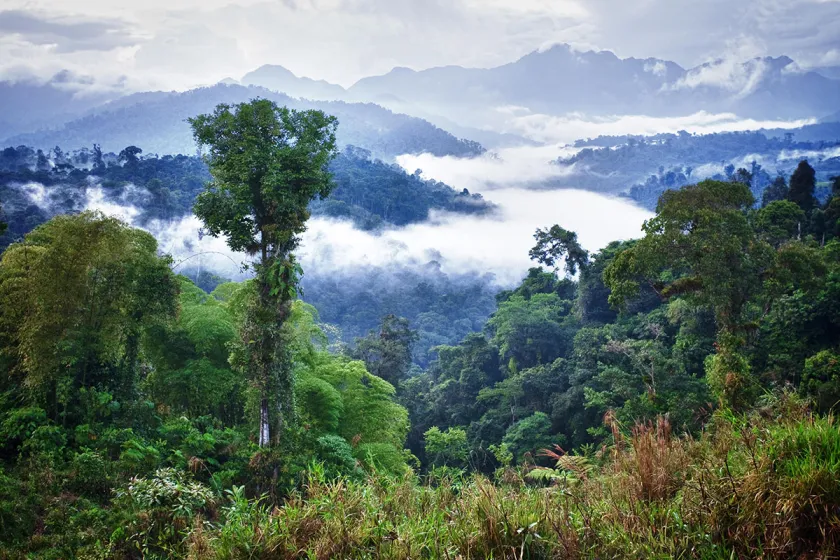
The findings have particular implications for tropical ecosystems. Many ecosystems near the equator have evolved within relatively narrow temperature ranges, meaning that continued changes in temperature can place substantial pressure on species and habitats.
Coral reefs are among the ecosystems that could remain vulnerable. Reef-building corals depend on relatively specific environmental conditions, and sustained changes in temperature can contribute to stress and ecological disruption. The persistence of elevated temperatures after net zero could therefore create challenges even as the global rate of warming eventually stabilises.
The research also raises questions about climate justice. Countries that are comparatively less responsible for historical greenhouse gas emissions can nevertheless face severe effects from rising temperatures, extreme weather and ecological changes.
The unequal distribution of climate impacts has increasingly become part of international discussions about adaptation, financing and responsibility. While emissions reductions are aimed at limiting future warming, vulnerable countries also require measures that allow communities and ecosystems to adapt to changes that are already occurring.
The new study was released alongside a separate report examining another consequence of the climate crisis: the risk of statelessness.
A report commissioned by the United Nations refugee agency and produced with the Peter McMullin Centre on Statelessness at the University of Melbourne warned that climate-related disasters could increase the risk of people losing access to citizenship and legal identity.
The report examined how disasters such as floods, fires and rising sea levels could contribute to displacement and create difficulties for people attempting to prove their nationality. The problem could become particularly serious for communities in low-lying island states facing the loss of land because of rising sea levels.
The UN refugee agency estimates that around 4.5 million people are currently stateless, while acknowledging that the true number could be significantly higher because stateless populations are often missing from official records.
The report argued that climate-related displacement could make the problem more difficult to manage. When people are forced to leave their homes following a disaster, important identity documents and citizenship records can be lost or destroyed. People who cross international borders may then face difficulties proving their nationality.
University of Melbourne Associate Professor Radha Govil, one of the report’s co-authors, said there was a connection between regions facing significant climate impacts and the risks associated with statelessness.
The report called on governments to take preventative measures rather than waiting until climate-related displacement becomes a large-scale legal and humanitarian problem. Among the measures proposed was greater investment in digital systems for preserving citizenship records.
Digitising records could help protect evidence of nationality when physical documents are destroyed during disasters. Such systems could also make it easier for displaced people to establish their legal identity after moving from affected areas.
The report also highlighted potential risks facing children who become separated from their parents during climate-related disasters. It recommended safeguards to ensure children can obtain citizenship when they are left without parents or other documentation following an emergency.
Nationality laws can create additional complications where mothers and fathers do not have equal rights to pass citizenship to their children. The report warned that children could face greater risks of statelessness where mothers are unable to confer their nationality under national law.
Govil said the measures recommended by the report were practical and could be implemented before climate-related displacement creates larger problems.
The connection between climate warming and statelessness illustrates how the consequences of the climate crisis extend beyond temperature records and environmental damage. Changes in climate conditions can affect housing, livelihoods, migration, legal identity and access to basic rights.
For tropical countries, the new climate research adds another dimension to those concerns. Even if global emissions eventually reach net zero, the benefits of stabilising the climate will not necessarily be experienced equally or immediately across different regions.
The research does not suggest that emissions reductions are ineffective. Rather, it highlights the long-term consequences of accumulated emissions and the importance of reaching net zero as quickly as possible to limit additional warming.

The findings also reinforce the importance of adaptation alongside emissions reductions. Communities already experiencing substantial climate impacts may need infrastructure, financial resources and environmental protection measures even as global efforts focus on reducing future emissions.
For countries in the tropics, this could mean continuing to prepare for higher temperatures and associated environmental pressures long after global emissions begin to decline. The persistence of warming also means that climate policy cannot be measured solely by how quickly emissions fall.
The broader message from the research is that reaching net zero represents an important milestone rather than an immediate end to climate-related risks. Atmospheric carbon dioxide, ocean temperatures and ecosystems respond over much longer timescales, meaning that the consequences of past emissions can continue well into the future.
For vulnerable countries, particularly those near the equator and low-lying island states, the findings underscore the importance of combining global emissions reductions with adaptation and measures designed to protect communities from displacement and loss of legal identity.
As governments continue to negotiate climate policy, the research highlights the different timescales and geographical effects involved in the transition to a lower-carbon world. The path to net zero may reduce future warming, but the uneven legacy of past emissions is likely to remain an important challenge for decades to come.
Related News:
 Chornobyl Still at Risk 40 Years After Disaster
 Moldova River Crisis Exposes War’s Hidden Cost
 Canadian astronaut French words ease language row
 RAF Typhoons scrambled amid Russian drone threat near Nato
 Older Than Dinosaurs: Secrets of Mayfly Dance Revealed
 Doomsday Clock Nears Midnight Amid Global Crises
 Ebola outbreak in DRC overwhelms health system as cases surge
 Pope Meets Families in Italy Toxic Waste Zone
 UN Issues Urgent Warning: Imminent Return of El Niño
 Olympus Awaits Unesco Heritage Recognition
 London’s 2026 ‘Great Stink’ Raises Sewer Concerns
 Gen Z turns to BirdTok for a gentler digital escape
 Turkmenistan Begins Fixing Major Methane Mega-Leaks
 UN Warns Record El Niño Could Supercharge Global Heat
 Nepal Flood Survivors Face Unimaginable Loss
 Nepal Tunnel Rescue Offers Hope Amid Flood Devastation
 Typhoon Saudel Triggers Mass Evacuations in China
 Australia gives users control over social media algorithms
 South Africa’s Femicide Crisis Deepens
 Europe Faces Climate Reckoning After Extreme Summer
 UK Funds Gene Editing to Protect Threatened Wildlife
 Britain deploys RAF specialists to assist Belgium with drone threats
 Hitler’s DNA Confirms He Truly Had Only One Testicle
 UK New Car Discounts Near £6,000 as Prices Are Slashed
 South Africa’s Garden Route Gem Faces Looming Water Crisis
 Hindu Man’s Stand Sparks Hope in India
 Ocean Warming Drives Massive Marine Life Loss, Study Warns
 The Kill Line: A Shifting Vision of the American Dream
 ABC Staff Strike Over Pay and AI Concerns
 Artemis II: Humanity Returns to the Moon After Decades
 Apple at 50: Three Products That Changed How We Live
 Artemis II Returns After Historic Moon Flyby
 Disneyland Adds Facial Recognition at Entrances
 Ukraine Urges UK to Seize Russian Oil Tankers
 Escobar’s Hippos May Be Moved to India Zoo
 Capitalism ‘Suicidal’, Warns Petro at Climate Summit
 Two Dead in Adelaide Airport Plane Crash Fire
 Coalition pushes fossil fuel phaseout plan
 WHO approves first malaria drug for babies
 Germany to Return Rare Irritator Dinosaur Skull to Brazil
 China Fireworks Factory Blast Kills 21 in Hunan
 France Faces Record Presidential Crowded Race Amid Far-Right Surge
 Norway Doubles Down on Oil and Gas for Europe Energy Security
 Tractor Breakdown Tests Lincolnshire Farmers
 UK rejects EV charging VAT cut amid Treasury clash
 Hope for mountain bongos returns to Kenya
 Farage and Reform UK Reshape British Politics
 Starmer Leadership Under Pressure After Setbacks
 Germany Summons Chinese Envoy Over Russian Troop Training
 Sydney Records Hottest June Since 1859 as Expert Warns New High a ‘Signature’ of Global Warming
 Le Pen’s Popularity Holds Despite Conviction
 Bryne Backs Haaland Before England World Cup Clash
 England and Norway Fans Turn Miami Into World Cup Carnival
 UK Schools Struggle as Classrooms Top 40C
 London Tube Heat Reaches Dangerous Levels
 Venezuela Quake Death Toll Surpasses 4,000
 Wildfires Force Mass Evacuations in France And Spain
 Three-Quarters of England’s Riverbanks Still Off Limits
 Powerful 7.7-Magnitude Earthquake Hits Eastern Indonesia
 Weight-Loss Drugs Offer Food Savings Mainly to High Earners
 Is America Ready for an AOC Presidential Run?
 Burnham unveils £65m drought aid for farmers
 Ghent Professors Questioned Cofnas Appointment
 Australia Races to Find Tourists Missing in Nepal
 France Eases Cheese Rules as Drought Hits Farms
 Nepal Flood Death Toll Tops 300 as Second Flood Feared
 Nepal-Tibet Flood Death Toll Rises as 2,478 Remain Missing
 UK Subsidence Claims Surge After Record-Breaking Summer
 Masked Protesters Bring Dover Port Traffic to Standstill
 Australia’s Indigenous Population Was Far Larger Before Colonisation
 DRC Ebola Outbreak Peaks as New Infections Slow
 UK Heatwaves Set to Worsen Pothole Damage, RAC Warns
 2025 Among World’s Driest Years for Rivers
 Iran School Strike Raises War Crimes Questions, UN Says
 Russia’s Max App Raises Surveillance Concerns
 Indonesia Receives First Aircraft Carrier
 Lib Dems Prepare for Election Amid Reform Challenge
 British Columbia Sues OpenAI Over School Shooting
 Australia Renewables Reach Record 80% Grid Demand