Published: 01 October 2026. The English Chronicle Desk. The English Chronicle Online
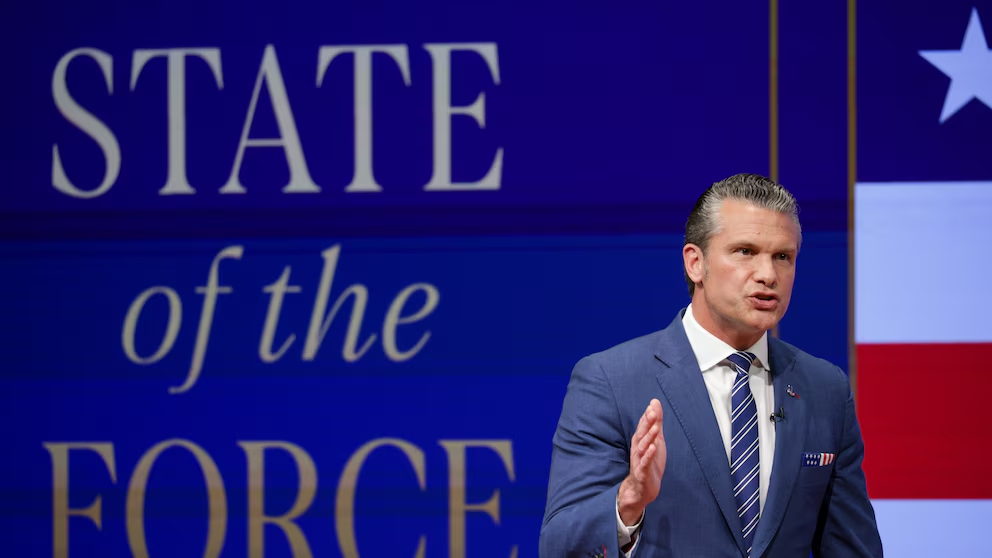
US Defense Secretary Pete Hegseth has confirmed plans to reduce by 20% the number of positions held by generals and admirals across the US military, announcing the measure during a wide-ranging address at Marine Corps Base Quantico in Virginia.
The announcement came during Hegseth’s second annual “State of the Force” address, where he outlined a series of changes affecting military leadership, technology, training and the Pentagon’s approach to diversity policies. The reduction is expected to affect roughly 800 general and flag officer positions, with the Pentagon aiming to complete the changes by January 1, 2027.
The plan represents a doubling of a 10% reduction Hegseth ordered previously. Pentagon officials have described the changes as an effort to reduce senior-level bureaucracy and alter the structure of military leadership.
The planned reduction concerns positions, or billets, designated for generals and admirals rather than meaning that 20% of all currently serving senior officers will necessarily be dismissed. Some positions may instead be eliminated or downgraded so they can be filled by officers at lower ranks.

Hegseth presented the restructuring as part of a broader effort to change how the US military operates. He said the focus should be on training, readiness, accountability, discipline and combat capability, arguing that senior leadership should be closely connected to those priorities.
During the speech, Hegseth also renewed his criticism of diversity, equity and inclusion policies within the armed forces. He used highly confrontational language to describe groups and individuals he believes have influenced military policy in recent years.
The defense secretary said the Pentagon was no longer a “woke department” and used a series of derogatory terms while describing the type of military culture he wants to promote. His remarks formed one of the most politically charged portions of an address that otherwise focused heavily on military organisation and operational capability.
The administration’s approach represents a significant change from policies adopted by previous Pentagon leadership. Hegseth has repeatedly argued that military standards should focus on combat readiness and individual performance rather than diversity initiatives.
The changes have generated disagreement among lawmakers and military observers. Supporters of the restructuring have described reductions in senior leadership positions as a way to remove unnecessary layers of command and direct more resources toward operational units. Critics in Congress have questioned whether rapid changes to senior military leadership could affect institutional experience and military readiness.
The 20% reduction is taking place alongside other changes announced by Hegseth. One of the most significant is the creation of a new four-star military command focused on autonomous warfare and drone technology.
The new command is intended to integrate emerging technologies, including autonomous systems and artificial intelligence, into military operations. The initiative reflects the Pentagon’s increasing focus on unmanned systems and automated technologies as major components of future warfare.
Hegseth also announced Project Meridian, a government effort designed to study the future of warfare and identify technologies and capabilities that could shape the next generation of military operations.
Elon Musk is expected to co-lead the project alongside Palmer Luckey, chief executive of defence technology company Anduril, and former Republican House Speaker Newt Gingrich. The project is scheduled to run for 120 days before producing an unclassified report containing its recommendations.
The involvement of Musk marks his return to a formal government initiative after his previous work with the Trump administration’s Department of Government Efficiency, commonly known as DOGE. Musk’s relationship with President Donald Trump had deteriorated publicly in 2025 before the two later moved toward a renewed working relationship.
The Pentagon’s technology initiatives come as the US military faces rapidly evolving threats involving drones, artificial intelligence, cyber capabilities and precision weapons. Military planners have increasingly focused on how relatively inexpensive unmanned systems can influence conflicts and challenge traditional assumptions about air defence and battlefield operations.
Hegseth’s speech also addressed the relationship between the military and American media. He criticised sections of the press and argued that reporting about military operations can have consequences for service members.
He described the information environment as another area of competition and accused some journalists of placing political objectives above national security concerns. His comments were directed particularly at media organisations and journalists whose coverage has criticised the Trump administration or the Pentagon.
The Pentagon has also increased its use of social media to promote its policies and respond directly to media coverage. That approach has contributed to a more openly political communication style from the department than has traditionally been associated with official military public affairs.
Another element of Hegseth’s programme involves changes to military education and institutions. The administration has moved to alter relationships between military academies and universities and has challenged some longstanding academic practices.
Military academies are also undergoing changes to their approach to civilian faculty. Hegseth has announced that the academies will no longer grant tenure to new civilian faculty members, although existing tenure arrangements are not affected.
The administration has argued that military education should remain closely connected to the armed forces’ operational mission. Critics have raised concerns about the potential consequences for academic independence and the quality of education provided at military institutions.
The changes announced at Quantico therefore extend beyond the reduction in senior officers. They form part of a broader effort to reshape the military’s leadership structure, technology priorities, educational institutions and internal culture.
The senior leadership cuts are particularly significant because general and flag officers occupy a relatively small but influential portion of the US military command structure. Reducing the number of positions could alter the organisation of headquarters and command responsibilities across the Army, Navy, Air Force and other components.
Pentagon officials have indicated that the reduction will affect positions across the military services. Some roles will be removed, while others may be downgraded so they can be filled by colonels or Navy captains rather than general or flag officers.
Hegseth has framed the restructuring around accountability and reducing what he describes as unnecessary bureaucracy. His supporters argue that fewer senior headquarters positions could create a leaner command structure and place greater responsibility closer to operational forces.
Opponents have raised different concerns, particularly about the loss of experienced senior officers and the pace of the changes. The debate has become more significant because the US military is simultaneously involved in major international operations.
The Pentagon is also dealing with questions about weapons stocks, military readiness and the demands created by modern conflicts. Those issues make the balance between organisational reform and institutional continuity an important consideration for military planners.
The planned completion date of January 2027 means the restructuring is expected to take place relatively quickly. The military services will need to identify the positions affected and determine which roles should be eliminated, consolidated or downgraded.
Hegseth’s address also illustrated the administration’s emphasis on technological transformation. The planned drone command and Project Meridian indicate that artificial intelligence, autonomous systems and robotics are expected to occupy a larger role in future US defence planning.
The combination of leadership reductions and technology initiatives reflects a broader attempt to reorganise the Pentagon around emerging forms of warfare. However, the ultimate effects will depend on how the reforms are implemented and how military leaders adapt to the new command structure.

The debate over Hegseth’s policies is likely to continue in Congress and within the defence establishment. Lawmakers have already questioned several aspects of his approach to senior military leadership and personnel management.
For the US armed forces, the changes announced at Quantico represent a substantial shift in organisational priorities. The reduction in general and admiral positions, expansion of autonomous warfare initiatives and rollback of diversity-related policies are all part of a broader transformation being pursued by the Pentagon under Hegseth.
As the military begins implementing the changes, attention will focus on which positions disappear, which are downgraded and how the restructuring affects command responsibilities. The Pentagon will also face the challenge of introducing new technologies while maintaining operational readiness and continuity across a global military force.
For now, Hegseth has made clear that reducing the number of senior military positions is a central part of his reform agenda. The coming months will determine how that plan changes the structure of the US military and how the armed services balance organisational reform with the demands of ongoing operations.
Related News:
 UK Prepares Aircraft Carrier for Middle East Crisis
 Trump dismisses concerns over 250-day carrier deployment
 Trump Asked Xi About Buying US Weapons
 Thousands Protest Iran Strikes Outside US Embassy London
 US Bombers Arrive at RAF Base Amid Rising Iran Tensions
 Ukraine war briefing: Zelenskyy offers help to Saudi Crown prince on combatting Iranian drones
 ‘The frontline is like Terminator’: Ukraine’s fighting robots
 USS Gerald R Ford Ends Record Naval Deployment
 Trump orders US troop pullout from Germany
 Trump likens US Navy actions to ‘pirates’
 Putin Declares Russia Victory at Scaled Victory Day Parade
 Houthis Strike Saudi Arabia as Middle East Tensions Rise
 Russian Missiles Intensify Pressure on Kyiv
 Trump Calls Strait of Hormuz ‘American Territory’
 Trump Faces Iran War Crisis Before Midterm Vote
 Netanyahu faces protests and pressure at UN
 Putin Orders Russian Army Expansion as War Intensifies
 South Korea demands apology over DMZ mine blast
 Two National Guard Soldiers Critically Injured Near White House
 US National Guard Member Killed in DC Shooting
 American Mother Extradited From UK to U.S. on Murder Charges
 Federal Immigration Shift: Officers Leave Louisiana for Minneapolis
 Trump Says US Must ‘Own’ Greenland to Block Russia, China
 Government Unveils Northern Powerhouse Rail Plans
 Trump press secretary attacks reporter over ICE question
 Kyrsten Sinema Faces High-Profile Lawsuit Over Marriage Interference
 Trump Fed bid heads to Supreme Court
 Partial US Government Shutdown Hits Homeland Security Funding
 Thousands Protest ICE Operations in Nationwide US Day of Action
 Sinema payment row deepens after $9,000 transfer claim
 US-Cuba Negotiations Shift as Oil Blockade Looms
 Nurses’ families fear breakup under UK immigration crackdown
 California Democrats Vow Trump Reckoning
 Trump’s Surgeon General Pick Evades Vaccine Questions
 Buffalo Refugee Tragedy: Border Patrol Neglect Leads to Death
 New Poll Reveals Reform UK Stance on British Citizenship
 Adelaide University Faces Backlash Over Event Cancellation
 Utah Woman Found Guilty of Poisoning Husband for Inheritance
 Trump Signals Hope for New Iran Talks as Ceasefire Fades
 Trump’s Presidency: A House of Cards Collapsing?
 Louisiana Tragedy: Eight Children Die in Mass Shooting
 Trump Starts $166bn Tariff Refund Process
 UK Stands Firm on Falklands Amid US Rift
 Investigation Into Anti-Trump Motives After Gala Shooting
 Trump Defiant After Washington Hotel Shooting
 Identity Revealed: Suspected Washington Gunman Named
 White House Security Case Sparks Political Firestorm
 Trump approval plunges amid Iran war fears
 Ohio’s Battle for Trust: Democrats Vying to Flip the Buckeye State
 US ‘Narco Boat’ Strikes Draw Global Outcry
 Afghan Families Left in Limbo Face Risk of Deportation
 Trump Announces 3-Day Russia–Ukraine Ceasefire Deal
 US Awaits Iran Reply on New Ceasefire Proposal
 Fear and Betrayal: The Chilling Case of Kouri Richins
 Kevin Warsh sworn in as Fed chair amid economic backlash
 US green card applicants must apply from abroad, DHS says
 Discontent grows around Putin amid war strain
 DeSantis’s ‘Alligator Alcatraz’ Faces Final Shutdown
 Trump’s Grip on the GOP Tested in Texas Senate Battle
 Trump Urged to Condemn UFC Fighter Over Obama Slurs
 US Military Pacific Boat Strike Kills Three People
 Is JD Vance the Ultimate Fall Guy for Trump’s Shaky Iran Deal?
 AOC Backs El-Sayed in Tight Michigan Senate Primary
 US Courts Back Trump on Park Signage Removals
 Trump’s Mount Rushmore Speech: A Divisive Anniversary
 Trump Intervenes in Fifa World Cup Balogun Ban
 NCAA Rules Unchanged After Supreme Court Transgender Ruling
 US Airman Avoids British Court in Indecent Exposure Case
 Florida Executes One of Its Oldest Death Row Prisoners
 Trump Hardens Canada Trade Stance as Talks Stall
 Trump Calls Iran War ‘Small Potatoes’ Despite US Deaths
 Trump gives $45,000 holiday gifts to White House aides
 New Mexico Takes Facebook to Trial Over Data Scandal
 Man Arrested in Mississippi Woman’s Death
 US Networks Suspend Trump White House Pool Coverage
 Democrat Says ICE Restricted Detention Camp Oversight
 Trump gives Xi red-carpet welcome as trade truce extends
 Xi urges Trump to avoid US-China military conflict
 Republican Senator Questions Trump Ad Spending
 Tennessee Set to Execute Woman After Clemency Denied