Published: 07 October 2026. The English Chronicle Desk. The English Chronicle Online.
US President Donald Trump has announced plans for a $6.6bn shipbuilding facility in Maryland that will be partly financed by the federal government but owned and operated by Anduril Industries, a rapidly expanding defence technology company founded by prominent entrepreneur Palmer Luckey.
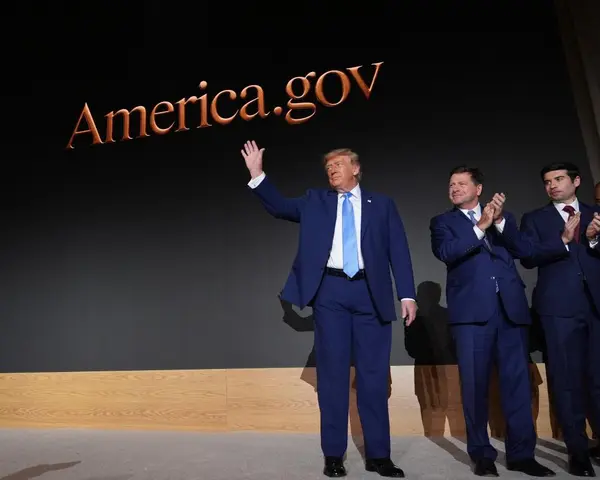
The announcement was made Tuesday at an unused industrial shipyard in Sparrows Point, Baltimore County, where the Trump administration is seeking to demonstrate its commitment to expanding America’s naval manufacturing capacity and accelerating the production of military equipment. The project is being presented as part of a broader effort to strengthen the US defence industrial base and reduce delays associated with traditional procurement and manufacturing processes.
The planned facility, which Anduril intends to call “Arsenal Two”, is expected to receive $2.9bn in funding from the US Navy, while another $3.7bn is expected to come from private investment. The factory is ultimately expected to manufacture torpedo tubes and other components for Virginia-class nuclear-powered attack submarines.

The project places Anduril in a new and highly specialised area of defence manufacturing. The company is best known for autonomous military systems, artificial intelligence, surveillance technologies and unmanned platforms. Although it has previously produced smaller unmanned maritime systems, it has not been publicly known as a major manufacturer of components for crewed nuclear-powered submarines.
That transition has attracted considerable attention because submarine construction is among the most technically demanding areas of the US defence industry. The Virginia-class submarine programme involves complex engineering, highly regulated production processes and strict security requirements. Establishing a new supplier capable of meeting those standards will therefore be a significant undertaking.
Anduril has indicated that the facility will not be ready to begin producing ship components until 2030, meaning the project will take several years before it begins contributing directly to submarine production. The long timeline reflects the scale of the investment as well as the challenge of establishing a new manufacturing operation for specialised naval systems.
Trump used the announcement to promote his administration’s ambitions for a stronger and faster American military production system. His administration has repeatedly argued that the US needs to increase the speed at which ships and other defence equipment can be designed, manufactured and delivered.
The president has also promoted the concept of a future “golden fleet”, an expression intended to convey a large and technologically advanced US naval force. The proposed Baltimore facility is expected to form part of that wider strategy by increasing the number of companies involved in naval manufacturing and expanding the industrial capacity available to the Pentagon.
However, the ownership and financing structure of the project has generated questions. Trump told the audience that US taxpayers would receive a 40% stake in the shipyard. He did not provide a detailed explanation of what that statement meant, leaving uncertainty over whether the federal government would actually hold an equity interest in the operation or whether he was referring to another form of public financial participation.
The issue is particularly significant because the project involves billions of dollars in public funding while remaining under the ownership of a private defence company. The arrangement highlights the increasingly close relationship between the US government and private technology firms as Washington seeks to modernise military production.
Anduril’s political connections have also placed additional attention on the announcement. Luckey, the company’s founder, is a significant Republican donor and fundraiser. He has hosted fundraising events for Republican politicians, including Trump, and has contributed millions of dollars to Republican political causes over recent years.
Trump described Luckey as a friend and praised him as a brilliant individual during the Maryland event. Luckey himself was not present at the ceremony.
The political relationship has become even more notable following a recent appointment involving the Pentagon. US Defence Secretary Pete Hegseth named Luckey as an adviser to “Project Meridian”, a recently launched initiative examining the future of warfare. Luckey has been an outspoken advocate of autonomous military technologies and the increasing use of artificial intelligence in defence.
His involvement in discussions about the future of warfare has reinforced Anduril’s position as one of the technology companies seeking to play a larger role in the US military establishment.
The company’s rise reflects a broader transformation taking place inside the American defence sector. Traditional contractors have historically dominated large military programmes, particularly shipbuilding, aircraft and nuclear weapons systems. Technology companies such as Anduril are increasingly seeking to enter these markets by combining software, artificial intelligence, robotics and autonomous systems with conventional defence manufacturing.
Supporters argue that newer companies can move faster than traditional defence contractors and can introduce technologies more quickly. They say that reducing bureaucratic barriers and encouraging competition could help the US military respond more rapidly to emerging threats.
Acting Navy Secretary Hung Cao strongly promoted that argument during the event. He described the planned facility as a partnership between the Navy and Anduril that could overcome bureaucratic obstacles and accelerate military production.
Cao offered unusually enthusiastic praise for Anduril despite the company’s limited history in submarine-related manufacturing. Addressing sailors gathered at the event, he declared that Anduril would manufacture the systems being discussed and repeatedly referred to the administration’s growing emphasis on artificial intelligence and what he called “super intelligence”.
His remarks also took a confrontational turn when he issued a stark warning to potential adversaries. Cao said the United States could enter an enemy country secretly and seize senior individuals while they were sleeping if the US were provoked. The language was strikingly aggressive and underscored the administration’s broader emphasis on deterrence and military strength.
The event took place against the backdrop of a changing global security environment in which the US Navy is seeking to maintain its technological and strategic advantage. American officials have increasingly raised concerns about the size and capabilities of rival naval forces, particularly as China continues to expand its maritime power.
For the Navy, increasing submarine production and maintaining existing fleets are central elements of long-term strategic planning. Nuclear-powered attack submarines provide the US with capabilities ranging from intelligence gathering and surveillance to anti-submarine warfare and long-range strike missions.
Yet expanding shipbuilding capacity has proved difficult. American naval programmes have faced challenges involving costs, workforce shortages, supply chains and production delays. The Trump administration has therefore placed renewed emphasis on attracting private investment and bringing new companies into defence manufacturing.
Anduril’s involvement could potentially broaden the industrial base, but the company will have to demonstrate that it can meet the demanding technical, security and quality standards associated with submarine components.
The unused industrial site in Sparrows Point provided a symbolic backdrop for the announcement. Uniformed sailors, including personnel associated with the USS Billings, were present as officials outlined the project’s ambitions. Some sailors had reportedly been rerouted from their expected return journey following deployment in the Caribbean so they could attend the presidential event.
For the administration, the gathering offered an opportunity to connect investment in advanced technology with the everyday experience of military personnel. For Anduril, it marked an important step towards becoming a more significant player in one of the most strategically important areas of US defence manufacturing.

The project nevertheless raises questions that are likely to remain unresolved until more details about its ownership, governance and financial arrangements emerge. The role of public money, the proposed taxpayer stake and the company’s political connections are likely to receive continued scrutiny as construction and development progress.
If successfully completed, Arsenal Two could represent a major expansion of Anduril’s role in the US defence industry and provide additional manufacturing capacity for the Navy. But the facility is still years away from production, and its ultimate impact will depend on whether the company can translate its experience in autonomous technology into the highly specialised world of submarine manufacturing.
The Baltimore project therefore represents more than the construction of another defence factory. It is also a test of Washington’s strategy of combining public investment with private technological innovation at a time when the United States is attempting to rebuild and modernise its military-industrial capacity. How effectively that partnership works could influence the future direction of American naval production for years to come.
Related News:
 UK Prepares Aircraft Carrier for Middle East Crisis
 USS Gerald R Ford Ends Record Naval Deployment
 Trump orders US troop pullout from Germany
 Trump likens US Navy actions to ‘pirates’
 Trump dismisses concerns over 250-day carrier deployment
 Trump Asked Xi About Buying US Weapons
 US Sends Third Carrier to Middle East
 Germany Pledges €1bn Military Aid to Ukraine
 Lithuania Offers to Fund Permanent US Military Base
 Canadian Veterans Condemn Trump Allies’ Military Remarks
 US National Guard Member Killed in DC Shooting
 Government Unveils Northern Powerhouse Rail Plans
 Trump press secretary attacks reporter over ICE question
 Kyrsten Sinema Faces High-Profile Lawsuit Over Marriage Interference
 ‘He Believed Help Was Coming’: Why Iran’s Protesters Feel Betrayed
 Trump Fed bid heads to Supreme Court
 Trump officials continue false claims after Alex Pretti shooting
 Partial US Government Shutdown Hits Homeland Security Funding
 Thousands Protest ICE Operations in Nationwide US Day of Action
 Epstein Files Reveal Trump Officials’ Emails with Financier
 Thousands Protest ICE in New York Against Trump Deportation Campaign
 Sinema payment row deepens after $9,000 transfer claim
 Nurses’ families fear breakup under UK immigration crackdown
 California Democrats Vow Trump Reckoning
 Trump’s Surgeon General Pick Evades Vaccine Questions
 Adelaide University Faces Backlash Over Event Cancellation
 Can King Charles Calm Trump on Key US Visit?
 Melania Trump Epstein remarks spark survivor backlash
 Trump Signals Hope for New Iran Talks as Ceasefire Fades
 US Catholics Caught Between President and the Pope
 GOP Senator Criticizes Trump’s Feud With Pope Leo XIV
 UK Stands Firm on Falklands Amid US Rift
 Investigation Into Anti-Trump Motives After Gala Shooting
 Trump Defiant After Washington Hotel Shooting
 Identity Revealed: Suspected Washington Gunman Named
 Judge halts deportation of Yemeni refugees in US
 White House Security Case Sparks Political Firestorm
 Trump approval plunges amid Iran war fears
 Ohio’s Battle for Trust: Democrats Vying to Flip the Buckeye State
 US ‘Narco Boat’ Strikes Draw Global Outcry
 Afghan Families Left in Limbo Face Risk of Deportation
 Tensions Emerge in Netanyahu-Trump Alliance
 US Awaits Iran Reply on New Ceasefire Proposal
 Immigration Judges Fear Pressure in Trump Era
 Kevin Warsh sworn in as Fed chair amid economic backlash
 US green card applicants must apply from abroad, DHS says
 Tulsi Gabbard exits after turbulent intelligence tenure
 Hormuz Talks Near Critical Stage
 Discontent grows around Putin amid war strain
 DeSantis’s ‘Alligator Alcatraz’ Faces Final Shutdown
 Prosecutor Proposes Law to Combat Election Deceit
 House Curbs Trump’s War Powers in Rare Rebellion
 AOC Backs El-Sayed in Tight Michigan Senate Primary
 US Courts Back Trump on Park Signage Removals
 Trump’s Mount Rushmore Speech: A Divisive Anniversary
 Trump Refuses to Sign Housing Bill, But Law Takes Effect
 Houthis Strike Saudi Arabia as Middle East Tensions Rise
 Trump Hardens Canada Trade Stance as Talks Stall
 Trump Calls Iran War ‘Small Potatoes’ Despite US Deaths
 Trump gives $45,000 holiday gifts to White House aides
 New Mexico Takes Facebook to Trial Over Data Scandal
 US Networks Suspend Trump White House Pool Coverage
 Democrat Says ICE Restricted Detention Camp Oversight
 Xi urges Trump to avoid US-China military conflict
 Lula accuses Trump of seeking control over Brazil
 Republican Senator Questions Trump Ad Spending
 Brazil Election Draws Religion Into Final Campaign
 Lula Warns of Bolsonaro Family Return as Brazil Votes
 DOJ Declines to Reopen Powell Renovation Probe
 Musk’s DOGE Sparks Turmoil Inside US Government
 Families Await USS Abraham Lincoln Homecoming
 Yemen government launches offensive against Houthis
 US bombers leave RAF Fairford after terror threat
 White House defends new aide over anti-Biden photo
 Quebec separatists return to power without majority
 Bolsonaro Dynasty Gains Momentum in Brazil
 Trump Comments on Iran Strike Draw US Backlash
 Argentina Protesters Resist Milei’s Land Sale Drive
 Okinawa US Troops Face Curfew After Murder Case
 Vance Demands Iran Cut Nuclear Enrichment