Published: 10 October 2026. The English Chronicle Desk. The English Chronicle Online.
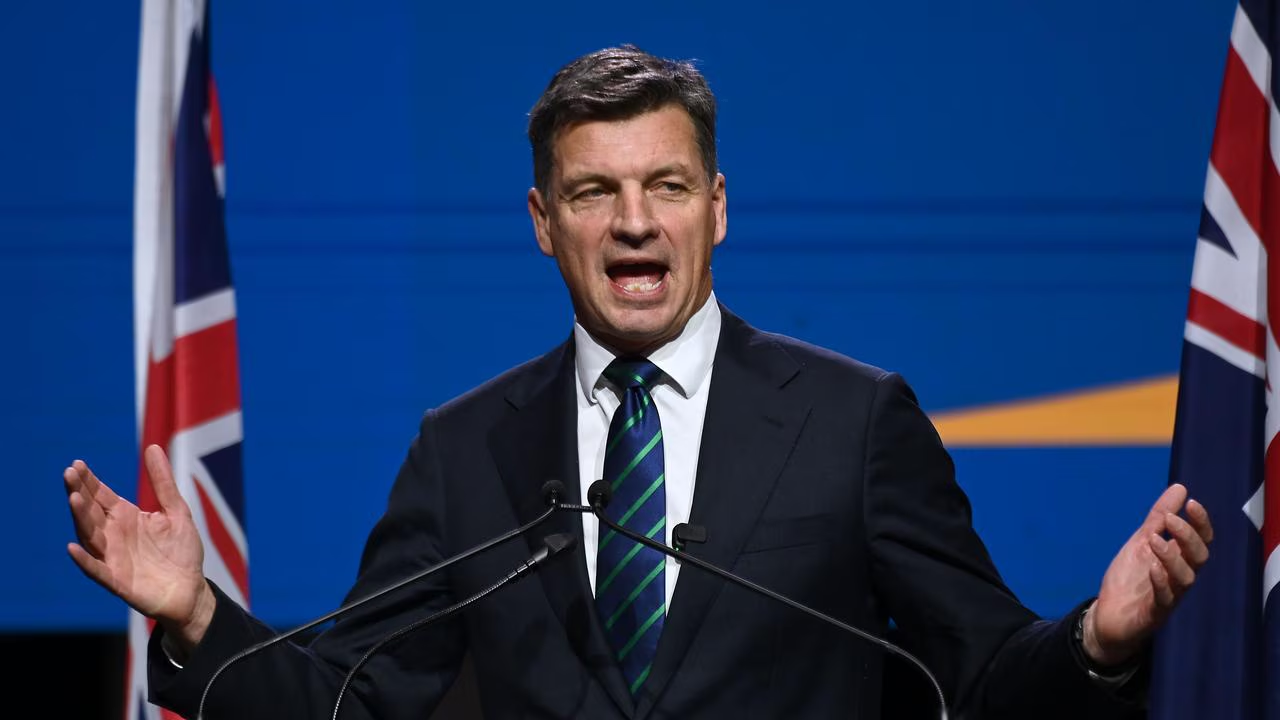
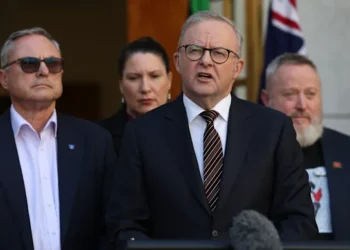
Australia’s conservative political movement has been rocked by a public clash between Liberal Party leader Angus Taylor and One Nation leader Pauline Hanson, exposing deep divisions over climate policy, immigration and the future of the country’s right-wing parties. Speaking at the Conservative Political Action Conference (CPAC) Australia in Brisbane on Saturday, Hanson dismissed Taylor as a “smarmy management consultant” and warned supporters not to trust the Liberal-National Coalition, even as she offered to cooperate with it to remove the governing Labor Party from office.
The confrontation unfolded during a gathering that brought together leading conservative figures at a time when the Coalition is struggling to regain political support and One Nation has been polling strongly. Taylor used his address to acknowledge past mistakes made by Coalition governments and appeal to conservative voters to give his party another chance. Hanson, however, challenged the credibility of that message, arguing that the Liberals and Nationals had helped create the problems they now promise to solve.
The exchange highlighted a difficult strategic question for Australia’s conservative parties: whether they can work together to challenge Labor while competing for voters who have become dissatisfied with the established political order. Although both sides oppose the current government, their disagreements over policy, leadership and political trust threaten to complicate any future cooperation.

Taylor’s appearance was particularly notable because it was the first time a sitting Liberal Party leader had addressed CPAC Australia. The event provides a platform for conservative activists, politicians and commentators, and the reception given to speakers can offer an indication of divisions within the broader right-wing movement.
The contrast between Taylor’s reception and Hanson’s was striking. Hanson received a standing ovation from most of the audience when she took the stage, followed by enthusiastic applause at the end of her speech. Taylor’s address received a standing ovation from fewer than half those present, while parts of the audience heckled him during a subsequent interview.
Hanson used her speech to attack what she described as the political “uniparty”, a term she applied to both Labor and the Coalition. She argued that the two major political groupings had alternated in government without adequately addressing the concerns of ordinary Australians.
“Australians despise [Prime Minister Anthony] Albanese,” Hanson said, before adding that voters did not want a management consultant replacing him either. Her description of Taylor referred to his professional background before entering politics, including work as a management consultant at the global firm McKinsey.
The remark was designed to question whether Taylor represented a genuine break from the political establishment. Hanson argued that the Coalition should not expect voters to forget its previous decisions simply because its current leadership had adopted a more conservative position.
“The uniparty have taken turns running this country into the ground. Both must be held accountable for the position they’ve put us in,” she told the conference.
Climate policy became one of the central points of disagreement. Hanson criticised the former Coalition government’s commitment to achieving net-zero greenhouse gas emissions, a target that Taylor has since abandoned. Her remarks drew on a longstanding argument among sections of the Australian right that climate policies place excessive burdens on businesses, households and energy users.
Hanson questioned why voters should trust the Liberals to reverse a policy they had previously supported. She also criticised the establishment of the eSafety commissioner, an office responsible for aspects of online safety and regulation, saying the Coalition’s record gave conservatives reasons to doubt its current promises.
The audience responded with boos when Hanson referred to the net-zero commitment and the eSafety commissioner. Her proposal for a royal commission into net zero, including an examination of decisions made by both Labor and Coalition governments, further demonstrated her determination to frame the issue as a question of political accountability.
Taylor had already acknowledged the controversy in his own speech. He admitted that Coalition governments had made important mistakes and specifically criticised their decision to support the net-zero target. He also said immigration numbers had been allowed to rise and pointed to increased public spending during the COVID-19 pandemic as another area where past decisions required reassessment.
“Your frustrations about where we let you down in the recent past are understandable and reasonable. Believe me, I share those frustrations,” Taylor told the audience.
The admission represented an attempt to recognise the concerns of voters who have moved away from the traditional conservative parties. Rather than defending every decision made by previous Liberal and National governments, Taylor sought to present his leadership as a new phase for the Coalition, with a clearer ideological direction and a stronger commitment to conservative policies.
He described the Coalition as “conviction-led and unashamedly on the right” and urged attendees to continue supporting the Liberals and Nationals, arguing that they remained the most credible alternative government. Although he did not directly name One Nation during the speech, he acknowledged that some people in the audience might have doubts about the Coalition.
Immigration policy provided another test of Taylor’s appeal. He promoted the Coalition’s recently announced plan to reduce net overseas migration, but his proposed targets drew an unfavourable reaction from sections of the audience. The plan envisages a net overseas migration target of 130,000, followed by targets of 160,000 in the third and fourth years.
The boos suggested that some attendees wanted more substantial restrictions than those proposed by the Coalition. Immigration has become an increasingly prominent political issue in Australia, with debates covering population growth, housing affordability, pressure on public services, labour-market needs and the country’s future economic direction.
For the Coalition, the challenge is to develop a policy that appeals to voters demanding lower migration while accounting for economic and demographic considerations. For One Nation, the issue offers an opportunity to distinguish itself from the major parties by presenting its approach as more decisive.
Taylor’s difficulties became more visible during an on-stage interview conducted by television presenter and podcaster Karl Stefanovic. Stefanovic asked how the Coalition could cooperate with One Nation and whether competition between the conservative parties risked dividing their shared electoral support.
Taylor responded, “I’m splitting nothing,” prompting loud heckling from sections of the audience. Several attendees shouted for him to answer the question, suggesting that the issue of cooperation remained unresolved for many of those watching.
Stefanovic then told Taylor that he was also fighting for his party’s survival. Taylor accepted the assessment, replying, “Sure,” before arguing that the Coalition had previously been too cautious and had effectively been frightened of its own shadow.
The exchange captured the pressure facing the Liberal leader. He must persuade voters that the Coalition has learned from past mistakes while also demonstrating that it remains a viable governing alternative. At the same time, he faces competition from One Nation, which has benefited from dissatisfaction among voters who believe the established parties have failed to respond to their priorities.
Despite her criticism, Hanson did not rule out cooperation. She told the audience that One Nation would work with the Liberals and Nationals to remove the Labor government. She also suggested that conservative voters could place the Liberals or Nationals second on their ballot papers, behind One Nation.
That offer illustrates the complicated relationship between the parties. Hanson wants to preserve One Nation’s independent identity and attract voters who distrust the Coalition, but she also recognises that conservative parties could benefit from cooperation against Labor. Taylor, meanwhile, needs to avoid alienating voters who support One Nation without weakening the Coalition’s claim to be the principal alternative government.
Any practical arrangement would require decisions about how the parties coordinate their campaigns, manage policy differences and respond to competing electoral interests. Their positions on climate change, immigration and regulation could make negotiations difficult, particularly if One Nation demands commitments that the Coalition is unwilling to adopt.
The conference also featured Nationals leader Matt Canavan, who appeared alongside Taylor and Hanson on its opening morning. The gathering is scheduled to continue through Saturday and Sunday, with other speakers including One Nation MP Barnaby Joyce, former British prime minister Liz Truss and Australian opposition figures Dan Tehan and Sarah Henderson.
The presence of prominent conservative politicians from Australia and overseas gives the event significance beyond the speeches themselves. It provides an opportunity for competing political movements to appeal to activists, test messages and establish their positions within a changing conservative landscape.
The latest clash comes as One Nation has consistently outpolled the Coalition in recent polling, increasing pressure on the Liberal and National parties to rebuild their support. If that trend continues, it could reshape the balance of power on the Australian right and make cooperation between the parties both more necessary and more difficult.
For Taylor, the immediate task is to convince conservative voters that his leadership represents a meaningful change rather than a temporary response to declining support. Acknowledging past mistakes may help, but voters will also judge whether the Coalition can explain its new policies, demonstrate their practical benefits and establish a credible alternative to Labor.
Hanson faces a different challenge. Her strong reception at CPAC suggests that her message resonates with many conservative activists, but translating enthusiasm at a political conference into broader electoral success requires sustained organisation and a clear strategy. Cooperation with the Coalition could increase the right’s chances of defeating Labor, yet it could also expose differences between One Nation’s promises and the compromises required in government.

The Brisbane confrontation therefore revealed more than a personal dispute between two political leaders. It exposed a struggle over who speaks for Australia’s conservative voters and whether the established Coalition can recover its authority while a rival party challenges its record.
Both leaders have expressed a desire to remove Labor from government, but their competing approaches show that a shared opponent does not guarantee political unity. The future of Australia’s conservative movement may depend on whether its parties can resolve their disagreements over policy and trust before voters make their next decisions at the ballot box.
Related News:
 Trader Wins Unfair Dismissal Case After Overseas Work
 Chornobyl Still at Risk 40 Years After Disaster
 Athens Mayor Moves to Tackle Overtourism Crisis
 Ukraine Urges UK to Seize Russian Oil Tankers
 Capitalism ‘Suicidal’, Warns Petro at Climate Summit
 Norway Doubles Down on Oil and Gas for Europe Energy Security
 Pope Meets Families in Italy Toxic Waste Zone
 Olympus Awaits Unesco Heritage Recognition
 Burnham unveils £65m drought aid for farmers
 France Eases Cheese Rules as Drought Hits Farms
 Turkmenistan Begins Fixing Major Methane Mega-Leaks
 Nepal Flood Survivors Face Unimaginable Loss
 Green Leader Targets Starmer’s Former Seat
 UK Subsidence Claims Surge After Record-Breaking Summer
 Nepal Tunnel Rescue Offers Hope Amid Flood Devastation
 Australia gives users control over social media algorithms
 Thames Water Revises Oxfordshire Mega-Reservoir Plan
 Australia Renewables Reach Record 80% Grid Demand
 Tropics May Wait Longest for Net-Zero Climate Benefits
 Nepal PM calls deadly flood a global climate warning
 New UK Homes in Flood Zones Face Insurance Risk
 Burnham Opens Door to Possible UK Return to EU
 Spain Sets Snap Election as Housing Crisis Deepens
 Pacific Climate Summit Draws Limited Global Leaders
 NSW Leader Downplays Impact of Landmark Coal Ruling
 Sydney Town Square Plans Face New Planning Hurdle
 UK Water Firms Earn Millions From Industrial Wastewater
 UK Pharmacy Body Drops Teva After Ethical Concerns
 Turkey Rules Out Troops in Saudi Arabia’s Houthi Conflict
 Panama Hit by Powerful 7.7-Magnitude Earthquake
 Three Convicted in Mexico Surfing Trip Murders
 France Faces Debt Crisis as Protests and Markets Clash
 Premier League Faces a Crisis of Trust After City Verdict
 Australian Advocates Seek Subsidised Drugs for PMOS
 Canada Passes Carney’s First Budget in Tight Parliamentary Vote
 ‘Black Tax’: Burden, Pride and Survival for African Workers
 UK Energy Reform Could Cut Bills by £200
 Rising Costs Force Families to Rethink Days Out
 Oil Slides, Stocks Jump on Trump Peace Signals
 Iran Drone Strike Hits Kuwaiti Oil Tanker in Dubai Port
 M&S Demands Urgent Action on Rising Violent Retail Crime
 Oil Prices Surge Above $120 Amid Iran Blockade Fears
 Coalition pushes fossil fuel phaseout plan
 Trump approval plunges amid Iran war fears
 Global Conflict Hits Home As Bullock Warns Of Economic Pain
 US Awaits Iran Reply on New Ceasefire Proposal
 High Street Crisis: Fears Grow Over Post Office Closures
 Oil Markets Face ‘Red Zone’ Threat Amid Iran Crisis
 Farage and Reform UK Reshape British Politics
 Starmer Leadership Under Pressure After Setbacks
 UK Economy Suffers a Sharp Downturn as Iran Conflict Bites
 Ukraine Creates Long-Range Strike Command
 England and Norway Fans Turn Miami Into World Cup Carnival
 UK Schools Struggle as Classrooms Top 40C
 Powerful 7.7-Magnitude Earthquake Hits Eastern Indonesia
 Gen Z turns to BirdTok for a gentler digital escape
 Trump Hardens Canada Trade Stance as Talks Stall
 Trump Calls Iran War ‘Small Potatoes’ Despite US Deaths
 Swedish Mining Push Puts Sami Land Rights Under Pressure
 UK plans tougher Israel stance with settlement trade ban
 UK Retailers Accused of Breaking Refund Laws
 UK Heatwaves Set to Worsen Pothole Damage, RAC Warns
 Mayors Could Gain Greater Powers Over Water Firms
 UK Rent Gap Puts Low-Income Families Under Pressure
 Trump gives Xi red-carpet welcome as trade truce extends
 Chinese Hybrid Car Surge Raises EU Auto Industry Concerns
 Xi urges Trump to avoid US-China military conflict
 Frome Community Loses Bid for Major Regeneration Site
 Madrid Tent Camp Grows as Spain Housing Crisis Deepens
 UK University Strikes Spread as Financial Pressure Grows
 Healey urged to act as UK energy bills rise 4%
 French Debt Fears Put Euro Markets Under Pressure
 Badenoch Raises Prospect of 2027 UK Election
 French School Protests Escalate as 400 Schools Close
 Salinas Struggles to Keep the American Dream Alive
 Families Await USS Abraham Lincoln Homecoming
 South Korea Probes Fuel Shipments to Russia
 Ministers Push ATO to Reconsider Credit Card Ban
 Houthi Missile Claim Sparks Riyadh Airport Disruption
 Trump’s Russian Diesel Deal Sparks Ukraine Fury