Published: 15 October 2026. The English Chronicle Desk. The English Chronicle Online.
Poland’s transformation from a communist state struggling with shortages and economic uncertainty into one of the world’s 20 largest economies is reshaping the country’s relationship with its workforce, its European neighbours and its own future. After decades in which millions of Poles left their homeland in search of higher wages and better opportunities abroad, a growing number are returning, drawn by rising salaries, modern infrastructure, expanding technology businesses and the prospect of building successful careers at home.
The country’s economic ascent has become one of Europe’s most striking development stories. National income surpassed $1tn last year, placing Poland among the world’s largest economies, while average incomes have moved steadily closer to those in western Europe. Yet the transformation has brought new challenges. Rising housing costs, widening social inequalities, political divisions and diminishing labour-cost advantages are forcing Poland to reconsider what its next stage of economic growth should look like.
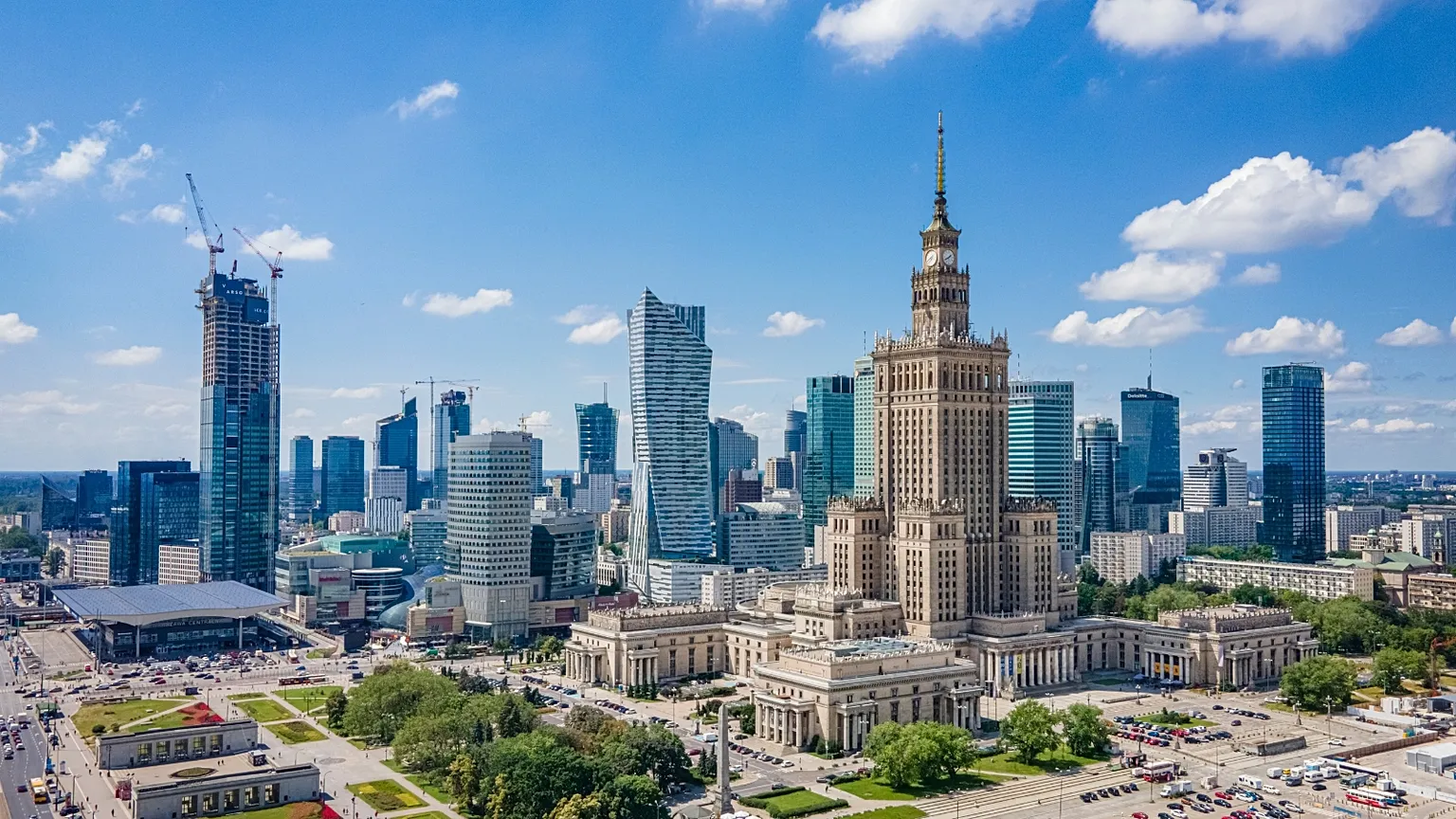
Warsaw offers a powerful illustration of the country’s changing fortunes. From the observation deck of Varso Tower, a 310-metre skyscraper completed in 2022, the Polish capital’s expanding skyline stretches across a city that has undergone extraordinary change since the end of communist rule. The tower stands above the Palace of Culture and Science, a monumental Soviet-era building that remains a symbol of Poland’s complicated history.

For some residents, the palace represents decades of political oppression and foreign domination. Others regard it as an important architectural landmark and a reminder of the country’s past. The contrast between the historic structure and the modern skyscraper has become a visual expression of Poland’s journey from a centrally planned economy towards a modern European economic power.
Cezary Błaszczyk, managing director of HB Reavis in Poland, which owns Varso Tower, has described the building’s height as symbolic of the country’s progress beyond communism. His colleague Natalia Kasperska has similarly portrayed the tower as a connection between Poland’s difficult past and its increasingly ambitious future.
The economic figures help explain that confidence. Poland’s income per capita rose from approximately 40% of the European Union average in the mid-1990s to 81% in 2025, according to figures cited in the economic assessment. Excluding oil-exporting economies and financial centres, Poland has achieved an exceptionally rapid convergence towards western European income levels.
International Monetary Fund projections indicate that Polish income per person could soon surpass that of countries such as Japan and Spain. Although comparisons depend on the economic measure used and future growth rates, the projections underline the scale of the country’s progress over the past generation.
The transformation followed a difficult transition from communist rule. In the 1980s, shortages of essential goods, long queues and economic instability were part of everyday life. Polish deputy foreign minister Marcin Bosacki has recalled waiting for hours to purchase basic foods such as butter and meat while the communist government imposed martial law.
The growth of the Solidarność labour movement, particularly among workers at the Gdańsk shipyards, helped challenge the political system. Pope John Paul II’s 1979 pilgrimage to his homeland also became an important moment in the development of national confidence and opposition to communist rule. Poland subsequently moved towards democracy around 1989–90, opening the way for market reforms and deeper integration with western institutions.
Membership of the North Atlantic Treaty Organization in 1999 and accession to the European Union in 2004 strengthened that transformation. Access to European markets, investment, funding and the freedom to work across much of the EU helped Polish businesses expand while giving citizens new opportunities to study and build careers abroad.
However, the same freedom that supported Poland’s integration also accelerated the departure of skilled workers. For years, substantial numbers of Polish citizens moved to Britain, Germany and other European countries in search of higher salaries. In Britain, Polish workers became particularly visible in construction, plumbing, hospitality, manufacturing and other sectors that depended on migrant labour.
The expression “Polish plumber” became a familiar feature of British political debates about European migration and freedom of movement in the years leading up to the Brexit referendum. Behind that stereotype was a broader economic reality: many Polish workers believed that employment abroad offered a faster route to financial security than remaining at home.
That pattern is now changing. Since Brexit took full effect following the transition period in 2021, the number of Polish nationals leaving the UK has reportedly been twice the number arriving in each year. Germany has also experienced a notable shift, recording more non-German citizens moving to Poland than travelling in the opposite direction in 2024 for the first time on record.
These developments do not mean that migration has stopped or that every returning worker has abandoned opportunities abroad. Instead, they suggest that Poland has become a more attractive destination for people who previously felt compelled to leave. Higher wages, improved professional opportunities, family connections and the ability to work for international employers from Poland have all contributed to that change.
Architects Jedrzej Kolesinski and Krzysztof Gornicki illustrate the trend. Both moved to London during their twenties to work at the international architecture firm Foster + Partners. They later returned to Warsaw, where they now work on major projects, including the design of Poland’s proposed new airport, described as one of Europe’s largest greenfield infrastructure developments.
For Gornicki, the decision to return was about more than salary. Poland had changed dramatically during his years abroad, and returning offered the opportunity to contribute to his country’s development while raising a family closer to relatives. Warsaw also offered a greener urban environment and, in several respects, a more affordable lifestyle than London.
Their experience reflects a wider change in how skilled professionals assess career opportunities. International companies increasingly allow employees to work on projects spanning continents without requiring them to live permanently in traditional global business centres. For Polish professionals, that means it is increasingly possible to combine international work with the personal advantages of living at home.
Warsaw’s streets reflect the broader transformation. Modern electric trams pass glass-fronted office towers, while construction cranes and new developments reshape the skyline. Digital services have entered everyday life, even in traditional establishments. At Prasowy, one of the capital’s oldest milk bars, customers can still enjoy familiar Polish dishes such as beetroot soup and dumplings, but orders are now taken through a digital touchscreen.
The historic Parade Square surrounding the Palace of Culture and Science has also undergone redevelopment, replacing parts of its former expanse of asphalt with greener public spaces. Further investment is planned as Warsaw pursues long-term ambitions to strengthen its international profile, including its bid to host the 2040 Summer Olympics.
Yet Poland’s growing prosperity has created pressures that were less prominent when the country was primarily competing on the basis of low costs. International investment and demand for urban housing have helped push up living expenses, making parts of Warsaw increasingly difficult for lower-income residents to afford.
Income inequality remains a significant concern, and the benefits of growth are not distributed evenly across households or regions. Rising salaries may improve living standards, but higher rents, food prices, transport expenses and restaurant bills can reduce the gains experienced by ordinary workers.
The country’s labour-cost advantage is also narrowing. For years, comparatively inexpensive skilled workers helped attract multinational manufacturers and service companies. Volkswagen established major automotive operations, Cadbury developed manufacturing activities and international banks such as JPMorgan expanded support operations in Poland.
Average labour costs were reported at approximately €19.10 an hour, including wages, taxes and other employment expenses. That remains around half the level in Germany and France, but the gap is gradually closing. For businesses considering where to locate factories, offices and service centres, the difference between Poland and western Europe is becoming less decisive than it once was.
Wage growth demonstrates the scale of the change. Poland’s average monthly wage increased more than threefold in nominal terms between 2004 and 2025, reaching 8,904 złoty, equivalent to approximately £1,723, last year. Deutsche Bank figures cited in the report indicate that net monthly salaries in Warsaw rose by 120% between 2016 and 2025, moving above those in Rome and Lisbon.
However, higher nominal earnings do not automatically translate into equivalent increases in purchasing power. Housing, services and everyday consumption have also become more expensive. The cost of a meal for two in Warsaw now reportedly exceeds that in Tokyo, while the price of a cappuccino has doubled.
Rafał Brzoska, the billionaire founder of parcel-locker company InPost, believes the country must now move beyond the economic model that initially helped it catch up with wealthier European economies. Rather than depending on relatively inexpensive labour, Poland needs to improve productivity, develop higher-value manufacturing, expand knowledge-intensive services and invest more effectively in technology.
His argument reflects a central challenge for countries approaching higher-income status. Once wages rise, maintaining competitiveness becomes increasingly dependent on workers producing more value through better skills, improved infrastructure, technological innovation and efficient business operations.
Energy costs and regulation will also influence Poland’s next phase of development. Companies need reliable and reasonably priced electricity to compete internationally, particularly as digital infrastructure, data processing and advanced manufacturing become more important. Improvements in regulatory certainty could also help businesses invest for the long term.
Poland is increasingly positioning itself as a regional technology hub. A $1bn investment fund backed by public and private capital is intended to support technology startups and artificial intelligence businesses. The country’s expanding pool of skilled graduates and technically trained workers provides a foundation for this ambition.
One prominent example is ElevenLabs, an AI audio-generation and voice-cloning company valued at approximately $11bn in the account. Named after 11 November, Poland’s Independence Day, the company illustrates how businesses connected to the country can compete in global technology markets rather than concentrating exclusively on lower-cost services.
Poland’s educational system is another important asset. Its performance in international student assessments has placed it among the stronger European countries in mathematics, while the proportion of adults with higher education qualifications exceeds that of Germany, according to the figures cited in the report.
The country’s creative technology industry provides another example of its changing ambitions. CD Projekt Red, the Warsaw-based developer behind The Witcher and Cyberpunk 2077, began in the 1990s as a business importing computer games produced by American publishers. It has since developed into an internationally recognised game studio competing for programmers, artists, designers and other highly skilled employees.
Co-chief executive Michał Nowakowski has recalled a period when young Poles often felt they needed to catch up with western countries. His family experienced displacement during the era of martial law, and a visit to London as a teenager left him impressed by British retail and popular culture.
Today, he believes that sense of inferiority has largely disappeared among younger generations. They increasingly see themselves as capable of competing internationally, supported by universities, technical education and a domestic economy that offers opportunities previous generations could scarcely imagine.
Nevertheless, Poland’s economic future is not guaranteed. Political tensions between nationalist president Karol Nawrocki and the liberal government led by Donald Tusk have intensified, while far-right parties have attracted a substantial share of public support. Disagreements over national priorities could complicate policymaking as the country approaches its next general election.
Defence spending and energy security add further complexity. Poland is investing heavily in its military capabilities amid Russia’s aggression against Ukraine, wider European security concerns and uncertainty about the future level of American engagement. Such spending can support domestic manufacturing, infrastructure and technological development, but it also places pressure on public finances and competes with other spending priorities.

The central question is whether Poland can turn its economic catch-up into a sustainable model based on innovation and productivity. The country has moved far beyond the shortages and constraints of its communist past, and the return of skilled workers suggests that the opportunities available at home have become more compelling.
Yet rising living costs, political divisions, energy challenges and the need for higher productivity demonstrate that the next stage will be more complicated than the first. Poland can no longer rely solely on inexpensive labour and its ability to attract companies seeking lower operating costs.
Its future success will depend on whether it can create a more innovative economy, improve living standards across society and provide compelling reasons for talented people to stay or return. The transformation from a country losing its skilled workforce to one attracting people back is a significant achievement. Sustaining that reversal may prove to be one of the most important tests of Poland’s economic maturity.
Related News:
 EU-China Talks Target Surge in Hybrid Car Imports
 Shell Refineries Set for Record Refining Profits
 EU Caps Chinese Hybrid Car Imports at 350,000
 Gen Z Graduates Face Economic Uncertainty
 UK Risks Falling Behind in AI Race
 Swedish Mining Push Puts Sami Land Rights Under Pressure
 UK retailers plan 100,000 placements for young people
 Oil nears $100 as Saudi attacks shake markets
 John Lewis Losses Widen to £124m as Confidence Falls
 AI CEOs Call for Slower Development
 Thames Water Revises Oxfordshire Mega-Reservoir Plan
 Anthropic Backs $31.9bn Queensland Data Centre
 Nvidia chief rejects AI extinction fears
 Labour Apprenticeship Scheme Faces Slow Start
 Chinese Hybrid Car Surge Raises EU Auto Industry Concerns
 UK Trade Losses Grow Without EU Product Deal
 AO Acquires Jessops in Camera Retail Expansion
 Beaverbrooks Boss Calls for Relief on Business Costs
 Why Americans Feel Ripped Off by Rising Prices
 Ukraine Faces $45m Hourly Cost From Missile Alerts
 Poundland Rescue Bid Could Protect 11,000 Jobs
 Bank Chief Calls for Power to Intervene in AI
 French Debt Fears Put Euro Markets Under Pressure
 UK Diesel Reaches £2 as Inflation Surges Across Europe
 Minister Rejects Fears of UK Diesel Shortage
 UK Weighs Chinese Car Tariffs Amid EU Trade Push
 BT Agrees £400m TalkTalk Rescue Deal
 Informa Agrees £2.24bn Deal to Buy Clarion
 Asos Investigates Hack Claims After Customer Alerts
 Poland Pushes Energy Security Beyond Russian Gas
 Samsung Heads for Record Profit as AI Chip Demand Surges
 IMF Warns Governments Over Rising Debt Burdens
 Doubts Grow Over Trump’s $15bn Iowa Steel Plant
 Japan Beer Giants Face Cartel Probe
 Tesco Raises Profit Forecast as Consumer Confidence Holds
 France Urges UK to Consider Returning to EU
 Ministers Push ATO to Reconsider Credit Card Ban
 Australia Delays Tax Credit Card Payment Ban After Backlash
 Firmus Abandons Major ASX Listing Amid Investor Doubts
 France Faces Debt Crisis as Protests and Markets Clash
 Healey Plans £1bn Online Marketplace Tax Crackdown
 Global Tech Sell-Off Deepens on Inflation and AI Debt Fears
 City & Guilds pay surge sparks backlash amid £22m cuts
 Albanese Rejects Gas Export Tax Push
 Kevin Warsh sworn in as Fed chair amid economic backlash
 Cannes filmmakers split over AI’s role in cinema
 London Launches First Self-Driving Taxis
 Trump Hardens Canada Trade Stance as Talks Stall
 Billionaire Chris Rokos poised to leave UK
 JPMorgan Boss Warns Against UK Bank Tax Rise
 UK Retailers Accused of Breaking Refund Laws
 Mayors Could Gain Greater Powers Over Water Firms
 Entain Plans 400 Job Cuts After Profit Update
 OpenAI Reveals Six Cases of Concerning AI Behaviour
 US Sanctions Open New Battle for Cuba Assets
 Tom Watson Takes Senior Role at Palantir
 UK Retail Sales Rebound as Consumers Spend More
 UK Rent Gap Puts Low-Income Families Under Pressure
 Calls Grow to Expand UK National Wealth Fund
 Australia Renewables Reach Record 80% Grid Demand
 MPs Defend UK Economic Watchdog Against Critics
 Trump gives Xi red-carpet welcome as trade truce extends
 Xi urges Trump to avoid US-China military conflict
 Madrid Tent Camp Grows as Spain Housing Crisis Deepens
 UK University Strikes Spread as Financial Pressure Grows
 Burnham Opens Door to Possible UK Return to EU
 Sheikh Tahnoon and the UAE’s AI Ambitions
 Healey urged to act as UK energy bills rise 4%
 UK house price growth slows as mortgage rates rise
 UK borrowing costs surge as global bond sell-off deepens
 Badenoch Raises Prospect of 2027 UK Election
 French School Protests Escalate as 400 Schools Close
 Salinas Struggles to Keep the American Dream Alive
 North Sea Strike Threatens UK Fuel Supplies
 France Schools Protests Draw 250,000 as Police Clash
 UK house prices stall as mortgage costs rise
 Royal Mail Plans Up to 2,500 Job Cuts
 UK Water Firms Earn Millions From Industrial Wastewater
 UK Pharmacy Body Drops Teva After Ethical Concerns
 Hall and Woodford Win Nobel Economics Prize