Published: 23 October 2026. The English Chronicle Desk. The English Chronicle Online
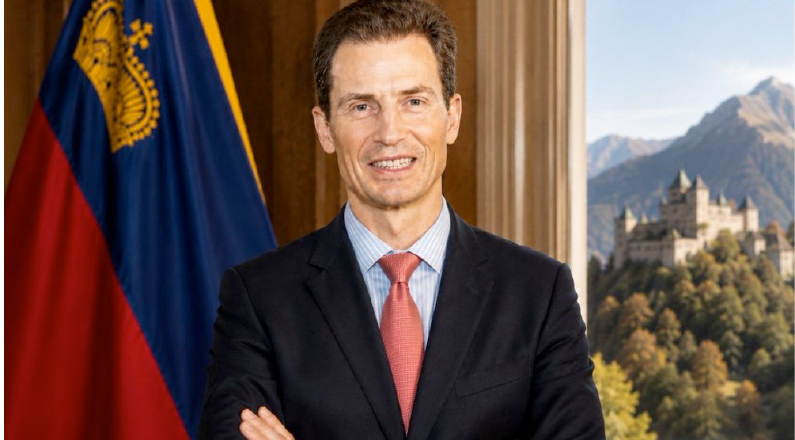
In a move that has sent shockwaves through the small Alpine principality and reignited European debates over monarchical authority, Liechtenstein’s Hereditary Prince Alois has officially exercised his constitutional veto for the very first time in his reign. The crown prince used his executive powers to quash a landmark, parliament-approved bill aimed at liberalizing the nation’s strict abortion laws and aligning them with broader European standards. The decision has left women’s rights advocates and pro-choice campaigners deeply dismayed, marking a tense moment in the country’s political history.
The rejected legislation was introduced following a groundswell of public advocacy, propelled by a citizens’ initiative that gathered significant momentum. Launched earlier in the year, the petition secured over 4,970 signatures—representing roughly a quarter of Liechtenstein’s eligible voting population and easily surpassing the 1,000-signature threshold required to compel parliamentary consideration. The proposed overhaul sought to decriminalize abortion up to the twelfth week of pregnancy, allow health insurance schemes to cover the medical costs of the procedure, and repeal a long-standing nationwide ban on sharing clinical information regarding abortion access.

Despite intense debate and vocal warnings from the monarchy, the principality’s parliament narrowly voted in favor of passing the reform. Public opinion polls conducted in late summer indicated that a clear majority of the electorate—roughly 62 percent—supported modernizing the law. However, the formal confirmation from the Princely House effectively brings the democratic effort to a halt, as Liechtenstein’s constitution dictates that no parliamentary bill can enter into force without the sanction of the monarch.
In an official statement released by the royal house, officials confirmed that Prince Alois chose to withhold his royal assent following thorough deliberation. The statement explained that the regent remained firmly convinced that the proposed reforms were incompatible with ensuring adequate protection for unborn life, which the royal house considers a fundamental legal and moral value. While the prince expressed some willingness to consider lifting restrictions on the dissemination of healthcare information regarding overseas services, he stood firm on maintaining the core legal ban on domestic terminations.
Campaigners and civil rights organizers expressed immense disappointment following the announcement, describing the intervention as a direct blow to the nation’s democratic processes. Activists pointed out the profound contradiction of a single hereditary ruler overriding a legislative initiative backed by a quarter of the electorate and passed by elected lawmakers. Rights groups noted that while Prince Alois had threatened to exercise his veto on two previous occasions during his regency—both times in relation to attempts to alter abortion statutes—this marks the first instance where he has actively executed the power to defeat a law.
Liechtenstein maintains some of the most restrictive reproductive health laws in Europe. Under current criminal codes, abortions are strictly prohibited except under extreme and narrowly defined circumstances, such as when a woman’s life is in immediate danger or when a pregnancy arises from sexual assault. A legal modification in 2015 permitted women to travel abroad for terminations without facing prosecution upon their return. Consequently, an estimated 40 women each year travel to neighboring Switzerland or Austria to access clinical facilities.
Advocates argue that maintaining the prohibition does not prevent women from seeking terminations but merely forces them to endure financial and logistical burdens. Traveling across borders requires considerable expenses, personal transportation, and complex arrangements for childcare or time off work, disproportionately affecting low-income individuals. Campaigners expressed concern that the royal veto will perpetuate deep-seated social taboos and leave affected women feeling isolated in a society where seeking essential healthcare remains legally forbidden.
The decision has also thrust Liechtenstein’s unique constitutional framework back into the international spotlight. Unlike most modern European constitutional monarchies where royal assent is purely ceremonial, the ruling prince of Liechtenstein retains extensive executive and legislative powers. The monarch possesses absolute authority to veto legislation, dissolve parliament, dismiss government officials, and appoint members of the judiciary. In a 2012 national referendum, the public voted overwhelmingly to preserve the royal veto following a contentious national debate, solidifying the monarch’s role as the final arbiter of national policy.
Commentators and historians noted that the principality has frequently trailed behind neighboring European states on issues concerning gender equality and civil rights. Liechtenstein was notably the last sovereign state in Europe to grant women full voting rights, doing so only after a narrow referendum outcome in 1984. Activists had hoped that the 2026 initiative would signal a historic shift toward progressive legal standards, but the royal intervention ensures that the status quo will remain unchanged for the foreseeable future.
The controversial legislation emerged from a powerful grassroots campaign initiated earlier in the year by the Free List political party alongside local civil rights activists. Seeking to bring Liechtenstein into alignment with modern European healthcare standards, organizers spearheaded a national citizens’ initiative that collected more than 4,970 verified signatures—representing nearly a quarter of the entire voting population of the small Alpine nation and easily surpassing the 1,000-signature legal threshold required to compel parliamentary debate. The draft bill outlined a comprehensive reform package aimed at decriminalizing voluntary terminations within the first twelve weeks of pregnancy, integrating procedure costs into national public health insurance schemes, and repealing a long-standing statutory ban on disseminating clinical information and counseling resources regarding reproductive healthcare services.
Following intense legislative deliberation, Liechtenstein’s parliament voted narrowly to pass the historic measure, reflecting shifting societal attitudes within the traditionally conservative principality. Public opinion data published shortly before the parliamentary decision further indicated that a resounding 62 percent of eligible voters favored modernizing the country’s abortion statutes. However, the democratic mandate collided head-on with the unyielding authority of the Princely House, as constitutional doctrine dictates that no bill passed by parliament can attain the force of law without the explicit formal sanction and signature of the reigning monarch.
In an official statement released directly from Vaduz Castle, the royal house formally confirmed that Prince Alois had decided to withhold his sanction from the legislation. The official communique stated that, following exhaustive review and careful moral consideration, the regent remained thoroughly convinced that the proposed legislative overhaul was fundamentally incompatible with ensuring the adequate legal protection of unborn life, which the monarchy regards as an inviolable legal and ethical value. While the prince signaled a minor willingness to consider future discussions regarding the relaxed distribution of medical information to facilitate post-care consultations, he remained entirely immovable on maintaining the strict domestic criminal ban on elective terminations.
The royal intervention triggered immediate outrage among activists who had met directly with the prince just hours before the decision was announced. Campaign leaders characterized the veto as a severe blow to Liechtenstein’s public identity, arguing that the decision exposes a fundamental democratic deficit when a single non-elected ruler can summarily discard the expressed political will of a quarter of the electorate and a legislative majority. Rights groups highlighted that while Prince Alois had issued formal warnings regarding his intent to veto abortion reform on two previous occasions during his regency—most notably during a high-profile national debate in 2011—this event marks the absolute first time in his reign that he has actively brandished and executed his royal veto to strike down enacted legislation.
Liechtenstein currently maintains some of the most stringent reproductive laws anywhere on the European continent. Under current penal codes, terminating a pregnancy is treated as a criminal offense punishable by law, with exceedingly narrow exceptions granted only in dire circumstances where a pregnant woman’s life is in imminent medical danger or when a pregnancy directly results from aggravated sexual assault. A legal adjustment enacted in 2015 decriminalized the act of women traveling across national borders to seek medical terminations in adjacent jurisdictions, effectively creating a system where citizens routinely cross into neighboring Switzerland or Austria to undergo clinical procedures.
Advocates point out that the royal veto does virtually nothing to reduce the actual number of terminations sought by residents, but instead perpetuates a systemic burden that forces an estimated 40 women each year to seek care abroad. Campaigners emphasized that traveling to foreign clinics imposes significant financial strains, transportation barriers, and childcare complications that disproportionately disadvantage lower-income individuals. Furthermore, activists expressed deep concern that maintaining the domestic criminal status will further entrench social stigma, forcing women to navigate medical emergencies in secrecy and fear within a country where the head of state resides in a medieval castle overlooking a society where their personal bodily autonomy remains outlawed.
The episode has once again drawn sharp international scrutiny to Liechtenstein’s distinct political structure, which stands as a rare anomaly in modern Western democracy. Unlike most contemporary European constitutional monarchies, where the royal assent is viewed as a purely symbolic state duty, the ruling monarch of Liechtenstein holds immense, concrete power over every branch of government. Under the national constitution, the prince possesses absolute power to veto any act of parliament, dissolve the national legislature at will, dismiss the government or individual ministers, and exercise decisive influence over judicial appointments. In 2012, when citizens voted in a high-stakes national referendum regarding whether to strip the crown of its legislative veto, the electorate voted overwhelmingly to retain the monarch’s sweeping executive prerogatives, effectively cementing the prince as the ultimate arbiter of national policy.
Legal historians and sociologists note that Liechtenstein has historically lagged behind the rest of the continent regarding civil liberties and gender equity. The principality earned global notoriety as the very last sovereign country in Europe to grant women the right to vote in national elections, a right achieved only after a razor-thin referendum passed in 1984. Campaigners had expressed cautious optimism that the 2026 legislative drive would mark a progressive turning point, breaking the nation’s historical pattern of being the final European territory to embrace social reform.

Despite the profound legal setback, organizers insist that the national initiative achieved a historic breakthrough by permanently shattering decades of deep-rooted cultural taboos surrounding reproductive rights. Open public debates, media discussions, and community forums across the country have forced the issue into the mainstream spotlight, particularly among younger generations demanding institutional accountability. Nevertheless, with Prince Alois exercising absolute constitutional control and showing no willingness to compromise on core legal prohibitions, reformers face an formidable structural wall, leaving Liechtenstein’s abortion laws frozen in place while the rest of Europe moves forward.
While the immediate legislative effort has been blocked, leaders of the initiative emphasized that the public campaign succeeded in breaking decades of silence surrounding reproductive healthcare. Open public discussions across the country have challenged long-standing cultural stigmas, sparking conversations among younger generations. Nevertheless, with the prince holding unyielding constitutional power and showing no indication of altering his position, reformers face an uphill battle in their quest to bring Liechtenstein’s legal framework in line with the rest of Western Europe.
Related News:
 US Court Restores Abortion Pill Access Temporarily
 Mystery Grows Over Mitch McConnell’s Health
 Controversial Vaccine Trial Approved in Guinea-Bissau
 One Nation Pledges $2,000 Baby Subsidy in Victoria
 Suu Kyi Appears in Rare Photos After Royal Gift
 Helen Haines Loses Both Legs After Alleged Attack
 China-critical UK academics face ‘extremely heavy’ pressure from Beijing
 US Justice Department Files Lawsuit Against California Over Partisan Voting Maps
 Trump Deploys DHS to Charlotte in Major Arrest Operation
 Congress Approves Release of Epstein Files, Trump Expected to Sign
 Texas Governor Faces Lawsuit From CAIR
 Chinese & Japanese Boats Clash Near Disputed Islands
 Putin Meets US Envoy Amid Key Ukraine Peace Talks
 UK and EU Signal Fresh Push for Defence Cooperation Talks
 Thousands Protest ICE Operations in Nationwide US Day of Action
 Sydney Protest Clash Triggers Police Probe
 Report Says Pezzullo Acted ‘Recklessly’ in Dealings
 Hungary election: Orbán faces biggest test amid scandal
 Suspected Plot Targets Pipeline Before Hungary Vote
 Charles Faces Trump Test in High-Stakes US Visit
 US Court Ruling Reshapes Voting Rights Landscape
 Cartel crackdown raises fears of fresh violence
 US states redraw maps after voting rights ruling
 Judge halts deportation of Yemeni refugees in US
 Trump warns Iran as Middle East tensions surge again
 FDA Chaos Deepens as Trump Eyes Makary Exit
 Former ICC prosecutor condemns US sanctions
 Gunman Killed After White House Security Shootout
 Le Pen’s Popularity Holds Despite Conviction
 Exeter Approves Saudi Military Training Partnership
 UN expert urges UK to rethink Israel policy
 UK plans tougher Israel stance with settlement trade ban
 Miliband Rejects Chief Rabbi’s West Bank Warning
 Israel Accused of Undermining Palestinian Life
 Disabled Travellers Seek Fairer UK Care Rules
 Saudi Pact Raises Risk of Pakistan Entering War
 US Networks Suspend Trump White House Pool Coverage
 Japan PM Backs International Criminal Court
 King Refers Jamaica Slavery Petition to Privy Council
 Irish PM Backs Coach in Israel Football Dispute
 UK Pauses Chagos Deal Amid US Opposition
 Republican Senator Questions Trump Ad Spending
 French Student Protests Escalate Into Violent Clashes
 Burnham Opens Door to Possible UK Return to EU
 Drumcree Talks Falter as Legal Challenge Deepens
 UK-France Returns Deal Faces Expiry as Talks Stall
 Trump Immigration Policy Faces New Legal Tests
 French School Protests Escalate as 400 Schools Close
 Latin America women fear rollback of rights
 Palace Rejects Funding Andrew’s Police Legal Challenge
 Trump Rally Faces Protests as Texas Race Tightens
 Tanker Attacked Near Qatar as Hormuz Tensions Escalate
 UK Mission in East Jerusalem to Remain Open
 Trump Says He Deserves Nobel Peace Prize
 EU Divisions Deepen Over Israel Policy
 Delhi Detains Protest Leaders as Youth Rally Escalates
 Brazil Court Scandal Threatens Lula as Bolsonaros Rise
 Millions Face Tougher Medicaid Rules From January
 Ohio Airports Become Key Hubs for ICE Deportation Flights
 Farage Rejects Claims Reform Would Let Troops Shoot Migrants
 India’s Voter Roll Crisis Sparks Nationwide Protests
 Ukrainian Soldier Faces Trial Over Nord Stream Blast
 Judge Blocks Trump White House Media Ban
 Trump Warns Alaska Voters Over Rival Dan Sullivans
 Trump Targets Arizona and Montana Amid GOP Election Worries
 Brazil Cuts Working Week to 40 Hours in Lula Election Boost
 Gadi Eisenkot: Israel’s Anti-Netanyahu Challenger
 Trump Rallies GOP as Senate Democrats Boost Key Races
 Talarico Faces Tough Voter Test in Texas Senate Race
 Trump’s Ambassador Picks Face Growing Controversy
 Serbia Leader Linked to Controversial Trump Tower Plan
 UK Could Rejoin EU Through a Switzerland Plus Deal
 Trump Falsely Questions Ossoff’s Election Legitimacy
 Macron Condemns Violence as France Faces 2,400 Arrests
 Helen Haines Loses Leg in Alleged Targeted Attack
 Fifth Foreign Firm Withdraws From Jerusalem Cable Car Plan
 Meta Faces Election Bias Claims Ahead of Brazil Runoff
 Omar Claims US Raid on Residence Was Meant to Intimidate
 Aung San Suu Kyi Speaks to Son After Five Years
 Russia Strikes Kyiv After Agreeing to Resume Peace Talks