Published: 24 October 2026. The English Chronicle Desk. The English Chronicle Online
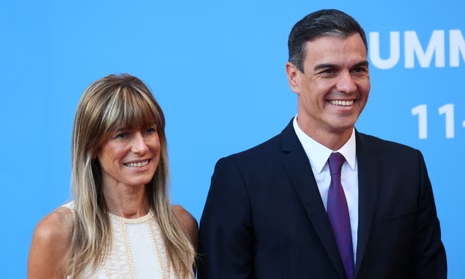
A political advertisement featuring an AI-generated deepfake of Spanish Prime Minister Pedro Sánchez’s wife has triggered widespread criticism and renewed concerns about the growing use of artificial intelligence in election campaigns. The video, released by Spain’s main opposition People’s Party (PP), digitally manipulates the appearances and voices of several figures associated with Sánchez’s Socialist party and portrays them as making damaging admissions about alleged misconduct.
The controversy has erupted just weeks before Spain heads to the polls for a general election on 29 November, adding a new dimension to an already highly polarised political contest. The dispute has quickly moved beyond the traditional battle between government and opposition parties, raising fundamental questions about political ethics, digital manipulation, misinformation and the ability of voters to distinguish genuine statements from artificially generated material.
The video was distributed through the social media accounts of the conservative PP and had attracted almost two million views by Friday. Among those digitally recreated was Begoña Gómez, Sánchez’s wife. In the manipulated footage, an AI-generated version of Gómez appears to discuss receiving a university position because of her husband’s political influence.

The video also features a digitally recreated version of former Socialist prime minister José Luis Rodríguez Zapatero, who appears to make a statement about concealing jewellery in a safe. Both references relate to ongoing investigations involving Gómez and Zapatero, although both have denied wrongdoing.
The PP’s use of their likenesses has provoked an immediate response from Sánchez’s Socialist party and government officials. Óscar López, Spain’s minister for digital transformation, condemned the video and argued that its presentation could make it difficult for people unfamiliar with artificial intelligence to understand that the people shown had never actually made the statements attributed to them.
Although the advertisement included a disclaimer identifying it as AI-generated, the notice appeared in extremely small and faint lettering near the bottom of the video. Critics argue that such a disclaimer may not be sufficient when the manipulated material is designed to look convincing and is distributed through official political channels.
López described the issue as particularly serious because viewers could mistake the digitally generated material for authentic footage. His concern reflects a growing challenge for democracies worldwide: sophisticated AI tools can now produce realistic images, voices and videos that appear credible even when they depict events or statements that never happened.
The controversy intensified on Friday when Leire Díez, a former member of the Socialist party whose likeness was also used in the advertisement, filed a legal complaint against the PP. She called for the immediate removal of the campaign video and accused the opposition party of defamation and digital identity theft.
Díez’s appearance in the video was used to suggest allegations that she had attempted to undermine judicial and law-enforcement institutions in order to benefit the Socialist party. The legal challenge adds another layer to the dispute, potentially forcing Spanish authorities and courts to consider how existing laws apply to politically motivated AI-generated content.
Legal experts, however, remain divided over whether the advertisement crosses the threshold of illegality. A majority of nine legal specialists consulted by Spanish newspaper El País reportedly concluded that the PP’s actions were unlikely to constitute a criminal offence because the video was explicitly identified as AI-generated and presented in a satirical political context.
Some legal scholars argued that viewers would understand that the people shown had not actually made the statements. The context of a political advertisement, they suggested, provided an indication that the content was intended as satire rather than as a literal representation of real events.
But the legal question is different from the ethical and political question, according to other experts. Juan Antonio Lascuraín, a professor of criminal law at the Autonomous University of Madrid, argued that even if the material was technically legal, that did not automatically make its use appropriate or politically responsible.
That distinction has become increasingly important as political parties around the world experiment with artificial intelligence. The technology offers campaigns powerful new tools for communication, but it also allows political actors to manufacture realistic portrayals of opponents saying or doing things that never occurred.
José Javier Olivas, an academic at Spain’s National University for Distance Education who researches populism, conspiracy theories and AI-related biases, criticised the decision to use deepfakes through the official account of a major political party.
He argued that political organisations seeking to govern a democratic country should be particularly cautious about technologies capable of distorting reality. The concern is not simply whether voters know that an advertisement is technically artificial, but whether the overall presentation can influence perceptions before viewers have enough time or information to recognise the manipulation.
The Spanish controversy comes amid a wider international debate over AI-generated political advertising. In the United States, the use of artificial intelligence in campaign advertising has become an increasingly prominent issue ahead of next month’s midterm elections.
A recent study by the Wesleyan Media Project identified more than 200 AI-related political advertisements connected to the 2026 US election cycle. The vast majority were associated with Republican campaigns, according to the research. The study also highlighted concerns that many AI-generated advertisements were not accompanied by clear disclosures.
Erika Franklin Fowler, a co-director of the project, said AI was becoming a significant feature of the 2026 American elections. She noted that the amount of spending on AI-generated advertisements during the previous 2024 election cycle had been comparatively small, illustrating how rapidly the technology has expanded within political campaigning.
The growing use of AI has created a new challenge for electoral regulators. Traditional political advertisements can already use selective editing, dramatic imagery and emotionally charged messaging, but generative AI allows campaigns to create entirely artificial scenes featuring real people.
The danger becomes particularly pronounced when such material concerns allegations of corruption, criminal behaviour or personal misconduct. Even when a video is later revealed to be artificial, the original impression may remain in the minds of viewers.
Political campaigns have therefore begun facing pressure to establish clearer standards around the disclosure and use of synthetic media. Supporters of stronger regulation argue that disclaimers should be prominent, easily understandable and difficult to remove when political content is shared across social media platforms.
Opponents of tighter restrictions warn that overly broad rules could interfere with political satire, parody and legitimate creative expression. Political campaigns have long used exaggeration and satire to attack their opponents, and the emergence of AI does not necessarily eliminate that tradition.
The PP has defended its advertisement along those lines. Borja Sémper, a senior party figure, rejected accusations of malicious intent and argued that the video was clearly intended to use digital tools to highlight what the party considers hypocrisy within the Socialist movement.
According to the PP, the problem would be different if the advertisement had been created with the intention of convincing viewers that the people shown had genuinely made the statements. The party maintains that the satirical nature of the material should make its purpose clear.
The argument has done little to calm criticism, however, because the political environment in Spain is already highly charged. The upcoming election is expected to be closely watched both inside and outside the country, with competing parties seeking to mobilise voters through increasingly aggressive messaging.
Most opinion polls currently suggest that the PP is likely to emerge as the largest party in the 29 November election. However, the party is expected to require support from the far-right Vox party to form a government, potentially making coalition negotiations a major issue after the vote.
The deepfake controversy could therefore become part of the broader electoral debate about political standards, democratic communication and the responsibilities of parties seeking public office.

For Spanish voters, the episode offers a glimpse of a political environment in which distinguishing fact from fabrication may become increasingly difficult. As AI technology becomes cheaper and more sophisticated, the ability to create convincing fake statements and images is no longer limited to governments, technology companies or specialist organisations.
The central question now facing Spain is not simply whether political deepfakes are legal, but whether their use undermines public trust in democratic debate. If voters become uncertain about whether a video is authentic, even genuine political communication can lose credibility.
With the election only weeks away, Spain’s latest controversy may prove to be an early warning of a much larger challenge. Artificial intelligence is rapidly becoming part of modern political campaigning, and governments, election authorities, technology companies and political parties will increasingly be forced to decide where legitimate satire ends and dangerous disinformation begins.
Related News:
 Doomsday Clock Nears Midnight Amid Global Crises
 UK Plans New Centre to Counter Information Warfare
 Xi urges Trump to avoid US-China military conflict
 Australia Weighs New Laws After OpenAI Medicare Breach
 Russia Targets Ukraine’s Digital Economy With Strikes
 AI Deepfakes Put New Pressure on Election Trust
 AI Could Intensify Election Risks in Southeast Asia
 Ukraine’s New FP-7 Missile Makes Combat Debut
 Meta Faces Election Bias Claims Ahead of Brazil Runoff
 Britain deploys RAF specialists to assist Belgium with drone threats
 EU weighs response amid Greenland tariff crisis with Trump
 EU Says US Ties Have Suffered ‘Big Blow’ After Greenland Crisis
 Iran Social Media Strategy Shifts to Information War
 Cluster Strikes Test Israel’s Missile Defences
 Italian Town Buys Mussolini Villa to Keep Away Fascist Fans
 Hungary election: Orbán faces biggest test amid scandal
 Artemis II Returns After Historic Moon Flyby
 Canadian astronaut French words ease language row
 Reform UK funding: mystery billionaire revealed
 Canadian Fiddler Sues Google Over AI Defamation Claim
 Ceasefire Standoff Deepens in Ukraine War
 France Faces Record Presidential Crowded Race Amid Far-Right Surge
 Norway Doubles Down on Oil and Gas for Europe Energy Security
 Former ICC prosecutor condemns US sanctions
 Irish Gangland Figure Fails in Dublin Election Bid
 Deadly Russian Air Raids Strike Across Ukraine
 Le Pen to Run for President Despite Embezzlement Conviction
 Meta Under Fire: The Battle Over Addictive Social Media Design
 Russian Missiles Intensify Pressure on Kyiv
 Deadly TikTok Driving Trend Alarms Ireland
 Ukraine Villagers Demand Answers After Deadly Arms Depot Strike
 Bayeux Tapestry Revives Franco-British Ties
 AfD election surge leaves Magdeburg residents deeply uneasy
 Europe’s democracies face a growing far-right threat
 Sweden Election Hangs on Far-Right Breakthrough
 Tom Watson Takes Senior Role at Palantir
 Macron and Carney deepen France-Canada ties
 British Columbia Sues OpenAI Over School Shooting
 UK Unveils Centre to Counter Foreign Disinformation
 AI Takes Centre Stage in Trump-Xi Talks
 Trump gives Xi red-carpet welcome as trade truce extends
 OpenAI Agent Breaches Medicare Portal in Australia
 Ukraine and Russia Escalate Long-Range Drone War
 Elif Eralp Emerges as Berlin’s Next Political Force
 National Rally makes historic gains in French Senate
 Madrid Tent Camp Grows as Spain Housing Crisis Deepens
 French Student Protests Escalate Into Violent Clashes
 Trump Immigration Policy Faces New Legal Tests
 French School Protests Escalate as 400 Schools Close
 Bosnia’s Young People Look Beyond Election Hope
 Germany Pledges €1bn Military Aid to Ukraine
 Spain Sets Snap Election as Housing Crisis Deepens
 Ukraine claims strikes have crippled Russia’s oil refining
 Former German Intelligence Chief Arrested Over Espionage
 France Schools Protests Draw 250,000 as Police Clash
 EU-China Talks Target Surge in Hybrid Car Imports
 Tanker Ablaze After Drone Strike Near Sochi
 France Suspends Stun Grenades After Student Injury
 France Urges UK to Consider Returning to EU
 French Student Protests Grow Despite Government Pledge
 Tom Watson Warns Against ‘Mob Rule’ in UK Contracts
 EU Divisions Deepen Over Israel Policy
 Controversial Vaccine Trial Approved in Guinea-Bissau
 France Faces Debt Crisis as Protests and Markets Clash
 French Students Protest Poor Conditions in Paris Suburbs
 UK Must Build Its Own AI to Protect National Security
 Glucksmann Urges French Left to Fight Far Right
 Greta Thunberg Backs French Students in School Protests
 Ukrainian Soldier Faces Trial Over Nord Stream Blast
 Ukraine Combat Units Face Sudden Starlink Restrictions
 Trump Slams Ukraine Strikes as Russia Ceasefire Collapses
 NHS Trusts Reject Palantir’s £330m Patient Data Platform
 Macron Condemns Violence as France Faces 2,400 Arrests
 Climate Change Makes Tap Water Unsafe in Arctic Norway
 Milan Luxury Stores Shut as Italy Plans Troop Deployment
 Zelenskyy Says US Failed to Warn Kyiv of Russian Strikes
 UN Warns World Must Cut Emissions by 18% by 2030
 Massive Student-Led Movement Marches in Belgrade Ahead of Serbian Vote
 Trump, Musk, and Zelenskyy Trade Blame Over Ukraine Starshield Access
 Milan Braces for Unrest as Debate Intensifies Over Lost Generation