Labour MPs have raised concerns that Prime Minister Andy Burnham’s proposed 10-year strategy for Britain could fall short of the radical economic reforms needed to revive the country’s struggling industrial sector. Members of the Reindustrialisation Research Group (ReRG), many of whom represent constituencies in former industrial areas, fear that the government’s long-term blueprint may contain ambitious political promises without sufficiently detailed policies or practical measures to deliver them. Their concerns are expected to be presented directly to Cabinet Office minister Sally Jameson during a meeting on Wednesday, as pressure grows within the governing party for the prime minister to turn his industrial ambitions into a clear programme of action.
The dispute highlights growing unease among some Labour MPs about the direction of the government’s economic strategy. While Burnham has repeatedly placed industrial renewal at the centre of his political vision, members of the ReRG argue that British manufacturers continue to face serious obstacles, particularly high energy costs and insufficient government support. They fear that without stronger intervention, the country could experience further industrial decline rather than the revival promised by ministers.

Andy MacNae, who leads the Reindustrialisation Research Group, said significant gaps remained in the government’s approach. He described the prime minister’s 10-year plan as an opportunity to address those weaknesses but suggested that the briefings provided to MPs so far had not demonstrated the level of ambition required.
MacNae acknowledged that ministers had engaged constructively with the group, but said MPs were still waiting for more substantial proposals. He warned that unless the government developed a stronger strategy, Britain risked failing to achieve meaningful reindustrialisation and continuing along a path of deindustrialisation.
Another member of the group, Jonathan Hinder, also called for more decisive action. He argued that industrial renewal could not be achieved through political slogans alone and said the country was moving in the wrong direction. In his view, the government needed to introduce significant measures rather than rely on broad statements of intent.
The concerns are particularly significant because many members of the group represent constituencies in Britain’s former industrial heartlands. These areas played an important role in Labour’s landslide victory in the 2024 general election and remain central to the party’s political support. Their representatives are therefore keen to see policies that create manufacturing opportunities, strengthen local economies and provide secure employment.
For communities that have experienced decades of industrial decline, the promise of renewed manufacturing carries economic and social importance. The closure of factories and the loss of traditional industrial employment have affected local businesses, household incomes and opportunities for younger generations. Labour MPs representing these constituencies believe that a credible industrial strategy must deliver visible improvements rather than simply establish long-term aspirations.
Burnham has presented his 10-year plan as the defining blueprint for his government, bringing together economic, public service and infrastructure reforms. His proposals include placing essential utilities under public control, reducing household bills and establishing a national care service. The strategy is intended to provide a broad direction for the country over the coming decade, rather than focus solely on short-term political priorities.
The prime minister had previously indicated that the plan would be published before the end of 2026. However, he suggested last week that its release could be delayed until January. The possible postponement has added to uncertainty among Labour MPs, some of whom are concerned that the process may be moving more slowly than expected.
The timing matters because ministers have repeatedly described industrial renewal as a central part of Britain’s future economic development. Burnham has indicated that manufacturing will sit at the heart of his economic agenda, while Chancellor John Healey promised at this year’s Labour conference to usher in what he called a new age of industrialisation. However, MPs within the ReRG argue that the government’s current policy decisions do not yet match the scale of those commitments.
One of the group’s main concerns involves the cost of energy for industrial businesses. High electricity and gas prices have placed considerable pressure on manufacturers, particularly companies operating energy-intensive facilities. These costs can weaken the competitiveness of British businesses against international rivals and discourage investment in new production capacity.
Before the budget, the ReRG urged Healey to expand the British Industrial Competitiveness Scheme, which provides reduced energy costs to approximately 10,000 businesses. The group considers the scheme an important instrument for supporting companies facing high operating expenses and maintaining the viability of domestic manufacturing.
However, the chancellor’s budget did not include an expansion of the business support programme. Instead, Healey announced a £100 council tax rebate intended to help households manage their energy bills during the winter. Although the household measure was welcomed as support for consumers, its announcement disappointed MPs who had been expecting additional assistance for industrial companies.
Members of the ReRG now want the 10-year plan to address both immediate and long-term challenges. They are calling for direct energy bill support for industrial businesses, alongside institutional changes designed to give the government’s reindustrialisation agenda greater authority and coordination.
One proposal is the appointment of a dedicated minister for reindustrialisation. Supporters believe that a minister with specific responsibility for the programme could coordinate policy across government departments, monitor progress and ensure that industrial priorities receive sustained attention. They also want the government to empower No 10 North, its operation based in Manchester, to oversee the strategy and strengthen links between central government and regional economic development.
The proposals reflect concerns that industrial policy may become fragmented if responsibility is spread across multiple departments without a clear central direction. Manufacturing investment often depends on several factors, including energy policy, transport infrastructure, skills development, planning decisions and access to finance. MPs argue that a coordinated approach is necessary if the government intends to transform its industrial ambitions into measurable results.
There are also questions about the process through which the prime minister’s 10-year strategy is being developed. Some MPs have expressed concern that recent ministerial briefings suggest the final document could be relatively modest and followed by an extended consultation process. They fear that such an approach could delay important decisions and weaken expectations surrounding the plan.
Uncertainty has also surrounded the individuals and organisations involved in preparing the document. Peter Hyman, who previously advised Keir Starmer on his political missions, has reportedly been overseeing the writing process. However, government officials have maintained that Burnham himself will make the key decisions about the strategy.
The involvement of Boston Consulting Group has also attracted attention among Labour MPs. The consultancy, which previously employed Burnham’s chief of staff, James Purnell, has been assisting with the planning process. Some members of the ReRG have questioned whether an external consultancy should play a significant role in developing a strategy intended to reshape Britain’s industrial future.
One Labour MP reportedly criticised the arrangement, expressing disbelief at the idea of the consultancy becoming involved in the country’s reindustrialisation programme. The criticism reflects broader concerns about the role of private consultants in shaping major government policies and whether the process will remain sufficiently connected to the practical needs of industrial communities.
Downing Street has sought to clarify the consultancy’s role, stating that Boston Consulting Group is providing only one consultant to assist with the process. Burnham has also insisted that the final plan will be more ambitious than some reports have suggested.
Speaking to The Economist last week, the prime minister said people were underestimating the significance of the proposed strategy. He disputed briefings that had played down its importance and said he intended to present a clear and substantial vision for Britain. Burnham also argued that the plan would bring together different policy areas into a coherent national programme.
His comments suggest that the prime minister remains confident about the scale of the forthcoming proposals. Nevertheless, the concerns raised by Labour MPs indicate that expectations within the governing party are already high, particularly among representatives whose constituencies have experienced long-term economic challenges.
The meeting with Jameson is expected to provide an opportunity for the ReRG to explain its priorities and seek greater clarity about the government’s plans. The discussions could help establish whether the concerns raised by MPs will be reflected in the final strategy, although the precise outcome remains uncertain.
At the centre of the debate is a wider question about how Britain can rebuild its industrial capacity while dealing with high energy costs, international competition and the need for long-term investment. A successful strategy would require more than ambitious statements. It would need clear responsibilities, sustained financial support and policies capable of encouraging businesses to invest in manufacturing and creating skilled employment.

For Labour, the stakes are both economic and political. Many voters in former industrial constituencies supported the party in the expectation that it would deliver stronger regional economies and new opportunities. If the 10-year plan fails to address their concerns, the government could face growing criticism from within its own parliamentary ranks as well as from communities waiting for tangible improvements.
Burnham now faces the challenge of demonstrating that his strategy can meet those expectations. His proposed blueprint has been presented as a defining statement of the government’s long-term ambitions, but Labour MPs are demanding greater detail on how those ambitions will be achieved. As preparations continue, the debate over industrial renewal is likely to remain a major test of the government’s economic direction and its ability to turn political commitments into practical change.
Related News:
 Fashion Firms Urge UK-Made NHS and Army Uniforms
 Mayors Could Gain Greater Powers Over Water Firms
 Informa Agrees £2.24bn Deal to Buy Clarion
 Labour MPs Urge Burnham to Lead UK Reindustrialisation
 UK Doubles Steel Tariffs to 50% to Protect Domestic Plants
 BBC News Faces Deep Cuts in 2,000 Job Plan
 UK Pushes for New EU Goods Trade Deal
 Reeves Fights to Keep Treasury Role Amid Labour Turmoil
 Burnham Faces Mounting Budget Challenges
 Swedish Mining Push Puts Sami Land Rights Under Pressure
 Spire Healthcare Agrees £1bn Takeover by Toscafund
 Oil nears $100 as Saudi attacks shake markets
 John Lewis Losses Widen to £124m as Confidence Falls
 Thames Water Revises Oxfordshire Mega-Reservoir Plan
 Farage Threatens Union Funding Ban Over Reform Donations
 North Sea Firms Urge Early End to Windfall Tax
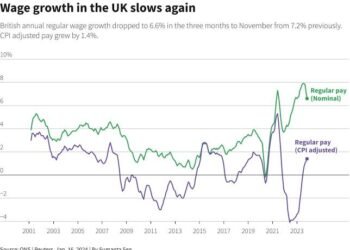 UK Pay Growth Slows to 3.9% as Rate Decision Nears
 Bank Urged to Slow Bond Sales as UK Costs Rise
 JLR Eyes NATO Market With New Defender Military Vehicle
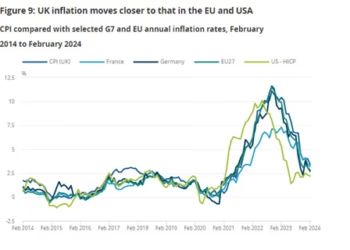 UK Inflation Hits 3.1% as Household Pressure Grows
 UK Youth Jobs Gap Reveals Deep Regional Divide
 Mayors Could Gain New Powers Over UK Water Firms
 Entain Plans 400 Job Cuts After Profit Update
 Lords Call for Tobacco-Style Gambling Ad Ban
 Next Raises Profit Forecast After Strong Summer Sales
 Tories Press Healey Over Tax Rises Ahead of Budget
 Trump Threatens EU With Tariffs Over Canada Proposal
 UK Productivity Improves as Bank Weighs Interest Rates
 Trump Threatens EU Over Canada Partnership Proposal
 Barclays Staff Push Back Against Office Return Plan
 US Sanctions Open New Battle for Cuba Assets
 Burnham Leaves Door Open to Future Brexit Reversal
 Thinktank Calls for Abolition of UK State Pension
 MPs Defend UK Economic Watchdog Against Critics
 Tony Blair Calls for Britain to Rejoin EU Within a Decade
 UK Trade Losses Grow Without EU Product Deal
 AO Acquires Jessops in Camera Retail Expansion
 Avanti West Coast Set for Public Ownership in March
 Beaverbrooks Boss Calls for Relief on Business Costs
 Dale Vince Plans New London-Wide News Operation
 Burnham Opens Door to Possible UK Return to EU
 Poundland Rescue Bid Could Protect 11,000 Jobs
 Royal Nursing Union Ends Partnership With Teva UK
 Palantir Lobbyist Had Role in Burnham Campaign
 Badenoch Raises Prospect of 2027 UK Election
 UK Diesel Reaches £2 as Inflation Surges Across Europe
 Minister Rejects Fears of UK Diesel Shortage
 London Council Warns of 150% Council Tax Rise
 UK Weighs Chinese Car Tariffs Amid EU Trade Push
 BT Agrees £400m TalkTalk Rescue Deal
 EU-China Talks Target Surge in Hybrid Car Imports
 Doubts Grow Over Trump’s $15bn Iowa Steel Plant
 France Urges UK to Consider Returning to EU
 Ministers Push ATO to Reconsider Credit Card Ban
 Australia Delays Tax Credit Card Payment Ban After Backlash
 Labour MP Urges Billions for Affordable Homes
 Labour Fears Budget Will Fail to Lift Living Standards
 IFS Warns UK Budget Faces £35bn Spending Gap
IMF Raises UK Growth Forecast Ahead of Healey’s Budget
 UK Rejects EU Pressure to Impose Tariffs on China
 Healey Plans £1bn Online Marketplace Tax Crackdown
 Business Chief Urges Burnham to Fix Brexit Damage
 UK Could Rejoin EU Through a Switzerland Plus Deal
 UK Plans Higher Training Costs for Older Apprentices
 Iran War Pushes UK Corporate Profit Warnings to Two-Year High
UK Borrowing Hits £24.5bn Ahead of Healey’s Budget
 Tax Online Sales to Save High Street, Burnham Urged
Brexit Deal Not Good Enough for Britain, Burnham Says
UK Devolution Plan Faces Test Over Regional Inequality
 UK Budget Leaves Households Facing Higher Energy Bills
 Lloyds Warns Against Extending Higher Bank Tax
 BP Profits Surge as Middle East Conflict Lifts Margins
Burnham Admits First Budget Fell Short of His Ambitions
 Virgin Media O2 Plans Thousands of Job Cuts
 Poundland Remains Vulnerable as Rescue Talks Continue
 UK House Prices Suffer Sharpest Fall in Three Years
 California Voters Reject One-Time Billionaire Tax
 Trump’s UK Ambassador Urges North Sea Drilling to Strengthen US Ties
 Millionaires group urge Reeves to introduce wealth tax to ‘lift kids out of poverty’
 Silent Tracks: Rail Line Without Passengers