
The United Kingdom’s economy has recorded its strongest quarterly growth in more than two years, with the rapid expansion of artificial intelligence (AI), cloud computing and technology-related services providing a significant boost to economic activity. Official figures show that gross domestic product (GDP) increased by 0.7% between July and September 2026, marking the fastest quarterly expansion since the beginning of 2024 and offering an encouraging signal for the country’s economic outlook.
The latest figures, published by the Office for National Statistics (ONS), indicate that the British economy performed better than many had anticipated despite persistent inflation, elevated energy prices and growing uncertainty in international markets. The expansion was largely driven by the services sector, particularly information technology, computer programming, consultancy and businesses involved in developing and implementing AI-related solutions.

The quarterly growth figure represents a significant improvement for an economy that has faced considerable pressure from higher living costs, expensive borrowing and weaker investment in several traditional industries. Economists had expected growth of approximately 0.7%, meaning the latest result was broadly in line with forecasts. Nevertheless, the strength and composition of the expansion have attracted particular attention because technology-related activities are increasingly becoming central to Britain’s economic performance.
The ONS also reported that the economy expanded by 0.2% in September compared with the previous month. This was stronger than economists’ expectations of no monthly growth. However, the statistical agency revised its estimate for August, reducing previously reported growth of 0.1% to zero.
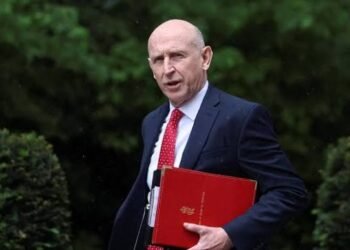
The September performance provided an additional boost to the government, particularly Chancellor John Healey, who has been under pressure to demonstrate progress in strengthening economic growth and improving living standards. The latest figures suggest that the economy has maintained considerable momentum despite difficult international and domestic conditions.
One of the most important contributors to the expansion was the information and communication sector, which grew by 2.1% during the third quarter. Increased activity in computer programming, IT consultancy and related services played a major role in the improvement. According to the ONS, technology businesses associated with artificial intelligence and cloud computing reported some of the largest increases in turnover.
The development highlights how the adoption of AI is beginning to influence different areas of the British economy. While public discussion often focuses on the potential of AI to replace certain jobs or transform professional occupations, its contribution to economic activity is increasingly visible in administrative, technical and business-support services.
Sarah Coles, head of personal finance at investment platform AJ Bell, said artificial intelligence continued to perform a significant amount of the work supporting economic growth during the quarter. She pointed to strong activity in less visible administrative and back-office operations, where businesses are increasingly using automated systems to improve efficiency and reduce operational costs.
Her assessment suggests that the economic benefits of AI are not limited to technology companies themselves. Businesses across different industries are adopting AI-powered systems to manage information, process transactions, organise administrative activities and improve customer services. These changes can increase productivity while allowing organisations to manage larger workloads with existing resources.
The expansion has also strengthened expectations that technology investment will remain an important driver of Britain’s economic performance in the coming years. Companies involved in data infrastructure, cloud services and professional technology support are benefiting from growing demand as organisations increase their reliance on digital systems.
Chancellor John Healey described the latest economic performance as evidence of the UK’s resilience. He highlighted the country’s growth during the first three quarters of 2026, arguing that the figures demonstrated stronger momentum than Britain had experienced for several years outside the exceptional recovery period following the Covid-19 pandemic.
According to the government, GDP increased by 1.8% during the first nine months of the year. This represents a substantial improvement compared with periods of weaker economic performance and suggests that Britain could achieve stronger annual growth than previously anticipated.
Sanjay Raja, chief UK economist at Deutsche Bank, said the economy was expanding at an annualised pace of slightly more than 2.5%. He described the performance as the strongest for the first three quarters of a year since the pandemic recovery. Excluding the unusual economic conditions associated with Covid-19, he noted that it would be necessary to look back to 2017 to find comparable momentum.
However, Britain’s performance remains part of a wider international economic picture. Although the UK has demonstrated encouraging growth, it has narrowly lost its position as the fastest-growing economy among the Group of Seven major industrialised nations to the United States this year.
The services sector remained the principal engine of growth during the third quarter, expanding by 0.9%. This sector includes a broad range of activities, including financial services, professional consultancy, information technology, transportation, hospitality and other consumer-facing businesses. Its performance was particularly important because services account for a substantial proportion of Britain’s overall economic output.
The production sector also contributed positively, recording growth of 0.1%. However, the construction industry remained a significant weakness. Although construction accounts for only around 6% of total economic activity, its decline was sufficient to reduce the overall growth figure.
Construction activity has faced considerable challenges, particularly in the development of new projects and private housing. Work on new construction projects has fallen by more than 7% since the middle of 2025, while private housebuilding has declined by approximately 30% from its 2022 peak.
The weakness in residential construction raises concerns about the availability of new housing, employment opportunities and investment in infrastructure. A sustained decline could also affect businesses supplying building materials, engineering services and other construction-related activities.
Suren Thiru, chief economist at the Institute of Chartered Accountants in England and Wales, described the third-quarter figures as strikingly strong. He said the economy had demonstrated resilience despite the economic consequences of hostilities involving the United States and Iran.
Thiru also highlighted the importance of AI investment in supporting services-sector growth. According to his assessment, businesses increased investment while households maintained relatively strong spending, even as inflation continued to put pressure on household budgets.
He suggested that some consumers had continued drawing on their savings to maintain spending levels. This has helped support economic activity, although it also raises questions about how sustainable household consumption will be if living costs continue increasing.
James Smith, an economist at ING, similarly pointed to information technology and professional services as important contributors to the expansion. He noted that investment growth was closely connected to developments in the IT industry, particularly the construction and expansion of data centres.
Britain has emerged as one of Europe’s leading destinations for data-centre investment, reflecting growing demand for computing capacity to support AI applications, cloud platforms and digital services. These facilities require substantial investment in buildings, electricity infrastructure, cooling systems and advanced technology.
Although output in parts of the sector declined during August and September, Smith expects data-centre development to remain an area of relative strength in 2027. Continued investment could create opportunities for engineering companies, technology specialists and businesses providing infrastructure and professional services.
Despite the encouraging growth figures, inflation remains a major challenge for policymakers. The Bank of England recently increased its benchmark interest rate by 0.25 percentage points to 4%, seeking to contain rising prices and prevent inflationary pressures from becoming more persistent.
Higher fuel and energy costs have been among the main contributors to inflation during the year. Petrol prices have risen above £1.70 per litre, while diesel prices have approached an average of £2 per litre. Wholesale electricity prices have also reached approximately twice their level a year earlier, according to the ONS.
These increases have placed additional pressure on households and businesses. Transport companies face higher operating costs, manufacturers must manage more expensive energy bills, and families have less disposable income available for other purchases.
The strength of economic growth could also influence the Bank of England’s next interest-rate decision. Some economists believe that the latest figures provide policymakers with greater justification for another increase when they meet in December.
Thiru argued that the stronger performance could reinforce the view that the economy is resilient enough to withstand higher borrowing costs. The National Institute of Economic and Social Research has also called for further rate increases, suggesting that additional action may be necessary to control inflation and prevent a more serious economic correction later.
However, not all analysts believe that the current momentum can be maintained. Simon Pittaway, an economist at the Resolution Foundation, warned that the economy’s resilience would face significant challenges in the coming months as inflation and borrowing costs continued to rise.
Trade unions have also expressed concern about the impact of increasing energy bills on ordinary households. TUC general secretary Paul Nowak said working people were continuing to face serious financial difficulties despite the positive economic figures. He particularly criticised the consequences of higher energy costs associated with the conflict involving the United States and Iran.
The Office for Budget Responsibility had projected economic growth of 1.2% for 2026 when it published its assessment alongside the October budget. However, the stronger-than-expected performance during the first three quarters has raised questions about whether that forecast will need to be revised.

The latest figures offer encouraging evidence that investment in artificial intelligence, digital infrastructure and professional services can support Britain’s economic expansion. Nevertheless, the benefits will need to extend beyond technology companies and major investors if the recovery is to improve living standards across the country.
For households, the real measure of economic success will depend on whether stronger growth eventually translates into better employment opportunities, improved wages, affordable energy and more manageable living costs. Britain’s AI-driven expansion has provided a welcome boost, but maintaining that momentum while controlling inflation and addressing weaknesses in construction will remain major challenges for policymakers.
Related News:
 Reform UK funding: mystery billionaire revealed
 UK rejects EV charging VAT cut amid Treasury clash
 UK firms accused of ‘AI washing’ boom
 UK Risks Falling Behind in AI Race
 London Launches First Self-Driving Taxis
 Tom Watson Takes Senior Role at Palantir
 Bank Chief Calls for Power to Intervene in AI
 Drax Datacentre Faces Major Carbon Emissions Concerns
 UK Must Build Its Own AI to Protect National Security
 EU Caps Chinese Hybrid Car Imports at 350,000
 Cyber Fraud Threatens Trust in Global Financial System
 Healey Pledges Major AI Investment for UK Security
 China’s AI Ambitions Hit $2.4 Trillion Market Setback
 North Korea Linked to Record $6.3bn Binance Crypto Heist
 Virgin Media O2 Plans Thousands of Job Cuts
 UK Warned Over Dangerous Dependence on China for Minerals
 UK Taskforce Unveils Plan to Streamline Nuclear Reactor Rules
 AI job losses UK: Britain faces sharper employment shock
 Europe Faces Winter Gas Supply Anxiety
 UK House Prices Fall as Mortgage Rates Rise
 Oil nears $100 as Saudi attacks shake markets
 McLaren to Create 1,000 UK Jobs in £450m Investment
 Nats Boss Summoned as UK Flight Chaos Continues
 John Lewis Losses Widen to £124m as Confidence Falls
 AI CEOs Call for Slower Development
 UK Productivity Improves as Bank Weighs Interest Rates
 Trump Threatens EU Over Canada Partnership Proposal
 UK Retail Sales Rebound as Consumers Spend More
 UK Rent Gap Puts Low-Income Families Under Pressure
 Calls Grow to Expand UK National Wealth Fund
 Labour Apprenticeship Scheme Faces Slow Start
 Australia Renewables Reach Record 80% Grid Demand
 UK Unveils Centre to Counter Foreign Disinformation
 MPs Defend UK Economic Watchdog Against Critics
 UK Plans New Centre to Counter Information Warfare
 Trump gives Xi red-carpet welcome as trade truce extends
 Chinese Hybrid Car Surge Raises EU Auto Industry Concerns
 AO Acquires Jessops in Camera Retail Expansion
 Xi urges Trump to avoid US-China military conflict
 TalkTalk Races to Sell Arms as Administration Looms
 Should Savers Lock Into 5.25% Fixed Rates?
 Burnham Opens Door to Possible UK Return to EU
 Poundland Rescue Bid Could Protect 11,000 Jobs
 Sheikh Tahnoon and the UAE’s AI Ambitions
 Healey urged to act as UK energy bills rise 4%
 UK house price growth slows as mortgage rates rise
 UK borrowing costs surge as global bond sell-off deepens
 UK Assures Public Over Diesel Supply
 Badenoch Raises Prospect of 2027 UK Election
 UK Diesel Reaches £2 as Inflation Surges Across Europe
 Minister Rejects Fears of UK Diesel Shortage
 BT Broadband Pauses Raise Digital Switchover Concerns
 North Sea Strike Threatens UK Fuel Supplies
 UK Weighs Chinese Car Tariffs Amid EU Trade Push
 BT Agrees £400m TalkTalk Rescue Deal
 UK house prices stall as mortgage costs rise
 IMF Warns Governments Over Rising Debt Burdens
 UK Water Firms Earn Millions From Industrial Wastewater
 Hall and Woodford Win Nobel Economics Prize
 IMF Warns Global Economy Is Nearing Its Limits
 Healey Plans £1bn Online Marketplace Tax Crackdown
 Nvidia Pledges $250m to Boost UK AI Safety Research
 Aardman Cuts Losses but Fails to Return to Profit
 UK Could Rejoin EU Through a Switzerland Plus Deal
 NHS Trusts Reject Palantir’s £330m Patient Data Platform
 UK Plans Higher Training Costs for Older Apprentices
 UK Unemployment Falls to 4.7% as Vacancies Decline
 UK Borrowing Hits £24.5bn Ahead of Healey’s Budget
 Tax Online Sales to Save High Street, Burnham Urged
 Labour MPs Urge Burnham to Lead UK Reindustrialisation
 US Bans BYD Vehicles at Japan Military Base
 Healey Set to Scrap Planned Cut to Cash ISA Allowance
UK Devolution Plan Faces Test Over Regional Inequality
 London Luxury Homes Face Deeper Price Declines
 Avanti West Coast Faces £70m Refund Bill
 UK Mortgage Holders Face Fresh Payment Shock
 Elon Musk’s $446m Midterm Gamble Ends in Defeat
 Poundland Remains Vulnerable as Rescue Talks Continue
 Britain Seeks Emergency Power as Wind Generation Falls
 UK Youth Face Jobs Crisis as Economy Loses Momentum